
Why Does My Dryer Get Hot but Leave Clothes Damp After One Cycle?
By General Appliance Service
A dryer that gets hot while clothes remain damp is frustrating because it appears to be working. The drum turns, laundry feels warm, and the timer advances, yet a normal load needs another cycle. Drying requires more than heat: the appliance must tumble fabrics and continuously remove humid air from the drum.
What a Technician Checks When a Dryer Heats but Does Not Dry
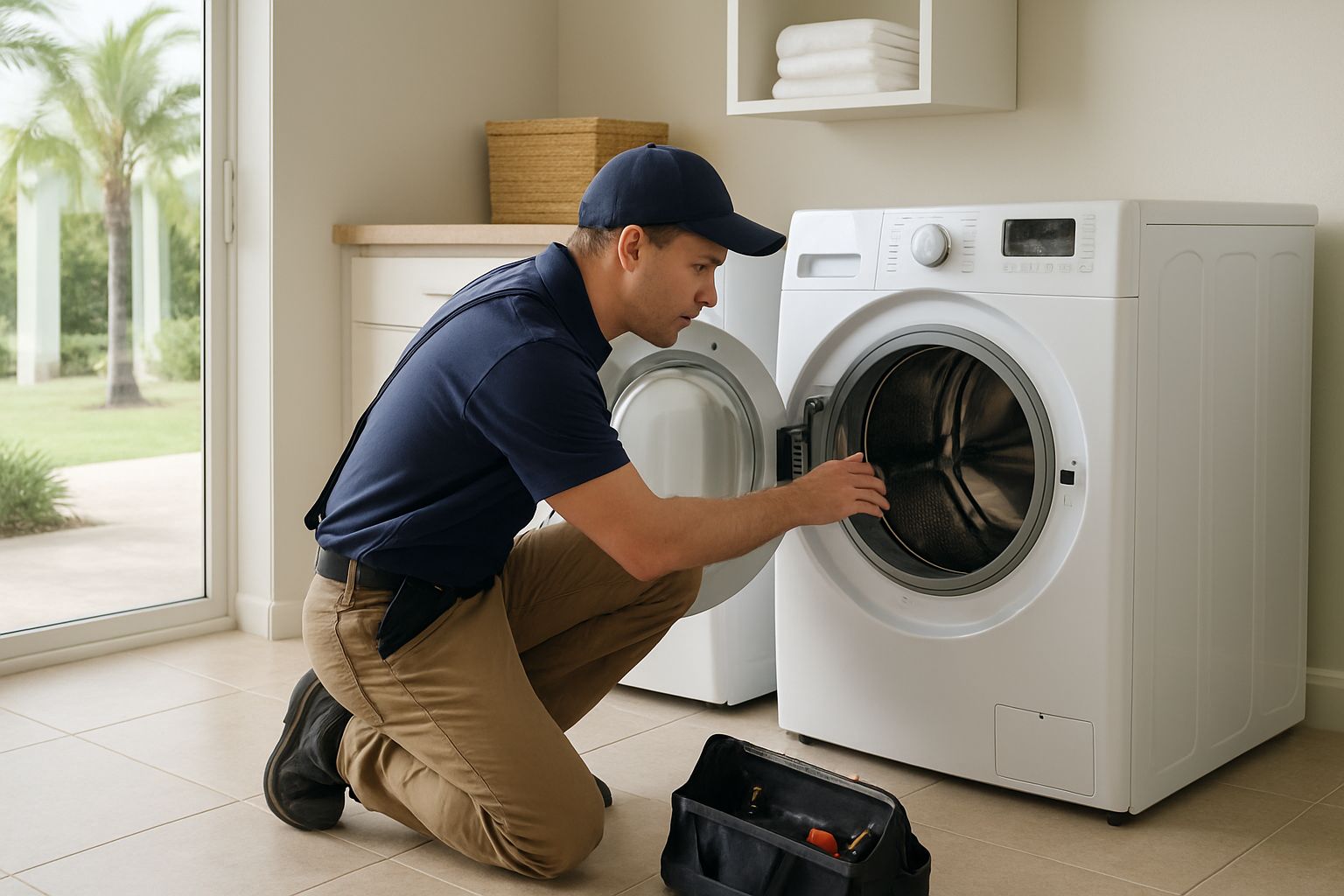
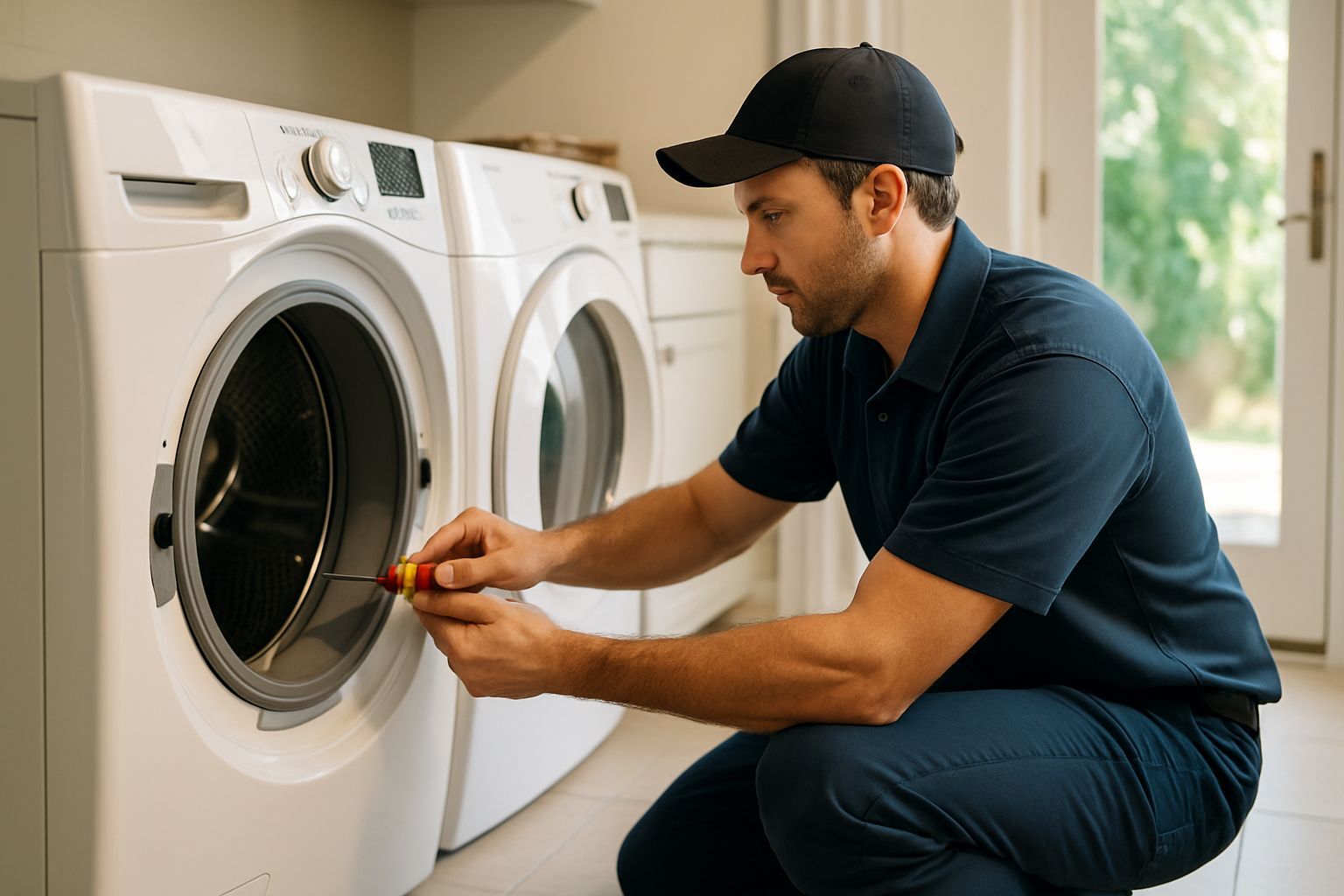
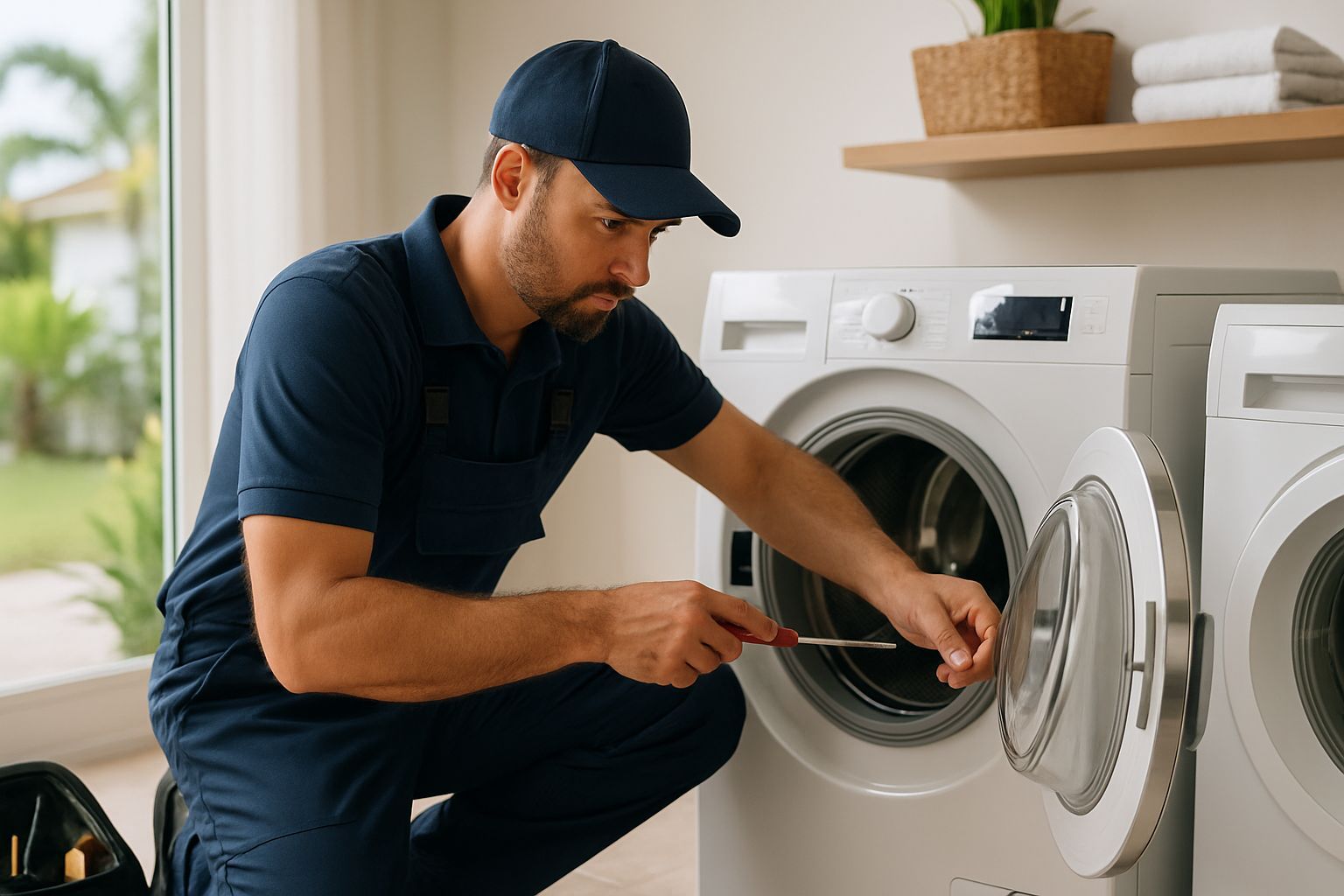
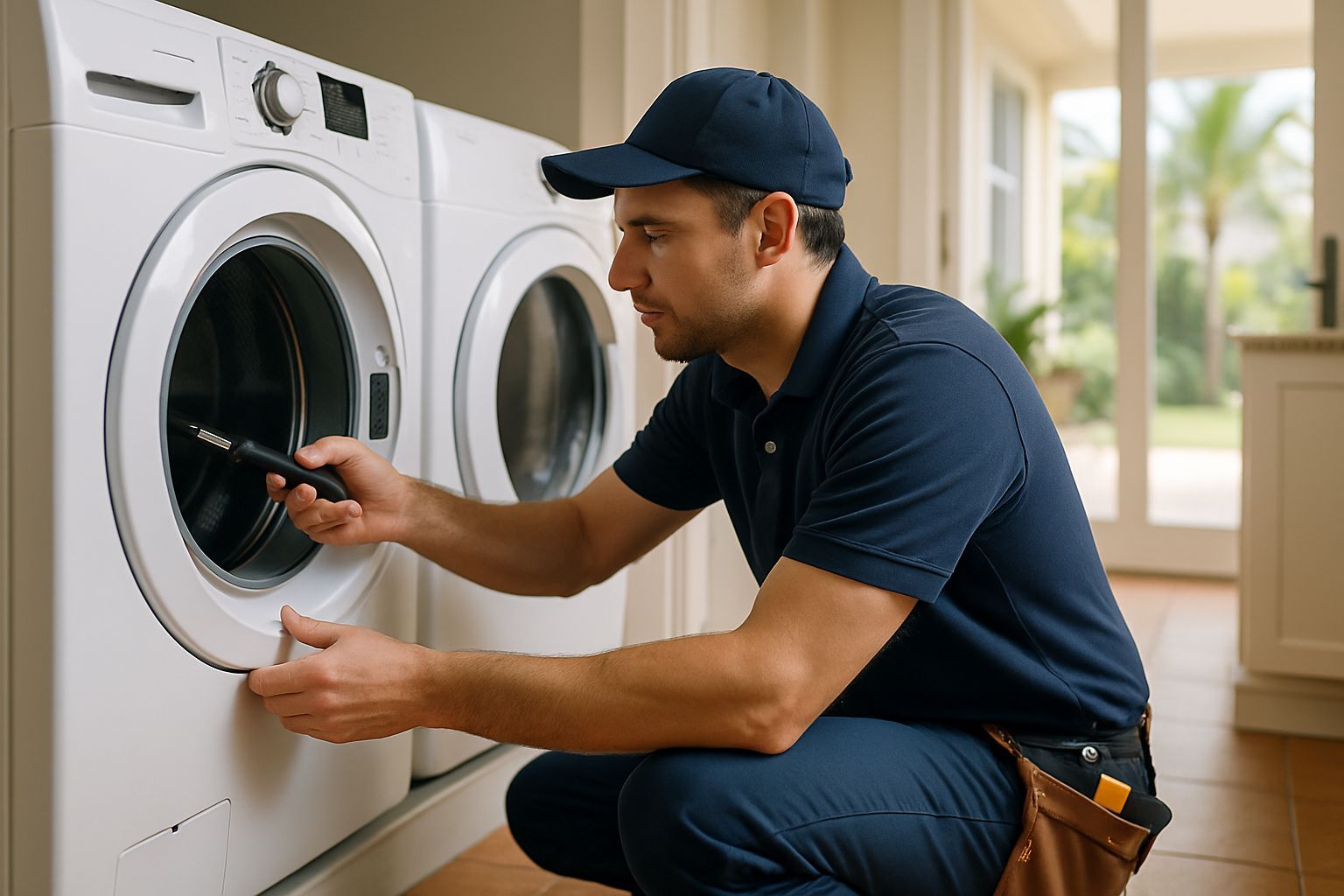
Drying relies on heat, tumbling, and airflow working together. Heat releases moisture from fabrics, while the blower moves warm, humid air through the lint path, vent duct, and exterior hood. When that air cannot escape, moisture remains in the drum and clothes can feel hot but stay damp.
Technicians often find restrictions beyond the lint screen. Lint can collect in internal ducting, the transition duct behind the dryer, a long wall vent, or the exterior termination. A crushed, disconnected, or sharply bent duct can reduce airflow as much as a lint blockage.
They also check whether heat is maintained throughout the cycle. Initial warmth does not confirm that a gas burner continues relighting or that an electric heating system is operating at full performance.
Start With Airflow, Not the Lint Screen Alone
Cleaning the lint screen before every load is important, but a clean screen does not prove the entire vent system is clear. Screens can develop a film from dryer sheets, fabric softener, or laundry products. Follow the manufacturer’s approved cleaning directions if water does not pass through the screen easily.
Run a normal mixed load and observe the outside exhaust hood while the dryer operates. The hood should open and airflow should not appear weak. Look for visible lint, nesting material, or a stuck flap, but do not reach into the termination.
With the dryer turned off, inspect only the accessible transition duct. Watch for crushing, sharp bends, or disconnection. Avoid moving a heavy dryer if it could strain a gas connector, electrical cord, or flooring. Professional vent cleaning is safer for inaccessible ductwork.
Why Heat Can Be Present but Drying Is Still Slow
A dryer does not need to be completely cold to have a heating problem. It may underheat, cycle off too soon, or move too little air for proper drying. On gas models, an initial flame does not prove the burner continues operating correctly during the full cycle.
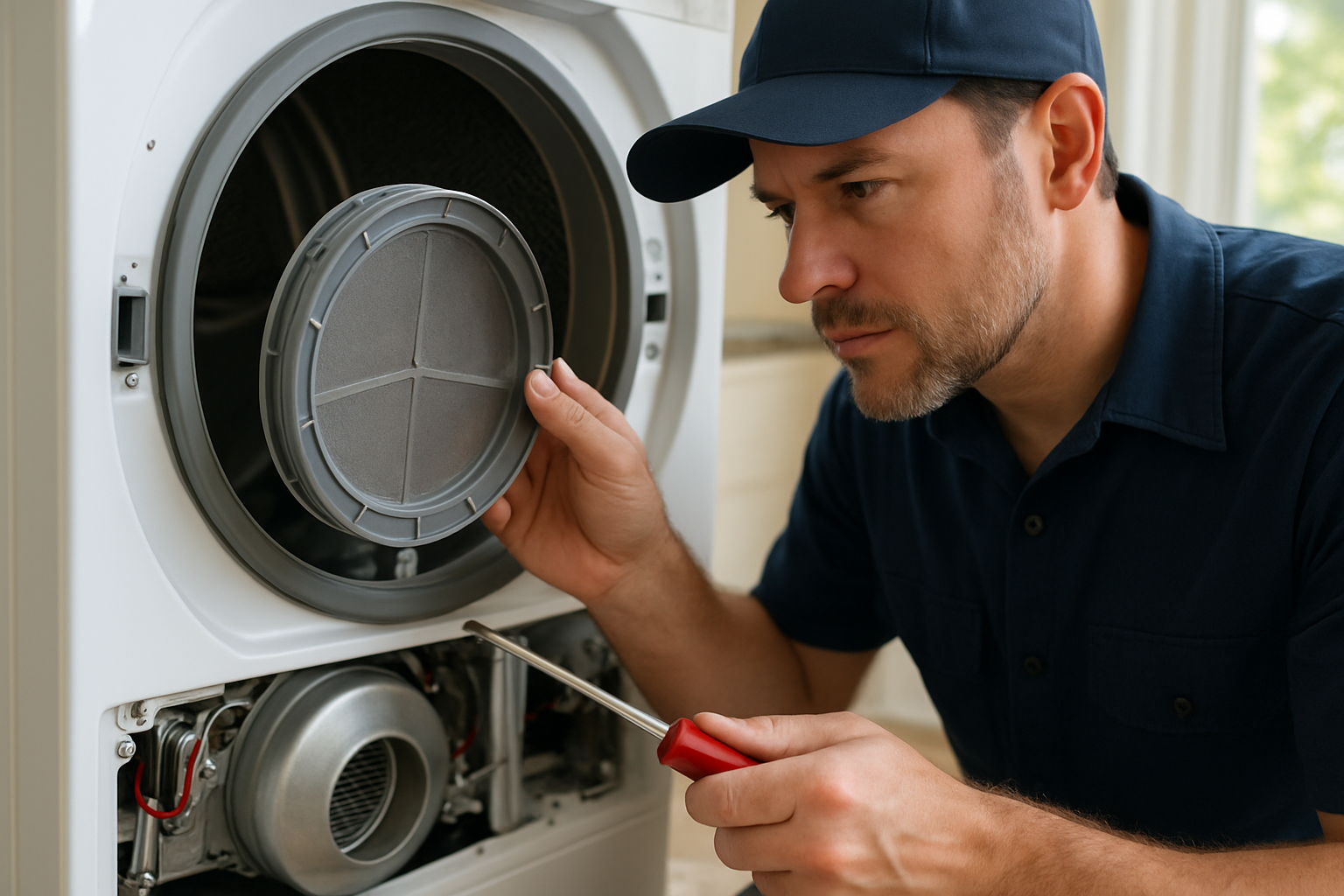
A technician may check ignition, gas-valve operation, sensors, wiring, controls, and flame cycling. An electric dryer may need electrical-supply testing, heater-circuit evaluation, thermal-protection checks, and blower inspection. Cabinet removal and electrical testing are not safe homeowner tasks.
If airflow and heating are operating correctly, moisture sensing and cycle selection become more relevant. Sensor cycles can end early when sensor bars are coated or when a very small load does not contact them consistently. Timed dry helps distinguish a sensing concern from a broader drying-performance problem.
Safe Checks Before Calling for Dryer Repair
Try timed dry with a normal-sized mixed load. If clothes remain damp on both timed and sensor cycles, the problem is less likely to be only a sensor setting. Note whether towels dry worse than lighter items and whether laundry feels unusually hot, cool, or humid when the cycle ends.
Stop using the dryer and arrange service promptly for smoke, burning odors, gas odor, repeated breaker trips, an excessively hot cabinet, scraping sounds, or unexpected shutdowns. These can indicate a safety issue.
For persistent long dry times, washer and dryer repair can identify vent, blower, heating, control, or sensing concerns before unnecessary parts are replaced. Homeowners needing appliance repair in Delray Beach, FL can have the dryer evaluated as a complete operating system.
Frequently Asked Questions About a Dryer That Gets Hot but Clothes Stay Damp
Why is my dryer hot inside but clothes are still damp?
Poor airflow is common. Heat may be present, but humid air cannot leave efficiently through the dryer duct, wall vent, or exterior hood.
Can a clogged outside vent make a dryer hot but slow?
Yes. A restricted exterior vent traps heat and moisture inside the system, causing longer dry times even when the drum feels unusually warm.
Why does my dryer need multiple cycles for one load?
Restricted airflow, weak blower performance, inconsistent heating, gas-burner relighting problems, electrical issues, or overloading can all extend drying time significantly.
Does a clean lint screen mean the vent is clear?
No. Restrictions can exist inside the dryer, behind the appliance, in wall ducting, or at the exterior termination beyond the screen.
When should I stop using a slow-drying dryer?
Stop immediately for smoke, burning or gas odors, breaker trips, severe overheating, scraping, or shutdowns. Repeated long cycles also warrant professional service.
General Appliance Service can diagnose slow drying accurately, without assuming that a warm drum or a recently replaced part identifies the actual cause.