
Refrigerator Water Dispenser Dripping After Use: What the Timing Can Tell You
By General Appliance Service
A refrigerator water dispenser dripping after use is not always a major leak. A few drops from the nozzle immediately after filling a glass may simply be residual water draining from the outlet. Concern starts when dripping continues for minutes, returns after the dispenser has been idle, overflows the tray, or reaches the floor. Timing and the exact water source provide important clues.
What a Technician Checks When the Water Nozzle Keeps Dripping
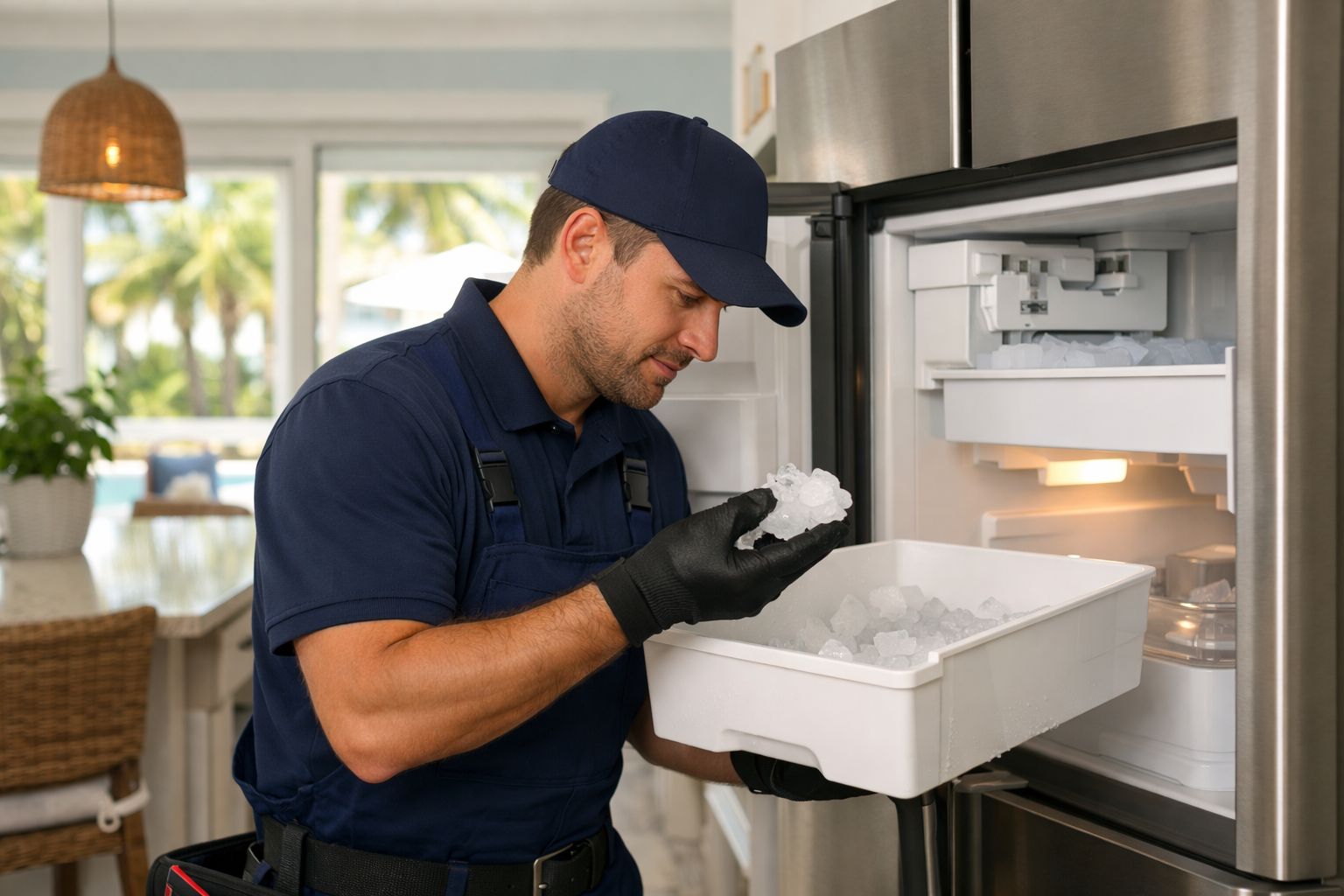
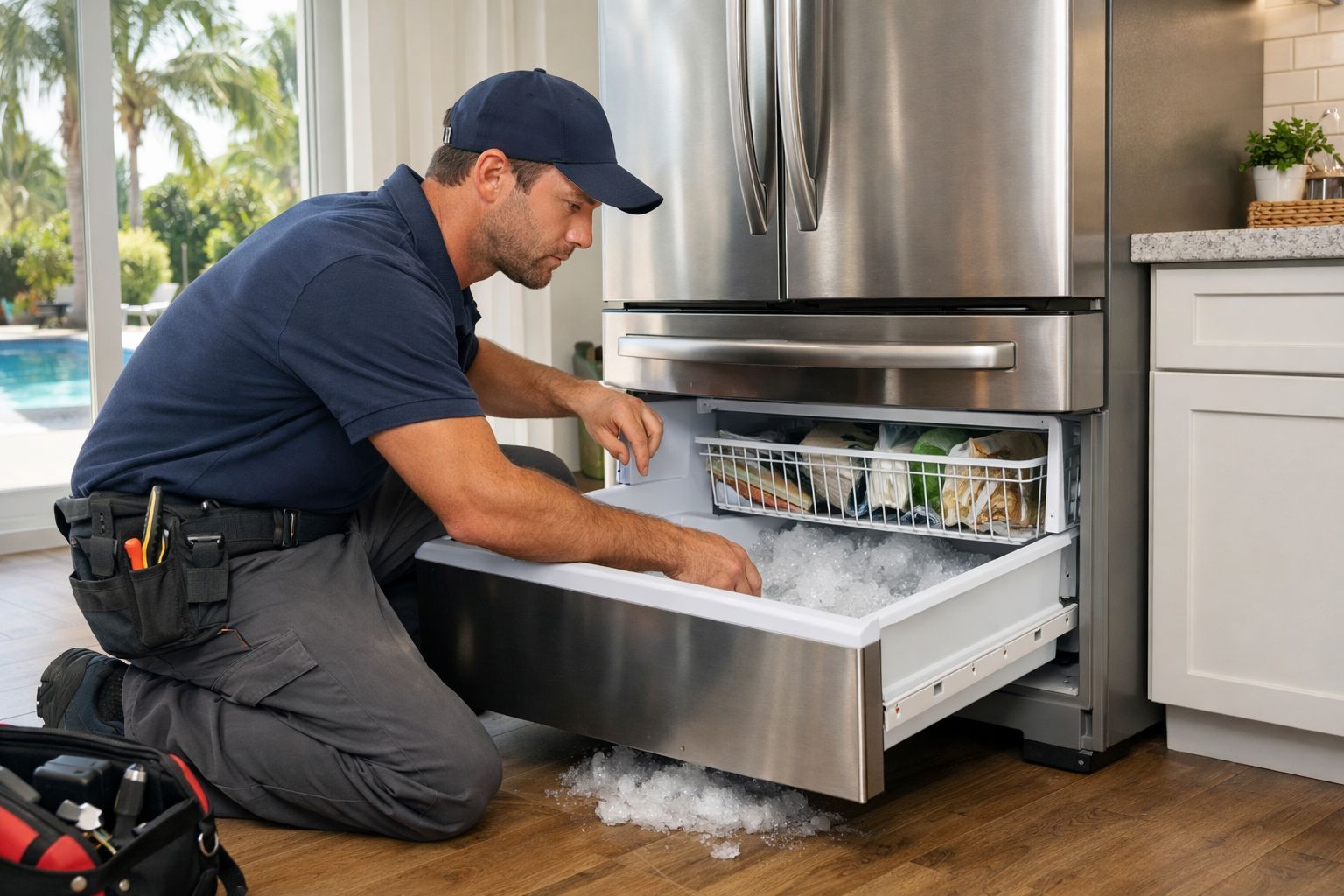
The first step is confirming where the water originates. Melting ice near the chute can run into the dispenser recess and look like a drinking-water leak. A loose ice-chute flap can create a similar wet area, particularly after ice use.
For a true nozzle drip, a technician dries the area, dispenses water, and watches what happens after the paddle is released. Does dripping stop within seconds, continue steadily, or return later? Those patterns help narrow down the water path involved.
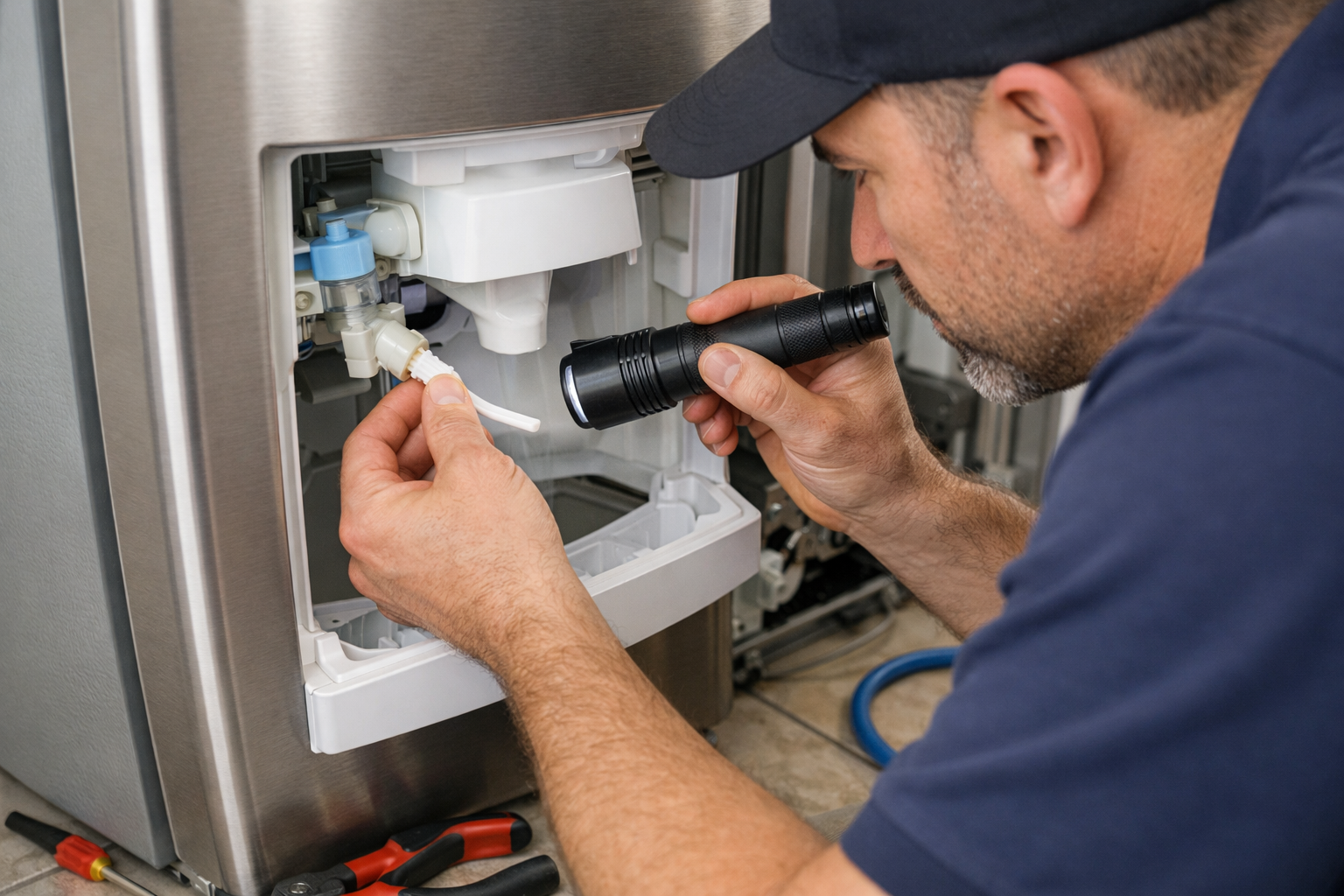
The paddle must also return freely. A sticking actuator may keep calling for water, usually producing more than a slow drip. Technicians also inspect the nozzle, filter housing, visible tubing, and connections because water can track from another source before appearing at the dispenser.
When a Few Drops Are Normal—and When They Are Not
Water can remain in the short passage between the valve and dispenser outlet. After a glass is removed, gravity may release a few drops. If dripping stops almost immediately and the recess stays dry, that is generally normal.
Persistent dripping suggests a different condition. An inlet valve may not seal completely after dispensing ends, or pressure changes in the line may allow water to seep through a marginal component. Some refrigerators have separate dispenser and ice-maker water paths with model-specific valve routing, so dripping alone does not identify a failed part.
A damaged outlet component may also hold and release water improperly. If water actively flows without the paddle being pressed, treat it as a different symptom. Our guide to a refrigerator randomly dispensing water explains that distinction.
Safe Checks for the Filter, Water Path, and Pressure
Dry the dispenser recess, place a cup beneath the nozzle, dispense one glass, and time the drip after releasing the paddle. Note whether it stops quickly, continues for several minutes, or restarts later. Check the ice chute and flap to rule out melting ice.
If the issue began after a filter change, confirm the filter is correct for the refrigerator and fully seated according to the owner’s manual. An improperly installed or damaged filter can leak around the housing. A restricted or incorrect filter may affect flow, although it does not automatically cause nozzle dripping.
Note recent power interruptions, ice-maker activity, and household water-pressure changes. These details can help identify a pattern. Use towels to protect flooring. If water runs, pools, reaches electrical areas, or threatens cabinetry, stop using the dispenser and close the accessible water shutoff if it can be done safely. Do not force the paddle, remove panels, heat concealed tubing, or test live wiring.
When Persistent Dripping Needs Professional Diagnosis
Schedule service when dripping lasts longer than a brief moment, returns after idle time, repeatedly fills the tray, or creates water on the floor. Water damage to cabinets and flooring can become more costly than the appliance repair.
A technician may check actuator and switch behavior, the outlet, filter housing, connections, and possible valve seepage. The model’s wiring diagram and water-routing design matter because a control issue, mechanical problem, or valve fault can produce similar symptoms.
For refrigerator repair in Boynton Beach, General Appliance Service can diagnose the complete water system instead of guessing at a filter, valve, or dispenser assembly. Homeowners needing appliance repair in West Palm Beach should address an ongoing leak before it damages nearby surfaces.
Frequently Asked Questions About Refrigerator Water Dispenser Dripping After Use
Is it normal for a refrigerator water dispenser to drip after filling a glass?
A few immediate drops can be normal residual water. Dripping for minutes, restarting later, or filling the tray is not typical.
Why does my fridge water nozzle drip hours after use?
A delayed drip can indicate seepage after dispensing stops. The valve, pressure conditions, outlet assembly, and water-routing design should be checked.
Can a new water filter make the dispenser drip?
It can if the filter is damaged, incorrect, or not fully seated. It may also simply coincide with an unrelated outlet or valve problem.
Does dripping always mean the inlet valve is bad?
No. A valve that fails to seal is one possibility, but the water source and the refrigerator’s specific water-system layout must be verified first.
Should I turn off the water supply if the dispenser leaks?
Turn it off if water is actively running, pooling, reaching electrical areas, or threatening flooring. For isolated drops, use a cup while arranging service.
A small residual drip may be harmless, but repeated water at the dispenser deserves attention. Professional diagnosis can determine whether the issue is limited to the outlet or involves a deeper water-system fault.