
Washer Fills Slowly on Cold but Works on Warm? What the Rinse Pattern Can Tell You
By General Appliance Service
A washer that fills slowly on cold may wash normally on a warm setting, then pause or show a fill-related error during rinse. That pattern is useful because it points toward the cold-water path, but it does not identify one failed part by itself. Warm water often uses a mix of hot and cold water, so a successful warm fill does not prove the cold side is working correctly.
What a Technician Checks When a Washer Fills Slowly on Cold
The first question is whether enough cold water is reaching the appliance. A partially closed supply valve, kinked hose, sediment buildup, or an internal washer problem can create similar symptoms.
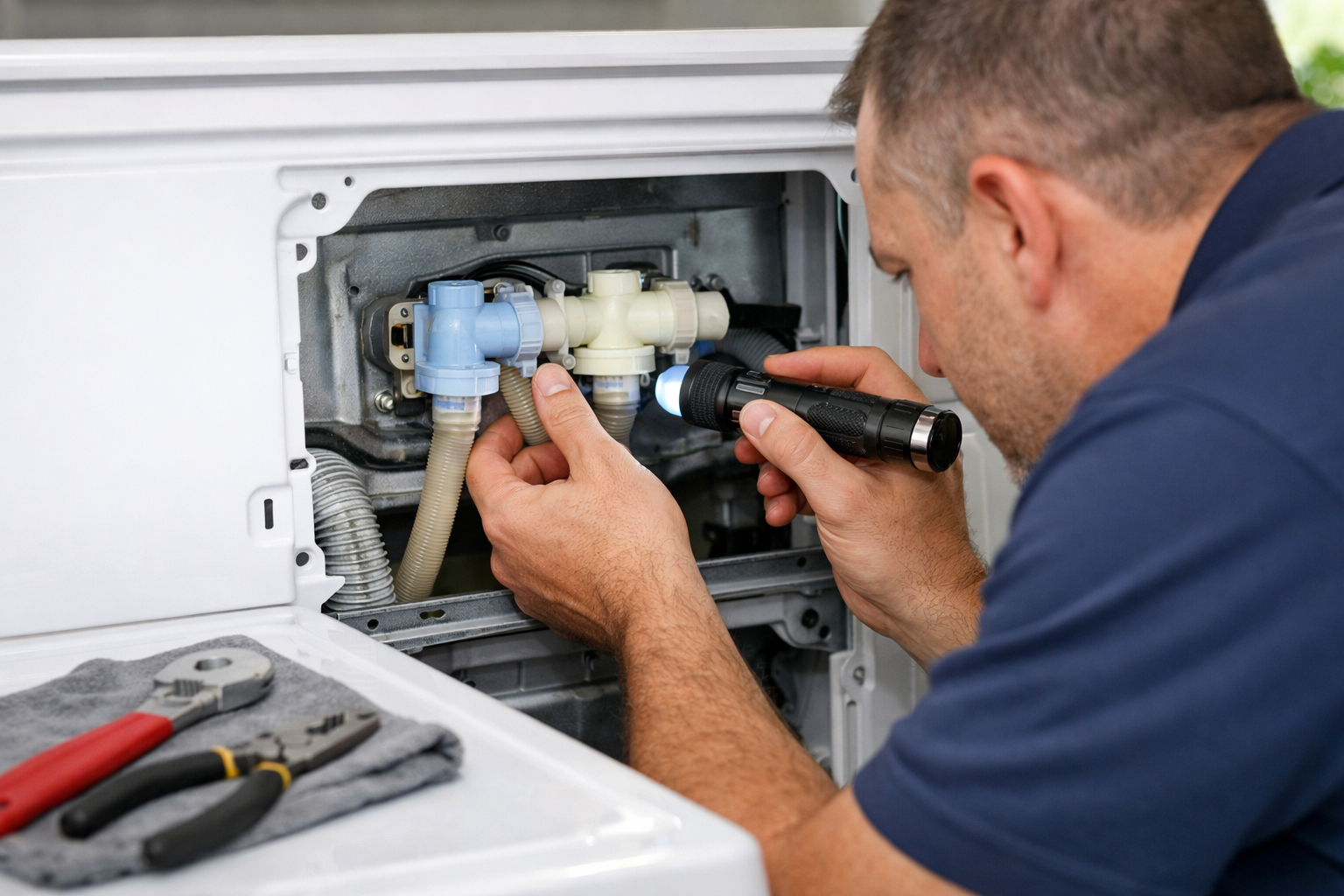
A technician typically verifies water flow from both washer supply lines. Normal cold-water pressure at a bathroom sink is helpful, but it does not rule out a restriction at the washer’s dedicated valve, hose, or inlet connection.
Many washers have small inlet screens where hoses connect to the valve assembly. Mineral scale, rust, and debris after plumbing work can restrict those screens. Because many models use cold water for rinsing, a cold-side restriction may be most noticeable late in the cycle. Rinse behavior still varies by model, cycle, and selected options.
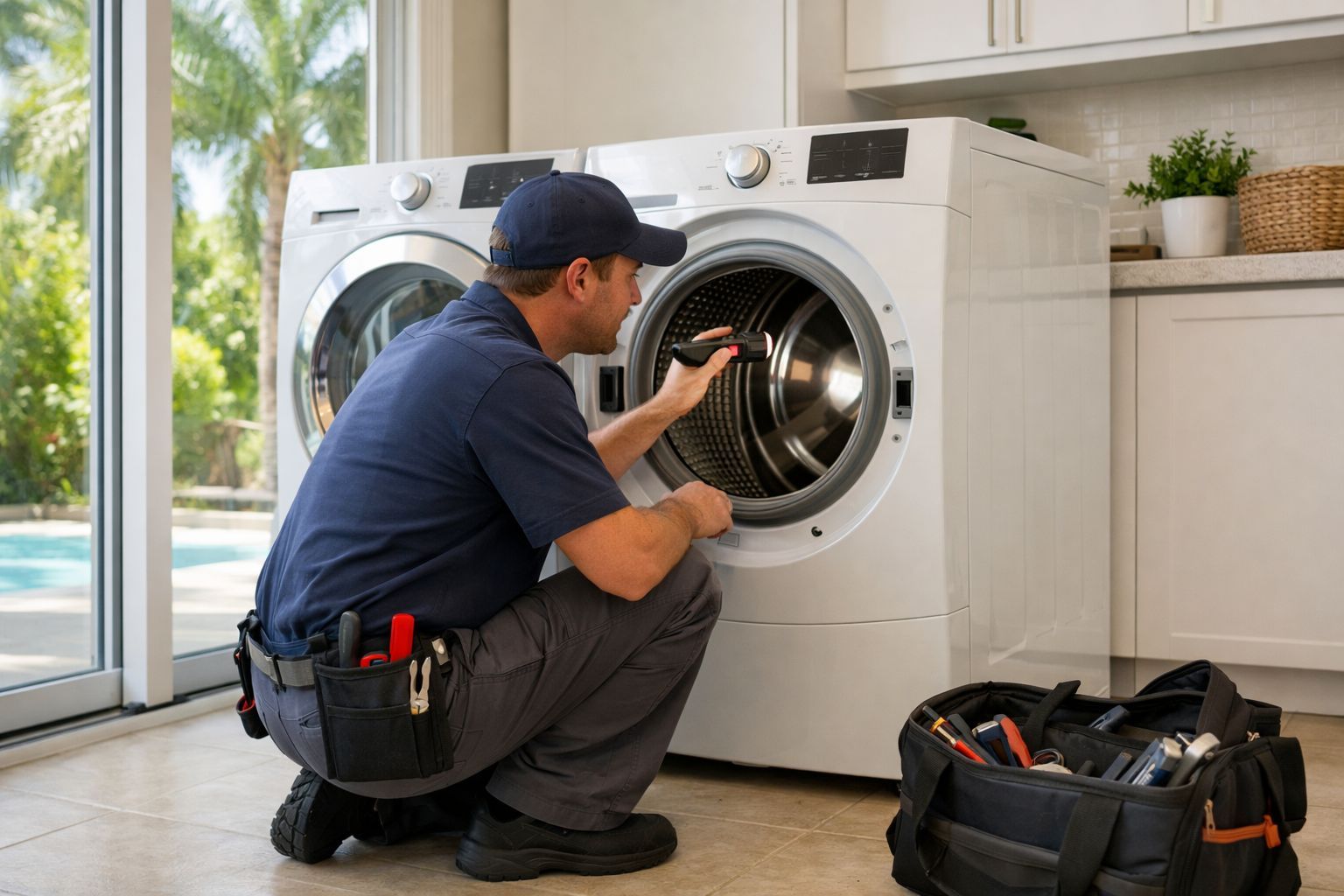
If supply flow is adequate, diagnosis moves inside the machine. A cold-side valve solenoid may be weak, the valve may not open fully, or the washer may be receiving an incomplete electrical command.
Why Warm Washes Can Still Seem Normal
A warm selection is not a complete test of the cold inlet. On many washers, warm water is created by opening both hot and cold valves in a controlled mix. The hot side may provide enough water for the machine to appear normal even when cold flow is partially restricted.
Symptoms can also change by cycle. A bulky cycle may allow more time to fill than a quick wash, while an eco setting may use a different temperature strategy. Some machines pause and retry before displaying an error. Others time out during a later rinse, making the problem seem as though it began near the end of the load.
For that reason, technicians compare the selected temperature, cycle stage, and actual water flow rather than replacing an inlet valve based only on a warm-cycle test.
Safe Checks Before Calling for Washer Repair
Note exactly when the issue occurs. Does the washer struggle only on Cold, only during rinse, or at every temperature? Record the selected cycle and photograph any error code before clearing it.
Check that both accessible water valves are fully open, and inspect exposed hoses for kinks, crushing, leaks, or visible damage. Avoid pulling a heavy washer away from the wall if doing so could strain a hose or damage flooring.
You can compare cold-water flow at another fixture. Weak flow throughout the home may indicate a broader plumbing issue. Normal flow elsewhere does not clear the washer’s individual valve, hose, or inlet screen.
Stop the cycle and close accessible water valves if the washer leaks or overfills. Do not remove cabinet panels, bypass a water-level control, test live voltage, or remove inlet screens unless the owner documentation provides a specific safe procedure.
Restriction Clues, Control Problems, and Professional Diagnosis
Sediment at a cold inlet screen or inside an aging hose can slow filling enough for the cycle timer to expire. A weak cold-side inlet valve can cause the same result: the machine may be commanded to fill, yet only a small amount of water enters.
Before replacing a part, a technician confirms whether the valve receives the proper command. Wiring, connectors, the control board, and pressure or flow sensing can all affect cold filling. Manufacturer diagnostics, wiring information, and model-specific testing help avoid unnecessary valve or control-board replacement.
If the tub appears to fill and drain at the same time, that is a different clue. A drain-hose installation issue or water-level problem can create a repeating-fill pattern. See this guide if your washer keeps filling and draining rather than simply filling slowly on cold.
For persistent temperature-specific fill problems, washer and dryer repair in Boynton Beach can identify whether the cause is supply flow, an inlet restriction, a valve assembly, or washer sensing.
Frequently Asked Questions About a Washer That Fills Slowly on Cold
Why does my washer fill normally on warm but slowly on cold?
Warm cycles often use both water supplies. Hot-water flow can partly mask a restricted cold path, so normal warm filling does not confirm healthy cold-water flow.
Can a clogged inlet screen make my washer stop during rinse?
Yes. A restricted cold-side screen can prevent the washer from reaching its expected water level in time. Many machines rely heavily on cold water during rinsing.
Why does a fill error appear near the end of the cycle?
A final rinse may be the first stage that depends mostly on cold water. A partial cold-side restriction can remain hidden during earlier mixed-temperature fills.
Does slow cold filling always mean the inlet valve failed?
No. A supply valve, hose, inlet screen, wiring connection, control output, or sensing issue can create similar symptoms. Proper testing separates those possibilities.
Should I keep restarting a washer that fills slowly?
Avoid repeated restarts if it times out or shows fill errors. Check accessible valves and hoses, then arrange service if the problem continues or worsens.
For intermittent rinse failures, appliance repair in Greenacres, FL can help determine whether the selected program is normal or a component is limiting cold-water fill. Recording the cycle, temperature, and error display gives the technician a useful starting point.