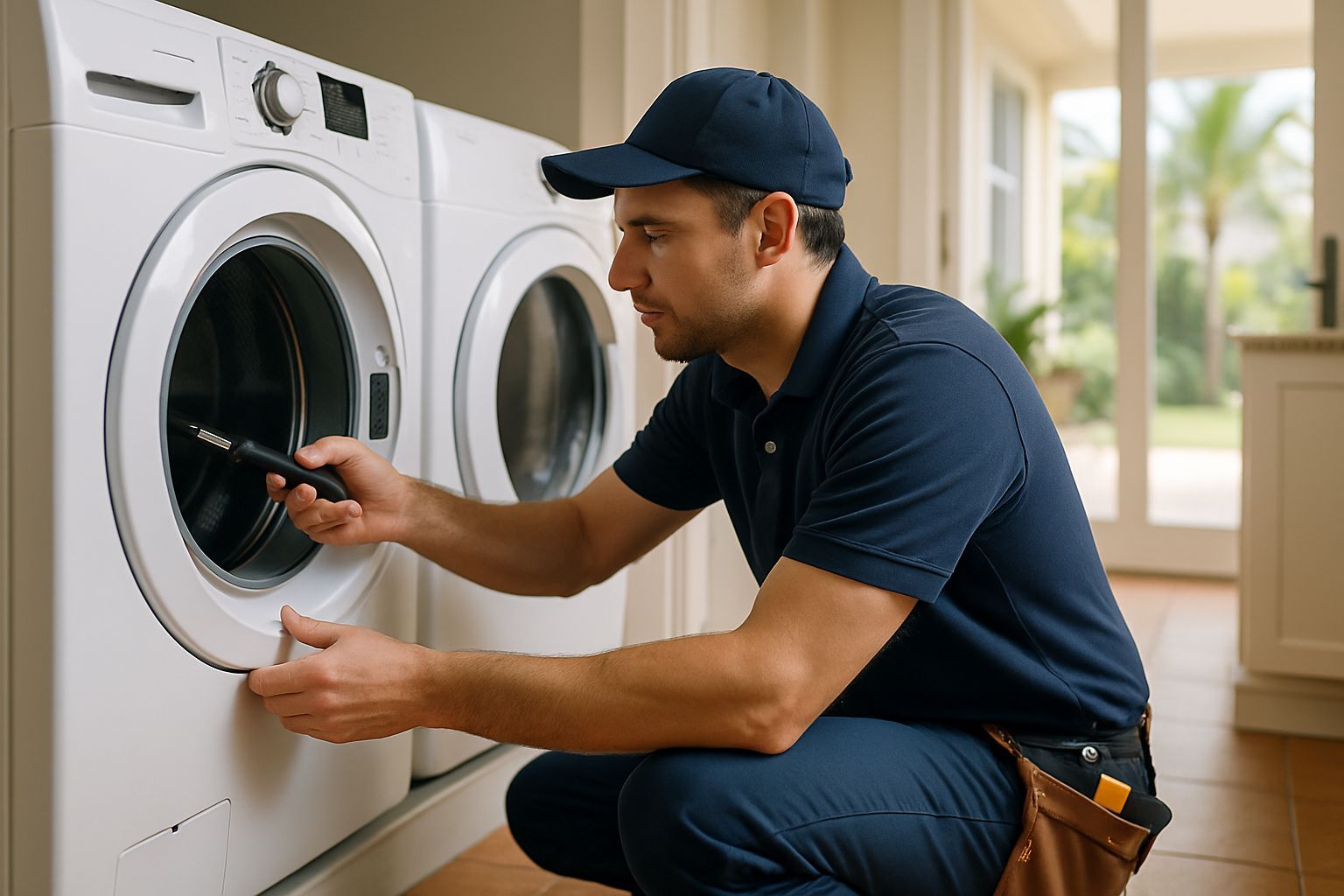

Why Does My Dryer Make a Rhythmic Thumping Noise That Fades After It Warms Up?
By General Appliance Service
A dryer thumping noise that begins as soon as the drum turns can be unsettling, especially when it repeats at the same interval during the first few minutes. When the sound becomes quieter after warm-up, that pattern provides a useful clue, but it does not confirm one failed part. A bump occurring once or twice per drum revolution usually involves a rotating drum support, guide, or contact point rather than normal airflow or heating noise.
What a Technician Checks When a Dryer Thumps in Rhythm
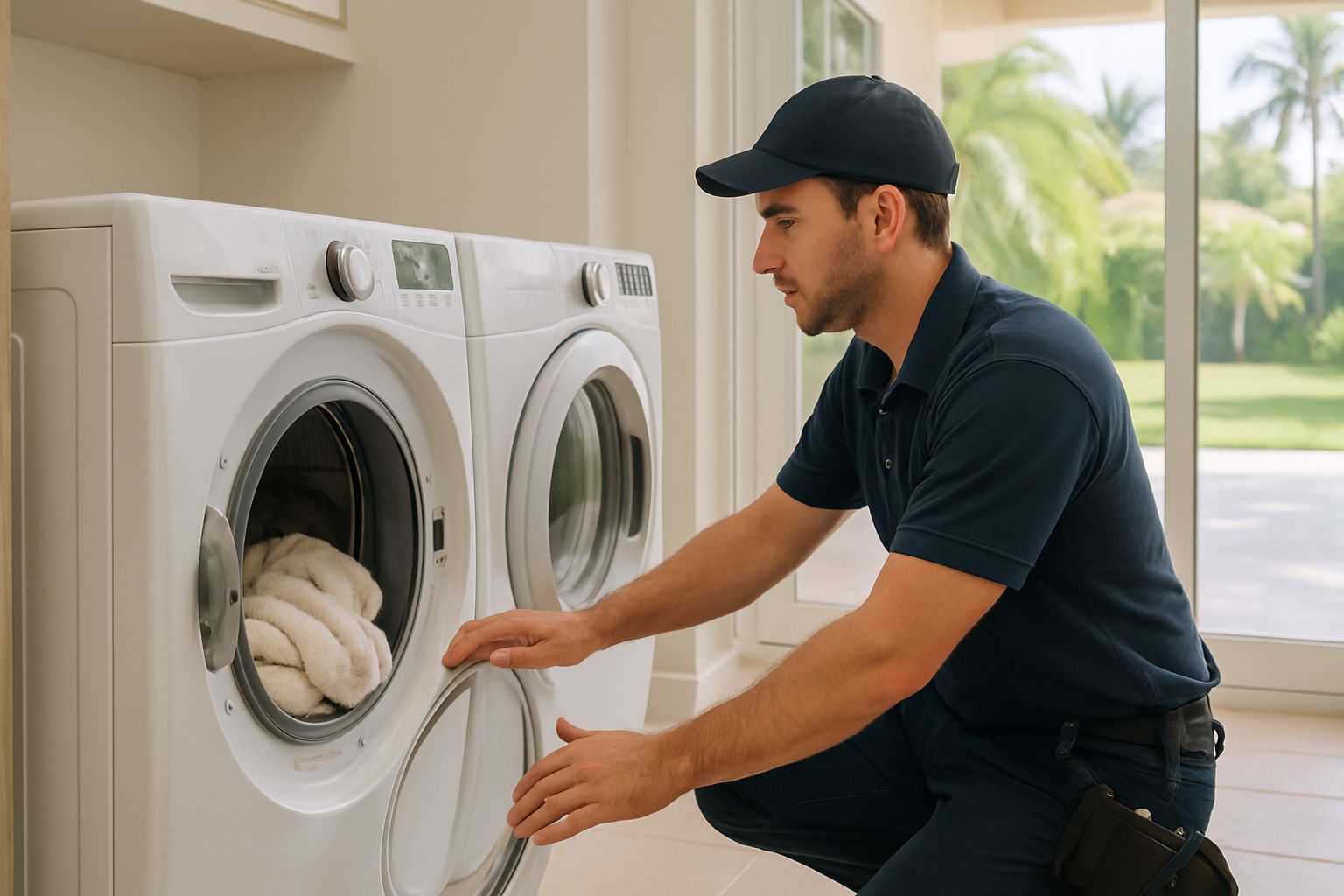
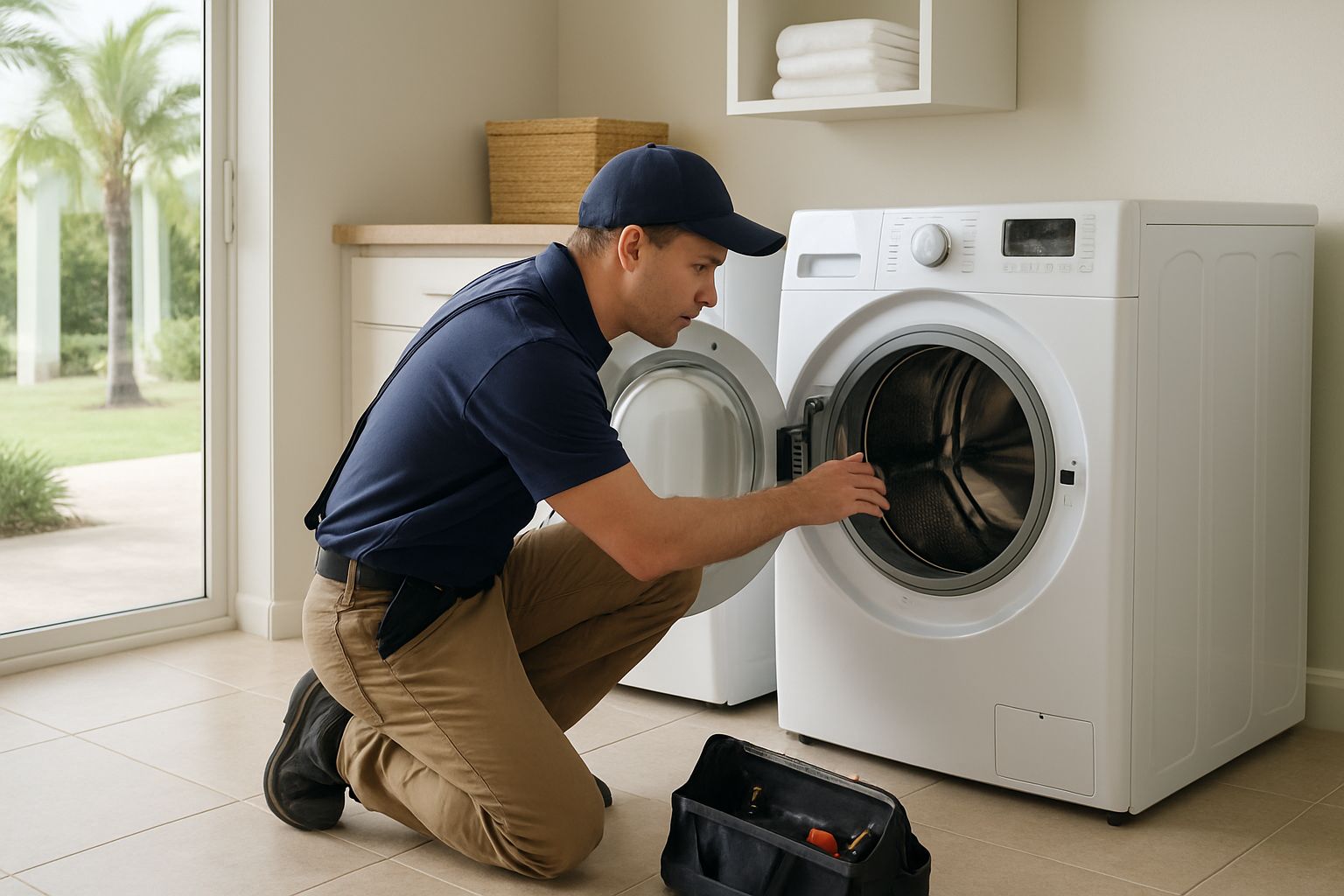
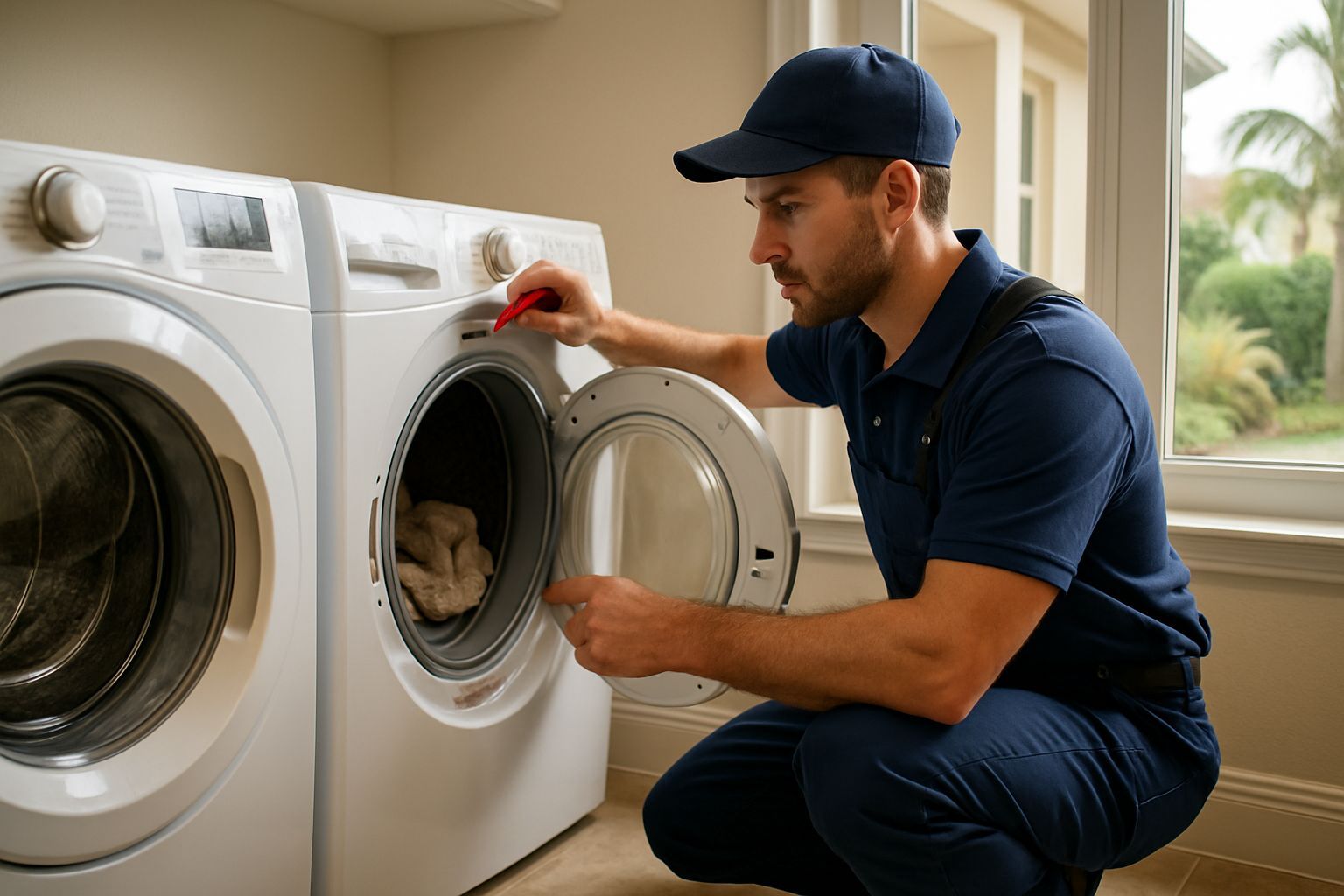
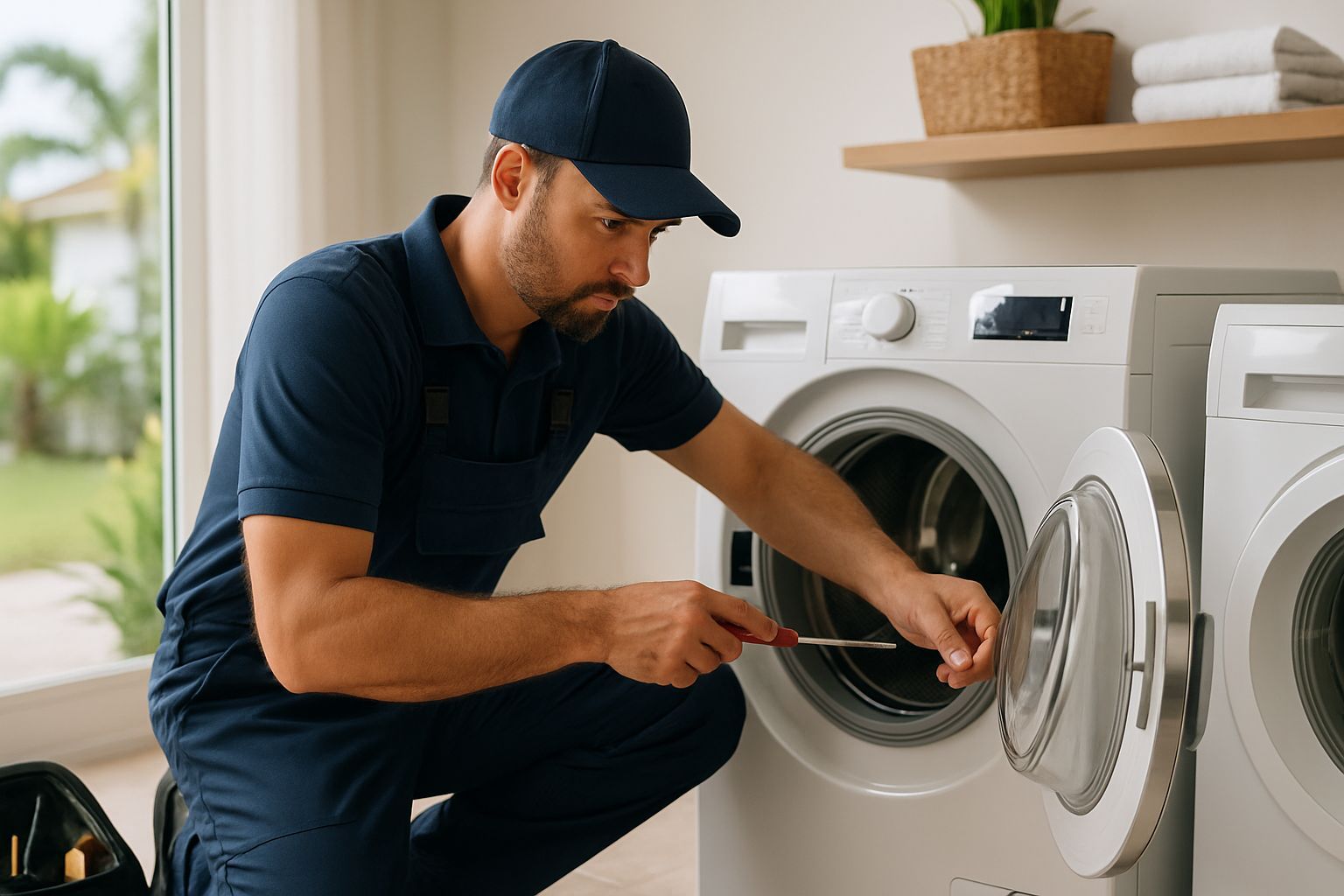
A technician first confirms whether the sound follows drum rotation. An empty dryer makes this easier to hear: if the thump repeats at a regular pace and changes speed with the drum, the drum-support system becomes the focus.
Depending on the model, the drum may ride on support rollers, front glides, a rear bearing, or a combination of parts. The belt turns the drum, while an idler pulley maintains belt tension. Wear in any of these areas can create a repeating noise.
A common cause is a support roller with a flat spot after the dryer has sat unused. As that roller turns, the drum can rise and drop slightly, producing a rhythmic bump. Warmth and movement may make the sound less noticeable, but that does not prove the roller is the only problem. Bent roller shafts, worn glides, uneven alignment, or drum contact can create similar symptoms.
Why the Noise May Fade After Warm-Up
A warm-up thump is not automatically harmless. Metal, rubber, and plastic components expand or flex slightly as the dryer operates. That change can reduce noise from a mild roller flat spot, light drum contact, or a minor alignment issue.
Technicians also inspect the drum itself. A cracked drum seam, a distorted drum shell, or wear where the drum contacts a support surface can create a bump at the same point during every revolution. A side panel or bulkhead that lightly touches the drum may sound similar.
The belt moves whenever the drum moves, so it can be easy to blame it. A worn belt may squeak, slap, or slip, but a once-per-revolution thump is not enough evidence to identify the belt as the cause. A proper diagnosis checks drum play, belt tracking, support surfaces, and whether each support point carries the drum evenly.
Safe Checks You Can Make Before Calling for Dryer Repair
Start with an empty drum and listen from a safe distance. Note whether the thump starts immediately, stays regular, and fades after five or ten minutes. Then try a small normal load. Shoes, buckles, and uneven laundry can make noise, but they usually will not create the same exact rhythm in an empty dryer.
Confirm that the dryer is level and stable. A rocking cabinet can magnify ordinary vibration, although adjusting the feet will not repair a worn roller, bearing, or damaged drum.
Clean the lint screen and make sure the exterior exhaust hood opens while the dryer runs. Restricted airflow can cause long dry times and heat problems, but it does not usually cause a mechanical thump once per drum revolution.
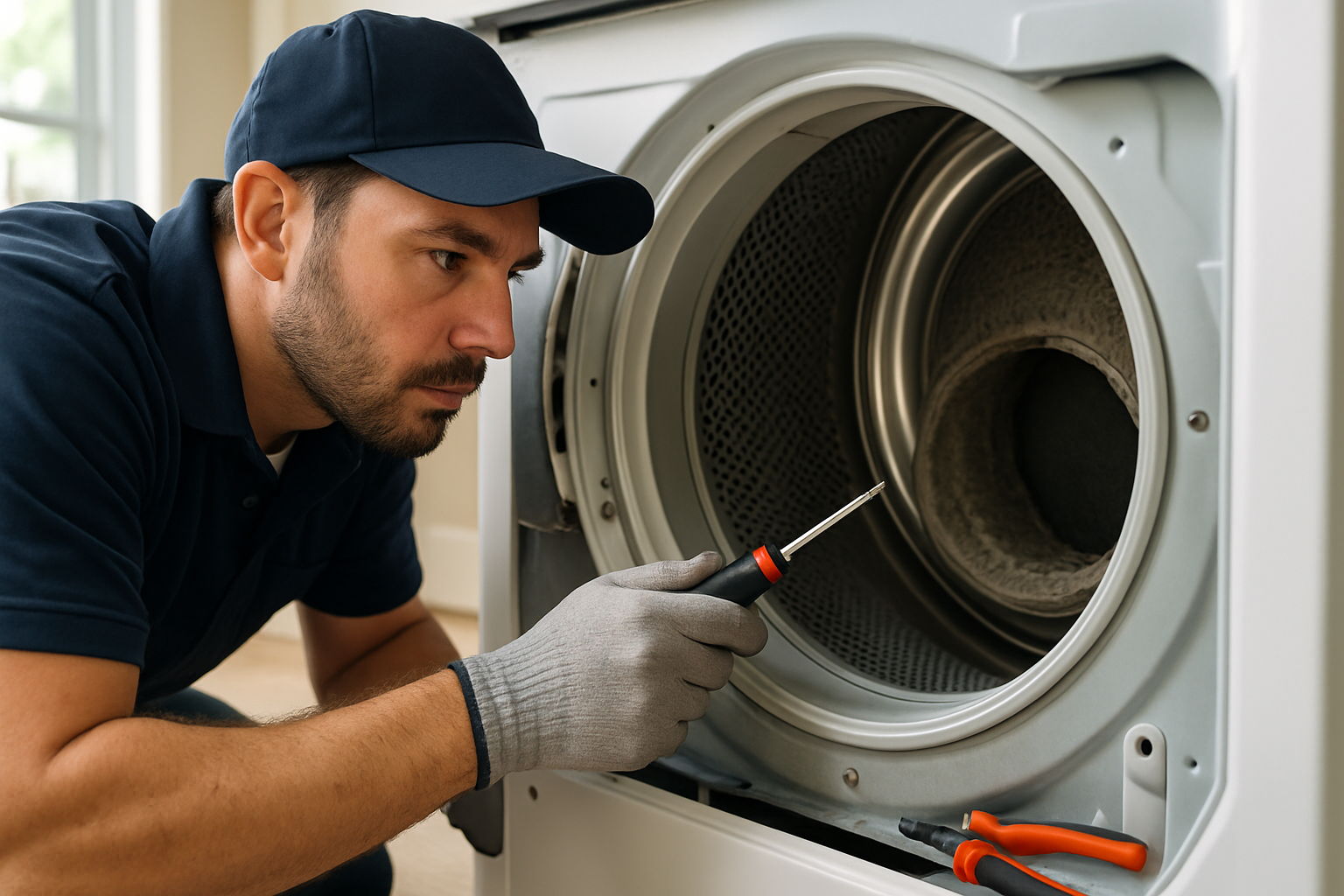
With power off, look through the open door for loose objects, damaged clothing, or obvious drum distortion. Do not reach into a moving drum or remove cabinet panels. For persistent noise, washer and dryer repair services can identify the source safely.
When a Thumping Dryer Should Be Turned Off
A mild thump that quiets after warm-up may not be an emergency, but some symptoms require stopping use until the dryer is inspected. Turn it off for metal-on-metal scraping, a burning or hot electrical smell, smoke, severe vibration, a tripped breaker, or clothing that catches or tears.
Also stop using the dryer if the drum binds, takes unusual effort to turn by hand with power disconnected, or produces a hard bang instead of a light repeating bump. Continued operation can worsen drum damage, wear out the belt, or create friction-related overheating.
A technician may inspect the drum seam, rollers and shafts, glides, rear bearing surfaces, idler pulley, belt tracking, blower area, and mounting alignment. Homeowners needing appliance repair in Delray Beach, FL should schedule diagnosis before ordering parts based only on the sound.
Frequently Asked Questions About a Dryer Thumping Noise
Why does my dryer thump only when it first starts?
A roller flat spot can cause a regular thump after sitting. As it warms and rotates, the noise may fade. Drum contact can behave similarly.
Can flat dryer rollers become quieter after warm-up?
Yes. A flattened roller section can make the drum bump repeatedly, then become less noticeable with heat and movement. The shaft and nearby supports still need inspection.
Does a thumping dryer always need a new belt?
No. Belts can make noise, but rhythmic thumps more often involve rollers, glides, bearings, drum damage, or a contact point. Belt tracking should still be checked.
Is it safe to use a dryer that thumps once per rotation?
Use caution. A mild noise without odors, scraping, shaking, or damaged clothing may not be urgent, but persistent thumping should be diagnosed before it worsens.
Why did the thump remain after roller replacement?
The original diagnosis may have been incomplete. Roller shafts, glides, drum seams, rear bearings, alignment, idler pulleys, and cabinet contact can create similar rhythms.
A test run after repair should confirm smooth drum rotation, correct belt tracking, and no remaining contact or vibration. Replacing only the most common part may not resolve the actual source.