
Why Does My Microwave Turntable Turn When I Open the Door?
By General Appliance Service
If your microwave turntable turns when the door opens , treat it as a safety concern, not a minor inconvenience. A microwave should not activate cooking-related functions simply because the door is opening. Stop using the appliance, disconnect power if it is safe to do so, and arrange a qualified diagnosis. A moving tray, light, or fan does not reveal what is happening inside the microwave.
What a Technician Checks When a Microwave Runs With the Door Open
Microwaves use a door-latch and interlock system that prevents cooking operation while the door is open. Several switches, latch hooks, mounts, and actuators must operate in a precise order as the door closes. Wear, damage, or misalignment can interrupt that sequence.
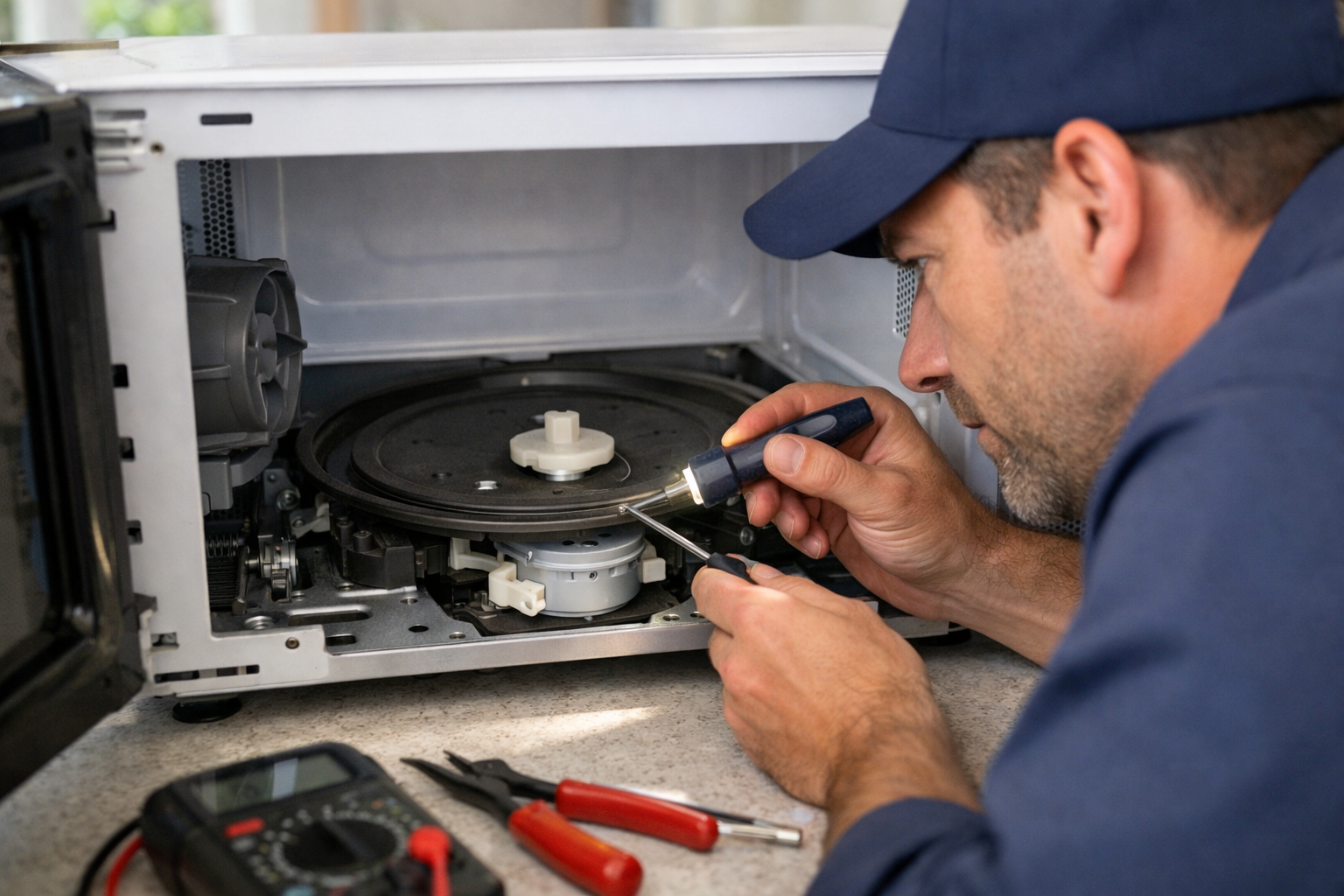
A technician may find a loose switch mount, worn actuator, damaged latch hook, bent door, or misaligned hinges. These problems can cause a switch to activate at the wrong time. The symptom can be confusing because the turntable motor and cavity light are separate from the microwave’s high-voltage cooking components.
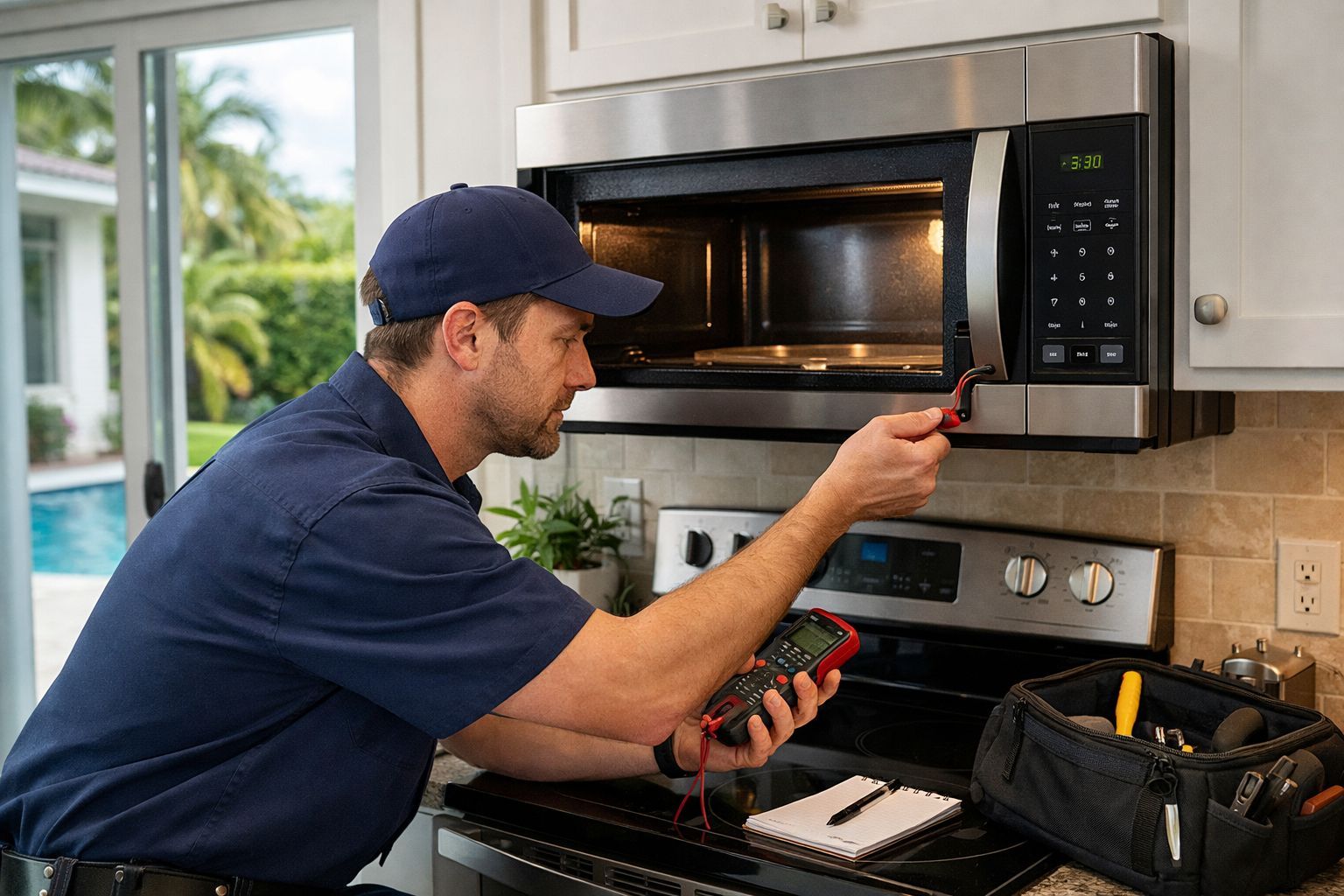
A moving turntable does not automatically mean the magnetron is operating. The technician confirms the reported symptom using model-appropriate safety procedures, inspects the latch assembly, and verifies the sequence of the primary, secondary, and monitor interlocks. Connectors, wiring, heat damage, and related control components may also need inspection.
Why a Moving Turntable Is Not a Safe Test
The turntable, interior light, cooling fan, and magnetron do not always receive power through the same path. A door-interlock or control fault might energize one visible function without proving that the cooking circuit is active. On another model, the same symptom could indicate a more serious condition.
Do not test whether the microwave “heats with the door open” by placing food, water, or other items inside. Do not repeatedly open, close, or slam the door to see whether the symptom changes. That can worsen damaged latch parts or create an intermittent condition that complicates diagnosis.
Microwaves can retain dangerous electrical voltage internally after being unplugged. For that reason, microwave repair in South Florida is safer than removing the cabinet or attempting to access a door switch yourself.
What You Can Safely Check From Outside the Appliance
Stop using the microwave first. Unplug an accessible countertop model without dismantling it. For a built-in or over-the-range unit, turn off the appropriate breaker if you can identify it safely.
Make observations from outside the appliance:
- Does the turntable, light, fan, or another function start every time the door opens?
- Does it occur while opening, closing, or holding the door in a certain position?
- Does the breaker trip or does the microwave lose power when the door moves?
- Are the hinges, latch area, door frame, or hooks visibly cracked, loose, bent, or misaligned?
- Did you hear buzzing, popping, clicking, or another unusual sound before the problem began?
Photograph visible damage and record the complete model number. These details help General Appliance Service prepare for the diagnostic visit and identify possible parts needs.
A Tripped Breaker Can Be Part of the Same Problem
If a fuse blows or a breaker trips as the door opens or closes, note the timing. Microwave monitor-switch circuits are designed to protect against unsafe interlock conditions. A sequencing problem in the latch or switch system can create a protective short and cause a fuse or breaker event.
Do not replace a fuse and try the microwave again. A replacement may fail immediately if the underlying problem remains. The cause could involve switch sequencing, damaged wiring, a heat-damaged connector, door alignment, or a related control issue.
For homeowners needing appliance repair in Delray Beach, FL, reporting whether the breaker trips during opening or closing provides useful diagnostic direction without creating additional risk.
How This Differs From a Microwave That Will Not Start
Door switches can contribute to several microwave symptoms. A microwave with a working display may refuse to begin cooking because it does not recognize that the door has closed correctly. That differs from unexpected operation when the door opens.
If the display looks normal but no cook cycle begins, see why a microwave display works but will not start. For a turntable that starts when the door opens, do not bypass switches, lubricate the latch, adjust hinges, or remove the cabinet. Proper diagnosis must account for the microwave’s safety circuits.
Frequently Asked Questions About a Microwave Turntable Turning When the Door Opens
Why does my microwave turntable run when I open the door?
It may indicate an abnormal latch, interlock-switch, wiring, or control issue. The turntable should not start simply because the door opens.
Is it safe to use a microwave if something runs with the door open?
No. Stop using it immediately. Visible operation does not confirm the high-voltage cooking circuit is off, and the appliance is not responding normally.
Could a bad microwave door switch make the breaker trip?
Yes. Incorrect switch sequencing can cause a protective fuse or breaker event. Wiring damage, connectors, and latch alignment may also contribute.
Should I replace the microwave door switch myself?
No. Microwaves contain components that can retain hazardous voltage after disconnection. Incorrect switch replacement can leave the original safety issue unresolved.
What information should I give a microwave repair technician?
Provide the model number, identify which function starts, and explain when it happens. Mention breaker trips, unusual sounds, and visible door damage.
A microwave that appears to begin a cycle with the door open needs professional attention, not trial-and-error testing. Keep it disconnected and out of use until a qualified technician identifies the fault.