
Why Does My Dryer Hum but the Drum Will Not Turn?
By General Appliance Service
A dryer that hums but will not turn is attempting to start, but something is preventing the drive system from moving. This differs from a dryer with no heat or one that stops during a cycle. The motor may be receiving power, yet the drum never begins tumbling.
Stop the cycle instead of repeatedly pressing Start. A steady hum can indicate a motor stalled under load, and continued attempts may overheat the motor or wiring.
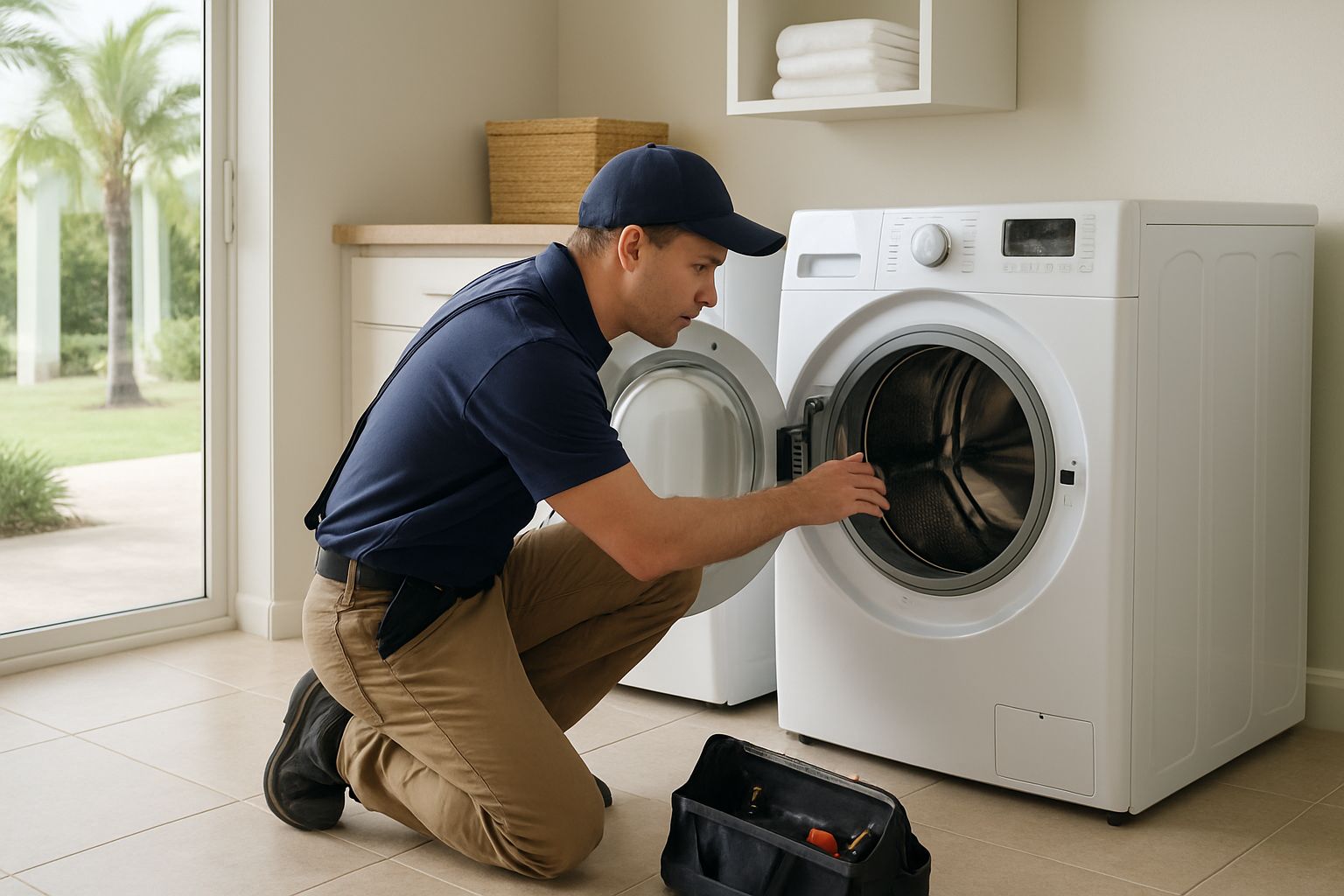
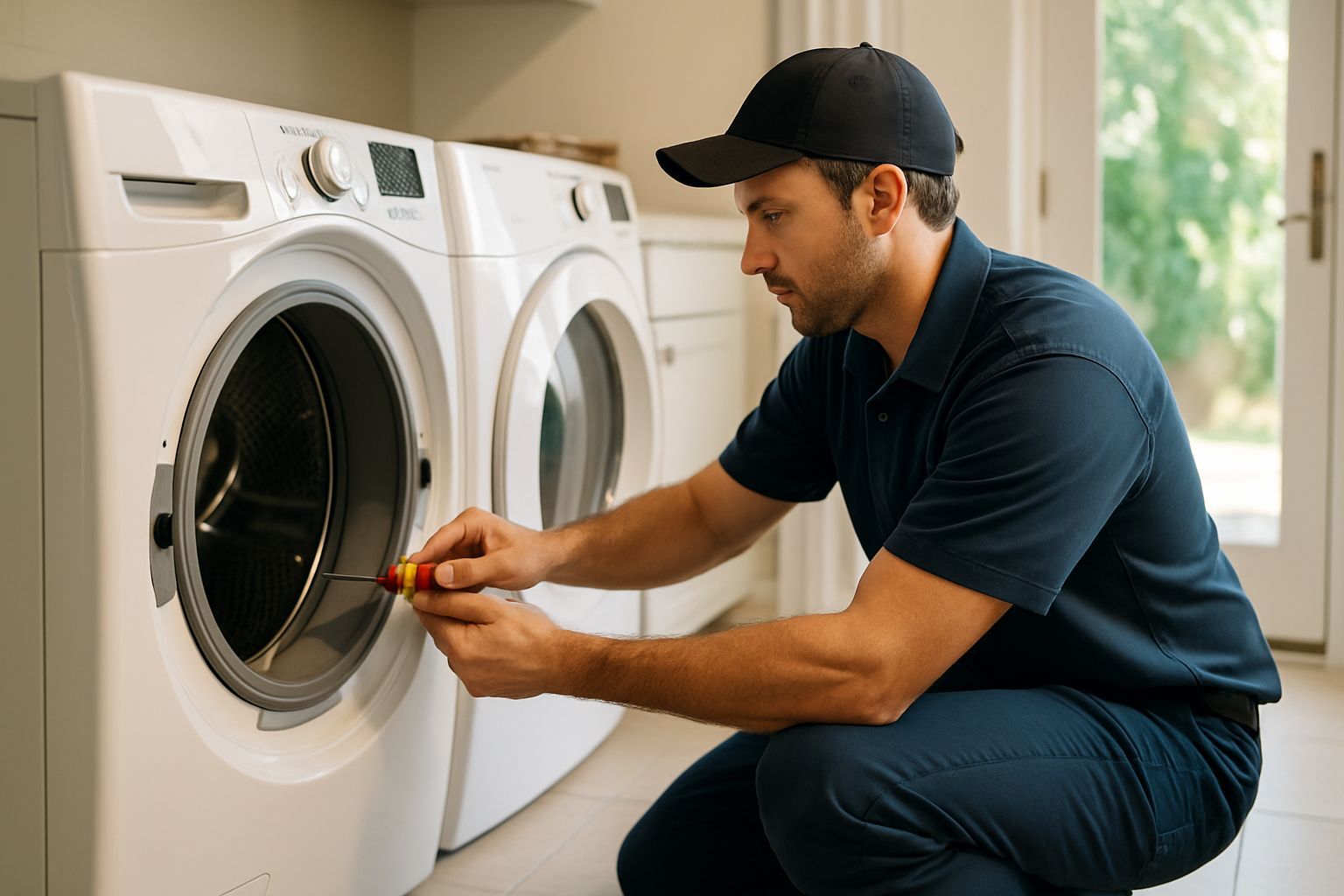
What a Technician Checks When a Dryer Hums but Drum Won't Turn
The motor drives both the drum and blower wheel. To start normally, it must overcome resistance from the drum, belt, support components, and blower. If any of these parts bind, the motor may hum without reaching operating speed.
A technician first separates a mechanical restriction from an electrical starting problem. Similar symptoms can result from a jammed blower wheel, worn drum rollers, seized idler pulley, damaged belt, loose wiring, or a failing motor.
Testing may include supply voltage, the terminal block, power-cord connections, door-switch circuit, harnesses, and timer or electronic-control output. The technician also checks whether the drum and drive system rotate with excessive resistance before identifying the motor as the failed component. This avoids replacing an expensive part when another component is creating the load.
Mechanical Drag Can Prevent the Dryer From Starting
Excessive drag in the drum-support system is a common cause. Depending on the model, the drum may ride on rollers, glides, a rear bearing, or an idler pulley. When a support part wears out, comes apart, or seizes, the motor may lack enough starting torque to move the drum.
A belt problem can also be involved, but a broken belt is not always the entire answer. Belts can slip, shred, come off their proper routing, or bind around another component. A damaged belt may be the result of a locked roller or pulley rather than the original failure.
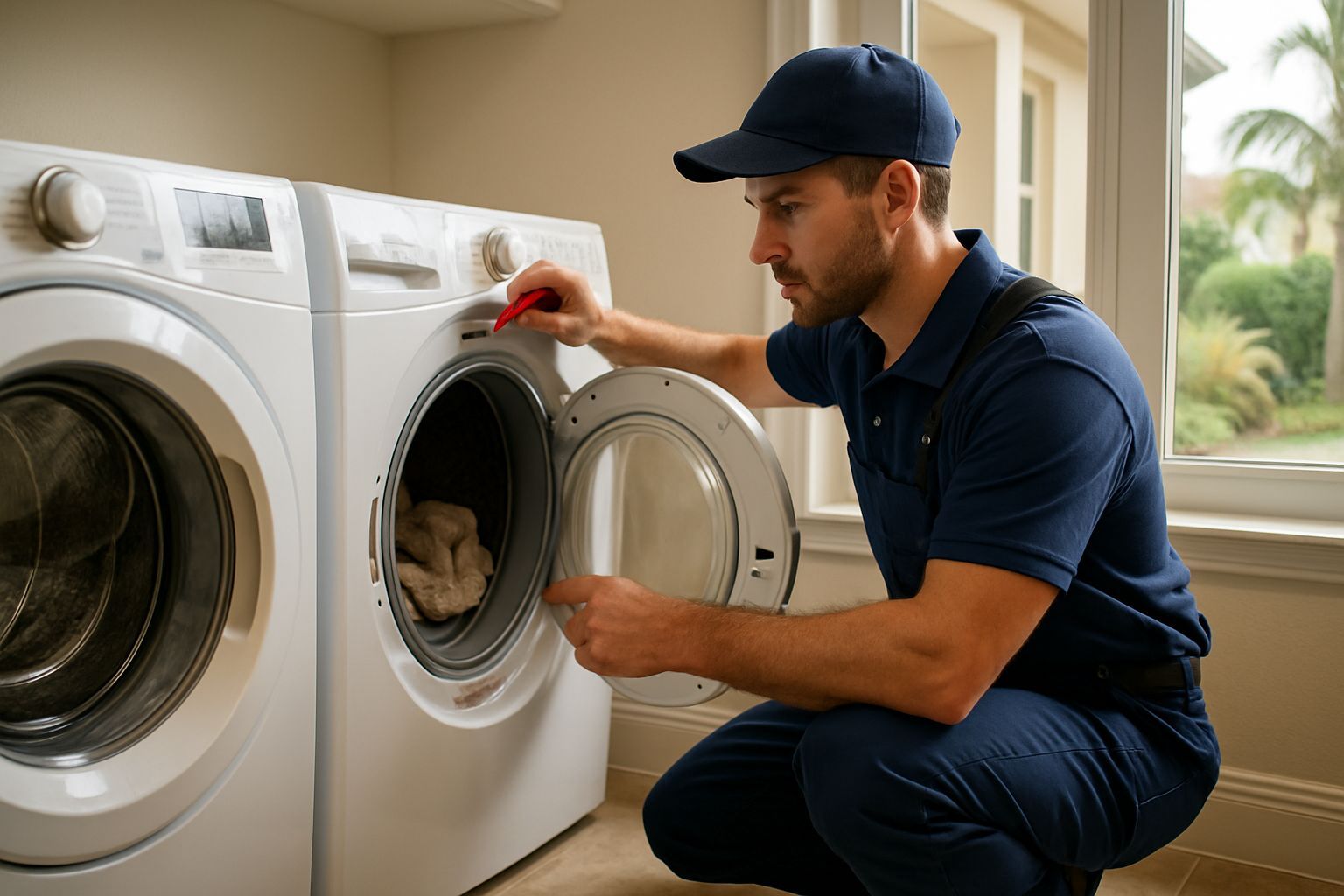
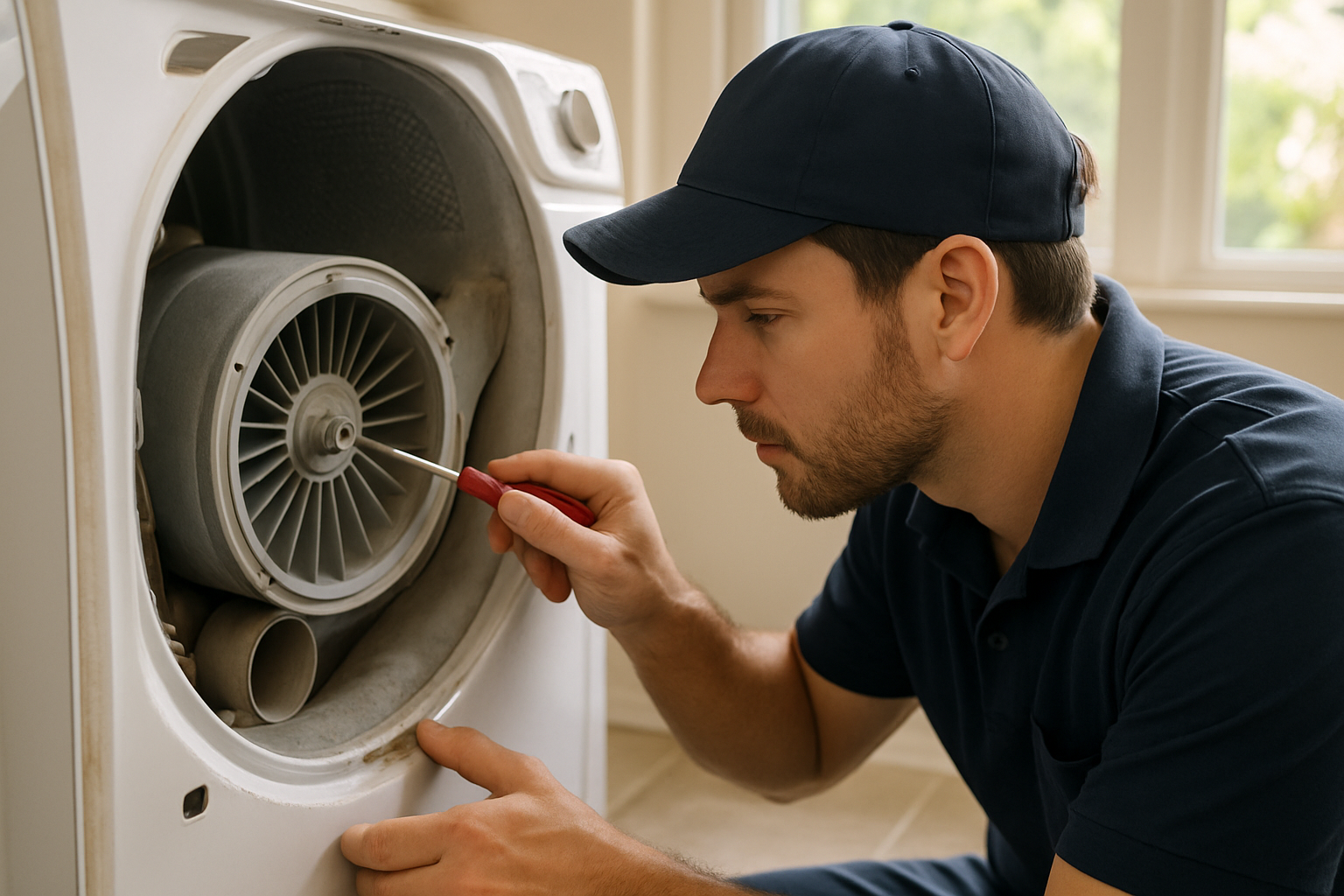
The blower wheel needs attention as well. Small objects, lint accumulation, or blower damage can restrict rotation. Because the blower is attached to the motor, a jam can keep both the blower and drum from moving. Accessing these parts involves sharp sheet metal and concealed electrical connections, making it best left to a technician.
Why Repeated Start Attempts Can Change the Symptom
A stalled motor draws more current because it cannot reach normal speed. Many dryer motors have internal overload protection that opens when the motor becomes too hot. The humming may stop, and the dryer can seem completely dead until the motor cools.
That change does not mean the dryer repaired itself, nor does it automatically prove the motor has failed. The overload may respond to a weak motor, but it can also react when the motor is fighting a jammed blower, tight drum, damaged support part, or poor electrical connection.
Stop using the dryer if you notice hot-rubber odor, an electrical smell, smoke, sparking, a tripped breaker, or repeated shutdowns. Homeowners needing appliance repair in Palm Beach Gardens, FL should arrange diagnosis before attempting another load.
Safe Checks You Can Make Before Calling for Dryer Repair
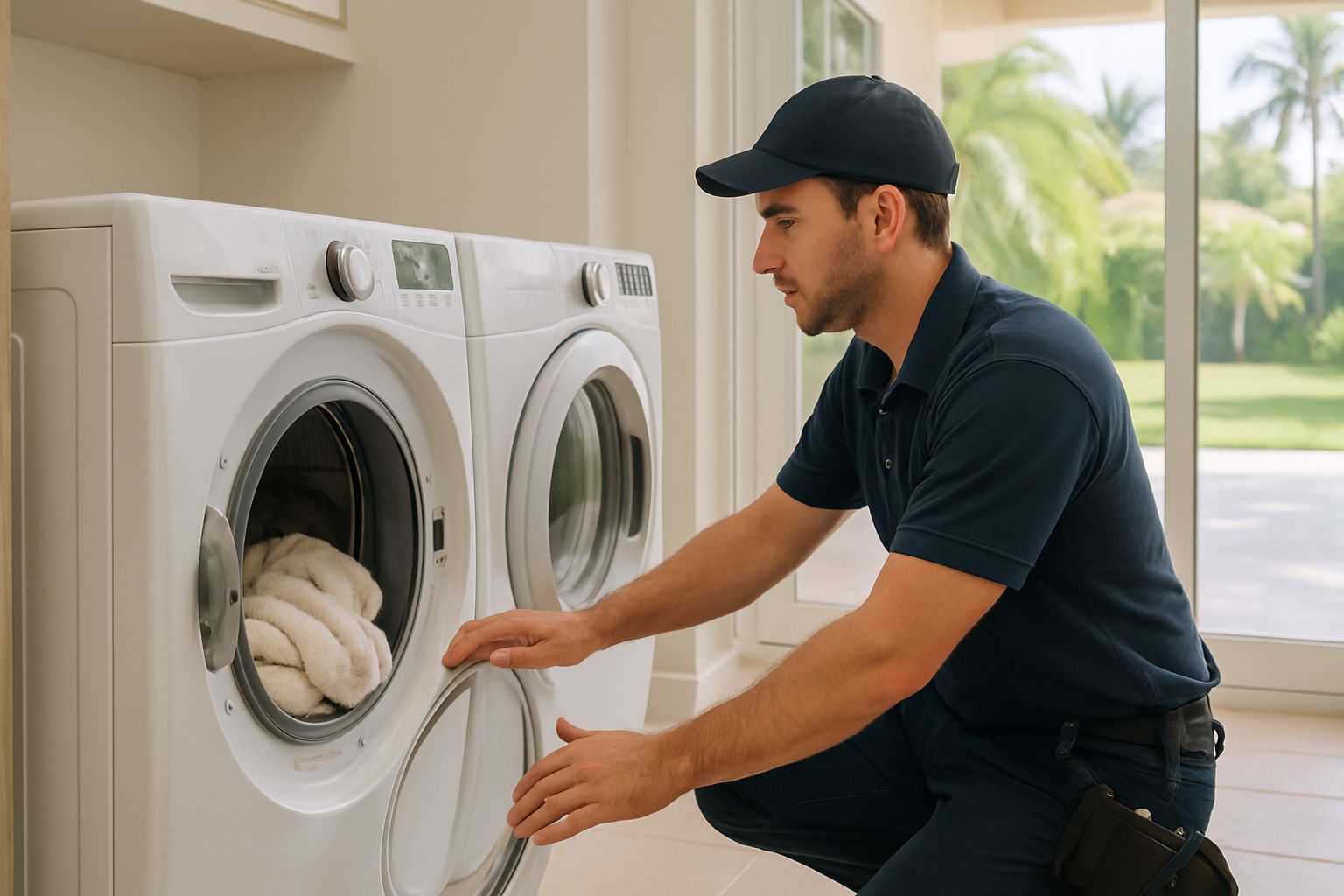
Unplug the dryer first. With the door open, look for a trapped garment, foreign object, or item wedged near the drum. Gently check whether the drum feels unusually difficult to turn by hand, but do not force it. Scraping, heavy resistance, or a drum that will not move normally are useful details for the technician.
Clean the lint screen and inspect the accessible transition vent behind the dryer for crushing, disconnection, or visible lint buildup. A restricted vent usually causes poor drying and overheating rather than an immediate no-tumble condition, but it should still be corrected.
Note whether the hum begins immediately, whether the drum moves briefly, and whether an error code appears. Avoid removing panels or reaching into the blower housing. A professional washer and dryer repair visit can identify mechanical resistance, a motor-circuit fault, or a model-specific control issue.
Frequently Asked Questions About a Dryer That Hums but Won't Turn
Why does my dryer hum but not spin?
The motor may have power but cannot begin rotating. Common causes include a stalled motor, jammed blower, belt issue, seized roller, or electrical start-circuit fault.
Can a broken belt make a dryer hum?
It can, depending on the dryer design. However, a humming dryer should not be assumed to have only a broken belt because other mechanical resistance may exist.
Can a stuck blower wheel stop the dryer?
Yes. The blower connects to the motor, so an obstruction or damaged wheel can prevent rotation, create a hum, and activate the motor’s overload protection.
Is it safe to restart a humming dryer?
No. Repeated attempts can overheat a stalled motor and worsen mechanical or electrical damage. Unplug the dryer if there is burning odor, smoke, sparking, or breaker trips.
Does a humming dryer always need a new motor?
No. The motor may be under excessive load, or the start circuit may be faulty. Diagnosis should confirm the cause before motor replacement.
A dryer that cannot start the drum needs attention before a smaller restriction becomes a larger repair. Record the symptoms, avoid repeated starts, and have the complete drive and starting system evaluated.