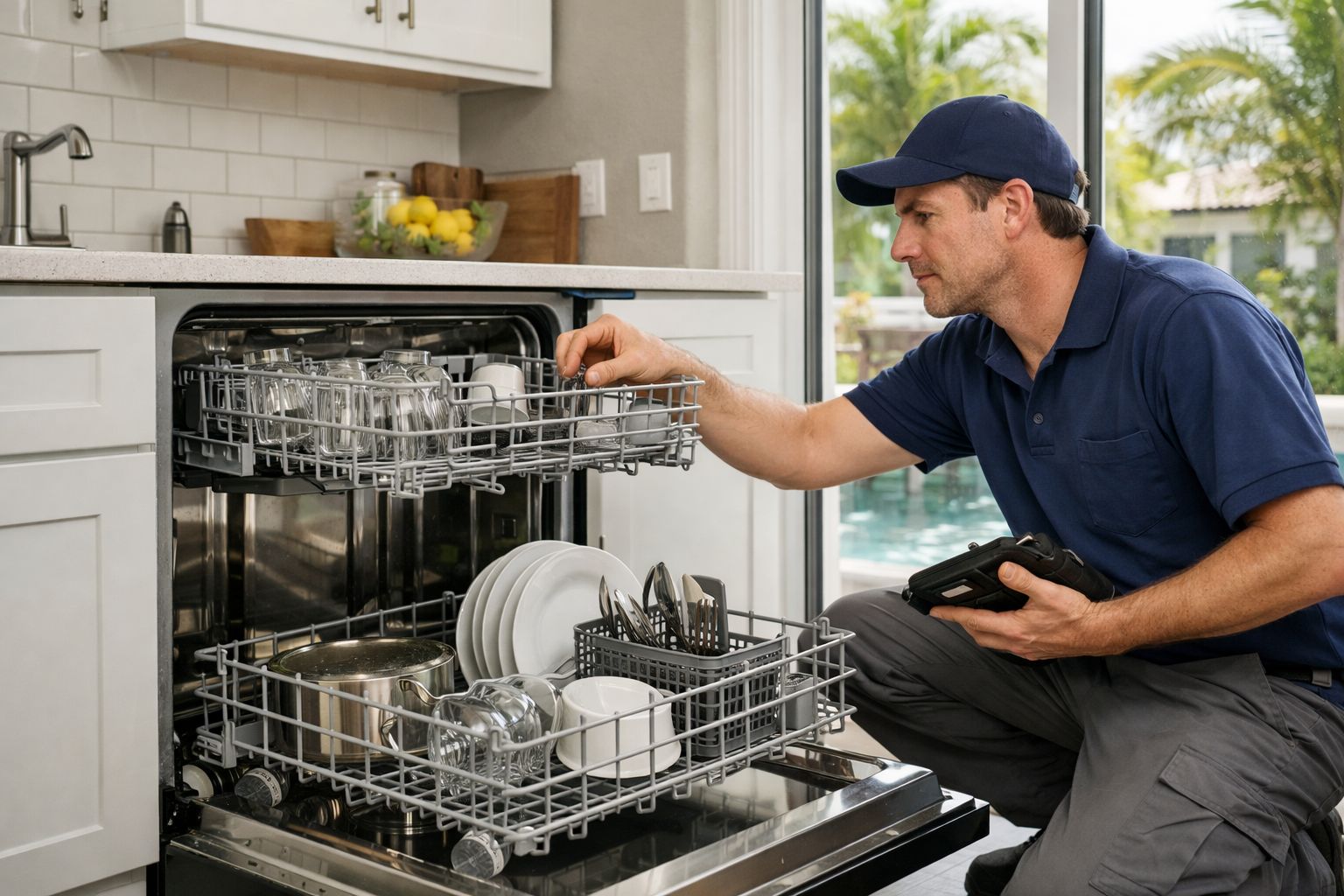

Why Does My Dishwasher Stop Mid-Cycle and Drain? What the Timing and Display Can Tell You
By General Appliance Service
A dishwasher that starts normally, washes for a time, then stops and drains can be frustrating. The drain cycle often sends homeowners toward the wrong part. This sequence usually means the control detected a condition requiring cancellation, protection, or a programmed response. The drain pump may be doing its job while another component, signal, or safety system caused the interruption. Timing, sounds, and display information provide the best clues.
What a Technician Checks When a Dishwasher Stops Mid-Cycle and Drains
The first question is not which part failed, but what happened immediately before draining began. A technician notes whether the machine filled, whether the circulation pump started spraying, how long it ran, and whether water remained afterward. Stopping before wash action begins differs from running for 20 minutes, beeping, and then draining.
Photograph any display code or blinking pattern before resetting the dishwasher. Codes are not universal; the same light pattern can mean different things by brand and model. The complete model number lets General Appliance Service use the correct manufacturer information instead of guessing from one symptom.
Why Draining Does Not Always Mean a Drain Pump Failure
A drain pump problem more often leaves dirty water in the tub. When a dishwasher drains after stopping, the pump may be responding correctly to a fault detected elsewhere.
Possible causes include water reaching a base pan on models with leak protection, an overflow or water-level concern, or a fill or flow-reading problem. Some controls also cancel a cycle if they lose confirmation that the door remains latched. The visible, noisy drain action may occur well after the original problem.
Before arranging service, check the floor, toe-kick area, and under-sink connections for visible water. If water is pooling or could damage cabinets or flooring, stop using the dishwasher and close the accessible water supply. Do not remove panels or reach underneath the appliance.
The Cycle Timing Narrows Down the Failure Area
A dishwasher that stops at nearly the same point every time provides a valuable clue. Consistent timing can point to a step the control expects to complete, including filling, circulating water, heating, or confirming the door switch.
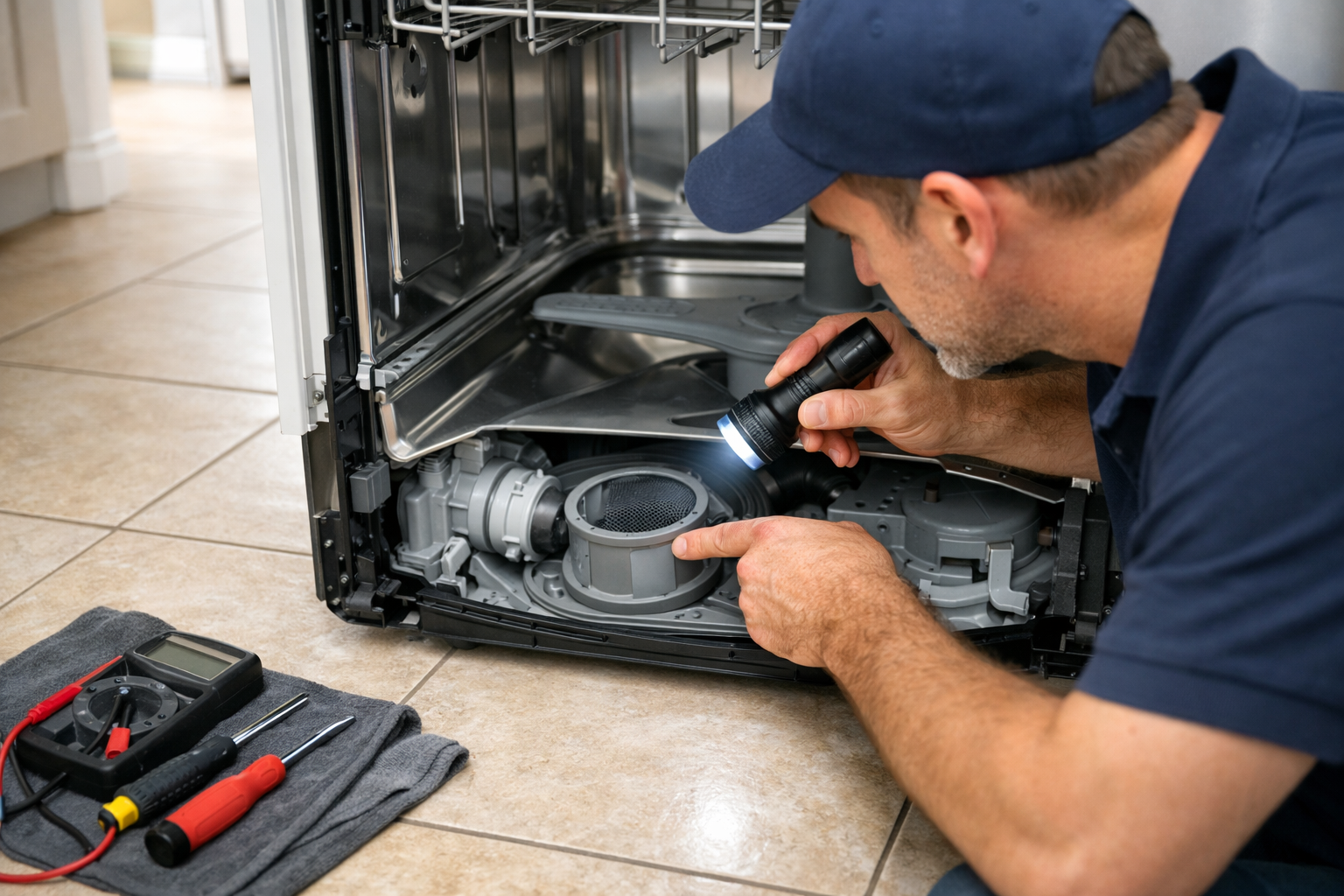
If it fills but never sounds like it is spraying, the circulation system needs attention. A weak wash motor, wiring issue, or control output problem can prevent normal wash action. A technician must verify proper power and motor condition before replacing a pump.
If the dishwasher runs for a while and then cancels, testing may focus on water level, flow sensing, temperature-related operation, intermittent wiring, and control inputs. For persistent problems, dishwasher repair in Boynton Beach can determine whether draining is the cause or the appliance’s response to another fault.
Check the Door and Record the Symptoms
Modern dishwashers must recognize that the door remains closed throughout the cycle. A rack, oversized pan, utensil, or damaged trim can interfere with closure. Wash vibration can also expose a marginal latch, strike, hinge, or wiring connection.
Close the door with racks positioned normally and nothing protruding from the tub. Do not slam, clamp, force, or bypass the latch. If the dishwasher responds when the door is pressed or moved, it needs proper latch and wiring diagnosis rather than a workaround.
Before resetting power, record the selected cycle, approximate elapsed time, unusual sounds, display message, and whether water remained in the tub. A reset may clear a temporary interruption, but repeated resets can erase useful information. Homeowners needing appliance repair in Lake Worth Beach, FL can provide these details to help narrow the diagnosis.
Frequently Asked Questions About a Dishwasher That Stops Mid-Cycle and Drains
Why does my dishwasher stop during washing and drain itself?
It may be responding to a leak, water-level concern, fill or flow issue, door-recognition problem, circulation failure, or control fault. Timing and display messages help separate causes.
Does mid-cycle draining always mean there is a leak?
No. Leak protection is one possibility, but a failed wash motor, latch issue, unexpected sensor reading, or control problem can also cause cancellation and draining.
Why do my dishwasher lights blink after it stops?
Blinking lights may indicate a stored fault, interrupted cycle, or model-specific service code. Photograph the pattern before resetting power, and record the complete model number.
Should I reset the breaker when my dishwasher stops?
A single reset may be reasonable after recording any code and confirming there is no active leak. Do not repeatedly reset and rerun a dishwasher that fails again.
Can a bad wash pump make a dishwasher drain?
Yes. If the circulation pump cannot run or draws excessive current, some dishwashers halt and drain. Testing should also rule out wiring and control-output issues.
A dishwasher that cancels and drains provides a timeline, not a simple parts list. Recording that timeline and using model-specific testing can prevent unnecessary replacement of pumps, boards, or sensors.