
Why Does My Dryer’s Auto Dry Cycle Keep Running After the Clothes Are Dry?
By General Appliance Service
A dryer Auto Dry cycle that keeps running after clothes are dry is frustrating and wasteful. The drum may tumble, heat normally, and dry the load, yet the cycle never seems to move toward completion. This often involves the automatic sensing system, but it does not automatically mean the timer has failed.
A useful comparison is whether Timed Dry finishes normally while Auto Dry runs too long. That distinction helps identify whether the dryer is having trouble interpreting moisture, temperature, airflow, or cycle progress.
What a Technician Checks When Auto Dry Keeps Running
Automatic drying systems vary by model. Many newer dryers use metal moisture-sensor bars inside the drum. Damp clothing touching the bars changes electrical resistance, helping the dryer determine when the load is dry.
Older mechanical models may rely more on heat cycling, thermostats, and timer-circuit logic. Electronic dryers may use temperature sensors, a thermistor, and control-board programming. The outward symptom can be the same even when the diagnostic path is different.
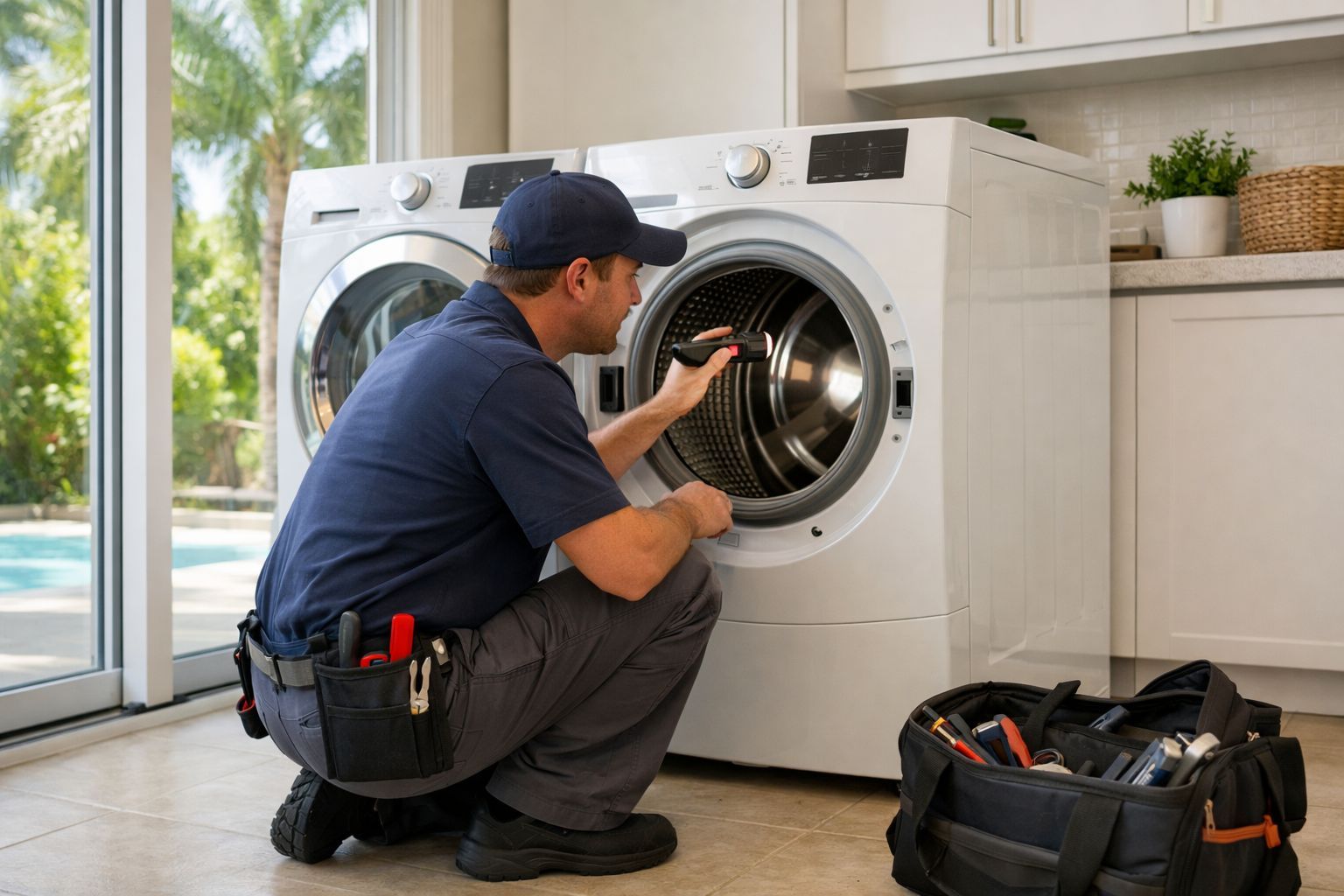
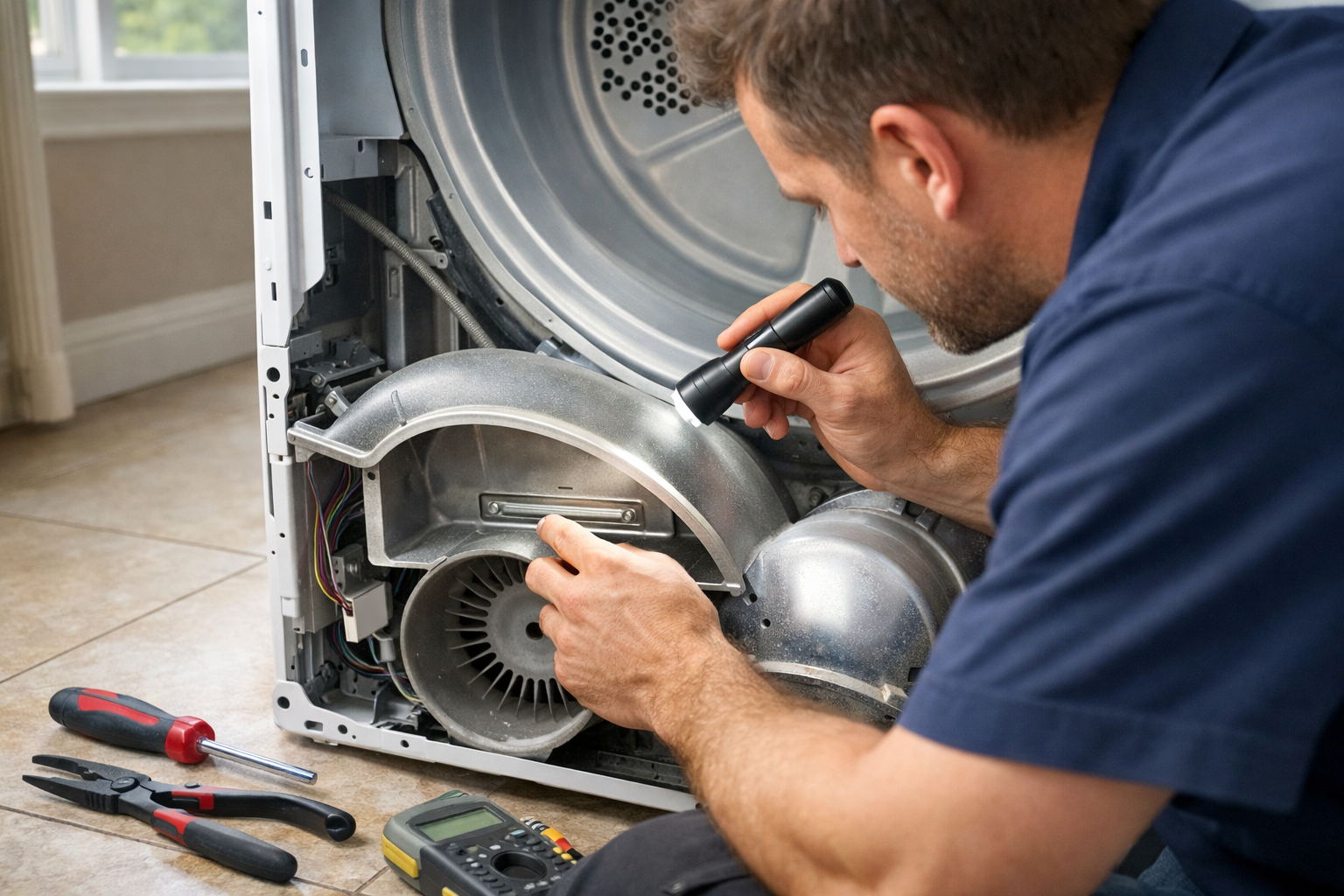
A technician first confirms basic drying performance: normal heat cycling, strong exhaust airflow, and a reasonable drying time. A long Auto Dry cycle can result from dirty sensor bars, damaged wiring, inaccurate temperature input, a timer circuit, or an electronic control receiving incorrect information.
Why Timed Dry Can Work While Auto Dry Does Not
Timed Dry runs for the selected amount of time whether laundry is dry early or remains damp. Auto Dry must make decisions based on moisture readings, temperature behavior, or both.
If Timed Dry works but Auto Dry continues too long, the motor, heater, and basic timer operation may still be functional. The automatic control path may simply not be seeing the condition required to end the cycle.
Load size also matters. A few lightweight items may not contact moisture bars consistently, which can make automatic sensing unreliable or cause a cycle to end early. Mixed loads can run longer when heavier fabrics remain damp after lighter items are dry.
If the dryer ends too early while clothes are still wet, see our guide to dryer Sensor Dry ends early but clothes are still damp. Early ending and failure to end can involve similar parts, but they are different symptoms.
Safe Checks Before Requesting Dryer Service
Test the dryer with one normal-sized load of similar fabrics. Avoid using one shirt, a few socks, or a mixed load of towels and lightweight items. Note how long Auto Dry runs and whether the clothing is truly dry when the cycle continues.
Clean the lint screen before each test. While the dryer runs, check outdoors to confirm that the exterior exhaust hood opens and air is leaving the vent. Restricted airflow can affect drying temperatures and automatic-cycle behavior, although vent cleaning alone does not prove it is the only cause.
Do not remove panels, disconnect concealed ductwork, or attempt electrical tests. Record the selected cycle, fuel type, error codes, and whether heat appears to cycle normally.
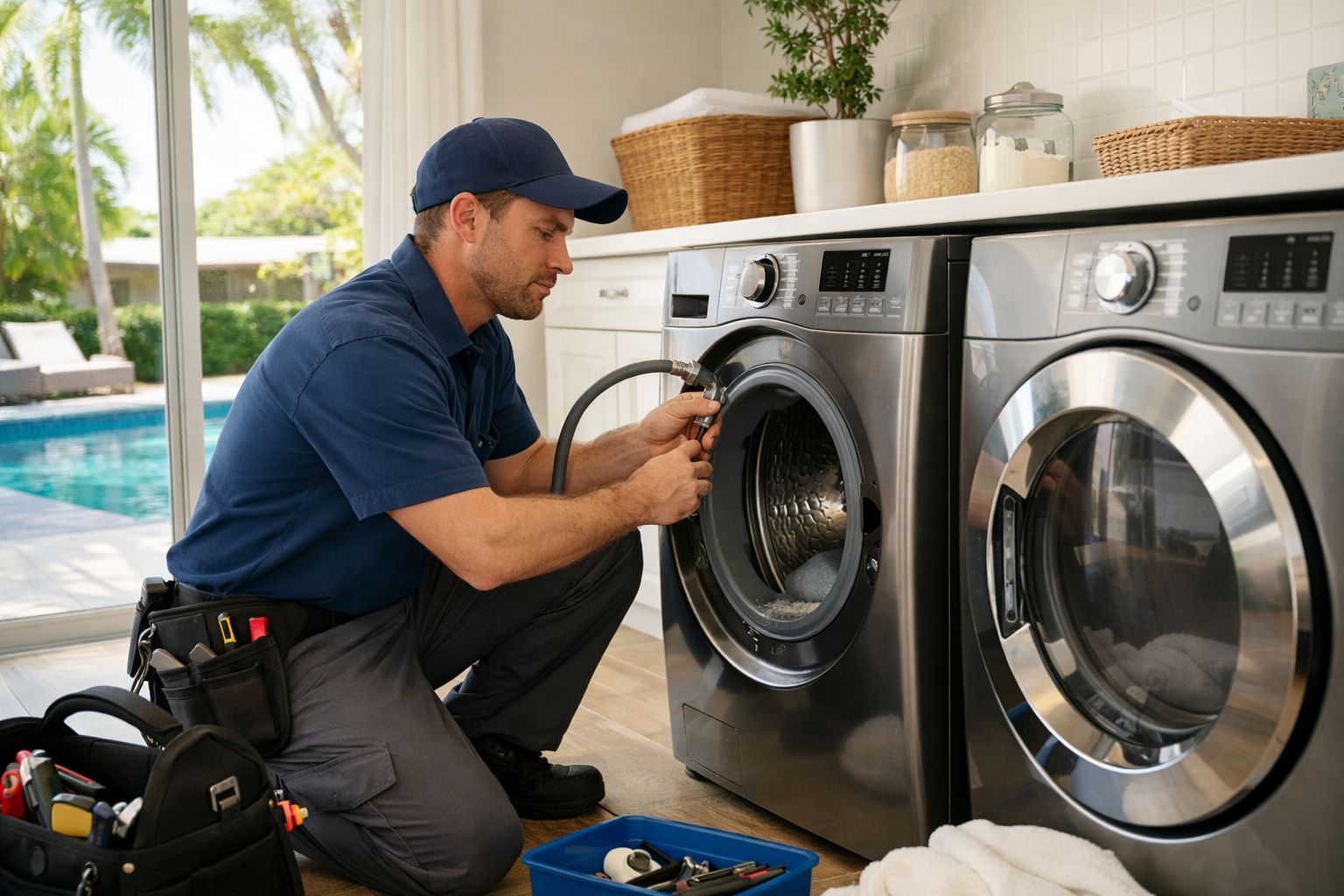
For washer and dryer repair in Boynton Beach, General Appliance Service can evaluate airflow, heating, sensors, wiring, and controls.
When a Long Automatic Cycle Needs Professional Diagnosis
A dryer that keeps running after clothes are dry wastes energy and adds unnecessary wear to fabrics. Changing settings repeatedly may not identify an intermittent sensor or control issue.
During diagnosis, a technician may inspect moisture bars and wiring, test temperature-feedback components, verify airflow, and determine whether the dryer uses mechanical timer logic or electronic controls. Model-specific wiring information matters because similar symptoms can follow different control paths.
Stop using the dryer if you notice smoke, a burning or scorching odor, excessive cabinet heat, a damaged cord or plug, repeated breaker trips, or a suspected gas odor. These symptoms need prompt attention.
For local help, appliance repair in Greenacres, FL can determine whether airflow, sensing, temperature control, or an electrical fault is affecting Auto Dry.
Frequently Asked Questions About a Dryer Auto Dry Cycle Not Ending
Why does my dryer keep running after my clothes are dry?
The dryer may not be receiving the dry-load signal it needs. Possible causes include sensor bars, temperature inputs, airflow, wiring, timer circuits, or electronic controls.
Why does Timed Dry work but Auto Dry never finishes?
Timed Dry follows a clock, while Auto Dry relies on sensor or temperature information. The issue may be limited to the automatic sensing or control path.
Does a dryer stuck on Auto Dry need a new timer?
Not necessarily. Some timers advance only after receiving the proper signal from another component. Check airflow, heat cycling, sensors, and wiring before replacing one.
Can a blocked dryer vent make Auto Dry run too long?
Yes. Restricted airflow changes heat and moisture removal, affecting cycle behavior. However, sensor, thermostat, wiring, and control problems can cause the same symptom.
Can dirty moisture-sensor bars prevent the cycle from ending?
Yes. Residue can interfere with readings on dryers using sensor bars. Clean accessible bars, but seek diagnosis if the dryer continues running excessively afterward.
A proper diagnosis avoids replacing parts based on guesswork and helps restore normal automatic drying performance safely.