
Why Is There Ice Under My Freezer Drawer? What the Location and Texture Can Mean
By General Appliance Service
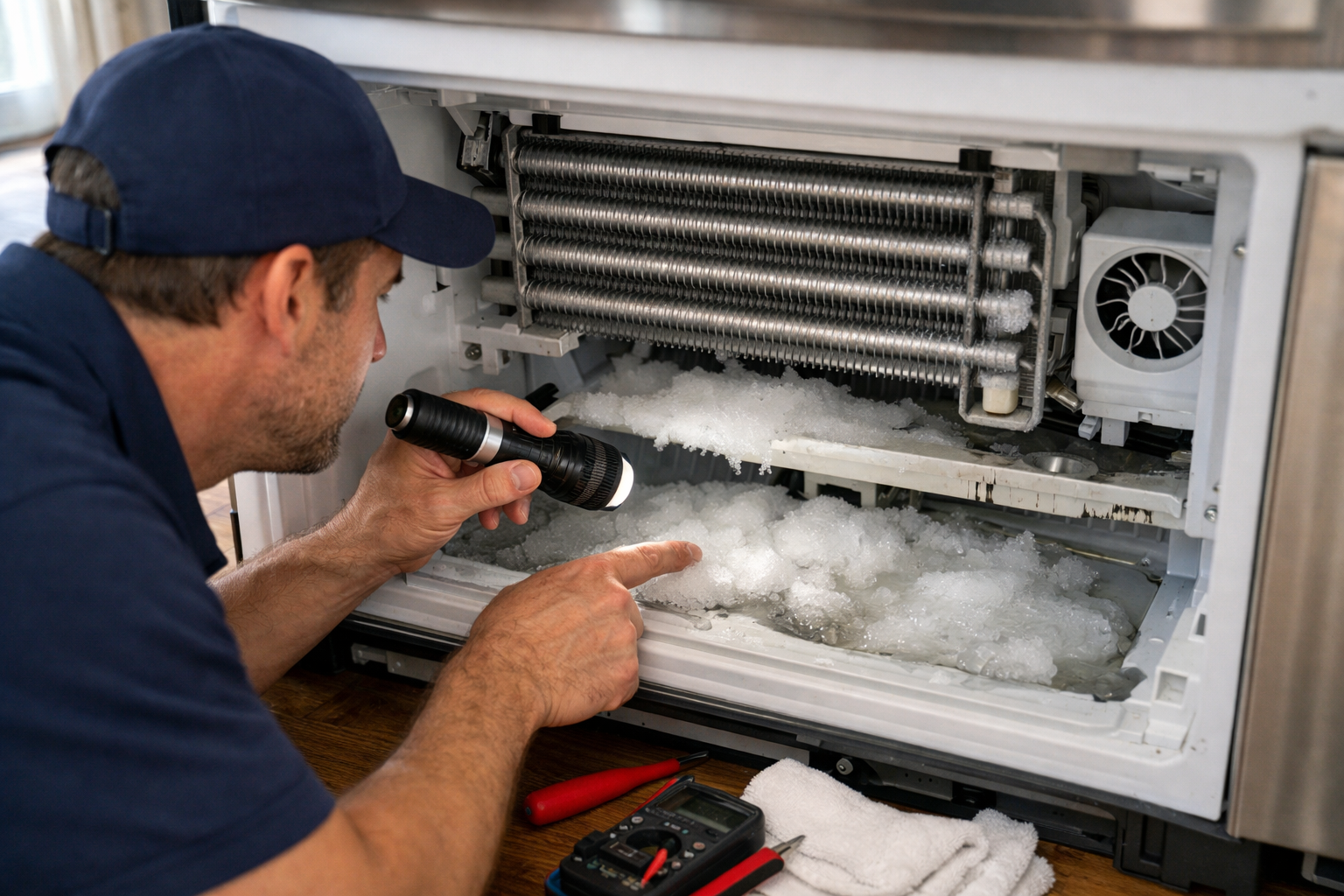
A smooth layer of ice under freezer drawer compartments is different from light, snowy frost on walls or food packages. Solid ice means liquid water reached the freezer floor before freezing. The freezer may still cool normally, but the drawer can become difficult to move, stop sealing properly, or crack if forced over the buildup. Where the ice starts and how quickly it returns offer useful diagnostic clues.
What a Technician Checks When Ice Forms Under a Freezer Drawer
First, a technician distinguishes frost from pooled-and-frozen water. Frost is usually white, dry-looking, and feathery. It often indicates humid room air entering through a door gap, damaged gasket, or drawer blocked by food packages.
A clear, thick, smooth sheet usually points to water collecting on the freezer floor. During automatic defrost, melted water should flow from the evaporator area through a drain trough and tube. If that path is frozen, restricted, or affected by a model-specific drain component, water can overflow into the bottom of the compartment and freeze beneath the drawer.
That is a common cause, not an automatic diagnosis. The technician also traces whether water begins at the rear drain area, below the ice maker, or along the front edge of the opening.
The Ice Location Can Point Toward the Water Source
Ice beginning at the rear of the freezer floor often warrants inspection of the defrost drain path. Water that cannot drain during defrost may run forward and freeze in repeated layers. Melting the visible sheet can restore drawer movement, but it does not correct the reason water backed up.
Ice concentrated below or near an ice maker may have another source. A fill tube can drip, an ice-maker mold can overfill, or a nearby water connection can leak slowly. This ice may return after ice production or dispenser use rather than after a defrost cycle.
At the front edge, check whether the drawer is fully seated and whether a package interferes with closing. For a comparison of freezer frost versus a solid ice problem, focus on texture and location instead of assuming every ice complaint has the same cause.
Safe Checks Before You Arrange Refrigerator Service
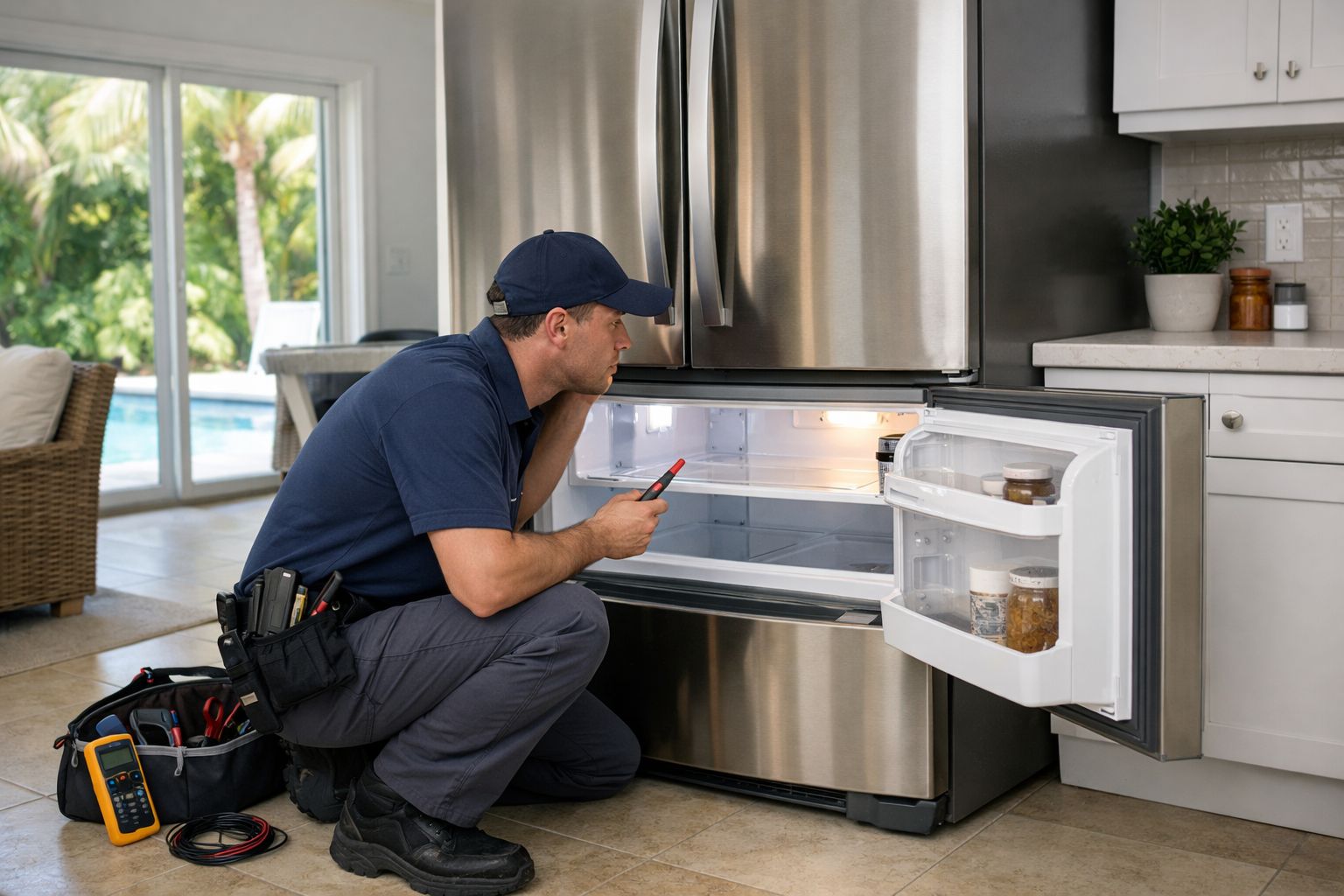
Do not force a drawer open or closed over ice. Doing so can damage rails, plastic bins, or door alignment. Avoid chiseling with knives or screwdrivers; a slip can puncture the liner, damage concealed wiring, or strike tubing.
Before scheduling service, make a few safe observations:
- Check that bins, drawers, and food packages are fully seated.
- Inspect visible gasket surfaces for crumbs, tears, or obvious gaps.
- Photograph the ice before melting it and note where it begins.
- Notice whether it returns after ice-maker use, water dispensing, or normal operation.
- Record the full model number and whether the refrigerator has an ice maker or dispenser.
If meltwater reaches the kitchen floor, use towels to contain it. Water near an outlet, power cord, or electronic controls calls for prompt service.
Why Recurring Ice Needs a Professional Diagnosis
A full thaw can make the freezer usable again, but recurring ice means the water source or drainage issue still needs to be identified. Possible causes include a restricted drain, ice-maker fill problem, poor door seal, or a defrost-system concern affecting how water moves around the evaporator.
Technicians inspect the drain route, evaporator ice pattern, drawer alignment, gasket contact, and ice-maker fill behavior before identifying a failed part. Replacing a heater, sensor, control board, or drain component without confirming the involved system can waste time and money.
Homeowners needing refrigerator repair in Boynton Beach should mention where the ice begins and how soon it returns. For appliance repair in Delray Beach, report any water on the floor or trouble closing the drawer.
Frequently Asked Questions About Ice Under a Freezer Drawer
Why is there a solid sheet of ice under my freezer drawer?
A solid sheet forms when liquid water reaches the freezer floor and freezes. Backed-up defrost water, an ice-maker leak, or a door-closing issue may contribute.
Is freezer-floor ice the same as frost on freezer walls?
Not usually. Frost is generally white and crystalline from humid air. A smooth or clear floor layer suggests water pooled first, then froze.
Can a clogged defrost drain cause ice under the drawer?
Yes. If defrost water cannot follow its intended drain route, it can overflow into the freezer bottom and freeze beneath the drawer.
Could my ice maker be causing the ice?
It can. A leaking fill tube, overfilling ice maker, or connection drip may send water downward. Buildup near the ice maker is a useful clue.
Should I keep defrosting if the ice returns?
Defrosting may temporarily restore drawer movement, but repeated ice means the cause remains. Photograph the pattern, protect the floor, and arrange diagnosis.
Addressing recurring freezer-floor ice early can help prevent damaged drawer components, poor door sealing, and water reaching the kitchen floor.