
Washer Leaves Clothes Soaking Wet After Spin Cycle? Why an Empty Tub Does Not Rule Out a Problem
By General Appliance Service
If your washer leaves clothes soaking wet after spin cycle, check whether water remains in the tub. A tub full of water and an empty tub full of dripping laundry point to different problems. An empty tub suggests the washer drained, but it does not prove the basket reached the high spin speed needed to remove moisture from fabric.
A completed cycle can still include a reduced or aborted final spin. An extra drain-and-spin cycle may help, but it does not identify the cause.
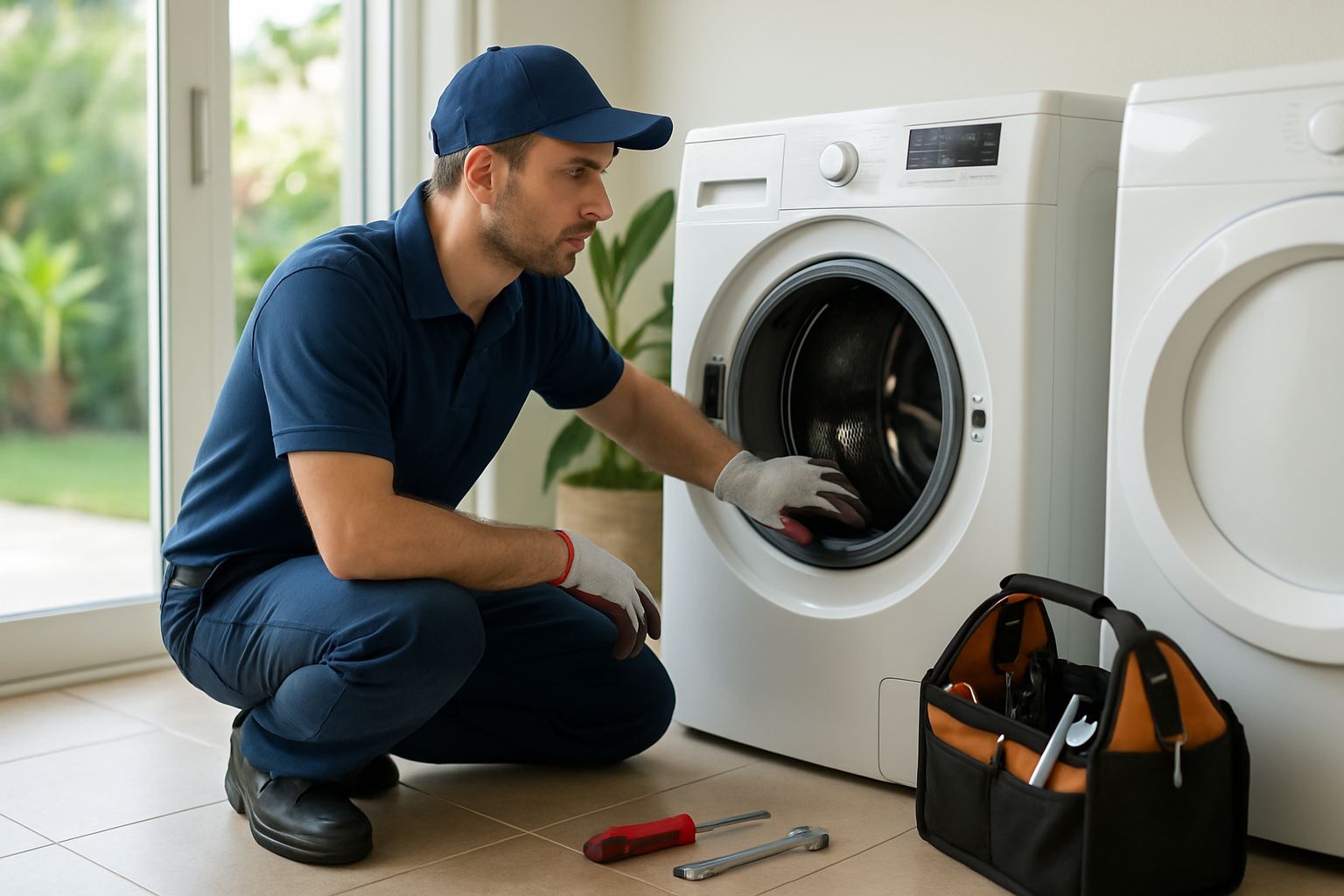
What a Technician Checks When Laundry Is Wet but the Tub Is Empty
The key question is not simply, “Did the washer drain?” It is whether the basket accelerated and stayed at proper spin speed with the load inside.
A washer can pump out water, begin spinning, then slow down or skip high speed if it detects an unstable load, lid or door-lock problem, excess vibration, or lost motor-speed feedback. Some models repeatedly redistribute laundry. Others finish at a lower speed to prevent the washer from moving or damaging itself.
Technicians also verify drain timing. A weak or intermittent pump may empty the tub but drain too slowly for the expected spin sequence. A restricted hose, improper drain installation, or siphoning condition can also affect operation. One wet load alone does not confirm a failed pump, motor, clutch, bearing, actuator, or control board.
Drain Trouble and Spin Trouble Leave Different Clues
Standing water after a cycle makes drainage a leading suspect. You may hear the pump hum, notice slow draining, or find that the washer stops before final spin. With power disconnected, check whether the accessible drain hose is sharply kinked or crushed.
An empty tub with unusually wet clothes shifts attention to spin performance. During the final portion of a normal load, does the basket reach a strong high-speed spin? Or does it rock, pause, repeatedly rebalance, and finish slowly? Loud banging, grinding, rubbing, or repeated balance attempts are useful clues.
A washer may spin while empty but struggle with wet towels, jeans, or bedding. That can indicate an imbalance, weak suspension, mechanical drag, or a drive problem under load. If you notice a hot rubber smell or rubbing during spin, see why a washer smells like burning rubber during spin.
Safe Checks Before Calling for Washer Repair
Test one ordinary, balanced load after the washer has cooled down. Avoid a single bath mat, heavy towel, or comforter, which can bunch to one side and make even a healthy washer reduce spin speed.
Make a few notes:
- Is there standing water in the tub?
- Does the basket reach fast spin or repeatedly slow down?
- Does an extra drain-and-spin cycle improve the result?
- Are there error codes, unusual vibration, clicking, grinding, or odors?
- Does it happen with every load or only bulky items?
With the washer unplugged, confirm the machine is level and stable rather than rocking on the floor. Check the owner’s manual using the full model number for error-code meanings and approved reset instructions.
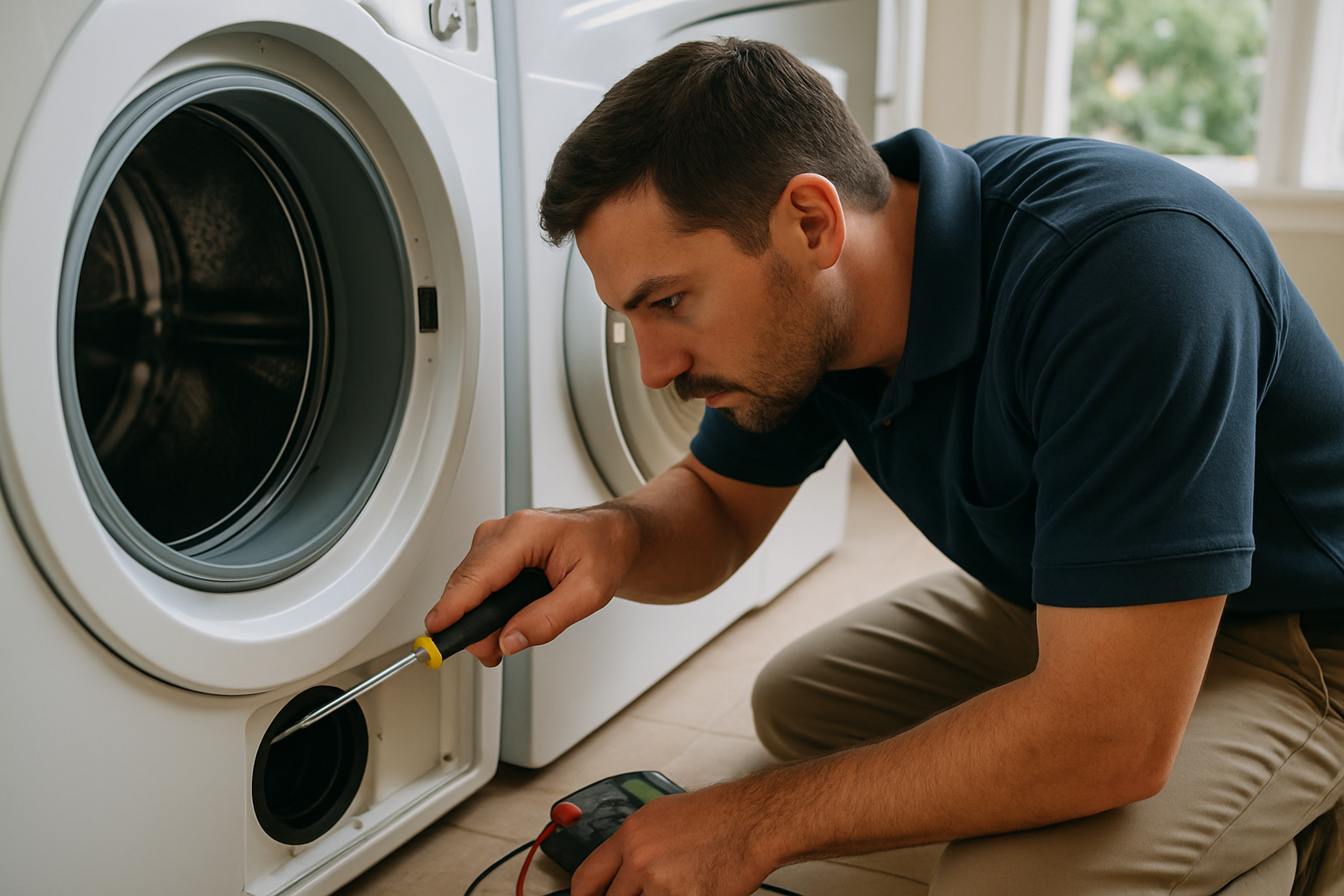
Do not bypass a lid switch or door lock. Do not remove panels or perform live-voltage testing. Stop using the washer if it leaks, smokes, smells electrical, or trips a breaker.
Why an Extra Spin Cycle Can Help Without Solving the Cause
An extra drain-and-spin cycle can redistribute laundry that was poorly balanced during the first attempt. It can also give an intermittent pump, lock-feedback circuit, or shifting component another chance to operate. That is useful information, not a diagnosis.
Top-load washers may use lid-lock signals and model-specific shifting components before high spin. Front-load washers rely heavily on door-lock confirmation, suspension behavior, load sensing, and motor-control feedback. Error-code meanings, pump access, and drive components vary by brand and model.
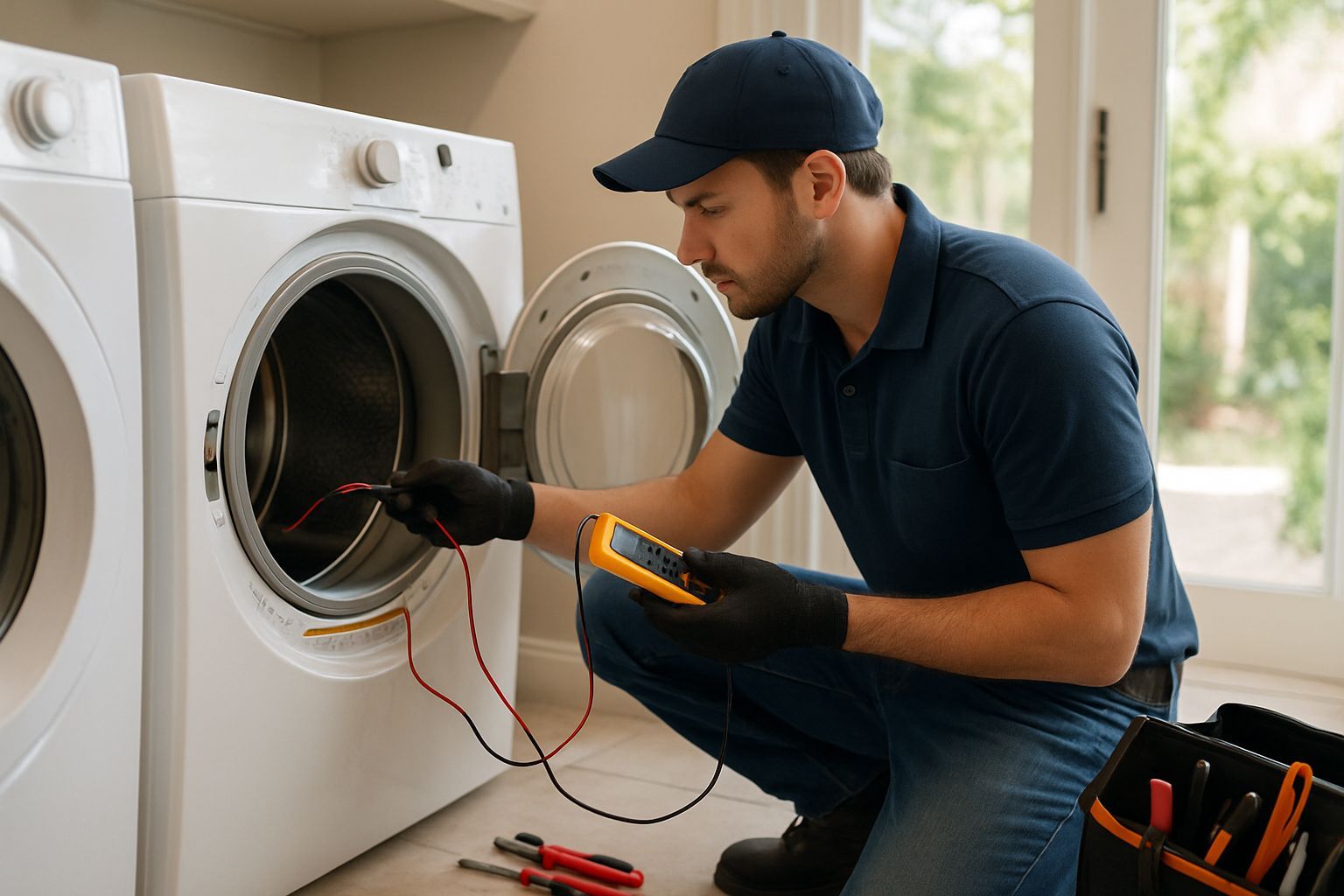
When wet laundry becomes a pattern, washer and dryer repair services can determine whether the issue is hydraulic, mechanical, electrical, or related to a control safety decision. A technician may check fault history, lock status, motor-speed feedback, suspension, basket play, pump performance, wiring, and drive components.
For homeowners needing appliance repair in Flagler Beach, recording the model number, load type, selected cycle, noises, and error codes can help identify an intermittent spin complaint.
Frequently Asked Questions About a Washer Leaving Clothes Soaking Wet After Spin Cycle
Why are clothes soaking wet when no water is left in the washer?
The washer may have drained but failed to reach or maintain full spin speed because of balance, lock, suspension, drive, or speed-sensing issues.
Why does an extra drain-and-spin cycle sometimes help?
It may redistribute an uneven load or give the washer another opportunity to complete its spin sequence. Intermittent improvement is not a permanent repair.
Can an unbalanced load prevent high spin?
Yes. Modern washers monitor movement and vibration. A heavy item on one side can make the machine pause, redistribute laundry, or reduce spin speed.
Does wet laundry mean the drain pump is bad?
No. A pump issue is possible when draining is slow or water remains, but an empty tub also requires checking spin, balance, locks, and drive parts.
Should I keep using a washer that leaves clothes unusually wet?
Avoid repeated use, especially with grinding, severe vibration, burning smells, leaks, or electrical odors. Continued operation can turn a smaller repair into a larger one.
A washer should leave laundry damp, not dripping. Confirming what occurred during final spin is more useful than assuming an empty tub means every system worked properly.