
Why Are My Refrigerator Ice Cubes Sticking Together? Melting, Overfill, and Water-Leak Clues
By General Appliance Service
Ice that comes out as one frozen block is more than an inconvenience. Refrigerator ice cubes sticking together may mean cubes softened and refroze, but fresh water entering the bin can create the same result. The shape of the ice, location of moisture, and timing of the problem help separate a freezer-temperature concern from an ice-maker water-delivery issue.
Before discarding the ice, take a photo. It can be useful if the pattern returns or a technician needs to evaluate the problem.
What a Technician Checks When Ice Cubes Stick Together
A technician first determines whether ice melted after it was made or received too much water during or after filling. Both problems can leave a solid mass in the bin, but they have different causes.
Freezer temperature, airflow, and door sealing are checked first. Warm air can soften stored cubes, which later refreeze and fuse together. A blocked air passage, damaged gasket, poor door closure, or defrost-related airflow problem can contribute.
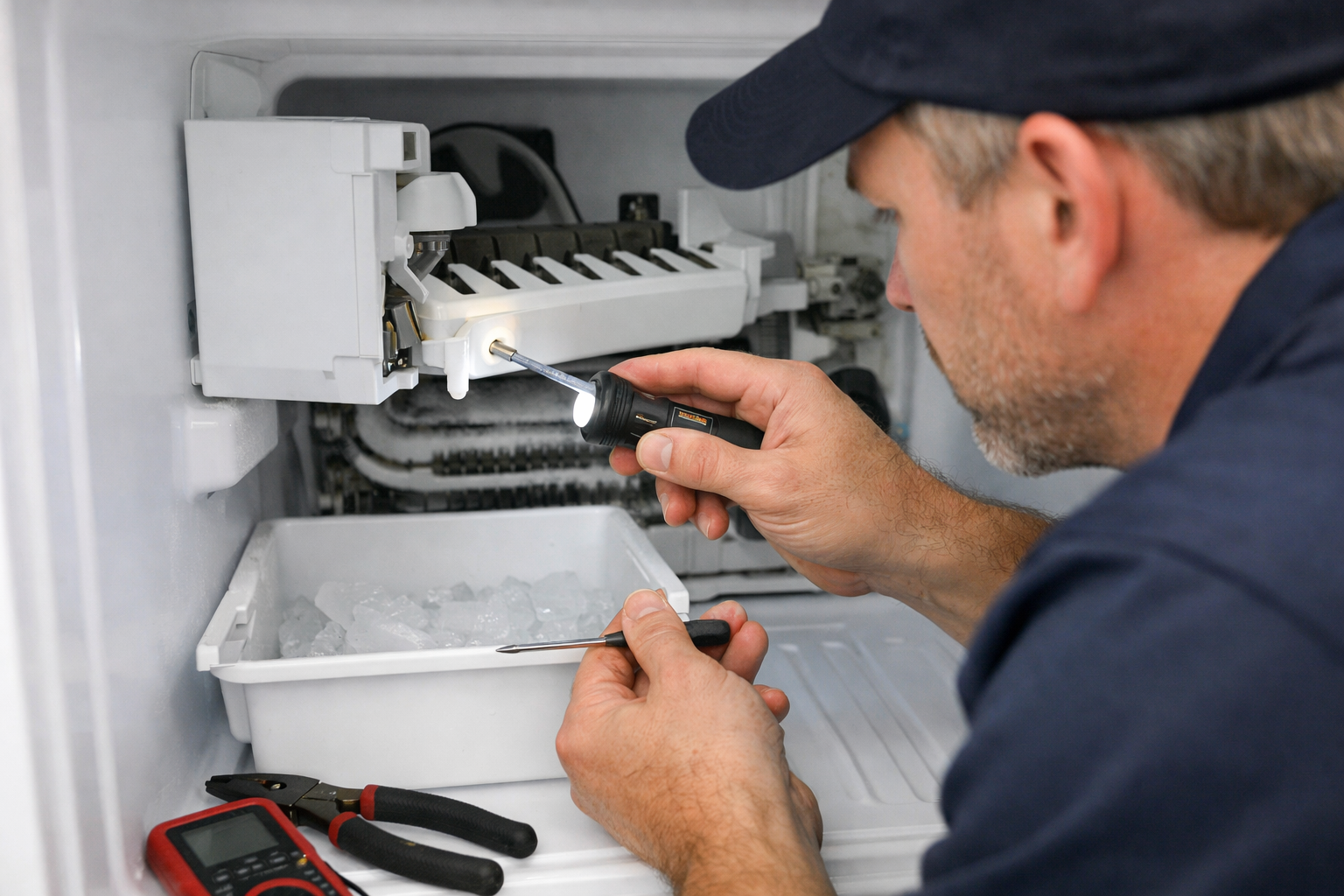
The ice maker is then inspected for fill-tube position, fill volume, harvest operation, and model-specific controls. A water inlet valve that does not close fully may seep after the normal fill cycle, allowing water to drip into the mold or directly into the bin.
The Appearance of the Ice Gives Useful Clues
Normally shaped cubes that are frosty, wet, and fused together often suggest melting and refreezing. Other signs may include soft frozen food, excess frost, or moisture near the freezer door.
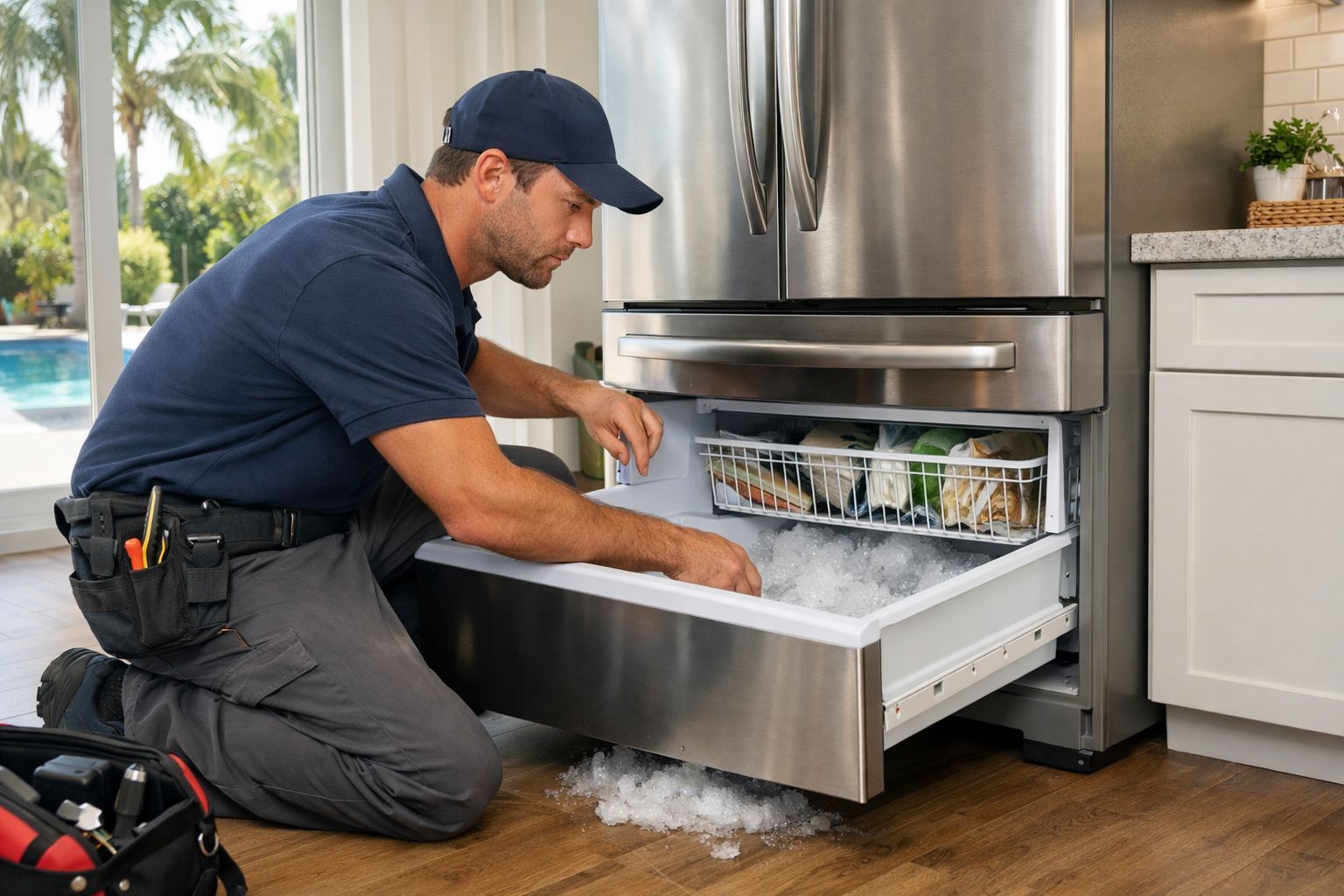
Oversized cubes, connected rows of cubes, ice sheets, or icicles around the ice maker point more strongly to excess water. Water beneath the ice maker may indicate overfilling, a dripping fill tube, or water entering the ice area from another path.
This differs from small or hollow refrigerator ice cubes, which commonly indicate that the mold did not receive enough water. Cube shape helps narrow the diagnosis, but it does not confirm one failed part by itself.
Safe Checks Before Calling for Ice Maker Service
Check whether food packages are keeping the freezer door or drawer from closing completely. Inspect the accessible gasket for crumbs, sticky residue, tears, or obvious gaps. Do not stretch or pull the gasket in an attempt to reshape it.
Confirm the temperature setting recommended in the owner’s manual and note whether other frozen items seem softer than usual. The displayed setting is not necessarily the actual freezer temperature, but it is a sensible starting point.
Watch the timing of the moisture. Does water appear after using the dispenser, after an ice-maker harvest and refill, or even when neither feature is used? Also confirm that the correct water filter is fully seated and check the visible supply line for kinks. Avoid removing ice-maker covers, changing fill adjustments, probing lines, or using heat on concealed tubing.
When Professional Diagnosis Makes Sense
A seeping inlet valve is possible, but clumped ice does not automatically mean the valve has failed. Poor airflow or a door that leaks warm, humid air can partially melt ice without adding water to the bin.
However, a repeatedly wet bin, clear icicles, or unusually large connected cubes deserves prompt attention. A technician can verify whether the inlet valve shuts off fully and whether the fill tube directs water into the mold rather than down the side of the ice maker.
General Appliance Service can evaluate cooling performance, water delivery, and controls through refrigerator and ice maker repair. For homeowners needing appliance repair in Coral Springs, FL, photos and notes about when water appears can make the visit more efficient.
Frequently Asked Questions About Refrigerator Ice Cubes Sticking Together
Why are my refrigerator ice cubes freezing into one big block?
The usual causes are partial melting followed by refreezing or unwanted water entering the bin. Frost suggests warming; fresh water or icicles suggests an ice-maker water-path issue.
Does clumping mean my freezer is too warm?
Not always. A warm freezer can soften and fuse cubes, but a dripping fill tube or inlet valve can also make the bin wet and freeze cubes together.
Can a leaking water inlet valve make cubes stick together?
Yes. A valve that seeps after filling can drip water into the mold or bin. That water freezes around existing cubes and creates connected chunks.
Why are my ice cubes unusually large or connected in rows?
That pattern often indicates overfill. Water may be entering too long, dripping after filling, or missing the mold because of a fill-tube problem.
Should I replace the ice maker if the bin is wet?
Not based on that symptom alone. The ice maker may work normally while the valve, fill tube, freezer airflow, or another water path causes moisture.
Repeated cleanup will not resolve the underlying cause. Addressing temperature, airflow, or unwanted water promptly can help prevent larger ice blocks, leaks, and unnecessary part replacement.