
Gas Oven Burner Goes Out During Preheat: What the Pattern Can Mean
By General Appliance Service
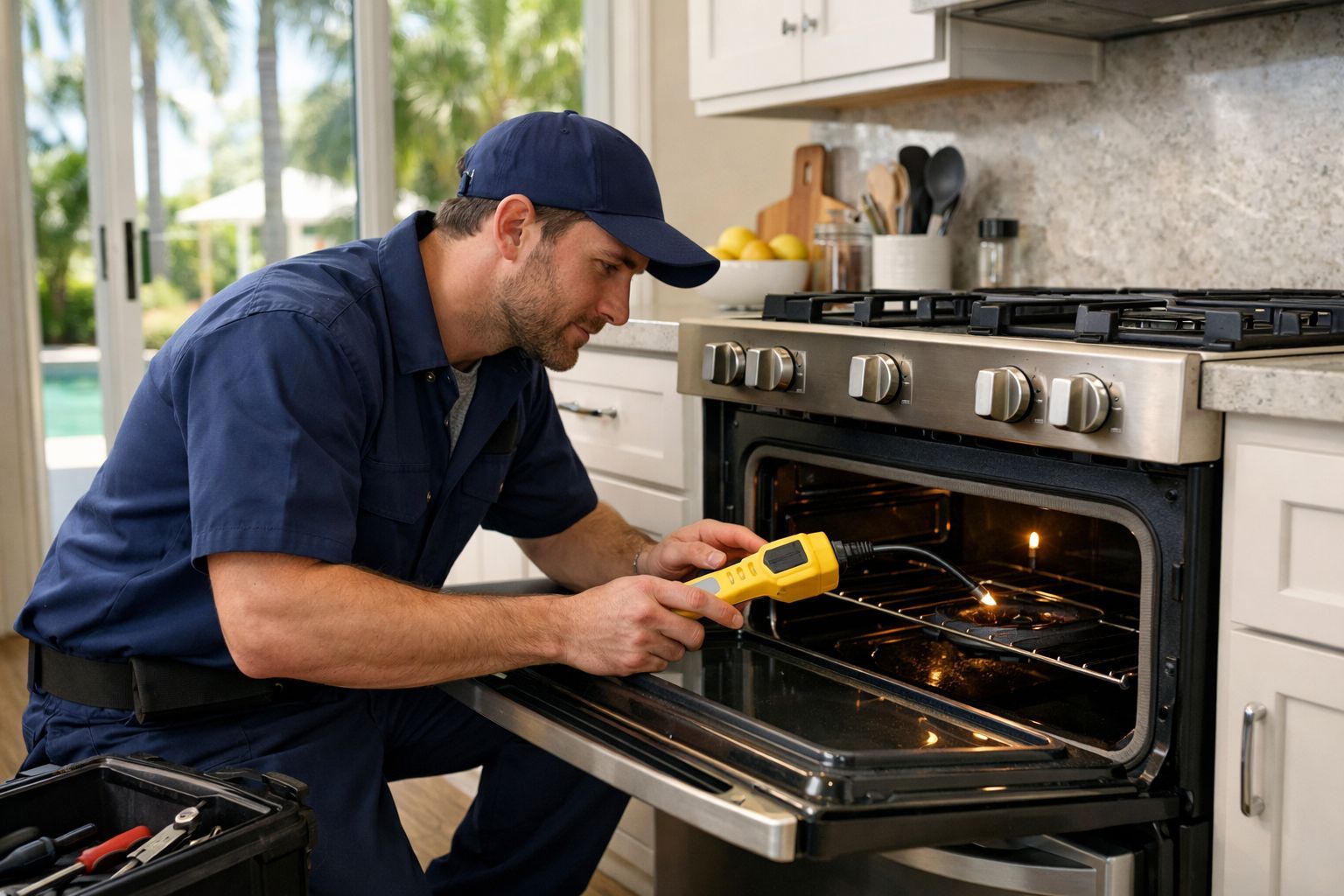
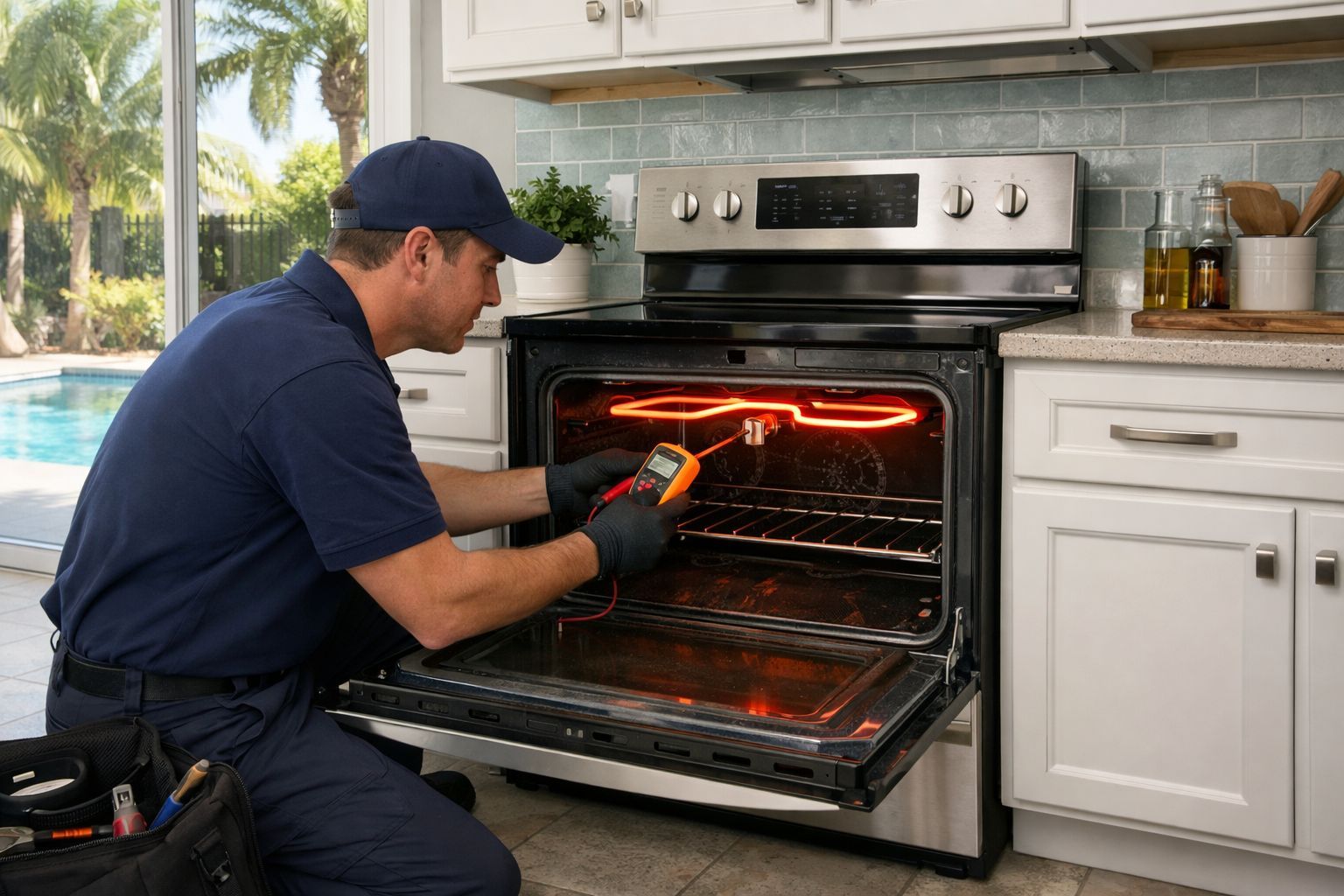
A gas oven burner that goes out during preheat differs from an oven that heats normally but later fails to cycle back on. In this pattern, the Bake burner lights, runs briefly, then shuts off before the cavity reaches the selected temperature. The oven may relight repeatedly, stall at a lower temperature, or take much longer than usual to preheat.
That timing matters because the visible flame is only one part of the heating sequence.
What a Technician Checks When a Gas Oven Flame Drops Out Early
A technician first establishes the exact sequence: whether the problem occurs on Bake only or also on Broil, how quickly the burner ignites, how long the flame remains on, and whether the control calls for heat again after it goes out.
Actual oven temperature matters more than the display alone. The cavity may rise slowly, stop well below the setting, or heat normally despite an inaccurate reading. Tracking temperature progress helps distinguish a short burner cycle from a temperature-sensing problem.
Gas ovens also use different ignition designs. Some use glow-bar igniters that work with the gas valve, while others use direct spark ignition. A glowing igniter or clicking sound does not identify the failed part. The model-specific ignition sequence must be verified before a repair is chosen.
Why the Burner Can Light but Not Finish Preheating
Several systems can create this symptom. An ignition or gas-valve issue may allow the burner to light without sustaining proper operation through the initial heating cycle. Weak, delayed, incomplete, or uneven flame travel can also reduce heat output during preheat.
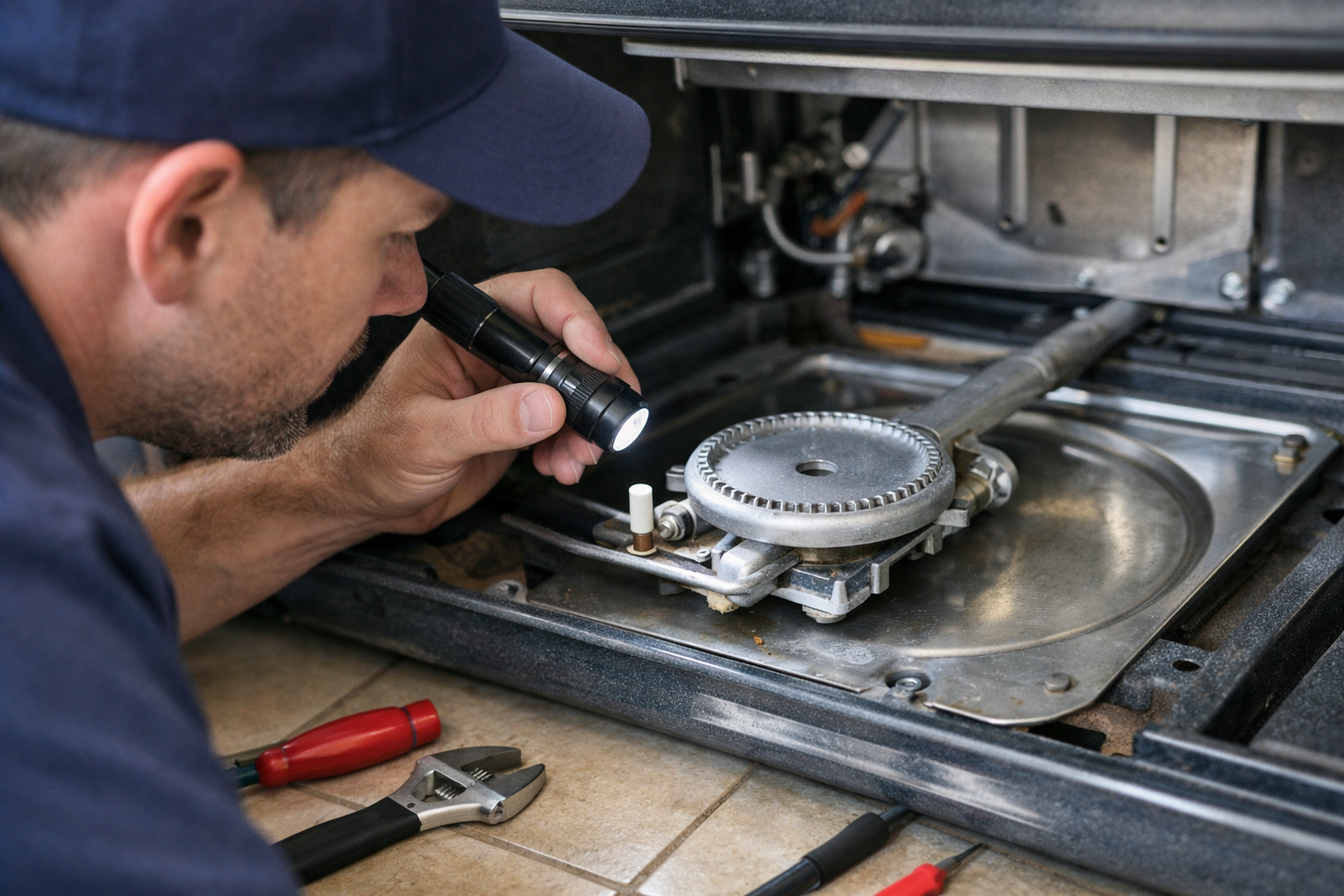
Technicians inspect burner alignment, distortion, contamination, and signs of abnormal combustion. These conditions can affect flame movement, but they are not the only possible cause.
Temperature feedback is equally important. If the oven sensor, wiring, connector, or related circuit sends inaccurate information, the control may stop calling for heat too early even though the cavity remains well below the selected setting.
A control board can cause early shutdown, but a working board receiving bad information can produce the same pattern. Replacing an igniter, sensor, or board based only on the symptom can waste money.
Start With Safe Observations
Do not remove panels, disconnect gas lines, probe electrical connections, or clean burner ports with picks, wires, or other tools. Never use a match or lighter to ignite the oven, and do not repeatedly restart Bake to force the issue.
Instead, observe from outside the appliance. Note whether Bake is the only affected mode, whether ignition is prompt, approximately how long the flame stays on, and the highest temperature the oven appears to reach. Photograph any error code.
The model number, fuel type, and recent power outages, moves, conversions, or service work can also help narrow the diagnosis. Stop using the oven if you notice a persistent gas odor, delayed ignition, soot, or a whoosh or boom at ignition. If a gas leak is suspected, move to a safe location and follow the gas utility’s emergency instructions.
When Repeated Relighting Needs Professional Diagnosis
Gas ovens normally cycle the burner to control temperature. During initial preheat, however, the burner should provide enough heat to bring the cavity toward the selected temperature in a reasonable time. Early shutdown, repeated relighting, or a plateau around 300 or 350 degrees deserves attention.
This differs from a gas oven that reaches temperature but will not reignite later. In that case, initial preheat succeeds and the issue appears during later temperature maintenance. Timing helps guide testing, although both patterns require model-specific diagnosis.
A technician can compare the preheat curve with actual cavity temperature and test the applicable ignition, valve, sensor, safety, wiring, and control circuits. They can also confirm that the range is configured for its supplied fuel and determine whether the problem is isolated to Bake.
Frequently Asked Questions About a Gas Oven Burner Going Out During Preheat
Why does my gas oven light and then turn off before reaching temperature?
Incorrect temperature feedback, weak heat output, ignition or gas-valve trouble, or a lost control signal can stop preheat early. Testing identifies the responsible system.
Is it normal for a gas oven burner to cycle during preheat?
Some cycling can occur, but the temperature should rise steadily. Short flame operation, repeated relighting, slow preheat, or a temperature stall is not normal.
Can a glowing oven igniter still cause incomplete preheating?
Yes. A visible glow does not prove the ignition system performs correctly under load. Its operation must be evaluated with the valve and complete circuit.
Why does my oven stop around 300 or 350 degrees?
The burner may be shutting down because of inaccurate sensor information, inadequate heat output, or an interruption in an ignition, valve, wiring, safety, or control circuit.
Should I use my oven if it smells like gas or makes a whoosh?
No. Stop using Bake if there is a persistent gas smell, delayed ignition, soot, or a whoosh or boom. Follow gas utility emergency guidance from safety.
For local help, oven and cooktop repair in Boynton Beach can evaluate the complete heating sequence. Homeowners can also arrange appliance repair in Jupiter, FL for intermittent gas oven heating problems before they become no-heat failures.