
Dryer Runs but No Heat? What an Appliance Technician Checks Before Replacing Parts
Dryer runs but won’t heat? Learn what technicians test first, from 240-volt power and thermal fuses to heating elements, airflow, and gas ignition.
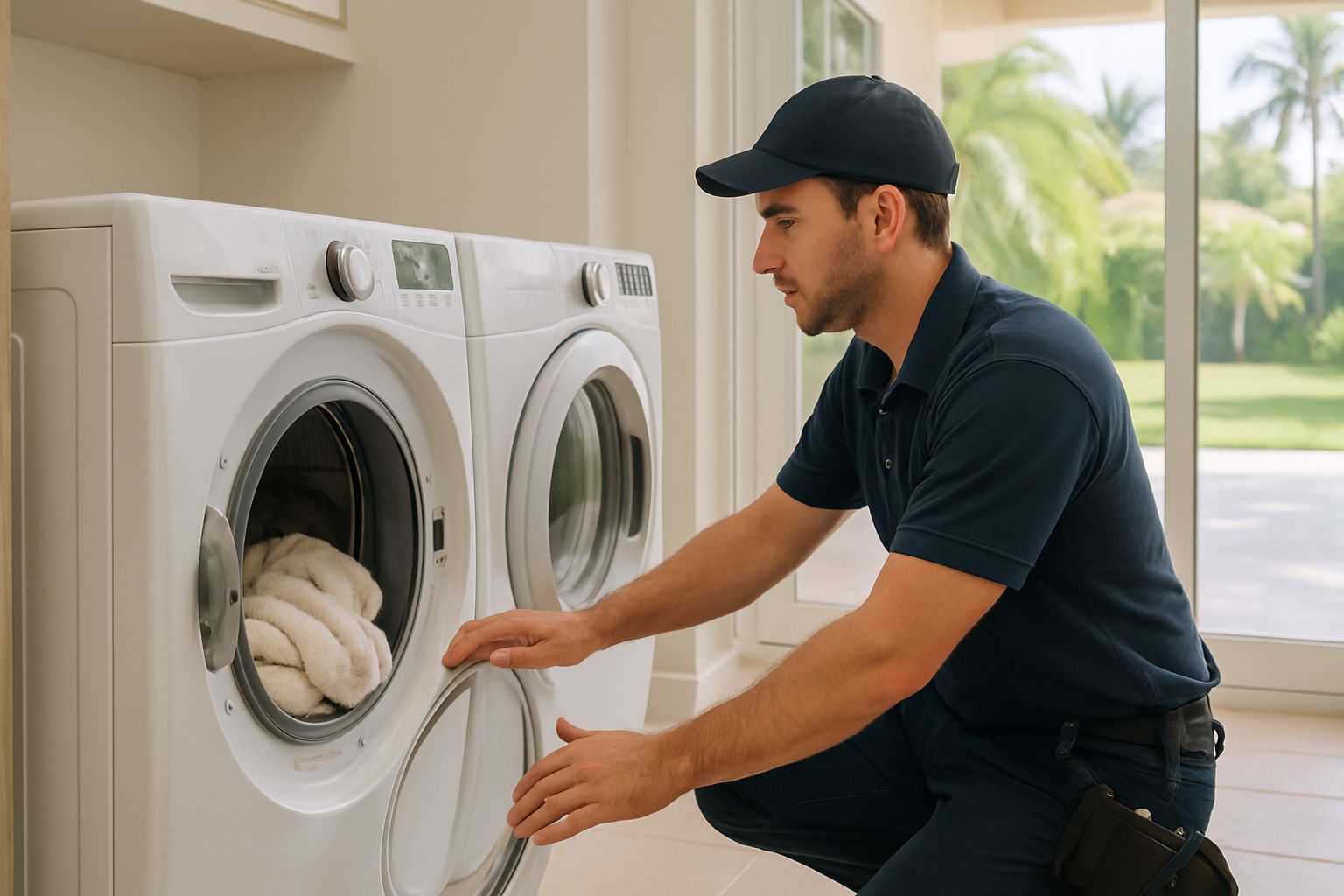
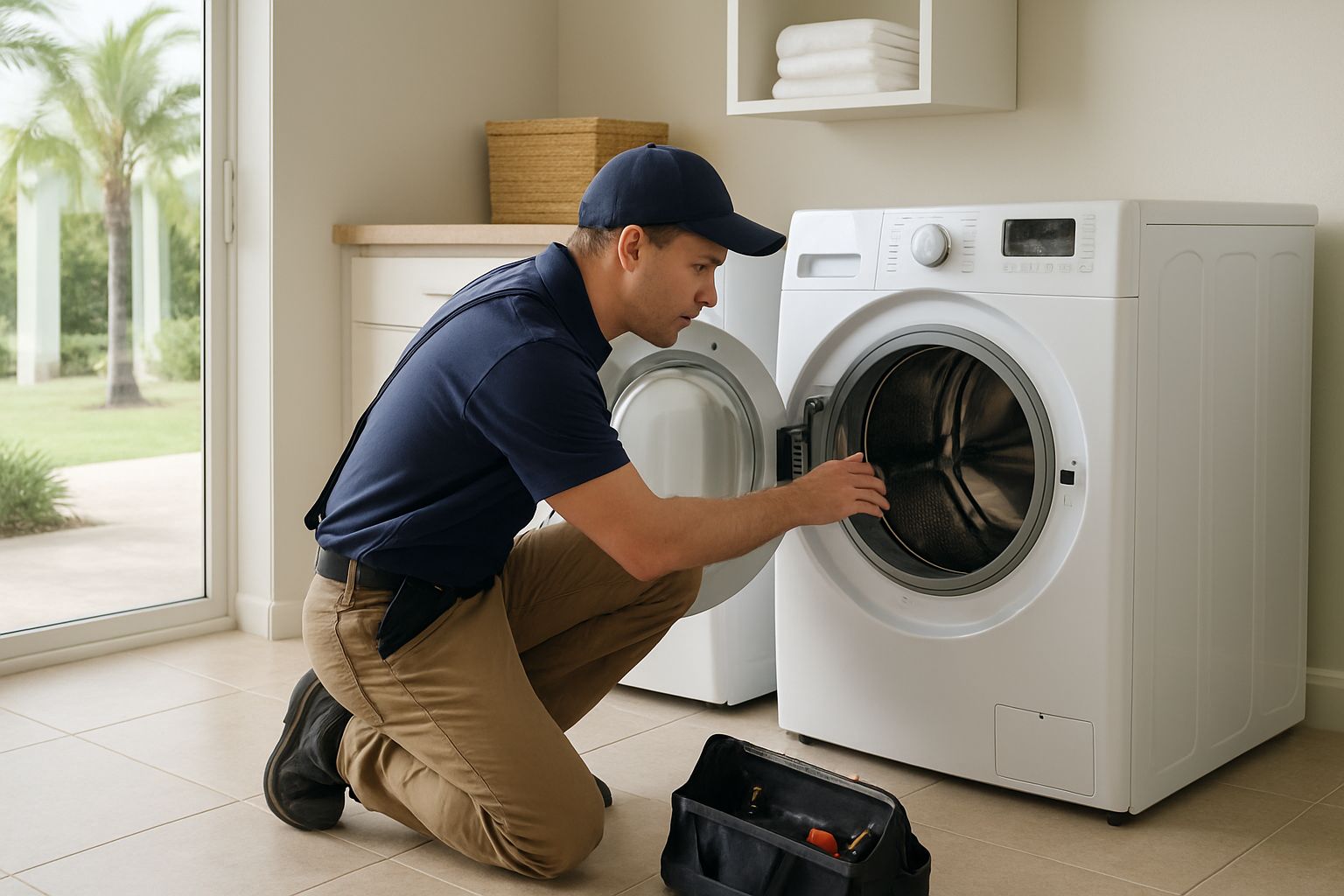
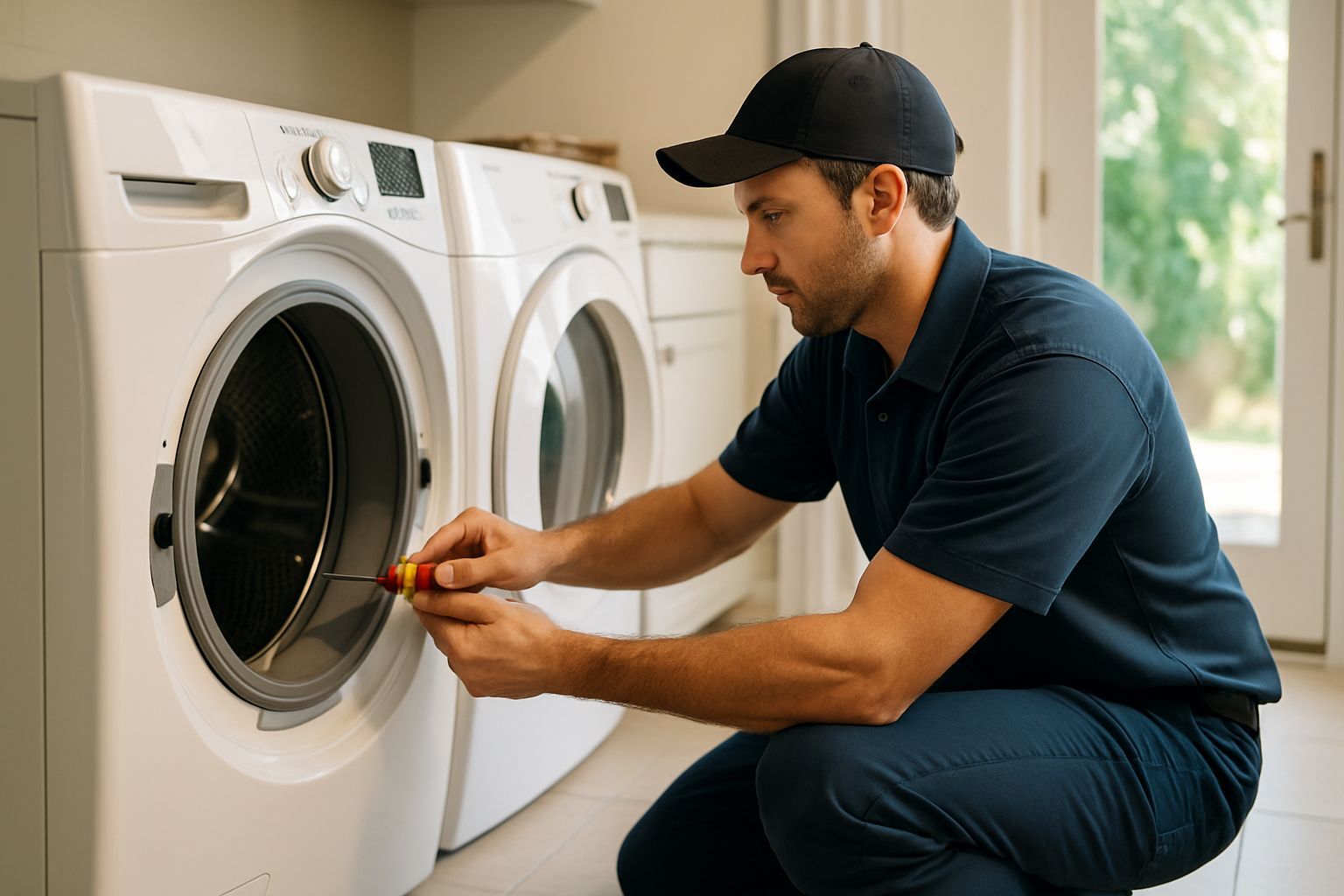
When a dryer is running, the drum is turning, and the clothes are still coming out cold and damp, most homeowners immediately think the heating element is bad. Sometimes that is exactly what we find. But a dryer with no heat can be caused by several different problems, and replacing the heater without testing the rest of the circuit can waste time and money. When we diagnose a dryer no heat complaint, we start with the basics and work through the heating circuit instead of guessing at parts.
One thing we see often is a dryer that appears to work normally except for the heat. The motor runs, the drum spins, the control panel lights up, and the timer counts down. That can make the problem seem simple, but the fact that the dryer runs does not necessarily mean it has everything it needs electrically to produce heat.
The Dryer Can Run Even When the Power Is Wrong
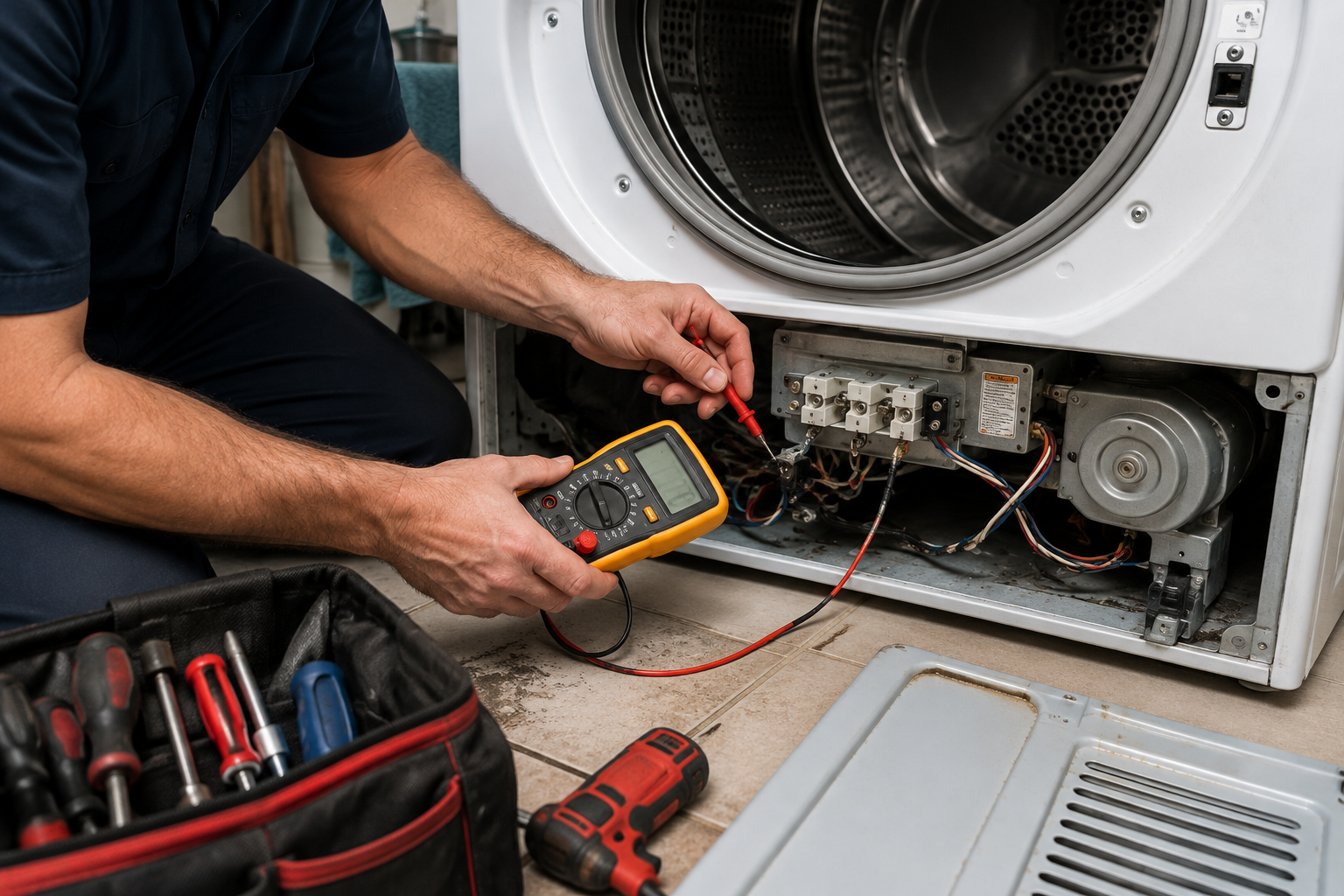
On an electric dryer, checking the incoming power is one of the first steps. Most electric dryers use approximately 240 volts for the heating system. The motor and some of the controls can operate even when part of that electrical supply is missing.
This means a dryer can tumble perfectly normally while the heating element receives no power. We may find a partially tripped breaker, damaged power cord, burned terminal connection, loose wiring, or another electrical supply problem.
This is why we do not automatically install a heating element just because the dryer is cold. A technician should verify the correct voltage at the appliance and then determine whether that voltage is reaching the heating circuit.
Heating Elements Do Fail, But They Should Be Tested
The heating element is certainly a common failure on electric dryers. Every time the dryer runs, that element heats up and cools back down. After years of use, the element can eventually break open and stop producing heat.
When we have access to the element, we test it rather than relying only on a visual inspection. Some broken elements are obvious, while others may look normal until they are checked with a meter.
We also look for signs that the element has contacted its metal housing or has been exposed to unusually high temperatures. If a heating element has failed because the dryer has been overheating, simply installing another one without correcting the reason for the overheating can lead to another failure later.
Thermal Fuses and High-Limit Devices Protect the Dryer
Dryers contain several temperature-control and safety components. Depending on the model, these may include a thermal fuse, thermal cutoff, high-limit thermostat, cycling thermostat, or electronic temperature sensor.
If one of these safety devices opens, the heating system can stop working. But when we find an open thermal cutoff or fuse, we also want to know why it failed.
A restricted vent is one possible reason. A crushed vent hose, lint buildup, blocked outside vent hood, obstructed blower wheel, or lint packed inside the dryer can reduce airflow and raise operating temperatures.
This is especially important when the same dryer has already had a heating element or thermal device replaced before. Repeated failures are often a sign that there is another condition that has not been corrected.
Gas Dryers Have a Completely Different Heating System
A gas dryer can also tumble normally and produce no heat, but the diagnosis is different. Instead of an electric heating element, a gas dryer uses an ignition system and burner assembly.
Depending on the design, we may be checking the igniter, flame sensor, gas valve coils, thermostats, wiring, and the electrical controls that allow the burner to operate.
The way the dryer behaves gives us useful information. For example, an igniter that never glows points us in a different direction than an igniter that glows but never produces a flame. A dryer that lights normally when cold but stops heating after several minutes can also require a different diagnosis.
Gas components should not be bypassed or experimented with. If you smell gas, stop using the dryer and address the gas supply safely before operating the appliance again.
Why the Control Board Should Not Be the First Guess
Modern dryers use electronic control boards for many functions, so it is easy to blame the board whenever something stops working. Control boards can fail, but they are not where we automatically start.
Before condemning an expensive electronic control, we want to know whether the board is receiving the correct information and whether the heating circuit itself is intact. A broken wire, open thermostat, failed heater, bad motor switch, power problem, or blown thermal device can all prevent heating even when the control board is working normally.
What You Can Check Before Calling for Dryer Repair
There are a few safe things a homeowner can check before scheduling appliance repair near me. Make sure the dryer is not set to Air Fluff, No Heat, or another unheated cycle. Check the circuit breaker, especially on an electric dryer. Clean the lint screen and inspect the accessible vent hose for crushing or obvious blockage.
If the dryer is getting extremely hot, smells burned, trips the breaker, sparks, or has damaged wiring, stop using it. Those symptoms need proper testing before the appliance is operated again.
A Good Repair Starts With a Diagnosis
When we work on a dryer that runs but does not heat, we are not just looking for a part to replace. We are looking for the point in the heating sequence where the failure occurs. That may be the household power supply, heating element, thermal fuse, thermostat, gas ignition system, motor switch, wiring, sensor, or electronic control.
That diagnostic approach matters because two dryers with the exact same symptom can have completely different failures. General Appliance Service provides local appliance repair for dryers and other major home appliances throughout our South Florida service area. If your dryer is tumbling but the clothes stay cold, testing the machine properly can usually find the cause faster than replacing parts one at a time.