
Dishwasher Top Rack Not Cleaning but Bottom Rack Does? What the Difference Can Mean
By General Appliance Service
A dishwasher top rack not cleaning while the bottom rack does can be frustrating because the machine may otherwise seem normal. It fills, makes wash sounds, and leaves lower dishes reasonably clean, while glasses and bowls above keep residue. That contrast usually points to a water-delivery or coverage problem. The cause may be as simple as a blocked spray arm or as specific as a poor upper-rack water connection.
What a Technician Checks When the Top Rack Stays Dirty
One rack cleaning well does not prove the full wash system is healthy. Many dishwashers use separate spray-arm designs, upper feed tubes, or diverter positions to send water through both racks. If pressure is weak or water is misdirected, the lower rack may still receive enough spray to appear acceptable.
A technician confirms proper fill level and adequate circulation force. A running motor does not always mean strong wash pressure. Restricted filters, debris in the sump area, or a declining circulation pump can reduce flow without making the dishwasher completely silent.
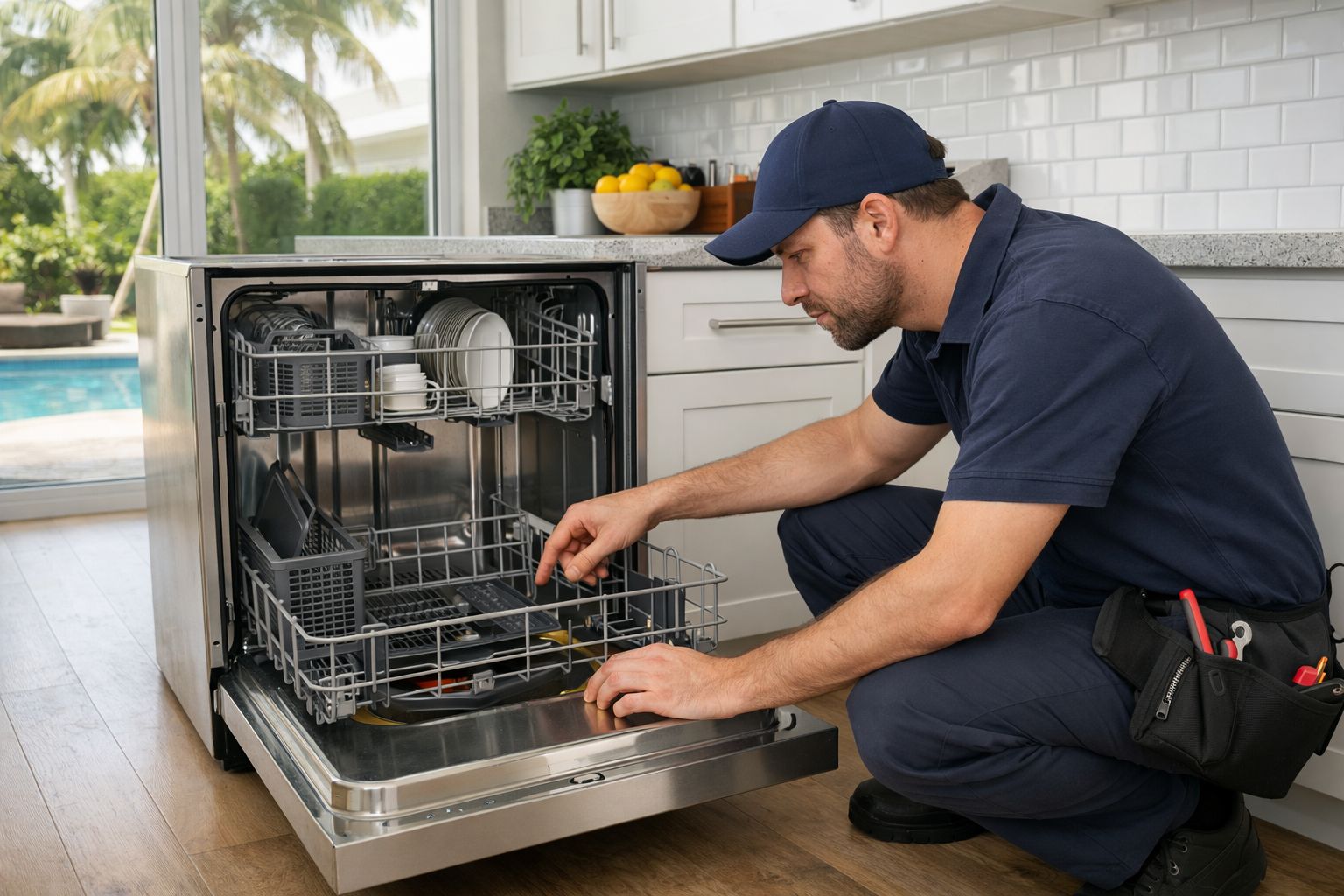
The upper spray arm, feed tube, and rack docking area also need inspection. On some models, the upper rack connects to a rear water port when it is pushed fully inward. A loose, damaged, misaligned, or blocked connection can leave the top rack with little water while the lower arm continues spraying.
Start With Loading and the Upper Spray Arm
Check the loading pattern before assuming a part has failed. Tall cutting boards, baking sheets, large pans, or utensils extending through the rack can prevent the upper spray arm from turning. Bowls that flip over can collect water and block spray from reaching nearby items.
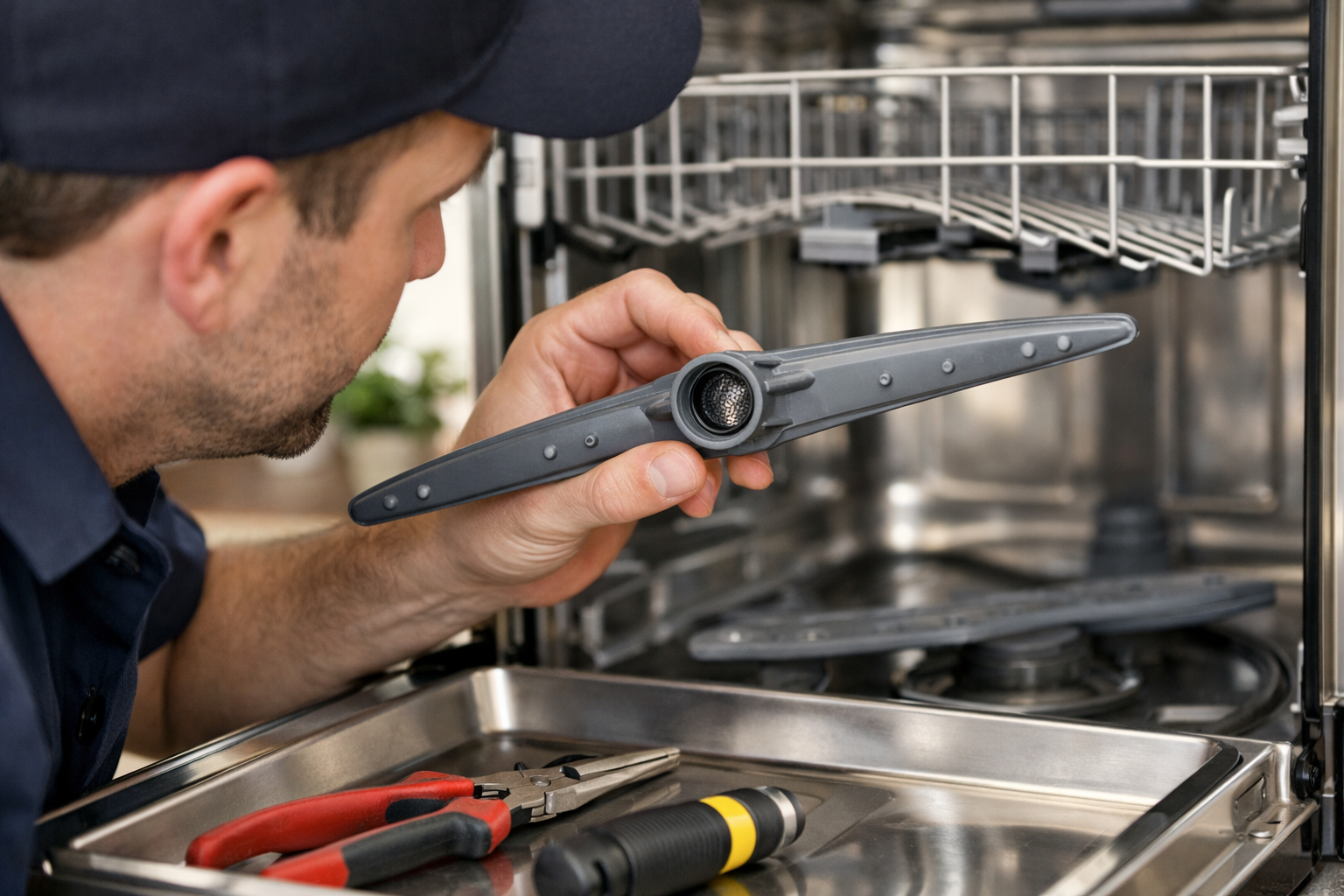
With the dishwasher off and cool, turn the upper spray arm by hand. It should rotate freely without hitting dishes or the rack. Check visible spray holes for food particles, paper labels, or mineral buildup. A partly clogged arm may still move but produce a weak or uneven pattern that misses glasses and cups.
Also make sure the upper rack slides completely to the rear. Look for broken rack adjusters, a loose rear connection, or an item caught behind the rack. Do not force it into position. Bent rails or damaged adjusters can keep the water connection from seating and sealing properly.
Food Residue and White Film Point to Different Problems
The material left on dishes offers useful clues. Food bits, grit, or greasy residue often indicate poor wash-water movement, blocked spray holes, restricted filtration, weak circulation, or inadequate spray coverage. Debris can be recirculated and redeposited when the filter or sump area is not handling it correctly.
White haze or cloudy spots can have a different cause. Mineral film from hard water, detergent problems, low rinse aid, or drying conditions may affect clean dishes even when the upper water path is working. If dishes feel gritty or have food stuck to them, focus first on circulation and filtration. If they are clean but cloudy, note detergent type, rinse-aid setting, and water temperature.
Clean any accessible filter only as the owner’s manual directs. Soft food debris, sand-like grit, grease, and mineral scale can each point toward a different underlying issue.
When a Top-Rack Problem Needs Dishwasher Repair
Some dishwashers alternate water flow between zones with a diverter, while others supply both arms continuously. A weak pump, restricted upper feed path, failing diverter, or leaking rack dock can therefore affect the top rack first. Mechanical water-path problems should be checked before assuming the control board has failed.
For a dishwasher that fills but has little washing action in either rack, this guide on a dishwasher fills with water but will not wash explains broader circulation concerns. A top-rack-only complaint usually requires closer attention to how water reaches that rack.
Call for service if the upper arm will not turn, the rack will not seat at the rear connection, grit returns after filter cleaning, or upper-rack loads remain dirty despite proper loading. Avoid bypassing the door latch, running the dishwasher open, removing panels, or disassembling the pump. Homeowners needing dishwasher repair in Delray Beach or appliance repair in Boca Raton can have the symptom diagnosed before replacing expensive parts.
Frequently Asked Questions About a Dishwasher Top Rack Not Cleaning
Why does the bottom rack clean while the top rack stays dirty?
The upper spray arm may be blocked, unable to turn, or receiving too little water through its feed tube, rack dock, diverter, or circulation system.
Can a clogged upper spray arm affect only the top rack?
Yes. Debris or mineral buildup can distort the upper arm’s spray pattern and reduce coverage, even when the lower spray arm continues operating normally.
Why do apparently clean dishes have food grit on them?
Grit usually indicates recirculating debris rather than a drying problem. Check the accessible filter, then have the sump and circulation system inspected if it returns.
Could the upper rack be disconnected from its water supply?
On some models, yes. The rack must align with a rear water port. A worn seal, broken adjuster, obstruction, or misalignment can prevent sealing.
Should I replace the wash pump if the dishwasher sounds normal?
Not without diagnosis. Normal sounds can occur with restricted flow, clogged spray holes, a diverter fault, or a poor rack connection. Testing pressure prevents unnecessary replacement.
Record the cycle used, detergent, water-temperature setting, error codes, and residue type before scheduling service. Those details can help narrow the problem and speed an accurate repair.