
Why Does My Gas Oven Smell Like Gas Before Lighting?
By General Appliance Service
A gas oven that smells like gas before the Bake burner lights is more than a slow-preheat inconvenience. A brief ignition odor can vary by model, but a noticeable or persistent smell, delayed light-off, uneven flame, or sudden “whoosh” can mean gas is collecting before ignition. Stop using the Bake cycle rather than repeatedly trying it, and ventilate the room if it is safe to do so.
What a Technician Checks When a Gas Oven Smells Gas Before Lighting
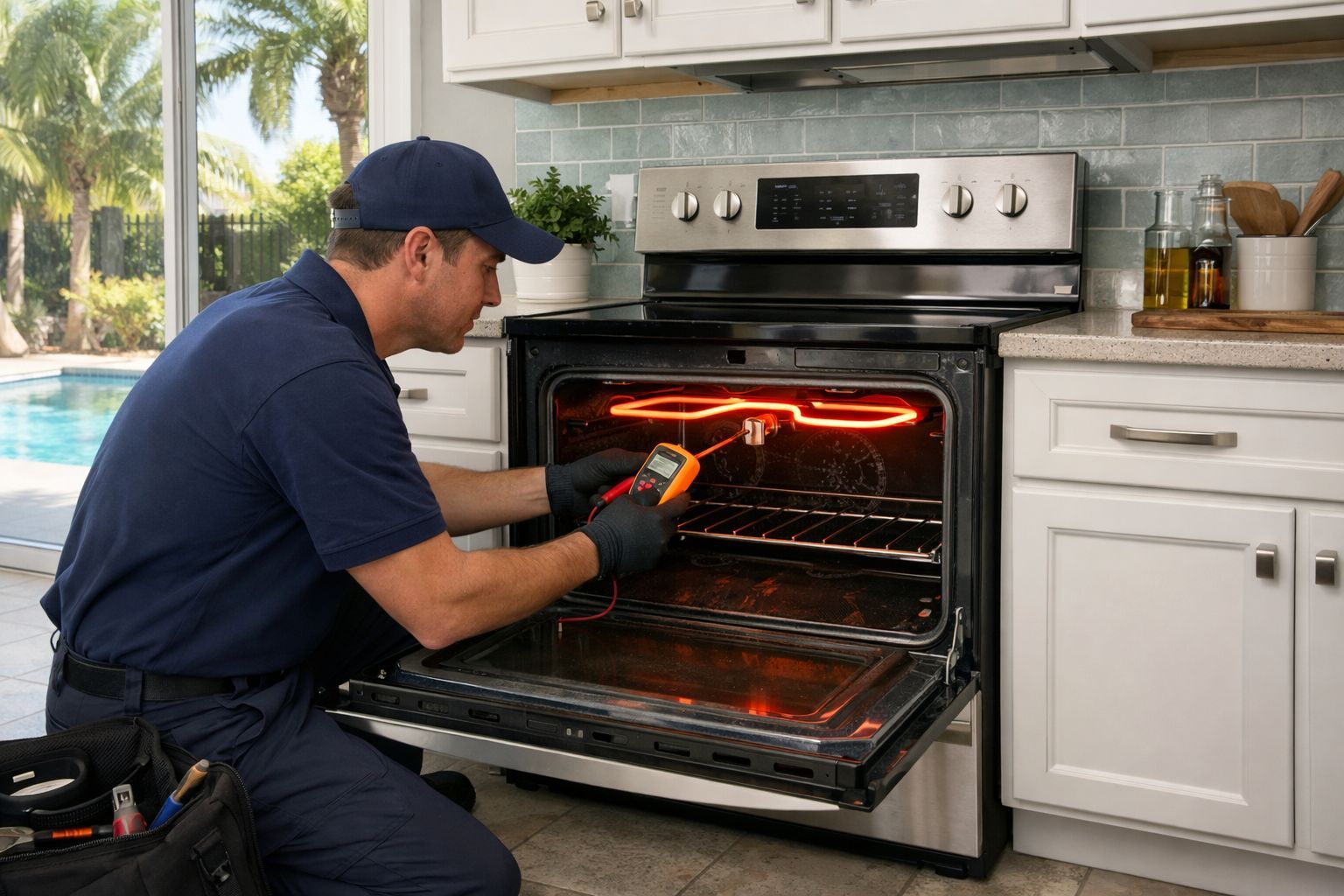
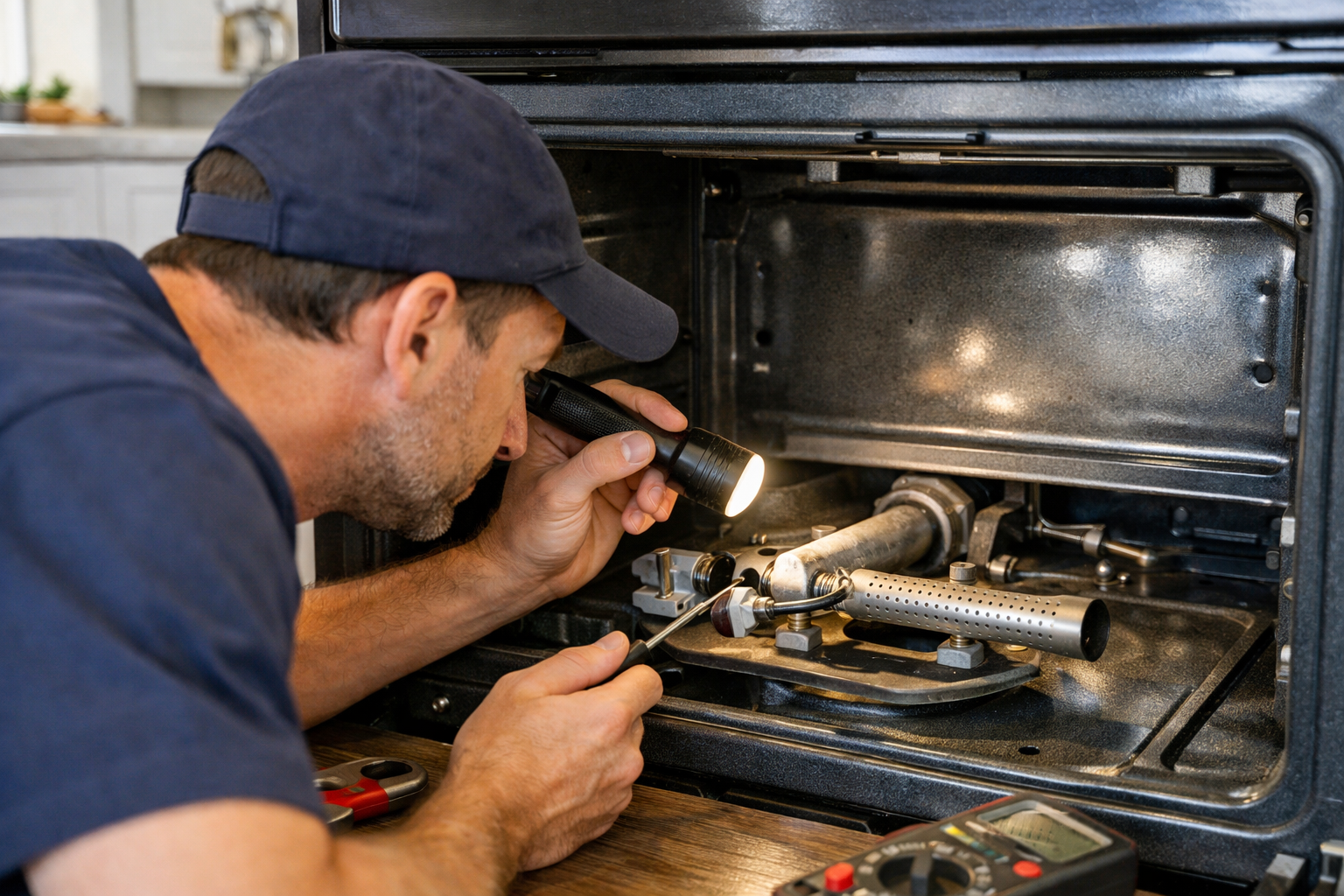
The Bake burner should receive gas and ignite in a controlled sequence. On many ranges, a hot-surface igniter glows first. Once it reaches the operating conditions required by that model, the gas valve opens and the flame should travel promptly across the burner.
A glowing igniter is not proof that the system is working correctly. An aging igniter may look bright orange but still be too weak under load. The burner may light late, ignite only near the igniter, or take much longer than normal to preheat.
A technician checks the igniter, burner, gas valve circuit, wiring connections, and control output instead of assuming one visibly glowing component is good. Burner alignment, heat damage, and the flame path also matter. The goal is to determine why the affected burner is not lighting promptly and evenly.
Why Delayed Ignition Can Create a Gas Odor or Whoosh
The odor occurs because fuel is entering the oven before the burner has fully lit. If ignition is delayed, gas has more time to collect around the burner area. When it finally catches, that accumulated gas can ignite at once and create a whoosh or puffing sound.
Do not consider that sound normal just because the oven eventually heats. Delayed ignition can worsen over time, and repeated attempts to start Bake can add more unburned gas to the oven cavity.
Poor flame travel is one possible cause. Gas may ignite beside the igniter but fail to spread smoothly through the rest of the burner. Contamination, damaged burner ports, heat distortion, or incorrect burner and igniter positioning can interfere with crossover. A weak igniter can create similar symptoms, so guessing at a replacement part is unreliable.
If the smell is strong, continues after the range is shut off, or seems unrelated to a normal ignition attempt, leave the area as appropriate and follow your gas utility’s emergency instructions.
Small or Uneven Flames Need Complete Diagnosis
A smaller-than-usual Bake flame can result from burner blockage or damage, but fuel supply and appliance configuration also matter. Natural-gas and LP ranges require the correct setup. Supply pressure, regulator concerns, or a problem in the gas path can affect burner performance.
The symptom can be misleading. A burner that lights weakly on one side may heat slowly, causing homeowners to focus on preheat time instead of the underlying ignition problem. Replacing an igniter without confirming the rest of the system may not correct partial flame spread or poor heating.
Technicians may compare Bake and Broil operation, but one working function does not automatically clear the other. Bake and Broil can have different burners, ignition components, valve paths, wiring, and control behavior.
For a safety-significant range concern, oven and cooktop repair allows a technician to evaluate the complete ignition and gas-delivery system rather than replacing a part based on appearance.
What You Can Safely Observe Before Calling for Service
Do not remove oven panels, probe wiring, clean burner ports with tools, or try to light the Bake burner with a match or lighter. Those actions can damage components or create an unsafe ignition situation.
From outside the appliance, note whether the issue happens on Bake, Broil, or both; whether the igniter glows; how long the burner takes to light; and whether flame begins at one end or spreads unevenly. Also note a whoosh, gas odor, error code, unusually long preheat, and whether the oven reaches the selected temperature.
After the oven is cool and off, you may photograph plainly visible debris or damage around an accessible burner area if the owner’s manual permits it. Have the full model number and fuel type available.
Homeowners needing appliance repair in Wellington, FL should mention delayed ignition and any gas odor when arranging diagnosis. Stop using Bake if ignition timing changes, the flame stays uneven, or the oven lights with a whoosh.
Frequently Asked Questions About a Gas Oven That Smells Like Gas Before Lighting
Is it normal to smell a little gas before my oven lights?
A faint, momentary odor may occur during ignition on some models. A noticeable, persistent, or recurring smell should not be ignored.
Why does my gas oven make a whoosh when Bake lights?
A whoosh can mean gas accumulated before ignition and then lit at once. Do not repeatedly restart the oven to test it.
Can an oven igniter glow and still be bad?
Yes. A hot-surface igniter can glow while failing to create the operating conditions needed for reliable burner ignition.
Why does the burner light on only one side?
Burner-port contamination, burner damage, positioning problems, or an ignition-system issue can interrupt flame travel across the burner.
Should I use the oven if it eventually reaches temperature?
No. Gas odor, delayed ignition, uneven flame, or a whoosh requires diagnosis. Reaching temperature does not prove ignition is operating safely.
If the oven lights normally but food remains undercooked or preheat stays slow, review why an oven says it is preheated but food is still undercooked. Gas odor and delayed light-off should always take priority.