
Dryer Stops Mid-Cycle Then Restarts After Cooling: What It Can Mean
By General Appliance Service
A dryer that runs for 10 to 30 minutes, shuts off, and works again after sitting may have a heat-related shutdown pattern. The cooldown period matters: a component may be overheating, losing a connection as temperatures rise, or reacting incorrectly to heat and airflow conditions.
That does not automatically mean the motor has failed. Restricted venting, an overheated motor, electrical trouble, or a temperature-control issue can create similar symptoms. The goal is to identify what stopped first instead of guessing at a part.
What a Technician Checks When a Dryer Stops Mid-Cycle
The first question is whether the entire dryer goes dead or whether only the heat stops. A drum that quits turning with inactive controls follows a different diagnostic path than a dryer that continues tumbling without heat.
A technician considers run time, load size, and how long the dryer must sit before restarting. Many motors have internal thermal-overload protection that opens when the motor becomes too hot, then resets after cooling. The motor may be overheating because of poor airflow, a restricted blower, excess cabinet heat, or a failing motor.
An air-only or no-heat cycle can also provide useful clues. If the dryer runs longer without heat, ventilation or heat-related conditions may be involved. If it still stops, the concern may be the motor, wiring, or controls. Neither result confirms a failed part by itself.
Why Airflow and Heat Can Cause a Mid-Cycle Shutdown
Restricted exhaust paths are a common cause of excessive dryer temperatures. Lint can collect beyond the screen, an exterior hood flap can stick, and long, crushed, or damaged vent runs can hold heat inside the dryer. The appliance may initially seem normal before temperatures rise.
Poor airflow can lengthen drying times, overheat the cabinet, and add strain to the motor and temperature-control system. Checking the lint screen alone is not enough; the transition duct, wall connection, and exterior termination all affect exhaust performance.
Clean the lint screen and make sure it is not coated with dryer-sheet residue. While the dryer operates, check that the outside vent hood opens and has noticeable airflow. Remove visible lint or outdoor obstructions around the hood.
Do not disconnect the vent and keep operating the dryer as a workaround. It can release lint and moisture indoors while leaving the installed exhaust problem unresolved.
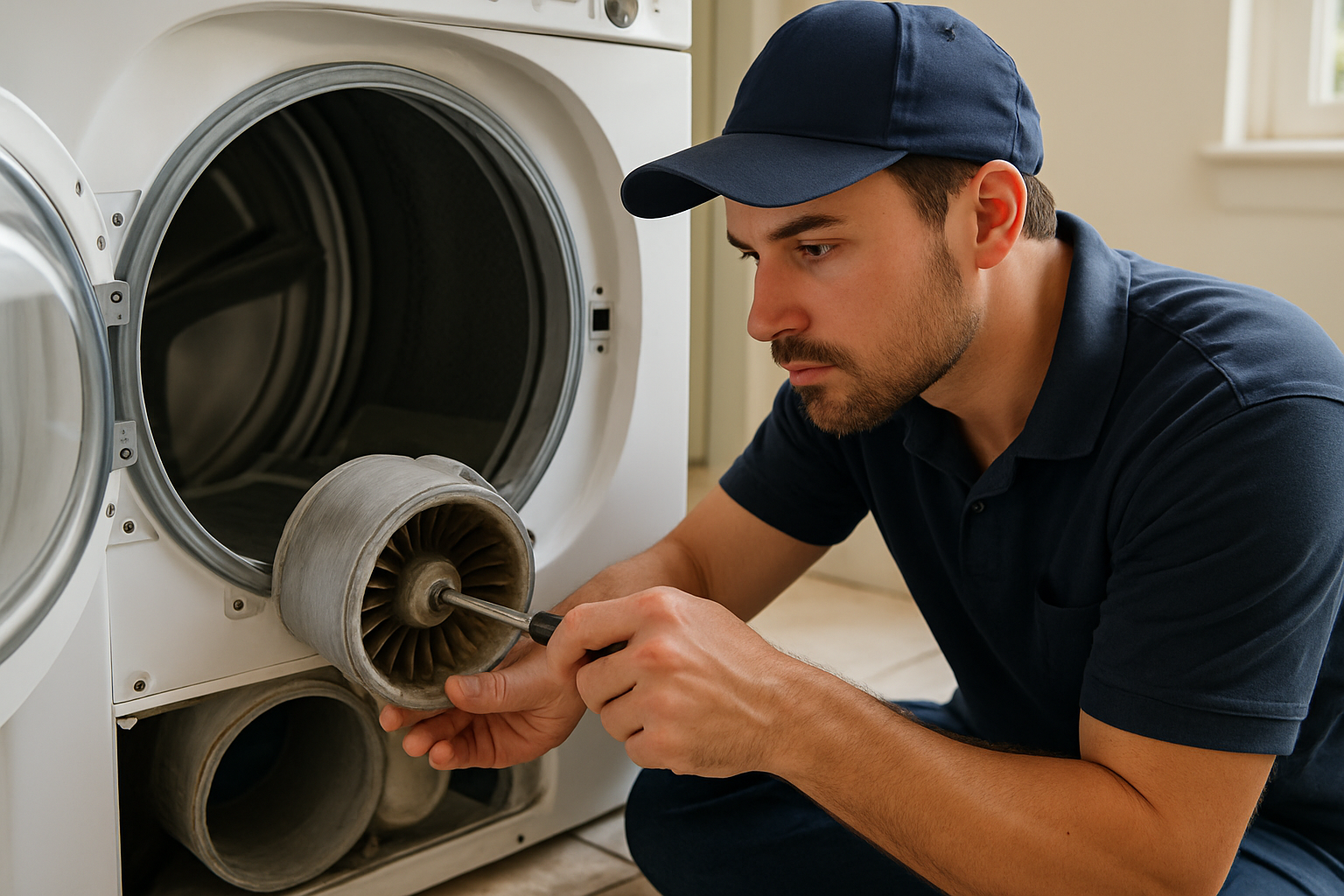
Electrical and Motor Problems Can Look Similar
An electric dryer can tumble when part of its electrical supply is missing or a connection is damaged. Depending on the model and fault, heat may behave unpredictably, or a weak connection may worsen as the appliance warms up. Burned terminal-block connections, damaged wiring, cord errors, and supply problems require careful inspection.
Motor concerns are more likely when the dryer hums, becomes unusually hot, or restarts only after a long rest. Still, replacing a motor solely because of the cooldown pattern can waste money. Airflow, heating conditions, wiring, and the motor-switch circuit should be evaluated first.
A thermostat, sensor, heating element, thermal fuse, motor, or control board can all be associated with a mid-cycle shutdown. A technician checks the shutdown sequence, exhaust performance, electrical connections, motor behavior, and temperature response using model-specific information. Gas dryers also need proper burner and ignition inspection.
For homeowners needing appliance repair in Lake Worth, an intermittent shutdown is worth addressing before it becomes a no-start condition or overheating concern.
Safe Checks to Make Before Calling for Dryer Repair
Use one normal-sized load and note the selected cycle, approximate run time before shutdown, and whether the drum and controls go completely dead. Record display messages, humming, scraping, burning smells, or breaker trips. If the owner’s manual supports an air-only setting, note whether the symptom changes.
Avoid repeatedly restarting a dryer that shuts down and feels hot. Repeated heat cycling can worsen a failing connection, motor, or airflow problem.
Stop using the dryer if you notice smoke, a burning odor, scorched lint, an unusually hot cabinet, or repeated breaker trips. If a gas dryer has any gas odor, do not operate it; leave the area if necessary and follow appropriate gas-safety procedures.
General Appliance Service provides washer and dryer repair for intermittent shutdowns, heating, airflow, tumbling, and control concerns. For homeowner limits, review these guidelines for safe appliance troubleshooting.
Frequently Asked Questions About a Dryer That Stops Mid-Cycle Then Restarts After Cooling
Why does my dryer stop after 20 minutes but start again later?
Cooling may reset a heat-sensitive device or component. Airflow restrictions, motor overheating, heating problems, wiring issues, and controls can all contribute.
Can a clogged dryer vent make the dryer shut off mid-cycle?
Yes. A restricted vent can trap heat, raise operating temperatures, and contribute to shutdowns. It is common, but it is not the only possible cause.
Why does my dryer run on air-only but stop when heat is selected?
That pattern may involve excess heat, restricted airflow, heating-system operation, or an electrical issue under greater load. Diagnosis is needed before replacing parts.
Should I keep restarting a dryer that shuts off and feels hot?
No. Stop using it, especially with a hot cabinet, burning odor, or breaker trip. Repeated restarting can increase damage and overheating risks.
Does a dryer that stops mid-cycle need a new motor?
Not necessarily. A motor may be involved, but airflow restrictions, electrical connections, and temperature-control faults should be ruled out first.
A dryer that repeatedly shuts off provides useful clues. Recording what happens before and after the shutdown helps General Appliance Service identify the cause safely and avoid unnecessary parts replacement.