
Why Is My Refrigerator Water Dispenser Slow but the Ice Maker Still Works?

September 12, 2026

By General Appliance Service

A refrigerator water dispenser that takes too long to fill a glass does not necessarily mean the entire water system has failed. If the ice maker still produces normal cubes and the refrigerator cools properly, water is reaching the appliance. However, flow may be restricted somewhere along the dispenser path.

The goal is to identify where the flow drops off. A filter may be responsible, but so can a partially closed shutoff valve, disturbed sediment, a weak valve outlet, or a restricted line inside the refrigerator door.

What a Technician Checks When a Refrigerator Water Dispenser Is Slow

Slow flow and no flow are different symptoms. A weak stream commonly indicates a partial restriction or limited incoming water volume. No water at all, especially when the ice maker still works, may point more directly to a dispenser-specific valve circuit or blocked door line.

A technician begins at the supply side rather than guessing at a replacement part. This includes checking water flow at the refrigerator, inspecting the supply tube for kinks, and examining the filter and filter housing. Water then travels through model-specific tubing, valves, reservoirs, and sometimes the refrigerator door.

Many refrigerators share one incoming water supply but use separate valve solenoids or downstream paths for the ice maker and dispenser. Normal ice production narrows the diagnosis, but it does not rule out a dispenser problem.

Check the Filter, Shutoff Valve, and Supply Line

An overdue filter can become restrictive as it traps sediment and mineral debris. A newly installed filter can also cause trouble if it is not fully seated, is damaged, or is not the exact approved type. A filter that looks new is not always flowing correctly.

Check the replacement date, verify the filter model number, and follow the owner’s manual if inspection or replacement is needed. Do not force a filter into place or bypass it unless the manufacturer specifically provides a safe procedure.

Behind the refrigerator, confirm that the household shutoff valve is fully open. The supply line should not be sharply bent, crushed against the wall, or pulled tight after moving the appliance. A partially closed valve may allow enough water for ice production while making the dispenser frustratingly slow.

If the problem started after a filter change, move, power interruption, or plumbing repair, mention that during a refrigerator repair visit. The timing can help isolate the likely restriction.

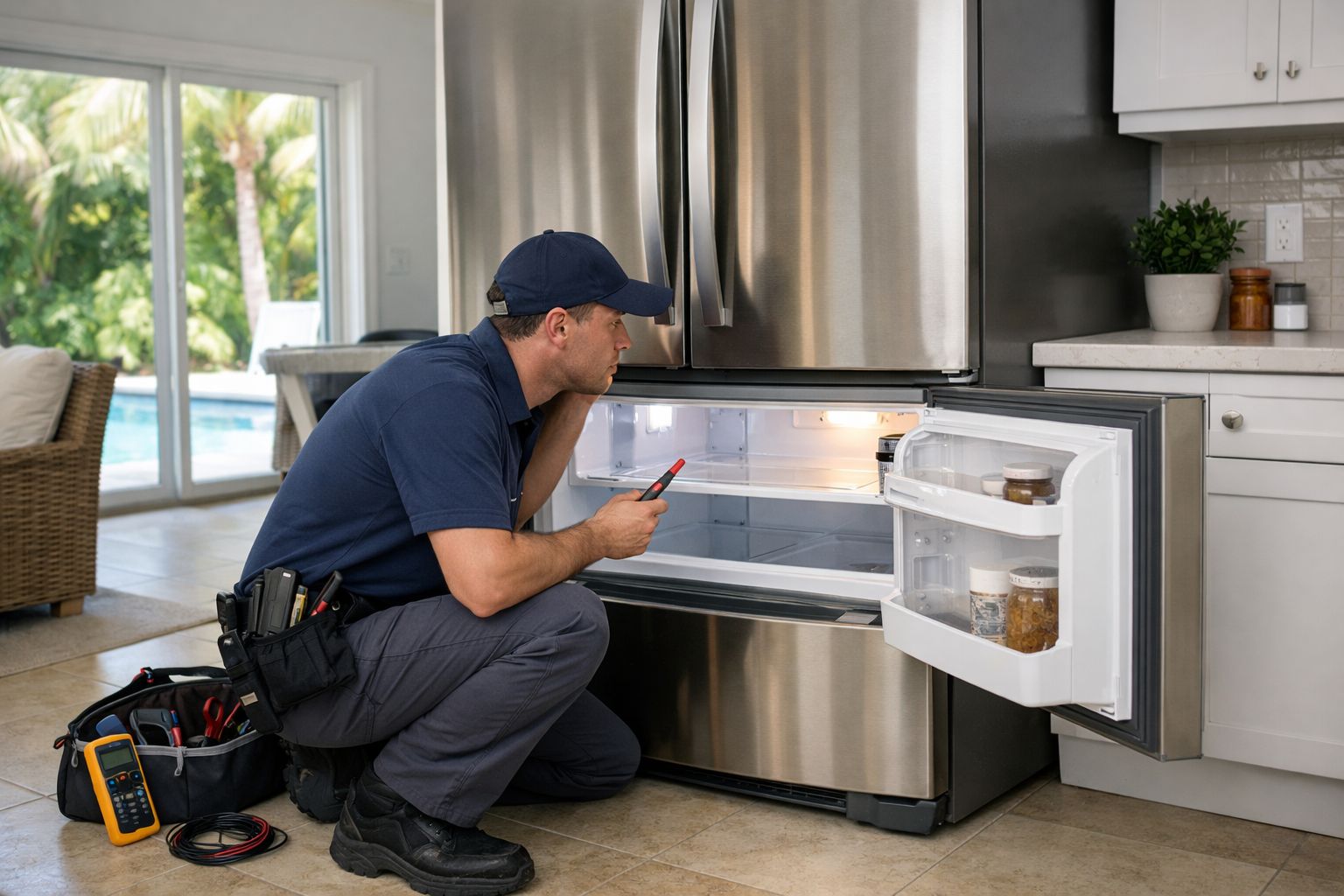
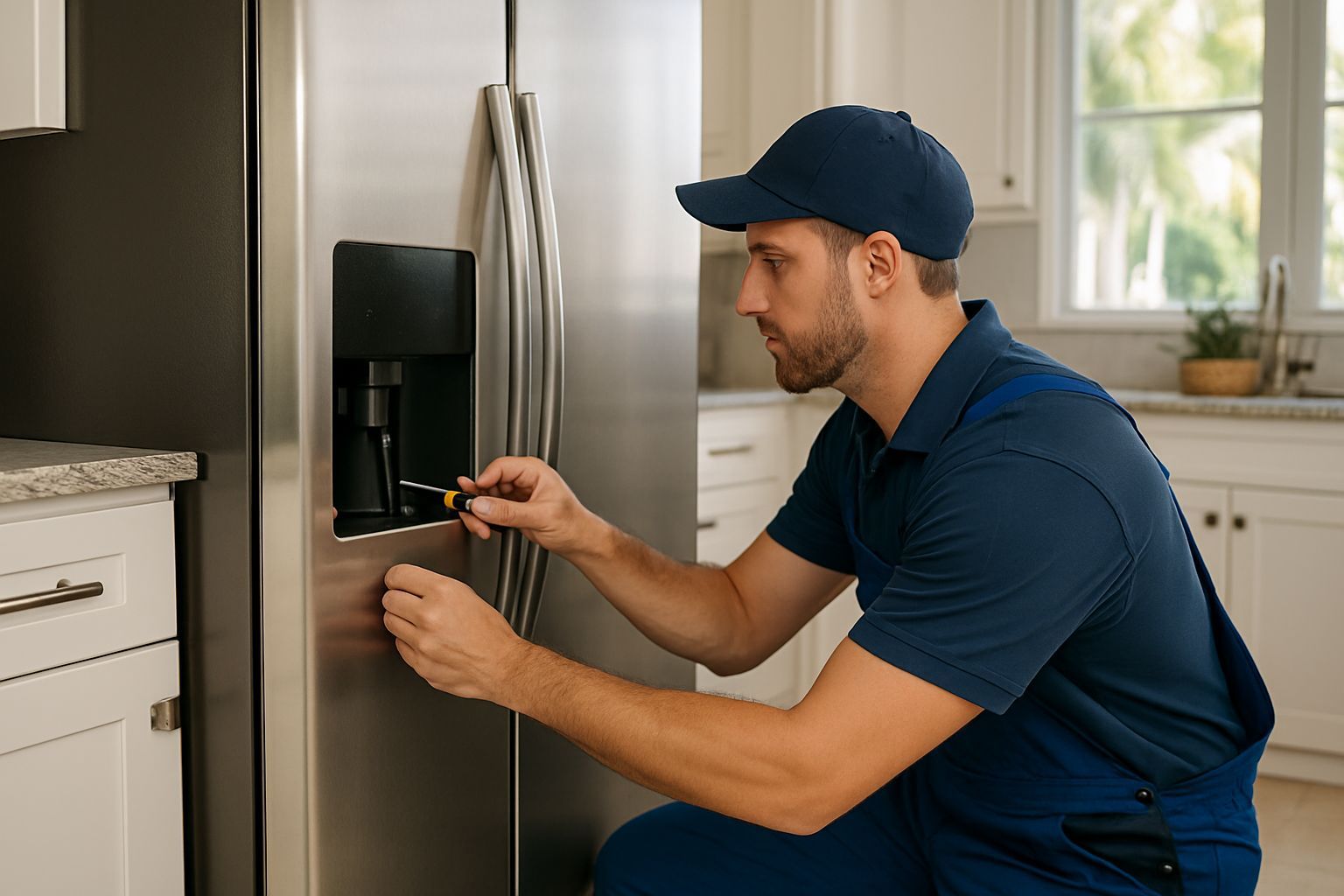
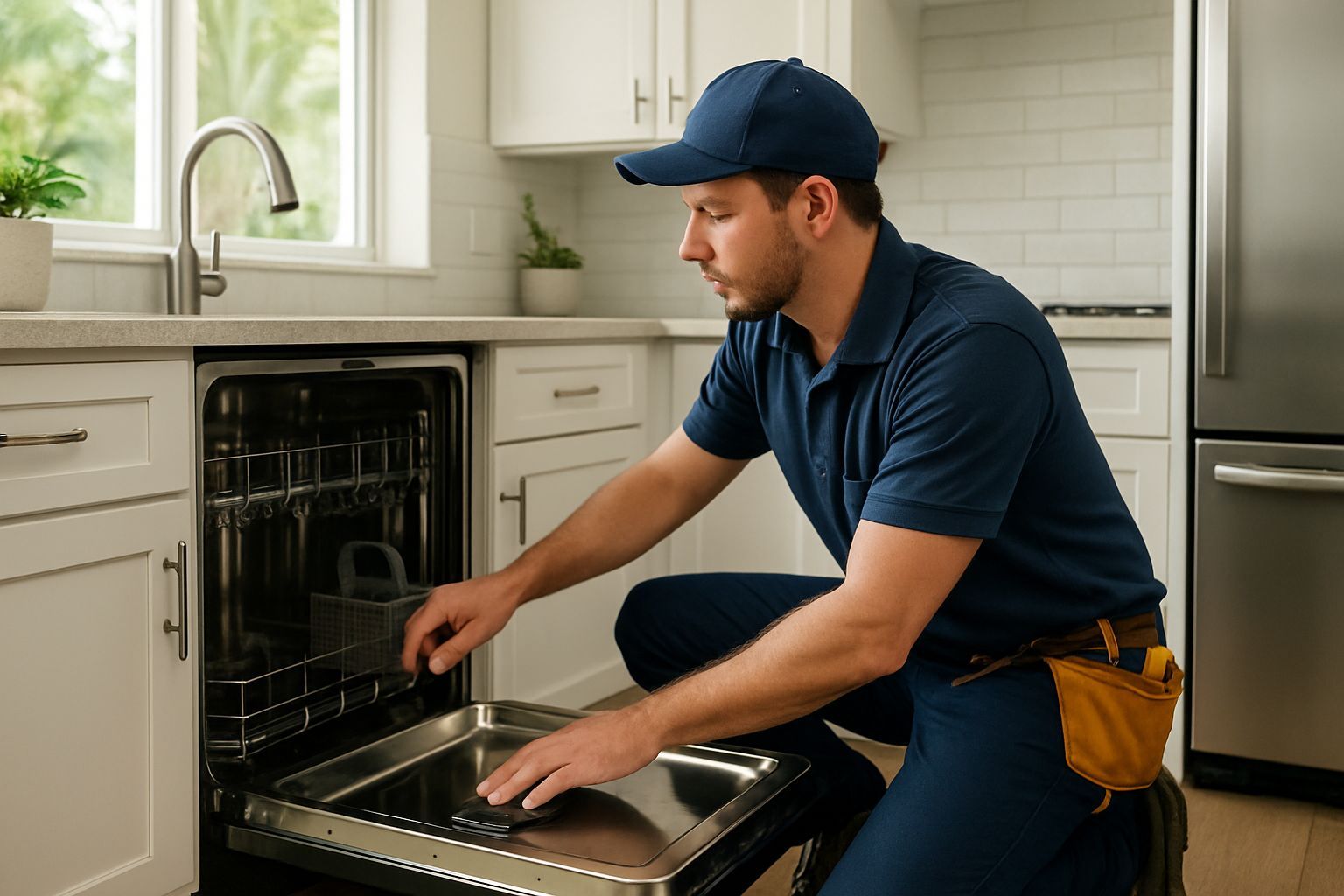
Illustrative appliance diagnostic inspection
AI-generated illustration of an appliance inspection.

Sediment, Valves, and Door Lines Can Cause Similar Symptoms

Plumbing work can disturb scale or debris in household pipes. Sediment may reach the refrigerator and restrict a filter, filter head, valve screen, or narrow water passage. The dispenser may surge, fade during use, or become slow immediately after plumbing work.

A refrigerator inlet valve may have separate electrically controlled outlets for the ice maker and door dispenser. The ice side can operate normally while the dispenser side is weak, restricted, or not receiving the correct electrical command. A failing valve is possible, but low supply flow, sediment, or a restricted filter head can look similar.

Some refrigerators route water through the door, where a line can freeze or become restricted. Avoid applying heat to the door or liner. Excessive heat can damage the finish, insulation, dispenser assembly, or concealed tubing. A technician can determine whether the issue is in the housing, valve, reservoir, or door line.

When a Slow Dispenser Should Be Serviced

A slow stream is not usually an emergency, but it should be addressed if it worsens or becomes inconsistent. Arrange service if flow remains weak after basic filter and supply checks, if the refrigerator buzzes or chatters while dispensing, or if ice becomes slow, hollow, or absent.

Stop using the dispenser and seek help promptly if water pools near electrical controls, drips from the dispenser area, or leaks behind the refrigerator. Water leaks can damage flooring and may indicate a cracked line or failed connection.

Homeowners seeking appliance repair in Lake Worth can have intermittent water flow diagnosed before replacing costly parts based on symptoms alone. For additional warning signs, review these signs your refrigerator needs repair.

Frequently Asked Questions About a Refrigerator Water Dispenser Slow to Fill

Why is my refrigerator water dispenser slow but the ice maker still works?

The ice maker and dispenser can use separate valve outlets or tubing paths. Ice production confirms some water supply, not unrestricted dispenser flow.

Can a new water filter cause slow refrigerator water flow?

Yes. A new filter may be incompatible, damaged, or improperly seated. Confirm it is approved for the refrigerator and installed according to instructions.

Why did the dispenser slow down after plumbing work?

Plumbing work can stir sediment and scale in household pipes. Debris can restrict the filter, filter housing, valve screen, or water tubing.

Does slow dispensing mean the inlet valve is failing?

Not necessarily. A weak valve is possible, but low incoming flow, sediment, a clogged filter head, or a restricted door line can match the symptom.

Should I use a dispenser that is barely flowing?

Avoid using it until the cause is identified if flow is worsening. Stop immediately if water leaks, pools, or reaches electrical controls.

Accurate diagnosis matters because the same weak stream can come from several locations. Checking the complete water path helps avoid unnecessary parts and protects against leaks.

By General Appliance Service September 11, 2026
An electric stove burner that stays hot after it is turned off may have a control or wiring fault. Learn the safety steps and what diagnosis requires.
By General Appliance Service September 11, 2026
If your dryer stops mid-cycle then restarts after cooling down, learn what airflow, overheating, motor, electrical, and mechanical problems may cause it.
By General Appliance Service September 10, 2026
A dryer that stops mid-cycle then starts again after cooling down may have an overheating, airflow, motor, or electrical problem. Learn what to check safely.
By General Appliance Service September 9, 2026
Dishwasher fills with water but won’t wash? Learn what to check first, why spray arms may not move, and when a circulation-pump problem needs professional diagnosis.
Washer Smells Like Burning Rubber During Spin
By General Appliance Service September 8, 2026
Washer smells like burning rubber during spin? Learn what can cause the odor, what you can safely check, and when a washer needs professional diagnosis.
Why Is My Dishwasher Filling With Water
By General Appliance Service September 7, 2026
Dishwasher filling with water when off? Learn how to tell a leaking inlet valve from drain-water backflow and when professional dishwasher repair is needed.
Yacht Appliance Repair
By General Appliance Service September 5, 2026
Need yacht appliance repair in South Florida? We service onboard washers, dryers, refrigerators and ovens with floor protection and in-place repairs whenever possible.
Microwave not heating
By General Appliance Service September 5, 2026
Microwave runs but food stays cold? Learn what technicians check first, including settings, door switches, magnetron, diode, inverter, and control problems.
Freezer not freezing with heavy frost buildup covering shelves, vents, and frozen food
By General Appliance Service September 3, 2026
Freezer building up frost and not freezing? Learn how door leaks, airflow problems, defrost failures, fans, and cooling-system issues cause freezer problems.
not making ice
By General Appliance Service September 2, 2026
Refrigerator ice maker not making ice? Learn what technicians check first, including freezer temperature, water filters, fill tubes, inlet valves, sensors, fans, and ice maker controls.