
Why Is My Electric Coil Burner Full Blast on Low?
By General Appliance Service
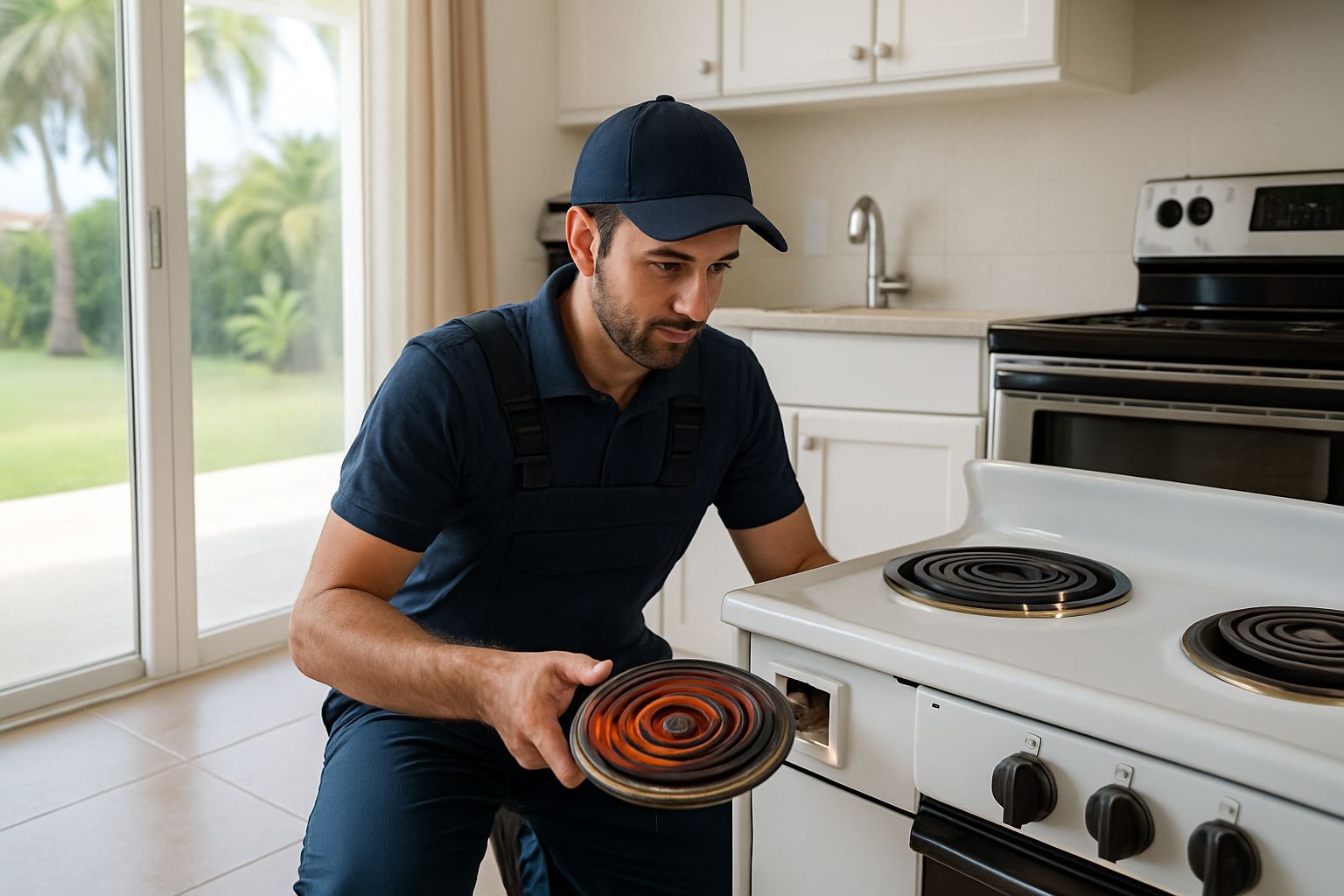
An electric coil burner does not hold one steady temperature. On Low or Simmer, it normally cycles on and off to create lower average heat. However, a burner that makes food sizzle, smoke, or boil aggressively at every active setting is not cycling normally. An electric coil burner full blast on low usually indicates a control-circuit problem that requires proper diagnosis.
What a Technician Checks When a Coil Burner Will Not Turn Down
Most conventional coil burners use an infinite switch behind the control knob. Despite its name, this switch does not simply send low voltage on Low and high voltage on High. It opens and closes contacts in timed cycles. At lower settings, the burner should be energized for shorter periods and remain off longer.
A technician first confirms whether the complaint is continuous maximum output or ordinary cycling. If the burner produces nearly the same heat on Low, Medium, and High, the switch, wiring, terminals, and element circuit need inspection. A stuck switch contact is common, but it is not the only possible cause.
An incorrectly installed replacement control, heat-damaged connector, or model-specific dual-element circuit can create similar symptoms. Replacing a part by appearance alone may not solve the problem and can create additional wiring issues.
Normal Cycling Versus a Burner Stuck on High
Electric coils may glow brightly during part of a normal cooking cycle, then fade or turn off. This is expected, especially at Low and Medium settings. The useful distinction is what happens in the cookware: water should settle into a controlled simmer, and food should not immediately scorch after the knob is reduced.
A burner stuck at high output keeps delivering maximum or near-maximum heat whenever the knob is in any active position. Moving the control from High to Low makes little practical difference. That differs from an electric coil burner that shuts off while cooking and works again after cooling, where heating interrupts and later resumes.
If the affected burner behaves the same at every setting, the range is being commanded on but is not regulating heat correctly. Do not assume the glowing coil alone proves a failure; the lack of control response is the important clue.
Safe Checks Before Calling for Range Service
Turn the knob to Off if the burner is obviously overheating. If it continues heating after Off, stop using the range and shut off its breaker if you can do so safely. Smoke, arcing, a burning-plastic smell, a tripped breaker, or a damaged coil also call for immediate discontinuation of use.
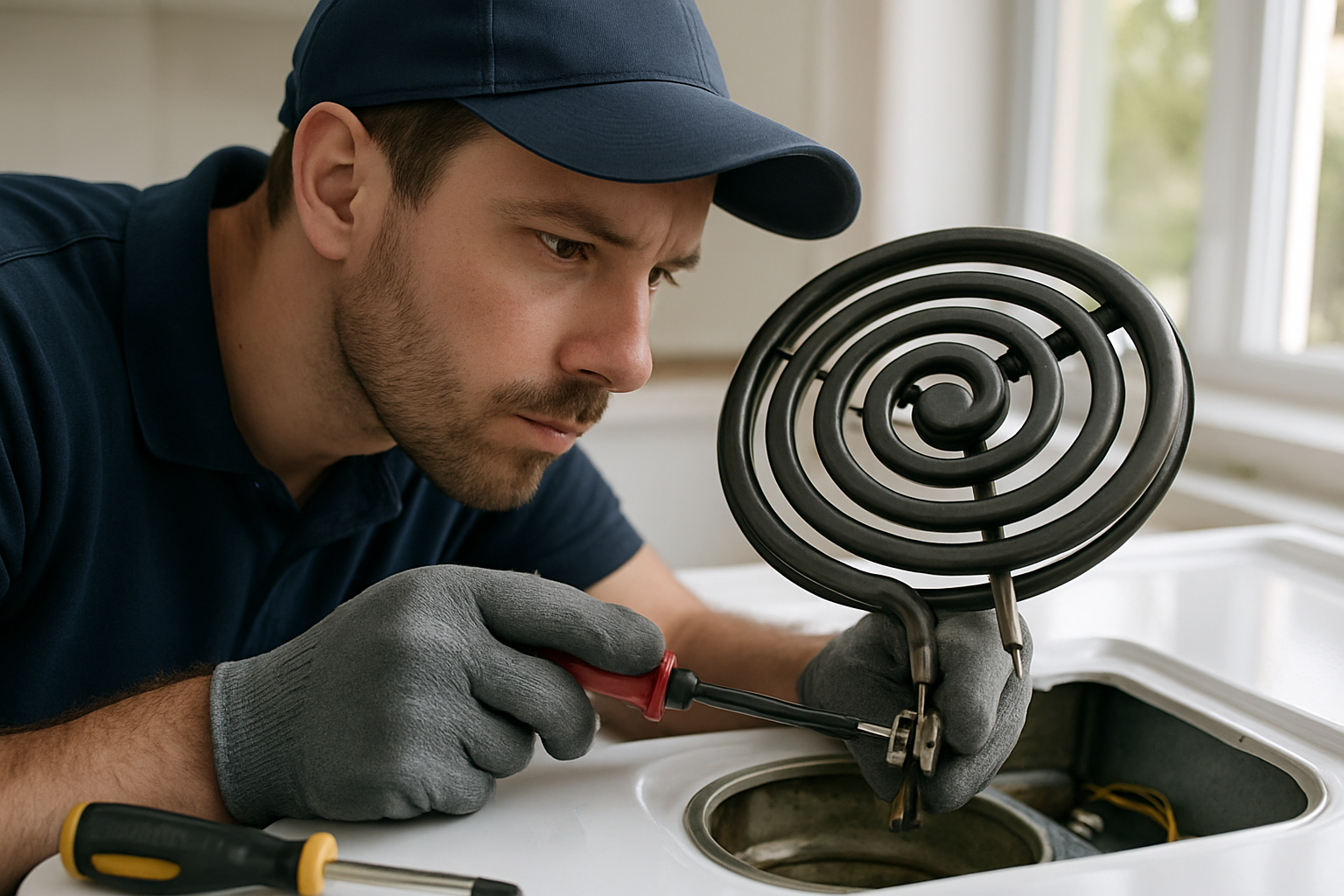
After the cooktop is completely cool and power is off, you may check whether a removable coil sits flat and fully seated in its receptacle. Do not bend the terminals or probe inside the receptacle. A loose coil can cause poor-connection symptoms, but it does not automatically explain full-blast heat.
Note whether one burner or several ignore their settings, and whether the element is a standard coil or a dual cooking zone. Have the model number available. Avoid repeatedly testing an overheating burner with empty cookware, and never leave it unattended.
Why the Switch Is Not Always the Only Answer
A failed infinite switch can leave contacts stuck closed, allowing the element to receive full power throughout the cooking cycle. Still, a correct diagnosis requires more than assuming the switch is bad. A technician may inspect terminals for heat damage, verify the circuit arrangement, and compare the installed control with the model wiring information.
Dual and expandable elements require added caution because their controls, limiters, and wiring vary by model. If the inner ring heats differently from the outer ring, the wrong ring operates, or a replacement part was recently installed, the exact control and terminal placement matter. Internal live-voltage testing is not a homeowner task.
For persistent control problems, oven and cooktop repair in Boynton Beach can identify whether the fault involves the switch, wiring, element circuit, or another model-specific component. Homeowners needing appliance repair in Lantana, FL should avoid using a burner that cannot regulate safely.
Frequently Asked Questions About an Electric Coil Burner Full Blast on Low
Is cycling on and off at low heat normal?
Yes. Coil burners cycle to regulate average heat. A problem exists when the burner produces nearly maximum cooking heat and shows little difference between Low and High.
Why is only one burner full blast on Low?
A failed infinite switch is common. Damaged wiring, incorrect control connections, or a dual-element circuit problem can also cause one burner to ignore its setting.
Can a bad infinite switch keep a burner on high?
Yes. If internal contacts stay closed, the heating element may receive full power at every active knob setting. Testing should confirm the switch before replacement.
Should I use a burner that will not turn down?
No. It can overheat cookware, scorch food, and make cooking unpredictable. If it heats after Off, shut off the breaker and stop using the range.
Why does my dual burner heat the wrong ring?
Dual elements have more complex controls and wiring. Incorrect terminal placement, a wrong replacement part, damaged wiring, or an element-related fault may affect operation.
A burner that will not reduce heat is both inconvenient and a safety concern. Professional diagnosis helps identify the complete circuit fault instead of guessing at a single replacement part.