Why Is My Gas Stove Flame Too High Even on Low? What the Flame Pattern Can Mean
By General Appliance Service
A gas stove flame that stays too high can scorch cookware handles, overheat the kitchen, and make simmering impossible. The pattern matters: one oversized burner suggests a different path than a range where every burner suddenly burns high. Do not assume a failed regulator or valve. Burner fit, fuel configuration, gas delivery, and low-flame control can all affect flame height. Safe observation helps determine when to stop using the range.
What a Technician Checks When a Gas Stove Flame Is Too High
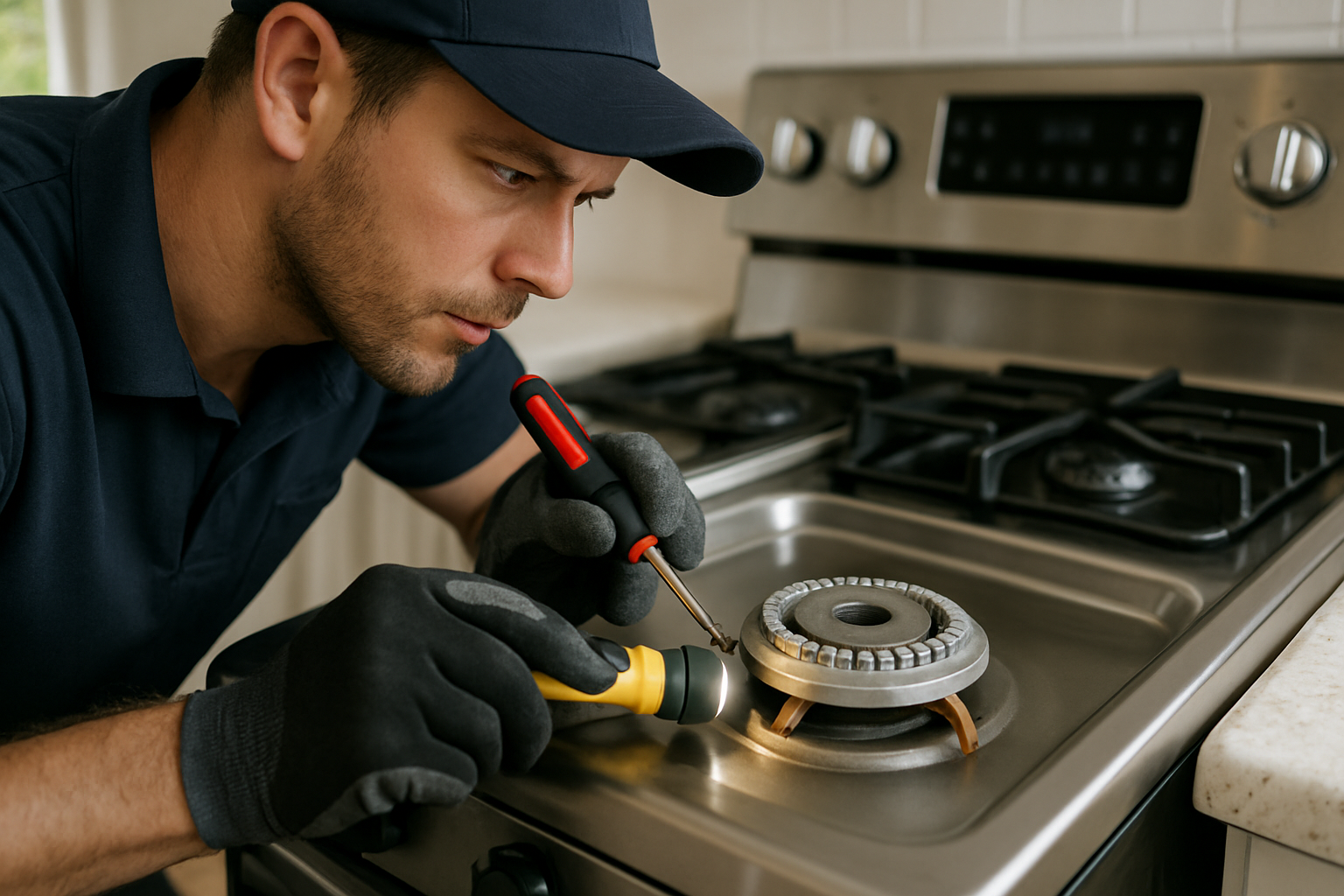
A technician observes the flame before recommending parts. They compare the affected burner on high and low with the other surface burners, noting height, color, stability, ignition, and response to the knob. These comparisons help separate a local burner concern from a range-wide fuel or supply issue.
The model number and fuel type matter. Natural gas and propane require model-specific conversion components, and an incorrect configuration can create abnormal flames. The technician inspects the cap, burner head, base, venturi area, and igniter for residue, corrosion, warping, damage, or incorrect assembly.
They may also evaluate regulator, manifold, and gas-supply performance under appropriate test conditions. A burner that will not seem to lower properly does not, by itself, prove that the control valve or regulator has failed.
One Burner Burning High Is Different From Every Burner Burning High
If only one burner has an unusually tall flame, start with the removable burner parts after the cooktop has cooled completely. Check the owner’s manual to confirm that the cap and burner head belong in that location and sit flat without rocking. Similar-looking caps are not always interchangeable.
Recent cleaning or a boil-over can affect burner operation. Let removable components dry fully before reinstalling them as directed by the manufacturer. Moisture, baked-on residue, or a cap that is slightly out of position may change flame distribution around the burner.
An oversized flame differs from a gas burner only lighting on one side. One-sided ignition often involves incomplete flame travel or dirty burner ports, while a flame that stays too large on low also raises questions about flame control and gas delivery.
When every burner burns higher than normal, removable parts are less likely to be the entire explanation. Installation configuration, regulator behavior, or supply conditions become more relevant, especially if flames change when another gas appliance operates.
Safe Checks Before You Use the Range Again
Turn the burner off and let the cooktop cool before touching burner components. Note whether the issue affects one burner or all of them, and whether the flame remains large on both high and low settings.
Watch for popping, delayed ignition, soot on cookware, flames rising well above the cookware, or a heavy yellow or orange flame. A mostly blue flame with small yellow tips can occur during normal operation, but persistent yellow flames, soot, or unstable flames should not be ignored.
Do not probe burner ports with tools, adjust valve screws, alter air shutters, remove orifices, change conversion parts, or test gas pressure. Those steps can create an ignition or combustion hazard and may complicate diagnosis.
When a Tall Gas Flame Means Stop Using the Appliance
Stop using the range if you smell gas, hear unusual hissing, see flames below the burner cap, experience flare-ups, or notice delayed ignition. Follow your gas utility’s emergency instructions if there is a gas odor.
Soot and persistent heavy yellow or orange flames also deserve prompt attention. They can indicate incomplete combustion and are not problems to manage by simply turning the knob down. Avoid using the affected burner until it has been assessed.
For homeowners needing oven and cooktop repair in Boynton Beach, General Appliance Service can evaluate persistent flame-height and low-setting concerns. Appliance repair in West Palm Beach, FL is also available for ranges with abnormal burner behavior.
Frequently Asked Questions About a Gas Stove Flame Too High
Why is my gas stove flame too high even when the knob is on low?
Possible causes include burner assembly issues, poor low-flame control, incorrect fuel configuration, or gas-delivery concerns. If correct cap placement does not help, schedule diagnosis.
Can an improperly seated burner cap make the flame too large?
Yes. A cap that rocks, sits crooked, or belongs on another burner can disrupt normal flame distribution. After cooling, verify placement using the owner’s manual.
Why are all my gas burners suddenly producing bigger flames?
If every burner changes at once, the cause may extend beyond individual burner heads. Fuel configuration, regulator performance, or supply conditions may require professional evaluation.
Is it safe to cook with a tall yellow or sooty flame?
No. Stop using the affected burner if flames are heavily yellow, produce soot, flare up, or appear below the cap. Follow emergency guidance if gas is smelled.
Should I adjust the burner or gas regulator myself?
No. Avoid adjusting valve screws, regulators, or conversion components. These parts affect combustion and safe gas operation and should be checked against manufacturer specifications.
A flame that is too high may be a simple burner-fit issue, but it can also signal a condition needing measured testing. Identifying whether one or every burner is affected gives technicians a safer starting point.