
Refrigerator Clicking but Not Cooling: What the Sound Can—and Cannot—Tell You
By General Appliance Service
A refrigerator clicking but not cooling can be alarming, especially when the sound repeats and temperatures rise. The click is useful information, but it is not a diagnosis by itself. A brief hum followed by a click near the lower rear often means the compressor tried to start and a protective device shut it down. The reason for that failed start still needs to be identified.
What a Technician Checks When a Refrigerator Clicks but Will Not Cool
The first step is locating the sound. Not every click comes from the same component. Some refrigerators use conventional compressor start devices, while others use inverter-driven compressors and electronic controls with different starting systems.
A technician listens for the sequence. Does the compressor hum for several seconds before clicking? Does it try again after a cooldown period? Are both the freezer and fresh-food sections warming, or is one area colder than the other?
A single relay click during normal operation differs from a repeated hum-click cycle with no temperature recovery. The repeated pattern can occur when a compressor cannot start, a protective device opens because of heat or electrical load, or the refrigerator is not receiving the proper command to run.
Technicians also check condenser airflow. If the condenser fan is not moving air or ventilation is restricted, the compressor may overheat. Airflow should be ruled out before blaming the compressor or a start component.
Safe Checks to Make Before Calling for Refrigerator Repair
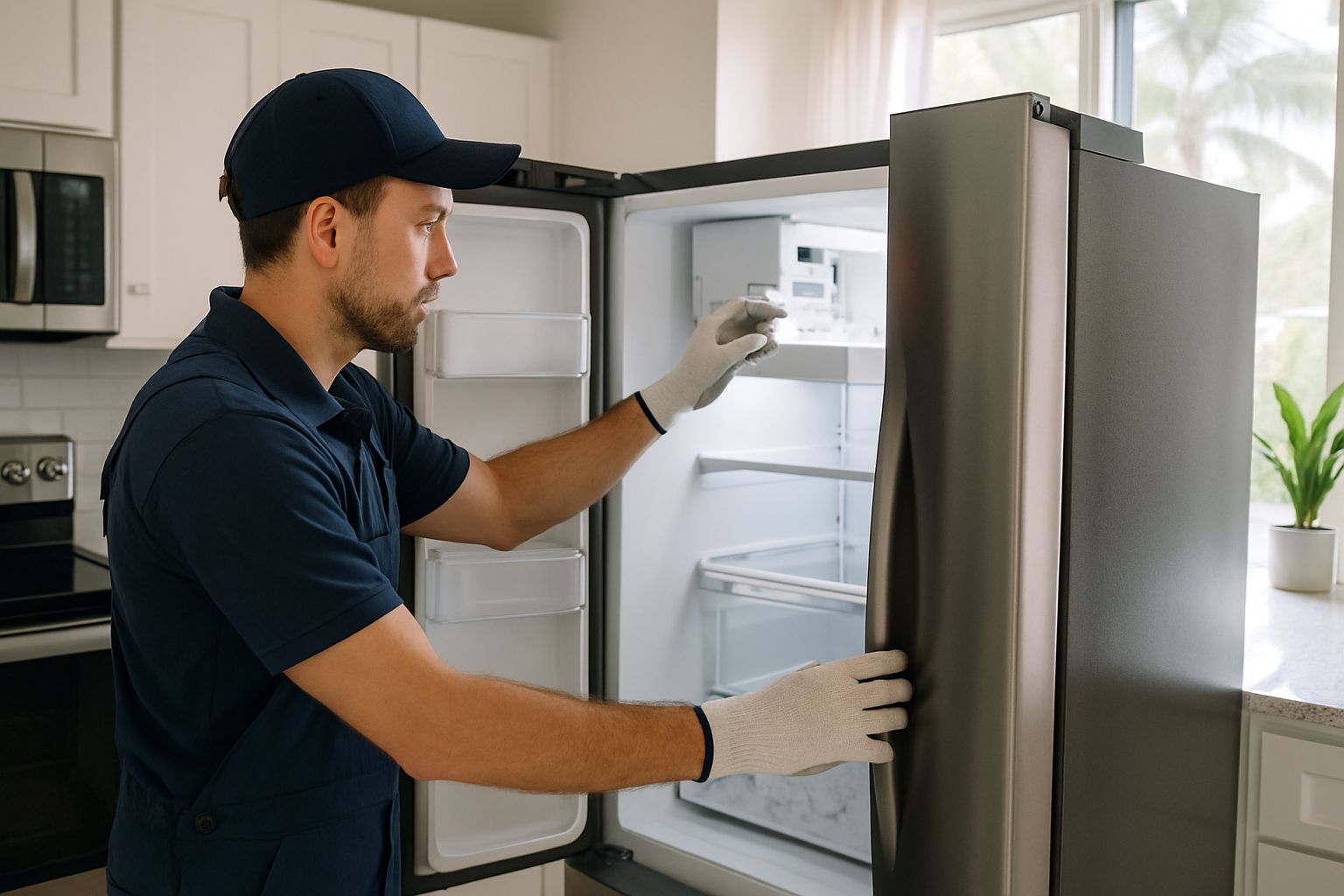
Start with checks that do not require removing panels or touching electrical parts. Confirm the outlet has power and that the refrigerator is not in cooling-off, demo, or vacation mode. Settings vary by model, so consult the owner’s manual instead of guessing from the display.
Listen from a safe distance and record a short video. Capture the hum, click, time between sounds, and any display messages. Note whether interior lights work, fans can be heard, and the freezer is warming along with the refrigerator compartment. This information can help make diagnosis more efficient.
Check exterior ventilation areas for boxes, pet hair, or other obstructions. If the condenser area is safely accessible according to the manual, look for heavy dust buildup. Do not remove covers, probe wiring, or reach near moving fan blades.
Avoid repeatedly unplugging and reconnecting the refrigerator as a “reset.” If there is a burning odor, smoke, arcing, visible heat damage, sharply dimming lights, or a tripped breaker, stop using the appliance and arrange prompt service.
Why the Same Clicking Sound Can Have Different Causes
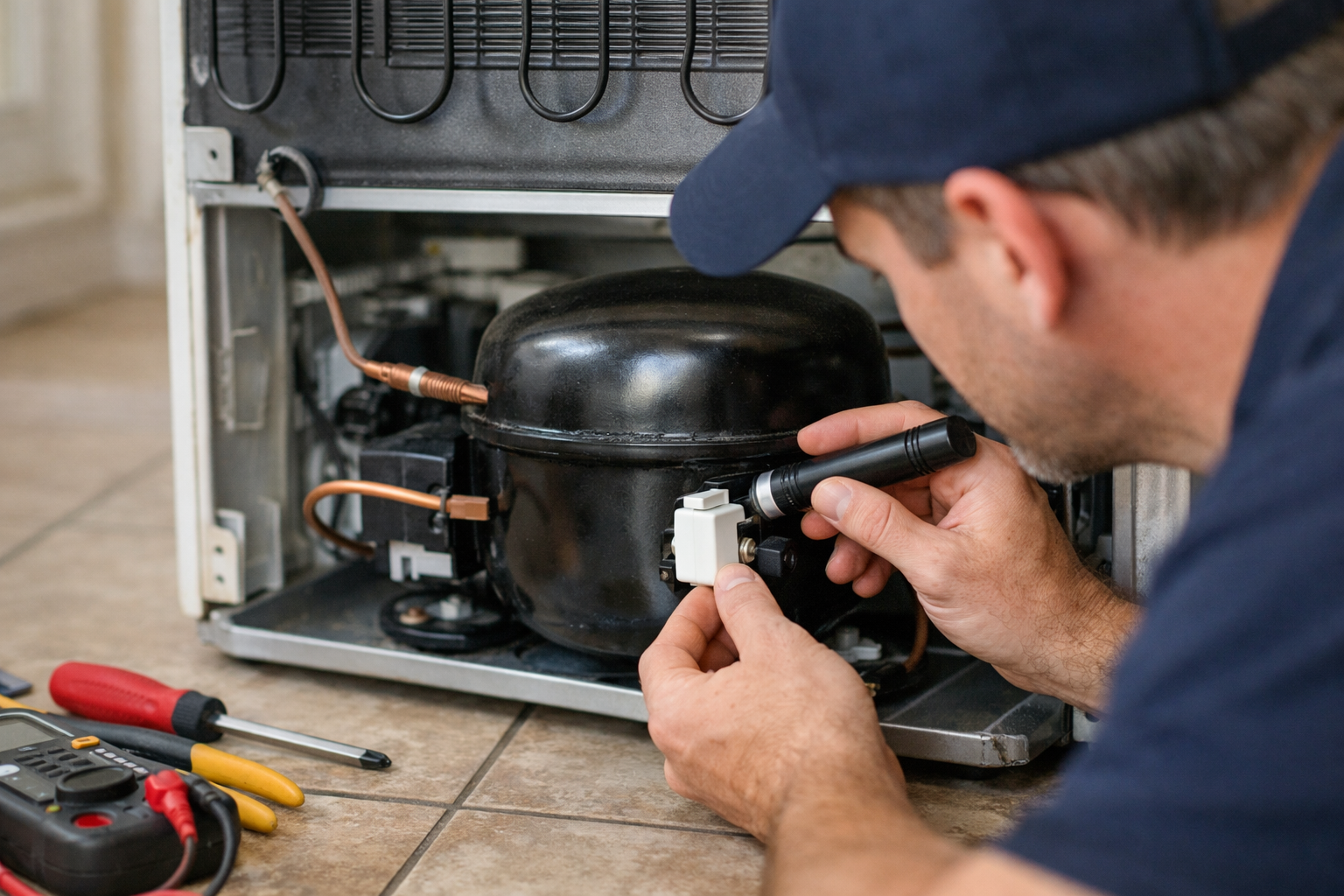
One possible issue is a fault in the compressor start circuit, where applicable. Depending on the design, that could involve a start device, overload protector, capacitor, wiring connection, or related control component. Replacing a part without testing is not a reliable repair plan.
The symptom can be misleading because an internally failing or locked compressor may create a similar hum-click pattern. The protective device may open when the compressor draws excessive current or cannot begin running normally. Poor condenser airflow can also overheat the compressor and cause later restart attempts.
On electronically controlled or inverter-driven refrigerators, the problem may involve the inverter path, harness connection, control command, or compressor itself. Proper diagnosis requires model-specific wiring information and instruments.
A refrigerator that runs continuously is a different pattern. Causes may involve airflow, defrosting, temperature sensing, or the sealed system. Our guide to a refrigerator running constantly explains why continuous operation should not automatically be blamed on the compressor.
Protect Food While the Refrigerator Is Warming
Treat rising temperatures as a food-storage concern, not just an appliance inconvenience. Keep doors closed as much as possible. Repeated checking lets warm air inside and reduces the remaining cold temperature.
Move meat, dairy, leftovers, and other perishables to a working refrigerator, freezer, or cooler with ice as soon as practical. A freezer that feels slightly cool may still be warming and should not be assumed safe for long-term storage.
For homeowners needing refrigerator repair in Boynton Beach, General Appliance Service can diagnose the failed-start pattern rather than treating the click as proof that one part has failed. Appliance repair in Boca Raton, FL is also available for recurring clicking, overheating, or loss-of-cooling symptoms.
Frequently Asked Questions About a Refrigerator Clicking but Not Cooling
Why does my refrigerator click every few minutes but not get cold?
A repeated click after a brief hum can mean the compressor is attempting to start and then shutting down on protection. Several faults can cause that pattern.
Does a clicking refrigerator always mean the compressor is bad?
No. Start devices, overload protectors, capacitors, wiring, fan problems, and electronic controls can sound similar. Model-specific testing is needed before deciding on a repair.
Can dirty condenser coils make a refrigerator click and stop cooling?
Restricted airflow can make the compressor run hotter and may contribute to shutdowns. Cleaning can help airflow, but it will not correct every clicking problem.
Should I unplug a refrigerator that clicks and will not cool?
Unplug it if smoke, burning smells, arcing, breaker trips, or visible heat damage occur and it is safe to do so. Otherwise, avoid repeated unplugging.
Why is the freezer slightly cool while the refrigerator section is warm?
The freezer may retain cold longer, or airflow may be limited between compartments. Compressor run attempts, fan operation, and temperatures must be considered together.
A recurring click deserves attention when temperatures are rising. Recording the sound pattern, protecting food, and arranging proper diagnosis can prevent unnecessary parts replacement and clarify the most practical repair path.