
Why Is My Washing Machine Filling With Water When Off?
By General Appliance Service
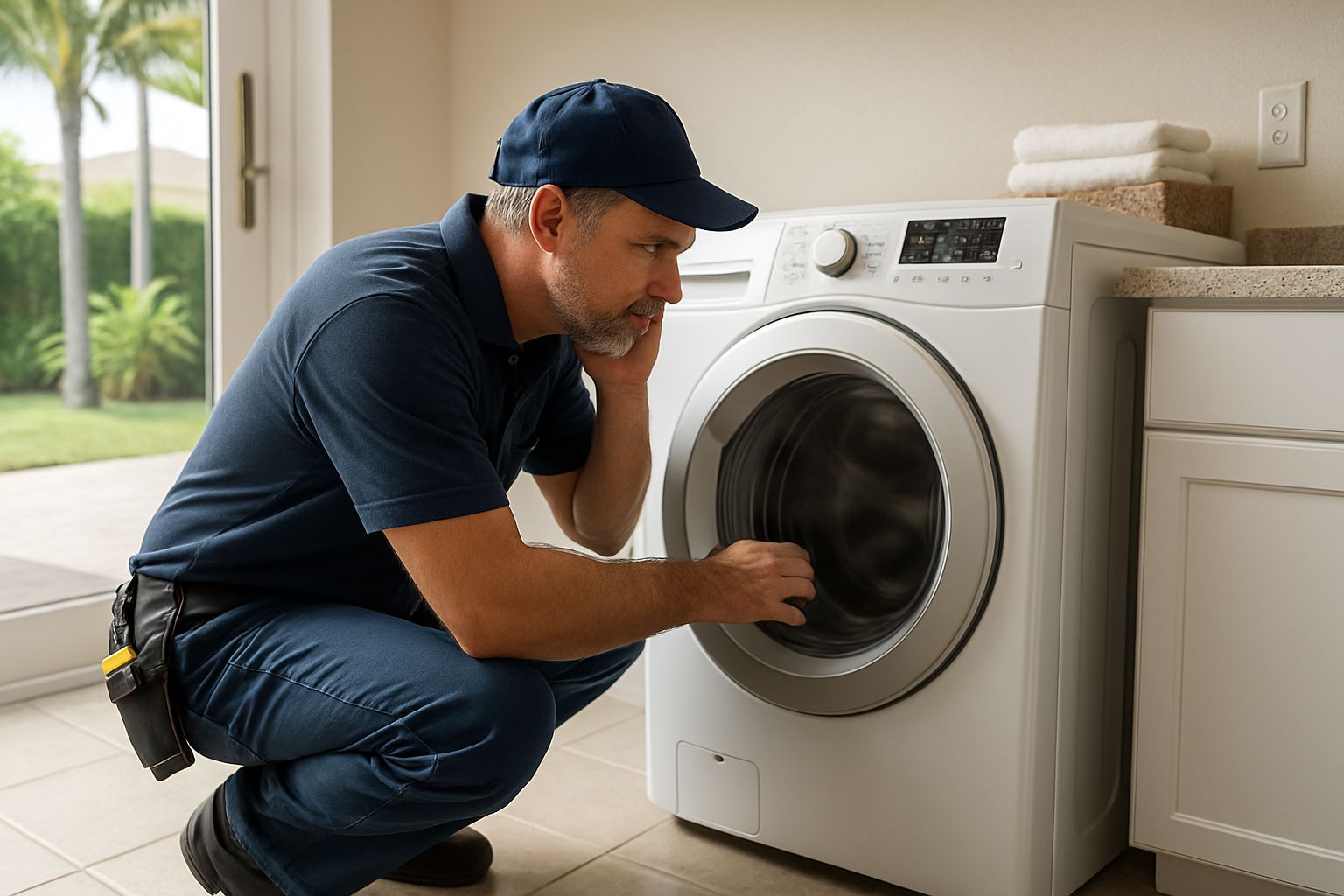
Finding clean water in the washer drum hours after a completed load is unsettling, especially when the machine is off. A washing machine filling with water when off is usually not a normal cycle function or a drain issue. Instead, water is getting past a part that should be closed. Because household water pressure remains available, a slow leak can continue until the supply is shut off.
What a Technician Checks When a Washer Fills While Idle
The first diagnostic question is whether water enters while the washer is completely idle or only rises too high during a wash cycle. These symptoms can have different causes.
For water that slowly appears in an unused tub, technicians often inspect the inlet valve. Located where the hot and cold hoses connect, this valve opens electrically when the washer needs water and closes after filling.
A valve can be electrically off yet leak internally. Mineral buildup, debris, or worn seals may allow water through the hot or cold side. The flow can be slow enough that the tub appears empty in the evening but contains inches of water by morning.
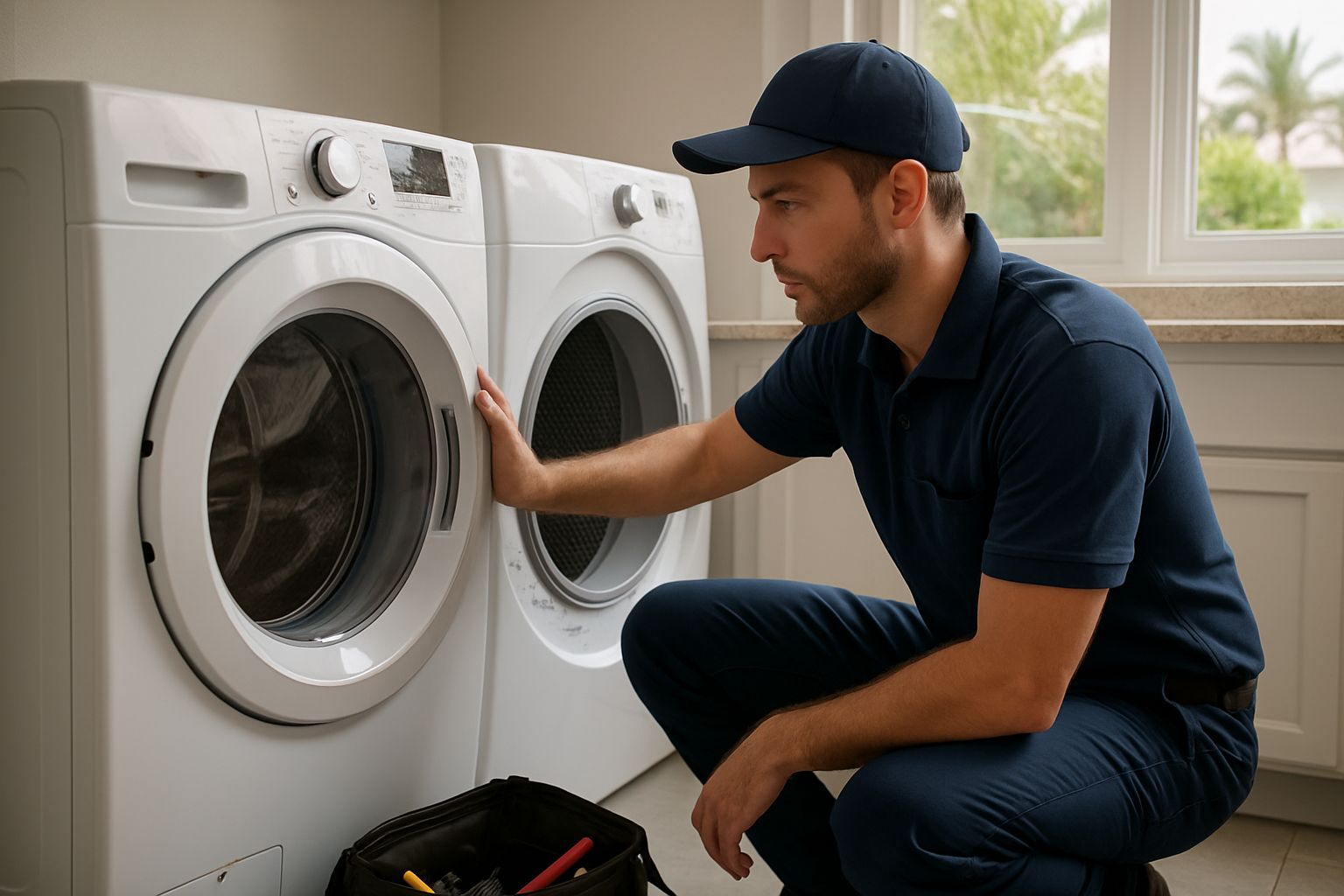
A technician may check whether water returns while the washer is unplugged, inspect hose connections and inlet screens, and identify which supply path is leaking before recommending a repair.
Shut Off the Water Before It Becomes a Floor Problem
If water continues collecting, stop using the washer and close both household supply valves behind it. Dry water around the appliance to reduce slip hazards and prevent damage to flooring, walls, or baseboards.
After emptying the tub, note how quickly water returns. It may take minutes, several hours, or overnight. If safe to do so, notice whether the water feels warm or cold, but do not taste it. That detail can help identify the supply side involved.
Look behind the washer for dripping hose connections, moisture on the wall, or water on the floor. Avoid removing cabinet panels or disconnecting pressurized hoses unless you are prepared to handle plumbing safely. Record the model number and take a photo of the water level.
For persistent idle filling, washer and dryer repair in Boynton Beach can identify the source before water damage occurs or an unnecessary part is installed.
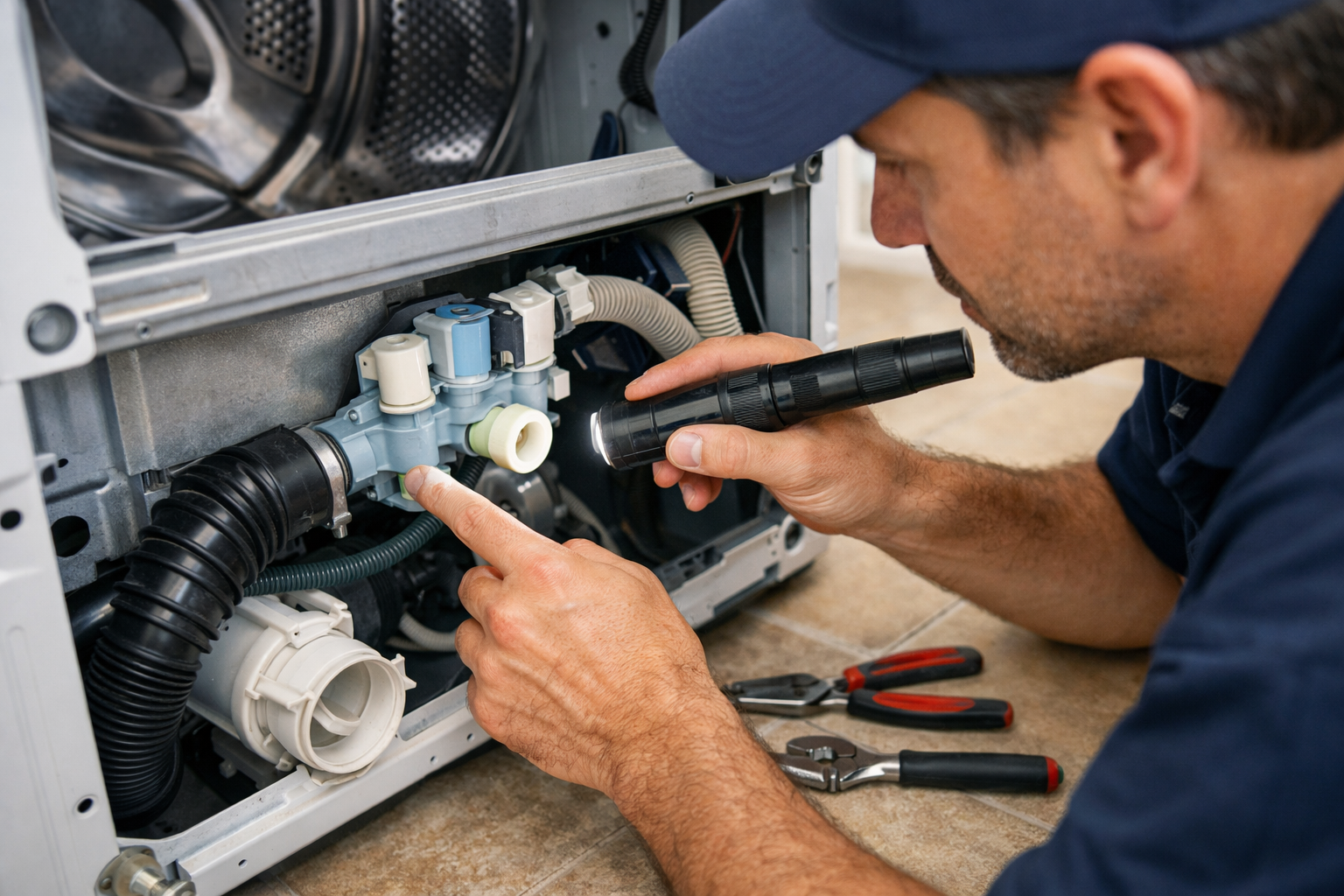
Why an Inlet Valve Can Leak With the Power Off
An inlet valve is designed to remain closed when it receives no power. Small internal passages and seals hold back household water pressure. When a seal no longer closes tightly, water can creep into the tub even with a dark control panel and no selected cycle.
The symptom can be misleading because unexpected washer behavior is sometimes blamed on the control board. With an idle washer, however, a mechanical seep through the inlet valve is often a more direct possibility. A control issue is more relevant when the washer actively commands water at the wrong time during a cycle.
Technicians may isolate the hot and cold supply paths to determine whether one side stops the accumulation. Avoid energizing the valve directly, bypassing controls, or leaving a suspected leaking washer connected while nobody is home.
Idle Filling Versus Active-Cycle Overfill
A washer that fills while untouched is different from one that overfills during a cycle. During active overfill, the inlet valve may be stuck open, but pressure sensing, a damaged pressure hose, wiring, or control output can also be involved.
If the washer keeps adding water, drains, and repeats the pattern, see washer keeps filling and draining. That symptom may involve siphoning or cycle-related sensing rather than water entering an idle appliance.
Call for service if water returns after the supply valves are reopened, if rear connections are wet, or if the issue returns after a cycle. Homeowners needing appliance repair in Pembroke Pines, FL should keep the valves off until the source is identified.
Frequently Asked Questions About a Washing Machine Filling With Water When Off
Why is there water in my washing machine when I have not used it?
Clean water in an unused washer commonly enters through an inlet valve that is not sealing fully. Water pressure can push past the hot or cold valve side.
Can an inlet valve leak when the washer is turned off?
Yes. The valve should close without power, but worn seals or debris can cause an internal leak. The washer does not need to be running.
How can I tell whether hot or cold water is entering?
After emptying the tub, note whether returning water feels warm or cold. A technician can isolate supply paths safely. Do not disconnect live hoses to test it.
Should I shut off the water if my washer fills overnight?
Yes. Close both supply valves and avoid leaving the washer connected unattended until it is diagnosed. This limits the chance of overflow and water damage.
Is idle filling the same as overfilling during a cycle?
No. Idle filling often indicates a valve that will not close. Active-cycle overfill can also involve level sensing, wiring, or the control system.
If the tub refills after you reopen the water supply, leave the valves closed and arrange an inspection rather than waiting for the leak to worsen.