
Why Does an Electric Stove Burner Stay Hot After You Turn It Off?
By General Appliance Service
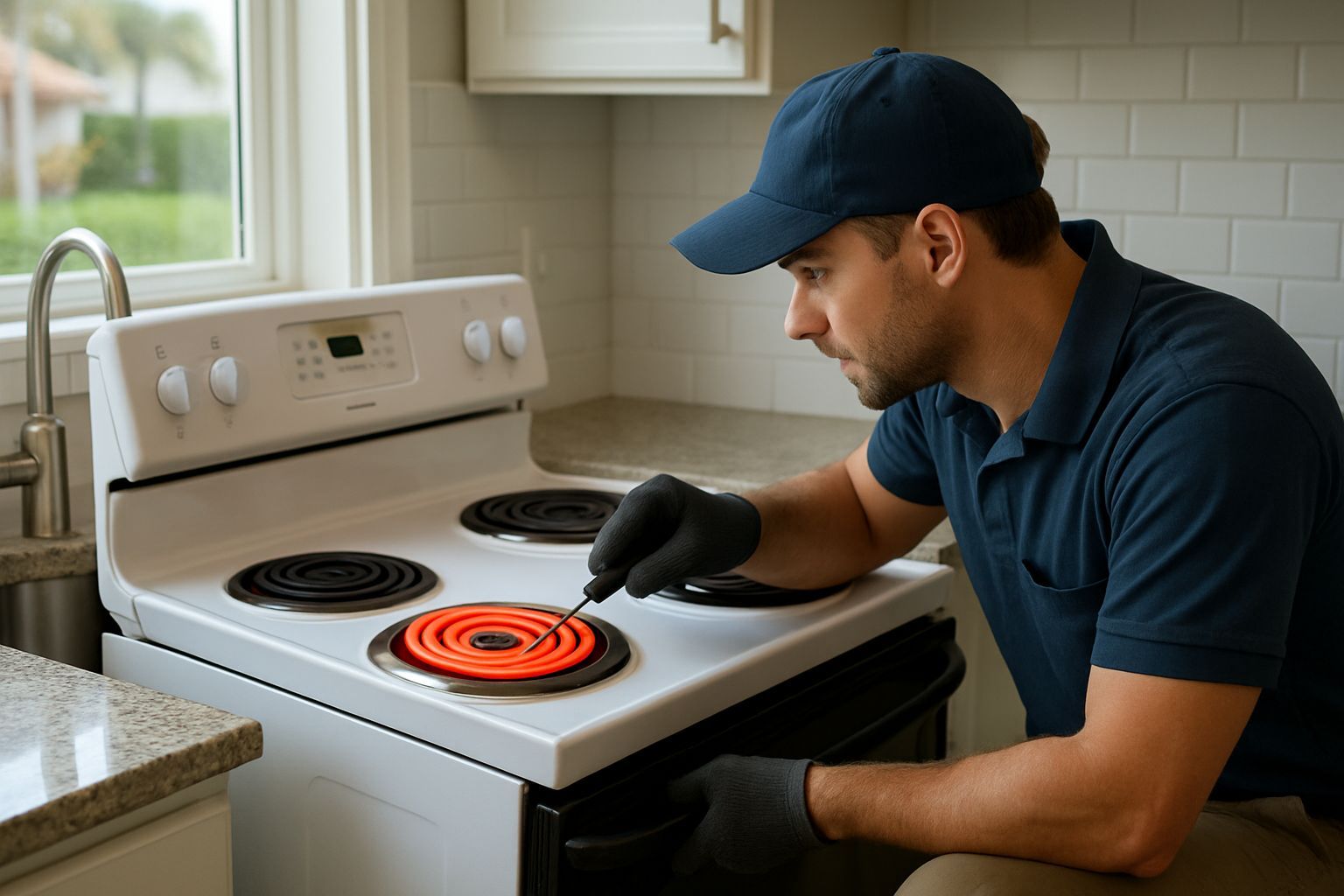
Electric coil and radiant glass-top burners retain heat after OFF. That can be normal cooling. A burner that stays brightly glowing, becomes hotter, or starts heating again with its control at OFF may still be receiving power and needs prompt attention.
If you suspect continued heating, switch off the range’s identified circuit breaker if safely accessible and leave it off until inspected. Do not rely on the knob. Keep people, pets and combustible items away while the surface cools. Do not touch the surface to test its temperature or leave cookware on it to test whether it keeps heating.
Normal cooling vs. a possible fault
| Observation | Possible explanation | Next step |
|---|---|---|
| Glow fades after OFF; surface stays hot | Stored heat in the element or glass | Keep clear and allow cooling; time varies by model and prior use. |
| Hot-surface light stays on as the cooktop cools | Normal temperature warning | Follow the manual; the light alone does not prove continued power. |
| Element remains bright, heats more, or re-energizes at OFF | Possible switch, relay, control or wiring fault | Disconnect power at the identified breaker and arrange service. |
| Indicator remains on after the surface has fully cooled | Possible indicator or sensing issue | Arrange diagnosis; do not assume the indicator confirms the surface is safe. |
Electric stove burner too hot: is it still heating after OFF?
Many knob-controlled ranges use a surface-control switch, often called an infinite switch. Contacts that fail closed can continue supplying power. Electronic cooktops may use relays and control boards instead. A relay, control command or wiring problem may produce a similar symptom.
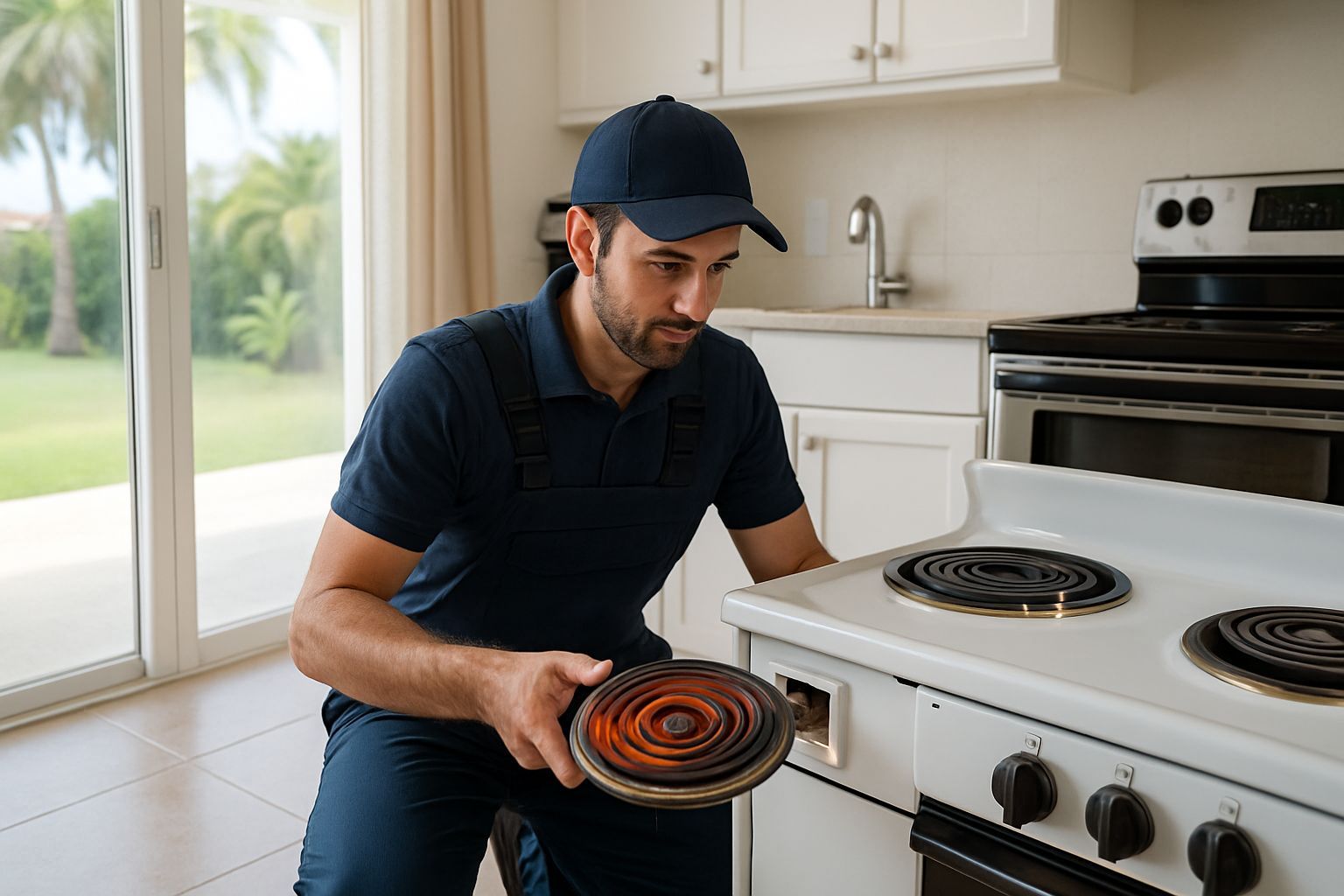
The element produces heat when powered; replacing it alone may not solve a control-path fault. Recent repairs, intermittent behavior and heat-damaged connections are useful diagnostic context, but none confirms a specific failed part.
Safe observations before service
After power is isolated and the surface has cooled, record the affected burner, the control position and whether the glow faded or persisted. Note recent repairs, electrical smells and any visible damage. Do not restore power repeatedly to reproduce the problem, remove panels or perform electrical tests.
When professional diagnosis is appropriate
Keep power off for continued heating at OFF, unattended activation, electrical odor or visible damage. A technician uses the model’s wiring information to inspect the control path, terminals and affected burner. Coil models may also need receptacle inspection. Learn about oven and cooktop repair or model-related GE appliance repair.
If an electric stove shuts off while cooking and restarts after cooling, the interruption follows a different diagnostic path from continued heating after OFF.
Frequently asked questions
Why is my electric stove burner still red after I turn it off?
A fading glow can be residual heat. A persistent bright glow, increasing heat or renewed heating at OFF needs power isolation and diagnosis.
Is an electric burner that will not turn off dangerous?
Continued powered heating can cause burns or overheat nearby items. Leave the range powered off until inspected.
Could the hot-surface light stay on when the burner is off?
Yes. It can remain on during cooling. Do not touch the cooktop to check or treat the light as proof of a control failure.
Will turning off the breaker reset a burner that stays on?
It removes power. It does not reliably repair a stuck switch, relay or wiring fault, even if the symptom changes temporarily.
Is the burner element bad if it keeps heating after OFF?
Not necessarily. The part supplying or controlling power may be responsible. Model-specific testing distinguishes the causes.
Need help with continued heating? Request service or call (561) 396-9878. Describe whether the burner keeps heating or only the warning light remains on. Confirm availability for your address.