
Why Is My Electric Coil Burner Sparking at the Plug-In Socket?
By General Appliance Service
An electric coil burner sparking at socket is not normal temperature cycling. A visible flash, crackling sound, hot electrical odor, or black marks where the coil prongs enter the range can signal a poor connection that worsens under load. Turn that burner off rather than treating the damage as cosmetic. Each arc creates heat that can harm the element terminals, receptacle, and wiring behind the cooktop.
What a Technician Checks at a Sparking Coil Burner Socket
A technician first confirms where the arcing occurs. A surface element may glow, cycle, or run too hot because of a control issue, but sparking at the plug-in connection follows a different diagnostic path.
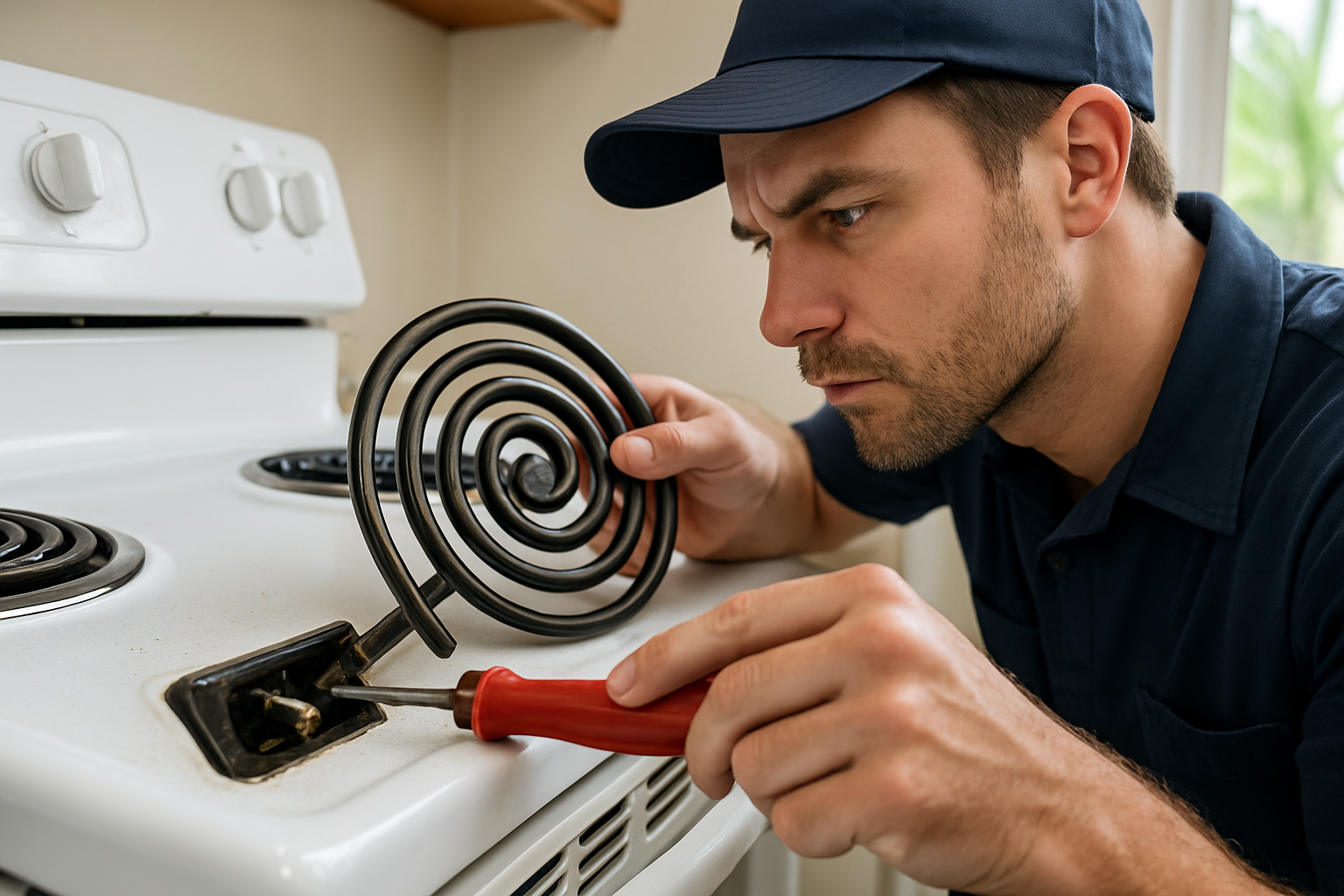
The removable coil’s prongs and the receptacle contacts are inspected for darkened metal, pitting, melted plastic, weak contact tension, and brittle insulation. These signs indicate overheating at the connection. The coil may be damaged, the receptacle may be damaged, or both parts may have been affected by repeated arcing.
Loose contact is a common cause. Resistance builds heat, heat weakens the connection further, and the connection can begin arcing when the burner is operating. A burner may seem to work normally until the damaged area becomes severe enough to crackle, smell hot, or leave marks.
The visible socket is not always the full problem. Accessible harness connections and the related control circuit may also need inspection to determine whether heat traveled beyond the receptacle.
Why the Coil and Receptacle Can Damage Each Other
It is tempting to replace whichever part looks worse. A blackened socket may suggest that the receptacle alone failed, while burned coil prongs may make the element seem like the only problem. Both parts form one electrical connection, however.
A worn coil terminal can fit loosely in a new receptacle and restart the overheating cycle. Likewise, a new coil installed in weak, heat-damaged receptacle contacts can begin arcing again quickly. Replacing only one damaged mating surface may hide the issue briefly without correcting it.
A proper diagnosis determines whether damage is limited to the element and receptacle or involves the harness, terminals, or controls. For recurring sparking, oven and cooktop repair in Boynton Beach can help identify the failed connection instead of replacing parts by appearance alone.
Safe Checks Before You Call for Cooktop Repair
Turn the affected burner control off. If it is safe and practical, switch off power to the range at its dedicated breaker before touching a removable coil. Let the appliance cool completely.
With power disconnected, inspect only the accessible area without taking the cooktop apart. Look for blackening, melted material, heat marks around the socket, damaged prongs, or a coil that does not sit securely. Take a clear photo and record the range model number for the service visit.
Note when the problem occurs. Does it spark immediately when turned on, only when the coil is moved, or after several minutes of heating? Report a burning odor, smoke, breaker trip, or burner that will not shut off.
Do not keep testing the burner. Do not file or bend terminals, spray cleaner into the socket, splice wiring, remove the cooktop, or perform live-voltage testing. Those actions can increase shock, fire, and wiring-damage risks.
Arcing, Normal Cycling, and Breaker Shutoff
A coil burner normally cycles to regulate heat. It may glow brightly, dim, and heat again while cooking. That behavior differs from a flash, sound, or odor at the plug-in socket.
If the burner works, shuts off, and resumes after cooling, review this guide about an electric coil burner shuts off while cooking. If the symptom comes from the connection where the element plugs into the range, stop using that burner until it is inspected.
Turn off the range breaker if there is active smoke, flames, melted plastic, repeated breaker trips, continued sparking, or a burner that stays on when switched off. Other burners may still work, but early heat marks should be taken seriously. For appliance repair in Boca Raton, FL, General Appliance Service can inspect the affected connection and related electrical damage.
Frequently Asked Questions About an Electric Coil Burner Sparking at the Socket
Why is my electric coil burner sparking where it plugs in?
Poor contact between coil terminals and receptacle contacts is the usual cause. Loose, pitted, corroded, or heat-damaged surfaces create resistance, heat, and arcing across small gaps.
Can I use the other burners if one coil burner is sparking?
Do not use the sparking burner. Other burners may work, but overheating marks, odors, or breaker trips elsewhere should be inspected before regular use continues.
Does a blackened burner socket mean the coil or receptacle needs replacement?
It may mean either or both need replacement. Blackening confirms overheating, but a technician should also check coil terminals, receptacle contacts, and accessible wiring.
Why did my burner start sparking again after the socket was replaced?
The coil terminals may also be worn, leaving poor contact in the new socket. Damaged wiring or incorrect installation can also contribute to recurring arcing.
Should I turn off the breaker if my stove burner sparks?
Turn off the burner first. Shut off the breaker if sparking continues or there is smoke, odor, melted plastic, a trip, or a burner that will not shut off.