
Why Is My Refrigerator Randomly Dispensing Water? What the Timing Can Tell You
By General Appliance Service
A refrigerator that randomly dispenses water is more than a nuisance. Water on the floor can damage cabinetry, create a slip hazard, and signal an electrical or control issue. The timing is often the best clue: water released during an ice-maker fill cycle follows a different diagnostic path than a dispenser that drips after someone fills a glass.
What a Technician Checks When a Refrigerator Dispenses Water by Itself
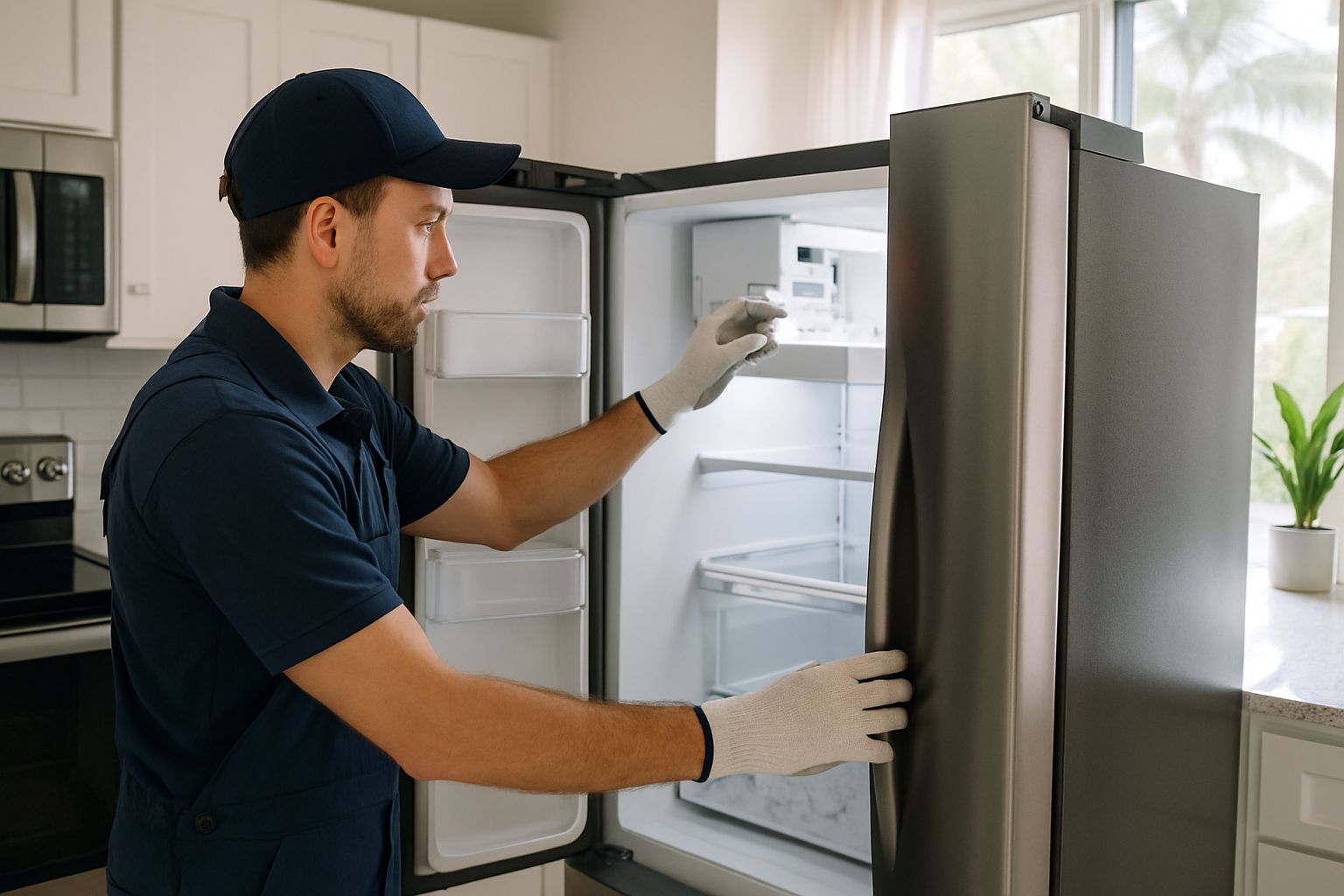
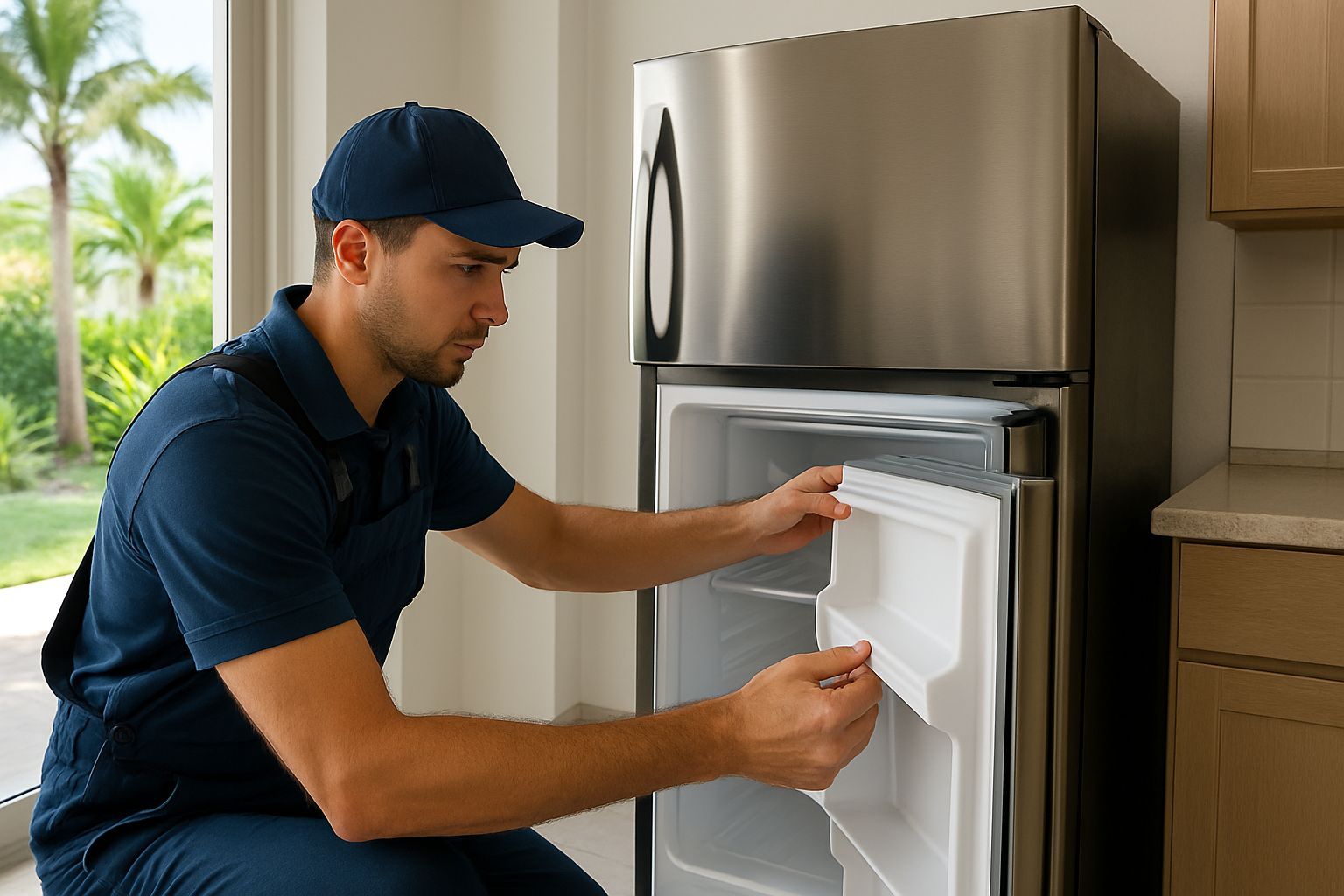
First, a technician confirms where the water is coming from. Water exiting the drinking-water outlet is different from melting ice spilling through the chute, an overflowing ice maker, or a leak beneath the refrigerator.
Timing matters next. Does the dispenser produce a normal stream when the ice maker refills? Does it happen only after the paddle is touched? Did it begin after a filter change, power interruption, or door impact? A short video showing the dispenser outlet and ice-maker activity can be helpful.
The exact model’s wiring diagram is also important. Refrigerator water systems may include a dispenser paddle, switch, door interface, hinge-area wiring, inlet valves, and control-board outputs. Several faults can create similar symptoms, but the correct repair depends on which component is sending or receiving the wrong signal.
Why Ice-Maker Timing Can Be an Important Clue
If water comes from the door dispenser while the ice maker is filling, the ice maker is not automatically defective. It may be requesting water normally while another circuit or component is being energized when it should not be.
On some model-specific designs, a shared isolation valve opens before water can be directed to either the ice maker or door dispenser. A failed diode in the harness can allow the dispenser valve circuit to energize when the ice maker requests water.
That is why a technician should not replace a valve based only on unexpected water flow. Damaged door wiring, a sticking actuator, a faulty switch, connector corrosion, a failed interface board, or an incorrect control output can produce the same report. The schematic determines whether a shared-circuit fault is possible.
For unexpected water flow, refrigerator repair in Boynton Beach can identify whether the fault is mechanical, electrical, or related to water routing before unnecessary parts are installed.
Separate Full-Flow Dispensing From a Slow Drip
“Random dispensing” can describe several different problems. A true unsolicited dispense produces a noticeable stream from the water outlet, similar to someone pressing the paddle. That points toward the dispenser switch, control, wiring, or valve circuit.
A slow drip after dispensing is different. A few drops can be leftover water in the nozzle, while persistent dripping may involve a valve that does not seal completely, water-line pressure changes, or an outlet issue. It does not necessarily involve the ice maker.
Water coming from the ice chute is another separate concern. Ice can melt and refreeze around the chute door, or the chute flap may not close fully. In that case, the water is usually associated with melting ice rather than unwanted drinking-water delivery.
Small or hollow refrigerator ice cubes usually indicate insufficient ice-maker fill. Unwanted dispenser flow suggests unintended water delivery, even though both symptoms involve the refrigerator’s water system.
Safe Checks to Make Before Calling for Service
If water is actively dispensing, move rugs and items away from the spill area. Shut off the refrigerator’s water supply if the valve is safely accessible, place towels on the floor, and check that water has not reached an outlet, power cord, or dispenser controls.
Look for visible clues without disassembly. Check whether the dispenser paddle is stuck or slow to return. Watch whether water exits the drinking-water outlet or ice chute, note whether the ice maker is overfilling, and record the approximate timing between events.
Avoid removing the dispenser panel or testing live wiring. Do not jumper switches, manually energize valves, or replace a control board based only on the symptom. If flow continues, pooling is heavy, or water reaches electrical areas, leave the water supply off until the refrigerator is diagnosed.
For appliance repair in Delray Beach, FL, General Appliance Service can trace the timing and electrical path behind intermittent dispenser problems instead of assuming every water issue is a bad valve.
Frequently Asked Questions About a Refrigerator Randomly Dispensing Water
Why does my refrigerator dispense water when nobody presses the dispenser?
A sticking paddle, faulty switch, damaged door wire, control problem, or incorrectly energized valve circuit can cause it. Timing helps narrow the likely area.
Can an ice-maker fill cycle cause water from the door dispenser?
On some models, yes. Shared electrical or water-routing components can be involved. This is model-specific and should be confirmed using the refrigerator wiring diagram.
Is random dispensing different from dripping after use?
Yes. Full-flow dispensing suggests an unintended command or valve activation. Dripping after use more often involves residual water, pressure changes, or a valve that does not seal.
Should I turn off the water supply if it dispenses by itself?
Yes, if water is actively flowing, pooling on the floor, or reaching electrical areas. Shut off the accessible supply and avoid using the dispenser.
Can I replace the inlet valve without testing wiring first?
It is not recommended. The valve may be working normally while receiving the wrong electrical command. Circuit testing helps prevent replacing a good part.
Repeated events should be documented with the time, water source, and any ice-maker activity. Those details help distinguish a simple drip from an intermittent electrical or water-routing fault.