
Why Does My Dishwasher Hum for a Minute After the Water Has Drained?
By General Appliance Service
A dishwasher humming after draining can be unsettling, especially when the tub looks empty and the sound continues for another minute. The timing matters. Some dishwashers run the drain pump for a programmed interval rather than stopping the instant the last water leaves the sump. A brief, familiar hum may be normal, but a new harsh, vibrating, or scraping noise deserves attention.
What a Technician Checks When a Dishwasher Hums After Draining
The first question is not simply whether the pump has failed. It is exactly when the sound occurs. A hum during the initial drain-out may be the drain pump moving water through the hose. A louder hum after the tub empties may be a normal timed pump-out period. If the noise happens while the dishwasher is washing, the circulation pump may be involved instead.
A technician also verifies that the dishwasher is draining completely. A tub can look empty while a partial restriction, debris near the pump inlet, or a noisy pump is still affecting operation. Cycle stage, duration, and sound quality help narrow the cause.
A steady, short hum that has always been present can be normal. New grinding, rattling, repeated clicking, cabinet-shaking vibration, or scraping provides more useful diagnostic information than humming alone.
Why the Sound Can Change Once the Tub Is Empty
Water helps load and dampen the drain pump. When the water level drops, the pump can become more noticeable as it continues running briefly. That is why a dishwasher may seem quiet while water is leaving, then hum more clearly after the sump appears empty.
Drain behavior varies by model. Some units use timer-controlled drain periods, while others use sensors, control-board logic, or cycle-specific sequences. The owner’s manual can confirm intended operation and identify model-specific error codes.
A normal pump may sound different without water around it, but successful draining does not rule out a developing problem. Small debris can intermittently contact the impeller as water flow changes. Seeds, label fragments, broken glass, bone chips, and small plastic pieces are common examples.

Safe Checks Before Calling for Dishwasher Repair
During the next cycle, note when the hum begins: while water drains, only after draining appears complete, or at another point in the wash cycle. Check whether water remains afterward, dishes are unusually wet or dirty, or the dishwasher displays a fault code.
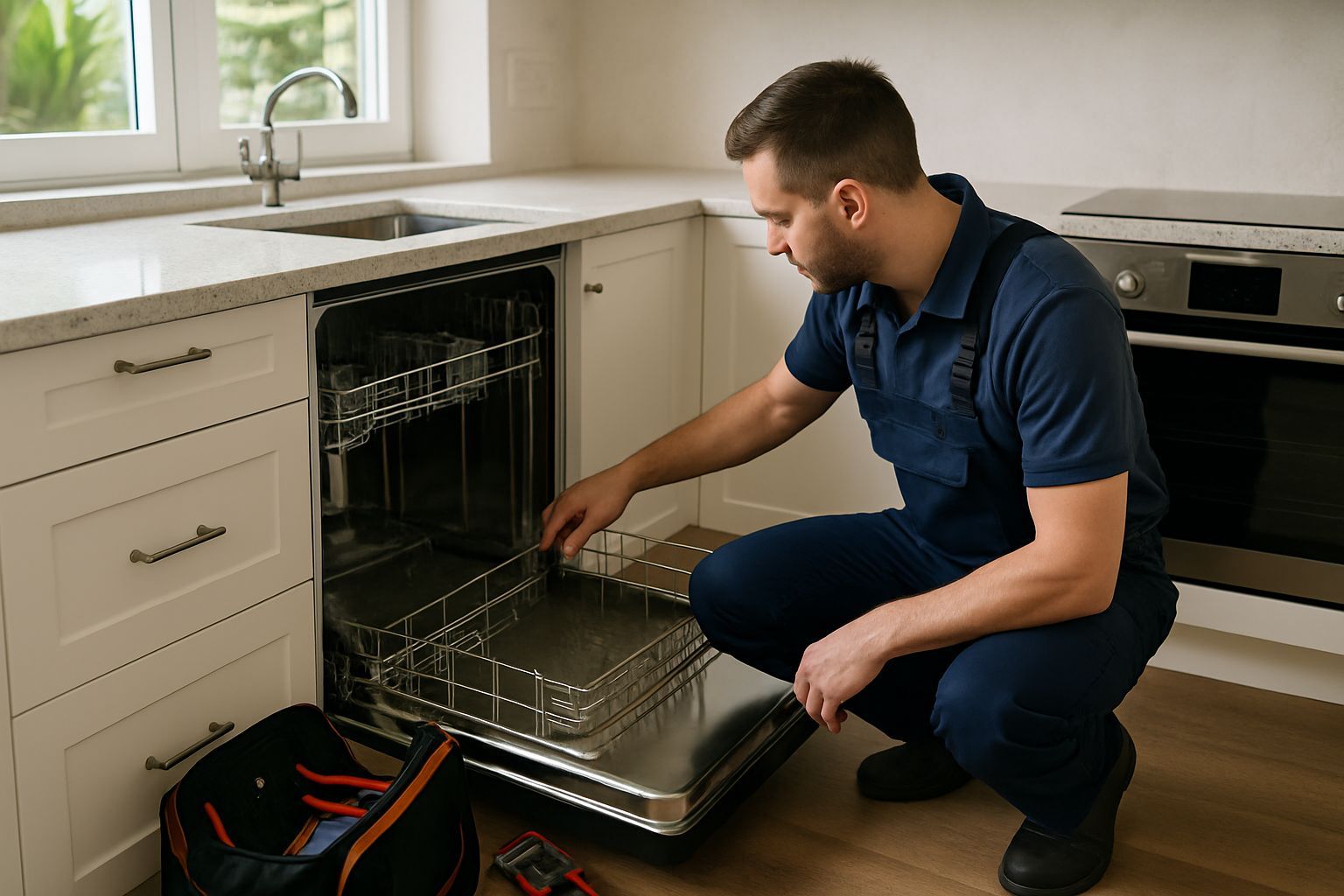
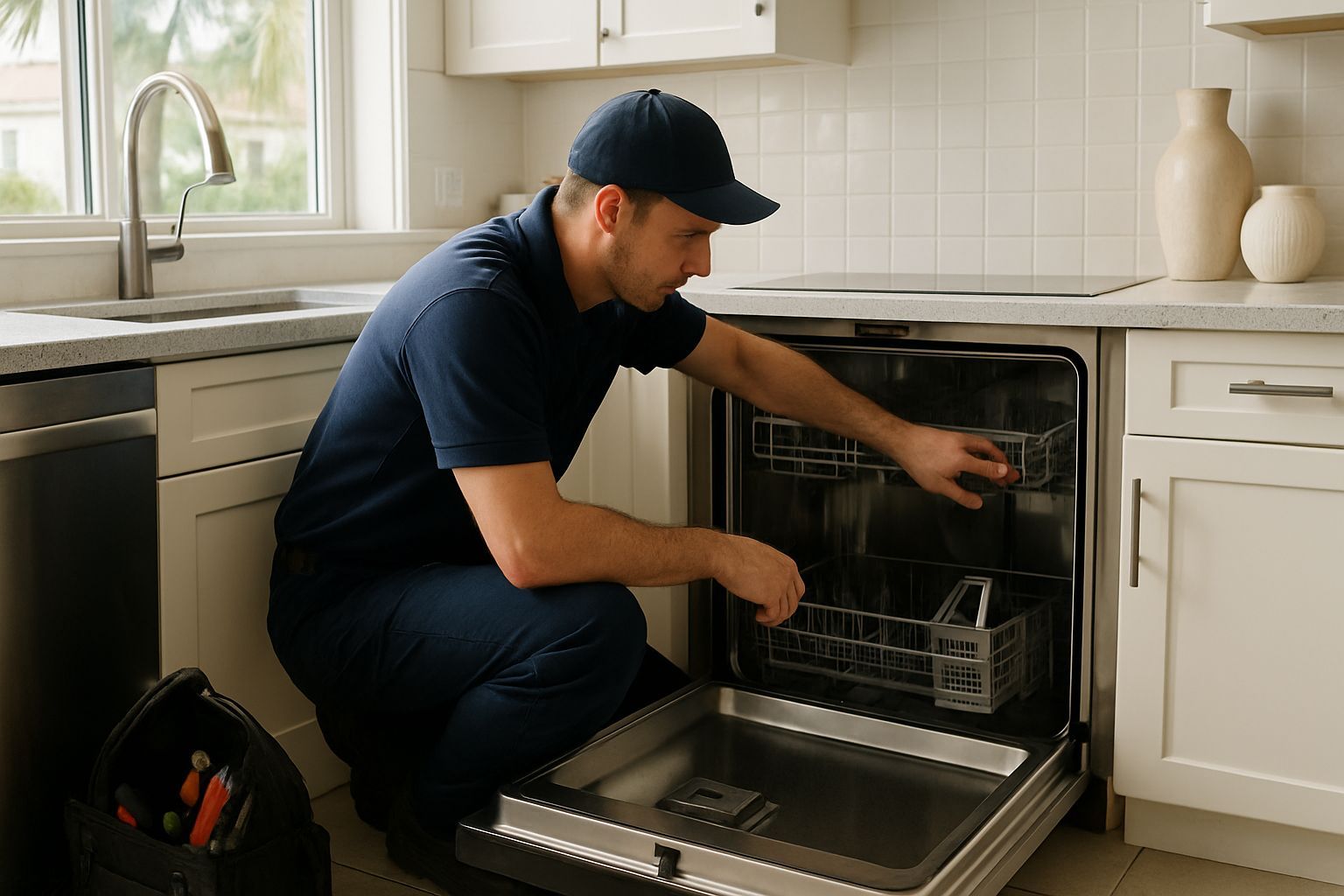
With the dishwasher turned off and fully cooled, remove and rinse only the user-serviceable filter or screen described in the manual. Look into the accessible sump area for obvious debris, but do not reach into concealed openings or probe the pump. Broken glass and sharp fragments can be difficult to see.
Stop using the dishwasher if the hum is paired with a burning smell, leak, tripped breaker, repeated error code, poor draining, or loud scraping. For persistent or worsening noise, dishwasher repair in Boynton Beach can determine whether the sound comes from the drain pump, circulation system, drain routing, or cabinet vibration.
What Can Cause a Newer, Louder Hum
Foreign material near the drain inlet or pump housing is one possibility, but it is not the only one. An impeller can wear, pump bearings can become noisy, or a loose mounting point can transfer vibration. A drain hose, cabinet panel, or nearby plumbing connection may amplify an otherwise ordinary motor sound.
Sometimes the sound seems to come from the pump when vibration is actually traveling through the cabinet. A hose touching a panel, a loose component below the tub, or contact with surrounding materials can make a normal hum sound much louder in the kitchen.
Accurate diagnosis prevents unnecessary parts replacement. A circulation-pump noise usually occurs while spray arms are washing, while plumbing, disposal, or air-gap noises may happen during draining but originate outside the dishwasher. Homeowners needing appliance repair in Greenacres, FL should not assume an empty tub means the entire drain system is healthy. This symptom also follows a different diagnostic path than a dishwasher that door drops or springs closed.
Frequently Asked Questions About Dishwasher Humming After Draining
Is it normal for a dishwasher to hum after all water has drained?
It can be normal when a model uses a timed drain period and the hum is brief, steady, and unchanged. New roughness or vibration should be checked.
Why did my dishwasher suddenly get louder at the end of draining?
The pump may become more audible without water, but sudden changes can indicate debris, pump wear, a loose mount, or vibration against cabinetry.
Can a dishwasher drain normally if something is near the pump?
Yes. Small debris can shift and touch the impeller only intermittently. The dishwasher may drain successfully while producing a rattle, scrape, or harsh hum.
Should I clean the dishwasher filter when it makes a humming noise?
Clean the user-serviceable filter if the manual recommends it. It may help drainage, but it will not fix every pump, wiring, or vibration problem.
When should I stop using a humming dishwasher?
Stop using it if there is grinding, scraping, a burning odor, leaking, standing water, breaker trips, repeated clicking, or an error code.
A short post-drain hum may be normal programmed operation. The important distinction is whether the sound is new, worsening, unusually harsh, or accompanied by another performance issue.