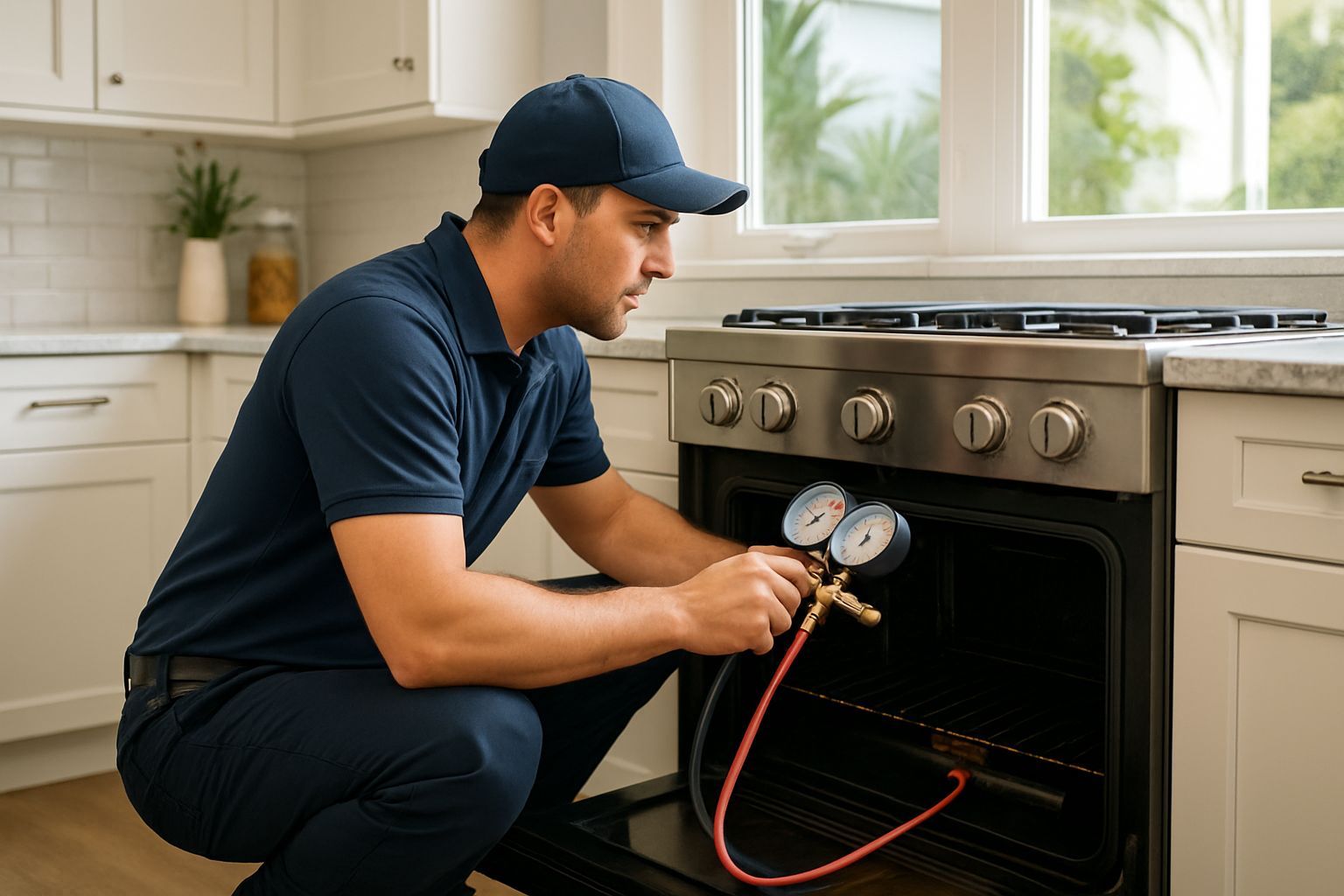

Why Does My Refrigerator Make Ice but Not Dispense It?
By General Appliance Service
A refrigerator that makes ice but will not dispense is frustrating because the ice maker appears to work normally. The bin may be full, the chute flap may open, and you may hear a hum when pressing the paddle—yet no cubes reach your glass.
This symptom usually points to a problem after ice production. Clumped ice, a misaligned bin, a worn drive, a faulty switch, damaged door wiring, or a control issue can stop the dispensing path.
What a Technician Checks When a Refrigerator Makes Ice but Will Not Dispense
A technician first confirms that ice is present and that the bin is seated correctly on its drive. Many bins use a coupling at the back that must engage with a drive shaft or fork. If the bin is slightly out of position, the motor may run without turning the auger.
The condition of the ice also matters. Cubes can freeze into a solid bridge after warm air enters through an open door or worn gasket, or when the bin sits unused. The auger cannot push a frozen mass toward the chute, and forcing the dispenser can damage the bin, auger, or drive components.
Dispenser sounds help narrow the problem. Humming may indicate a blocked auger or loaded motor. Grinding can suggest a stripped drive or damaged crusher component. Silence may point to the paddle, switch, wiring, or control circuit.
Start With the Ice Bin and Dispenser Settings
Before assuming a part has failed, check safe, simple items. Confirm that any child lock or dispenser lock is off. If the refrigerator offers cubed and crushed settings, try both and note the result. A crushed-only problem may involve crusher components, while failure in both modes can involve the bin, auger drive, motor circuit, or controls.
Unplug the refrigerator before removing the ice bin. Check for loose cubes around the auger, a visible ice bridge, or a bin that is not fully seated in its tracks. Reinstall it firmly, but do not force it. A cracked bin or damaged auger can worsen when pushed against a misaligned drive.
Also note whether the chute flap opens, the unit hums, or water still dispenses. These clues help, but none confirms one failed part.
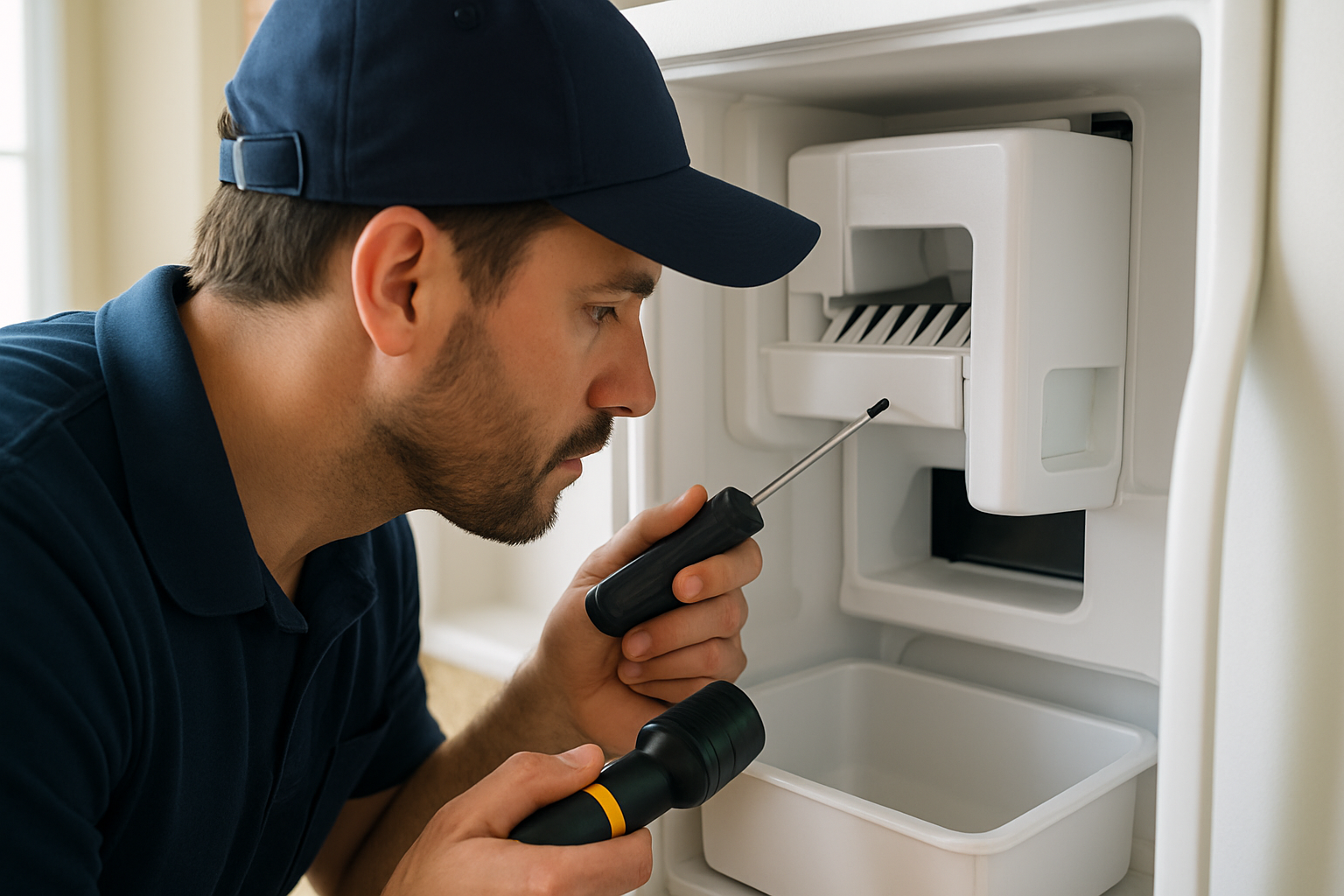
Why the Auger Can Hum Without Moving Ice
The auger is the spiral-shaped component inside the bin that moves cubes toward the chute. On many models, it also works with a crusher bar when crushed ice is selected. If cubes are fused together, the motor may hum as it tries to turn but cannot overcome the resistance.
The auger may also turn without properly transferring force from the drive. Plastic couplers, drive forks, and crusher components can wear, crack, or slip. The dispenser can sound active while the ice remains still.
A humming motor is not automatically a bad motor. Diagnosis should determine whether the bin is jammed, the drive is engaged, and the motor receives proper power under load. For persistent problems, refrigerator and ice maker repair can distinguish a mechanical bin issue from an electrical fault.
The Door Switch, Wiring, and Controls Can Stop Ice Delivery
The dispenser paddle starts a sequence that may operate switches, signal an electronic interface, release the chute door, and command the auger motor. A failure anywhere in that sequence can interrupt ice delivery.
Technicians often find intermittent wiring damage where the freezer-door harness flexes near the lower hinge. The harness moves whenever the door opens and closes. A broken wire or loose connector may cause dispensing to work intermittently, fail in one mode, or stop after the door is moved.
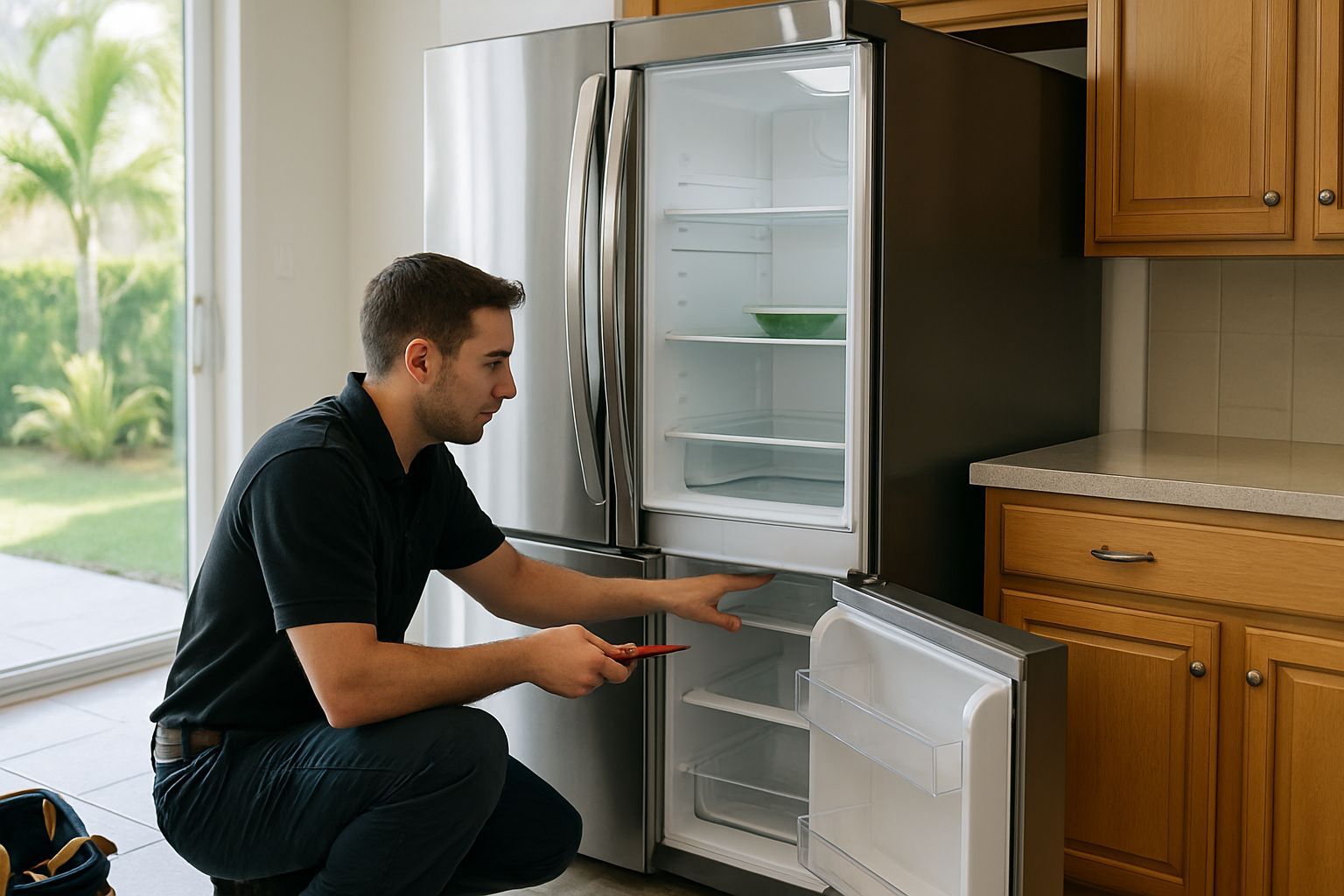
A technician checks the paddle, switches, harness connections, auger motor behavior, control output, chute, and bin-drive engagement using the correct wiring diagram. Panel removal, live-voltage testing, and bypassing safety switches should be left to a trained professional.
For appliance repair in Pembroke Pines, FL, a diagnosis can prevent spending money on an auger motor or control board that is not actually defective.
When to Stop Using the Ice Dispenser
Stop using the dispenser if you smell burning, see sparking, hear repeated harsh grinding, notice damaged wiring, or find a cracked ice bin or auger assembly. Repeatedly pressing the paddle against a jam can strain the motor and drive parts.
A complete inspection should identify why the ice is not moving rather than replacing the most obvious component.
Frequently Asked Questions About a Refrigerator That Makes Ice but Will Not Dispense
Why does my refrigerator make ice but not dispense it?
Ice making and ice dispensing are separate functions. Clumped ice, a misseated bin, auger trouble, wiring damage, a bad switch, or controls may prevent delivery.
Why does the ice dispenser hum but no cubes come out?
The motor may be trying to run against fused ice or a blockage. The auger drive could also be slipping instead of moving the bin components.
Can clumped ice in the bin stop the dispenser?
Yes. Cubes can freeze into a solid mass that the auger cannot move. Unplug the refrigerator, remove the bin, and inspect it without forcing components.
Why does water dispense normally but ice does not?
Water and ice functions can share controls but use different parts. Normal water flow does not prove the auger motor, ice switch, wiring, or crusher works.
Should I replace the auger motor if the flap opens?
Not necessarily. An opening flap shows part of the sequence works, but the bin, drive, motor circuit, wiring, or controls may still be responsible.