Why Does My Dishwasher Door Slam Open or Spring Closed?
By General Appliance Service
A dishwasher door should lower smoothly and stay open long enough to load racks comfortably. When a dishwasher door slams open, drops heavily, or springs back toward closed, its balance system may be compromised. Continued use can strain hinges, affect the latch, shift the appliance, or contribute to a door-area leak.
What a Technician Checks When a Dishwasher Door Will Not Stay Open
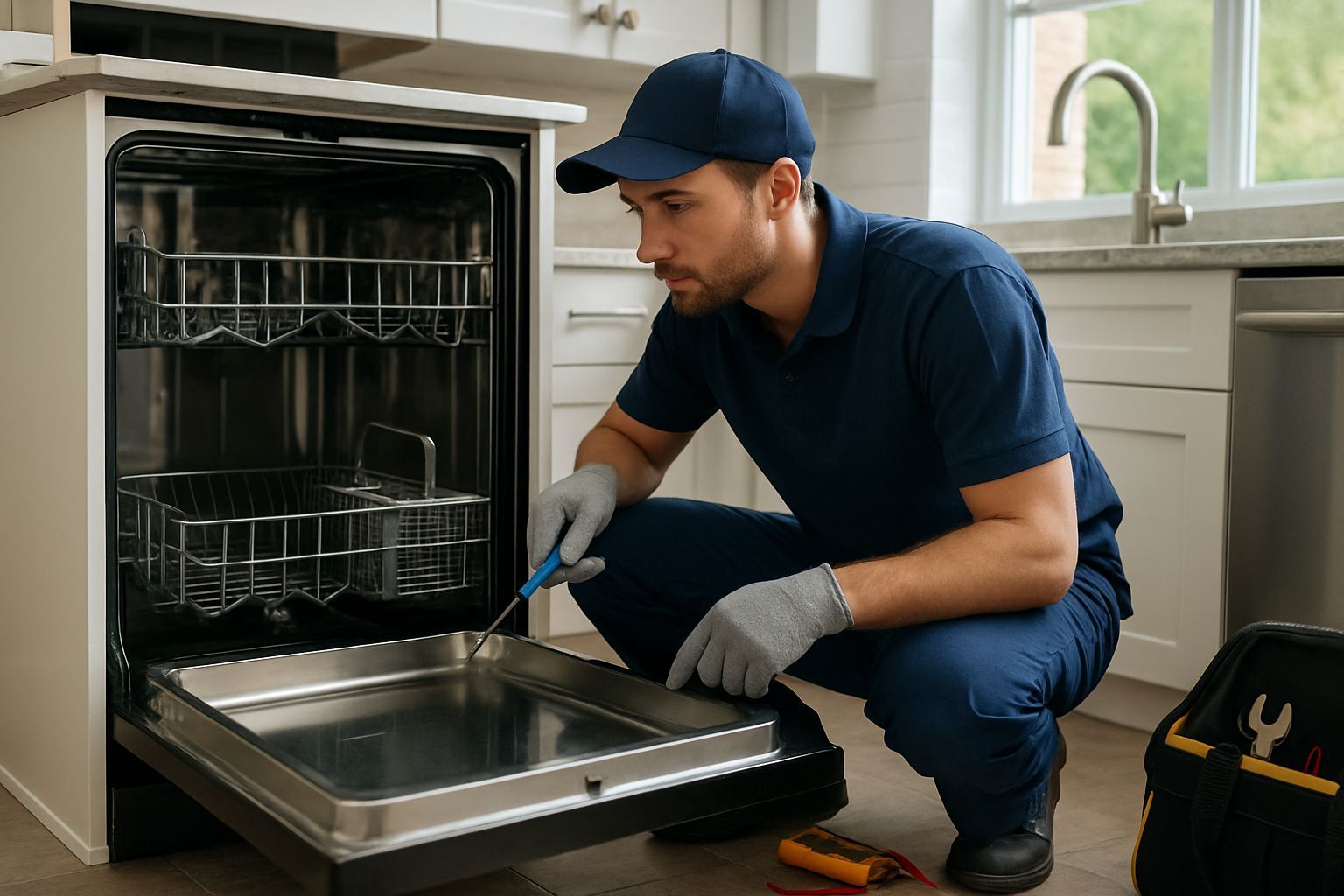
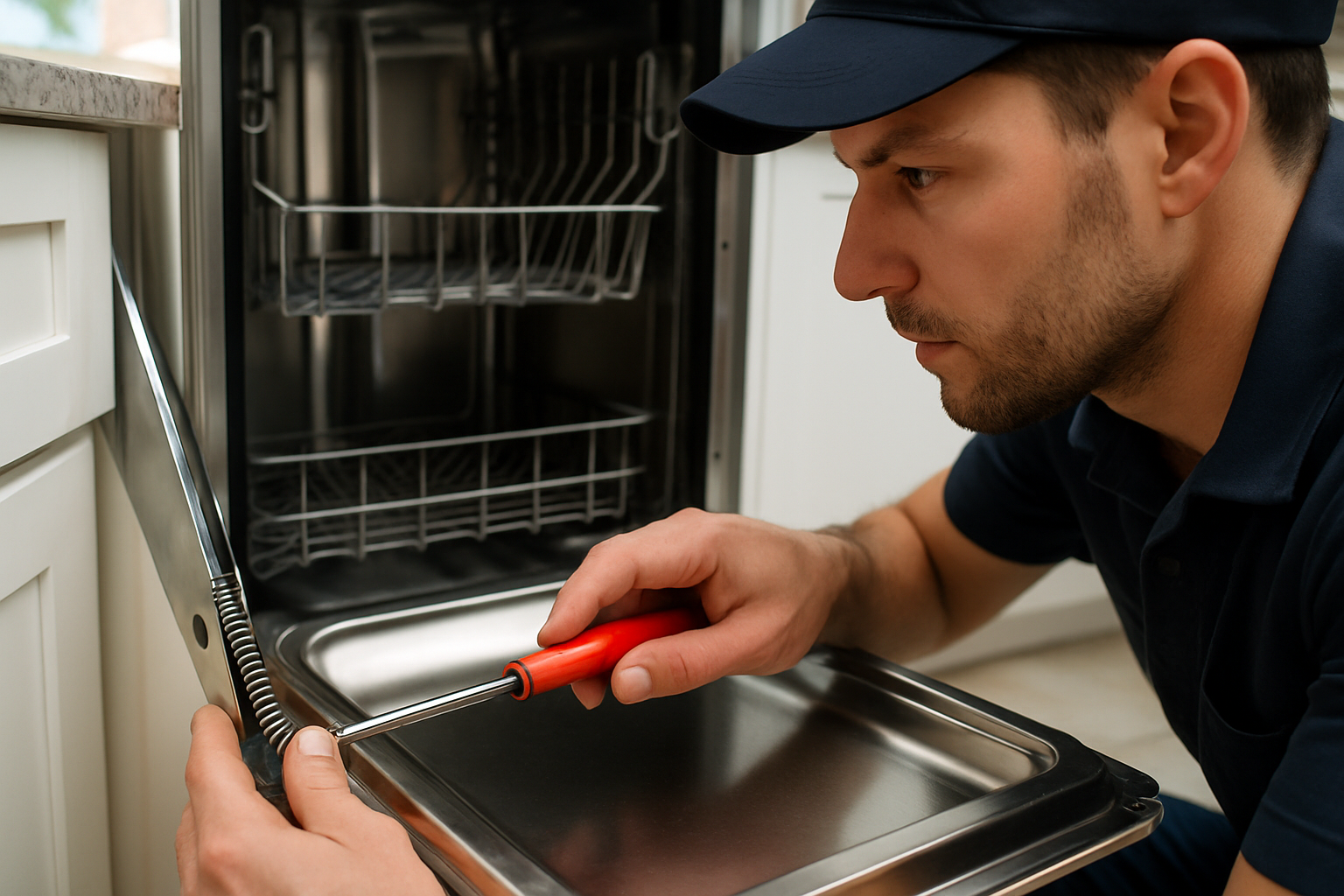
Dishwasher doors are heavier than they appear. The inner and outer panels, controls, insulation, dispenser, and any decorative custom panel all add weight. Hinge arms and springs, cables, links, pulleys, or guides are designed to counter that weight as the door moves.
When one of those balance components fails, the door may fall abruptly to its lowest position. A hard drop can stress the hinge arms, door frame, and mounting brackets. If the dishwasher is not firmly secured, it may also pull forward or shift in the cabinet opening.
A door that is difficult to lower or snaps back closed suggests a different balance issue. Some models are designed around a specific custom-panel weight. A missing, changed, or improperly configured panel can leave the springs stronger than the door weight. A technician identifies the model-specific system before recommending an adjustment or replacement part.
How Door Balance Problems Affect Leaks, Latches, and Cycles
A dropped door does not automatically cause a leak, but it can affect alignment. If a hinge bends or the door sags, the gasket may not compress evenly against the tub opening. Water can then escape from a corner or along the lower edge during a wash cycle.
Door position also affects latch engagement. The dishwasher may appear closed while the latch or door switch is not fully engaged. That can cause interrupted cycles or a machine that seems to stop unexpectedly. Before suspecting a control board or pump problem, the door, latch, and cabinet alignment should be checked.
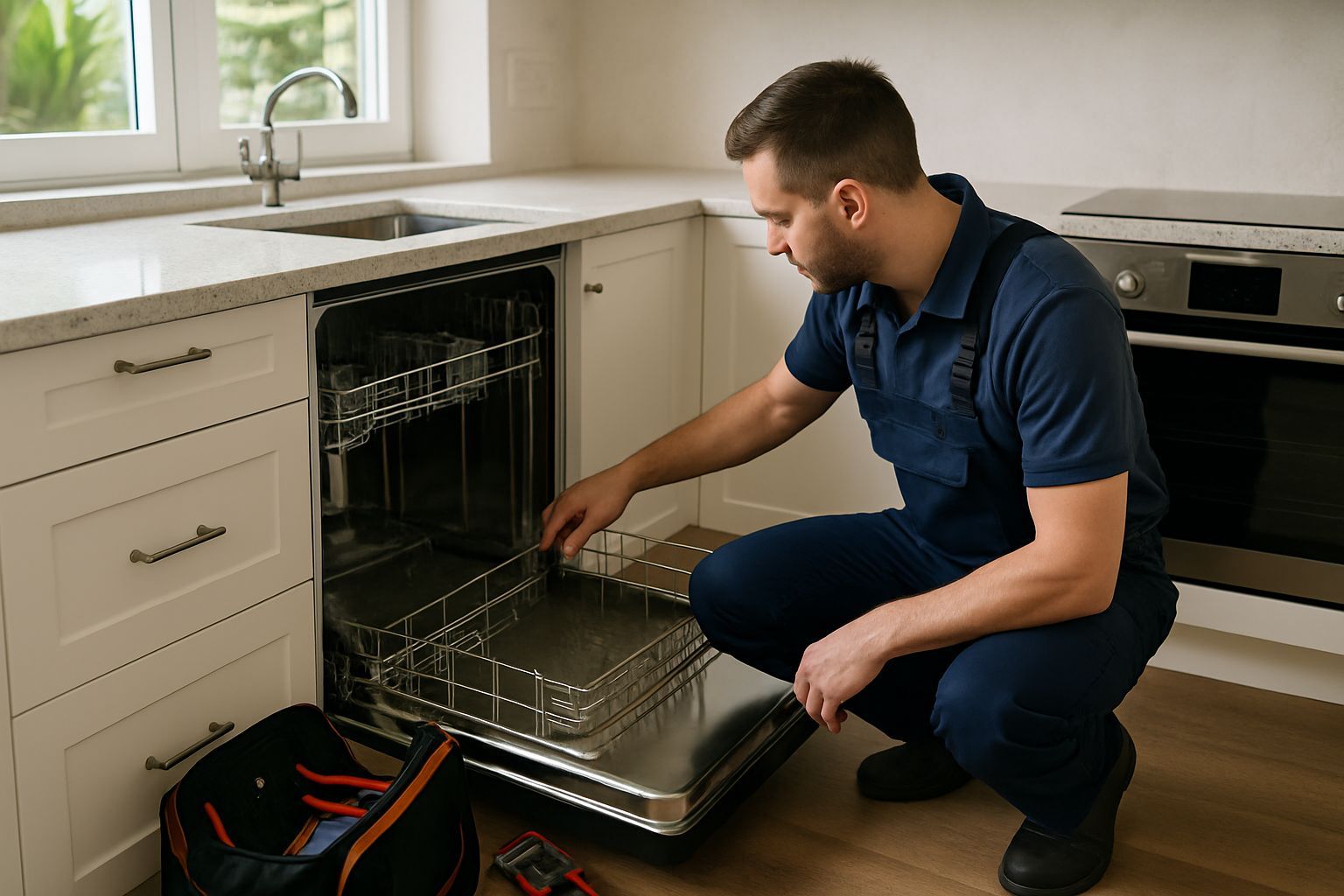
A built-in dishwasher that rocks when the door is moved may have loose mounting brackets or cabinet interference. Those conditions can worsen hinge and latch alignment over time. Homeowners needing dishwasher repair in Boynton Beach should have the door, hinges, mounting, and latch inspected together rather than replacing a visible component at random.
Safe Checks Before Calling for Dishwasher Repair
Stop using the dishwasher if the door drops violently, will not latch, opens during a cycle, leaks, or causes the appliance to move. Repeated test cycles can worsen an alignment or seal problem.
With the dishwasher turned off and empty, gently observe the door movement. Note whether it falls immediately, remains open at a loading position, or rebounds toward closed. Do not force the door beyond its normal travel or attempt to pull it into position.
Look for visible clues, including a door that sits lower on one side, a bent edge, a recently installed or missing decorative panel, or racks and dishes blocking closure. Check whether the appliance rocks or pulls forward and whether water is visible beneath or around the door.
If water is leaking, turn off the dishwasher water supply if it is safely accessible. Record the brand, full model number, and when the problem began, especially after installation, moving, panel work, or a hard door drop.
Why Spring Adjustment Is Not a Universal Fix
It is tempting to assume the door spring simply needs tightening or loosening, but that is not always safe or correct. Some dishwasher designs use fixed balance components, while others use model-specific tension arrangements. The proper balance may also depend on the installed door-panel weight.
Disassembling the door or changing spring tension without the correct procedure can create a pinch hazard, damage cables or hinges, and leave the door less stable. Pulling out a built-in dishwasher to reach side components can also disturb the water line, drain connection, or electrical supply.
Professional diagnosis includes the hinge arms, balance system, panel condition, mounting brackets, tub alignment, gasket contact, and latch engagement. For homeowners seeking appliance repair in Wellington, this full inspection is especially important when a door problem is accompanied by leaking or stopped cycles.
Frequently Asked Questions About a Dishwasher Door That Slams Open
Why does my dishwasher door suddenly slam all the way open?
A failed spring, cable, balance link, pulley, or guide may no longer support the door. Bent hinges or a shifted installation can also contribute.
Why will my dishwasher door not stay open while loading?
The door may be overbalanced. Missing or incorrectly configured decorative panels can make springs overpower the door on models designed for heavier custom panels.
Can a dishwasher door that drops hard cause a leak?
Yes. A hard drop can bend hinges or alter alignment. An uneven gasket seal may allow water to leak around the door during operation.
Why does my dishwasher door spring back closed?
Strong spring tension, missing panel weight, an incorrect panel setup, or another model-specific balance issue can cause the door to rebound toward closed.
Is it safe to run a dishwasher with a loose door?
Do not run it if it leaks, opens during a cycle, fails to latch, or shifts in the cabinet. Have the door, seal, latch, and mounting checked.
Prompt attention can prevent a door-balance issue from becoming a damaged hinge, leaking gasket, or unreliable latch problem. Avoid forcing the door, and arrange service if its movement is sudden, uneven, or unsafe.