
Why Does My Dryer Stop Mid-Cycle but Run Again After It Cools Down?
By General Appliance Service
A dryer that tumbles normally, stops before the cycle ends, and runs again after resting is providing an important diagnostic clue. Heat buildup around the motor, excessive resistance in the drum system, airflow restrictions, wiring faults, or control problems can create this pattern. It does not automatically mean the motor has failed.
First, confirm that the drum actually stops. A sensor cycle that ends early while the drum continues turning is a different issue than a dryer with an active display but no tumbling.
What a Technician Checks When a Dryer Stops Mid-Cycle
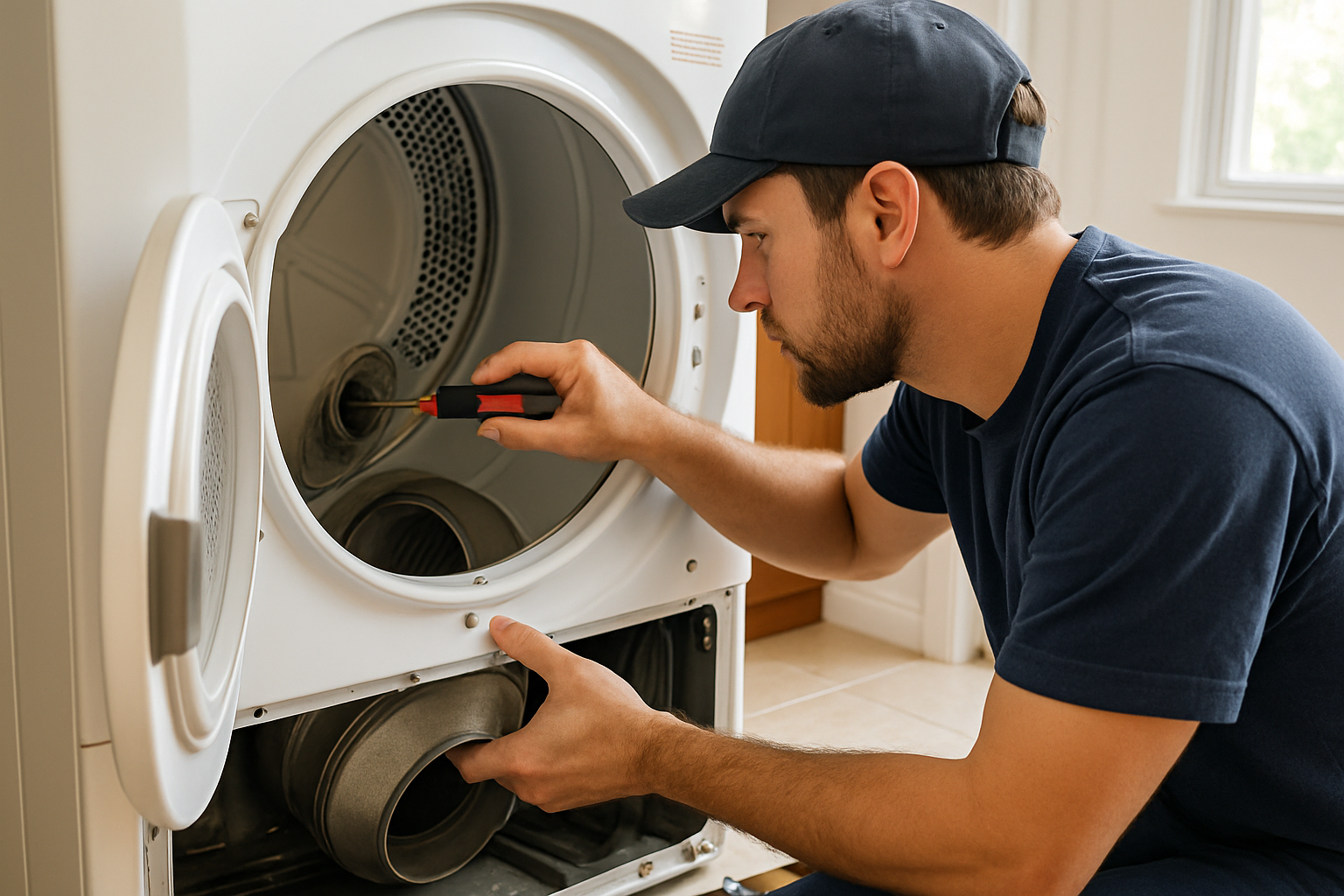
The cooldown period matters. If the dryer will not restart immediately but runs after ten or twenty minutes, a technician may check the motor’s internal thermal overload. This protective device can open when the motor becomes too hot, then reset after cooling.
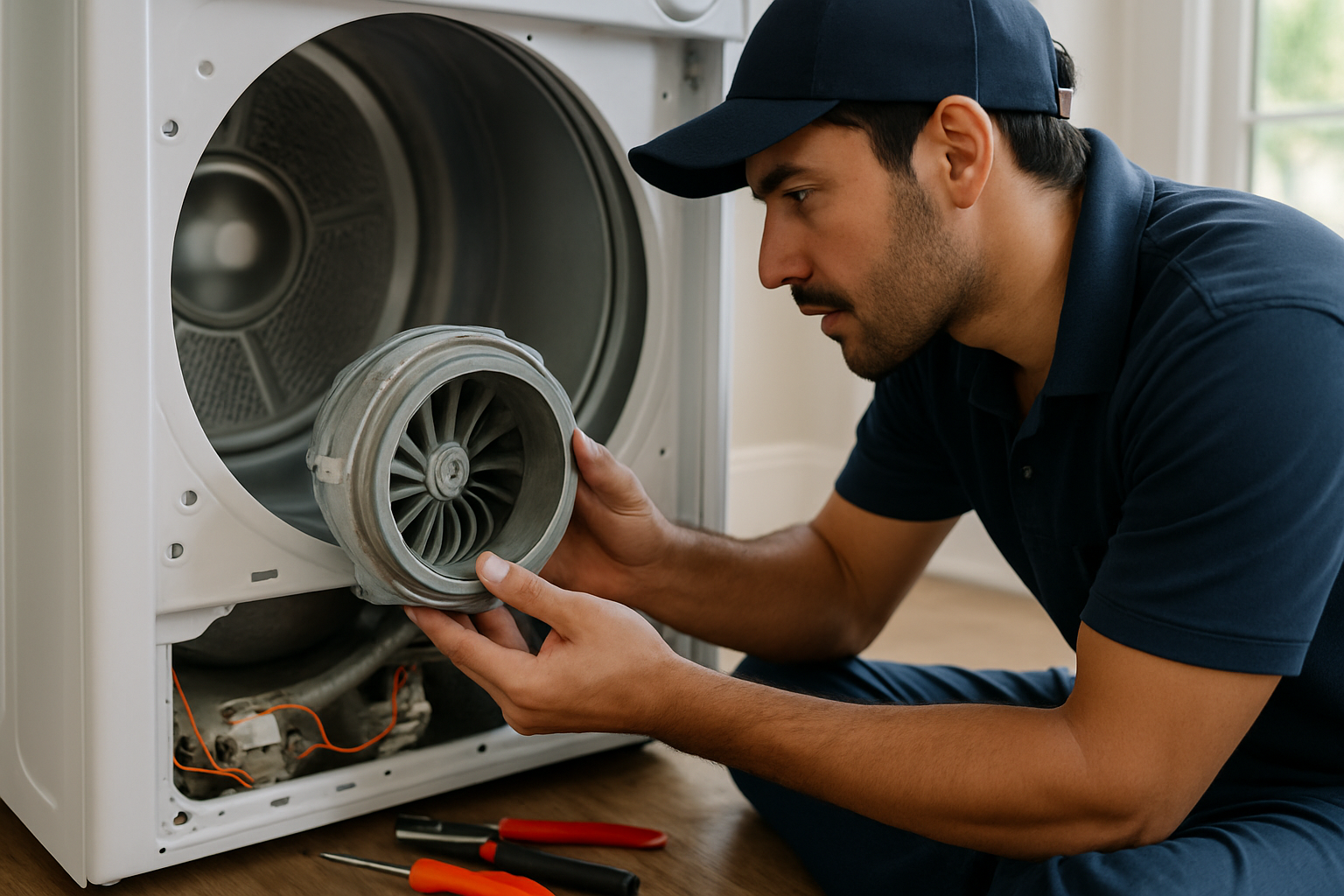
However, an overheating motor is not always a bad motor. Worn drum rollers, a binding idler pulley, a damaged blower wheel, lint buildup near the motor, or a restricted cooling path can make the motor work harder. A technician also checks what happens when the failure occurs: whether the motor hums, the drum stops silently, the display remains on, or heat continues. Those details help separate a motor problem from a relay, wiring, or control issue.
Airflow Problems Can Add Heat Where It Does Not Belong
Restricted exhaust airflow commonly causes long dry times and hot clothing, but it can also contribute to mid-cycle shutdowns. When heat cannot leave the cabinet efficiently, internal temperatures rise and may aggravate an already stressed motor or safety circuit.
Clean the lint screen before every load. While the dryer is operating normally, check from a safe distance that the outside vent hood opens. Look for a visibly crushed, disconnected, or sharply kinked vent hose behind the appliance, and keep stored items away from the dryer.
Do not insert tools into the vent or remove dryer panels to chase lint. Lint affecting the blower or motor cooling area may be inside components that require safe disassembly. A professional can inspect the exhaust route, wall connection, blower condition, and mechanical load together.
Why the Drum Can Stop While the Timer Keeps Running
On many electronic dryers, the display and timer have power separate from the drum motor circuit. The control may remain lit and continue counting down even though the motor has stopped. A live display does not prove the dryer is operating correctly.
A failed control board can cause this symptom, but so can a weak relay, heat-damaged wiring, loose connections, incorrect voltage, or a motor circuit that opens under load. Proper testing checks whether the motor circuit receives power at the moment the failure occurs.
Electric dryers also need the correct supply voltage and installation configuration. Some functions may appear normal even when a supply issue causes inconsistent operation under load. If your dryer ends a moisture-sensing cycle early but the drum never stopped, see our guide to a dryer sensor cycle ends early while clothes are still damp.
Safe Details to Record Before Calling for Dryer Repair
Avoid repeatedly restarting a dryer that shuts down unexpectedly. Instead, note how long it ran, how long it needed to rest, the load size, and whether the problem happened during an air-only setting. Air-only operation can help distinguish a heat-related condition from a motor or mechanical-drag concern.
Also note whether the drum stopped while the display stayed on and whether heat seemed to continue. Stop using the dryer immediately if the drum stops but heat remains on, or if you notice burning odors, smoke, sparking, unusually hot cabinet surfaces, repeated breaker trips, scraping, or grinding. Disconnect power if it can be done safely.
For repeated shutdowns, washer and dryer repair can identify the cause before costly parts are replaced unnecessarily. Homeowners needing appliance repair in Pembroke Pines, FL can have venting, mechanical load, and electrical operation evaluated as one system.
Frequently Asked Questions About a Dryer That Stops Mid-Cycle
Why does my dryer stop after 20 minutes and work again later?
The motor may be overheating and resetting after cooling. Mechanical drag, lint buildup, restricted airflow, wiring issues, and control faults can create similar timing.
Does a dryer that restarts after cooling always need a new motor?
No. The motor may be reacting to excess heat or resistance elsewhere. Rollers, the idler, blower, venting, electrical supply, and cooling path need inspection.
Why is my dryer timer still counting down after the drum stops?
The display can remain powered while the motor circuit opens or loses power. Thermal shutdown, a relay problem, damaged wiring, or control failure may cause this.
Can a blocked dryer vent make the drum stop turning?
Not directly in most cases. However, trapped heat can contribute to motor overheating or safety-circuit operation, especially when another motor or mechanical problem already exists.
Should I use a dryer if it stops tumbling but still feels hot?
No. Heat without drum movement can overheat clothing and the cabinet. Turn it off, disconnect power safely if possible, and arrange professional diagnosis.
General Appliance Service can distinguish a heat-related shutdown from a failing motor, control issue, or mechanical drag problem so repairs are based on testing rather than guesses.