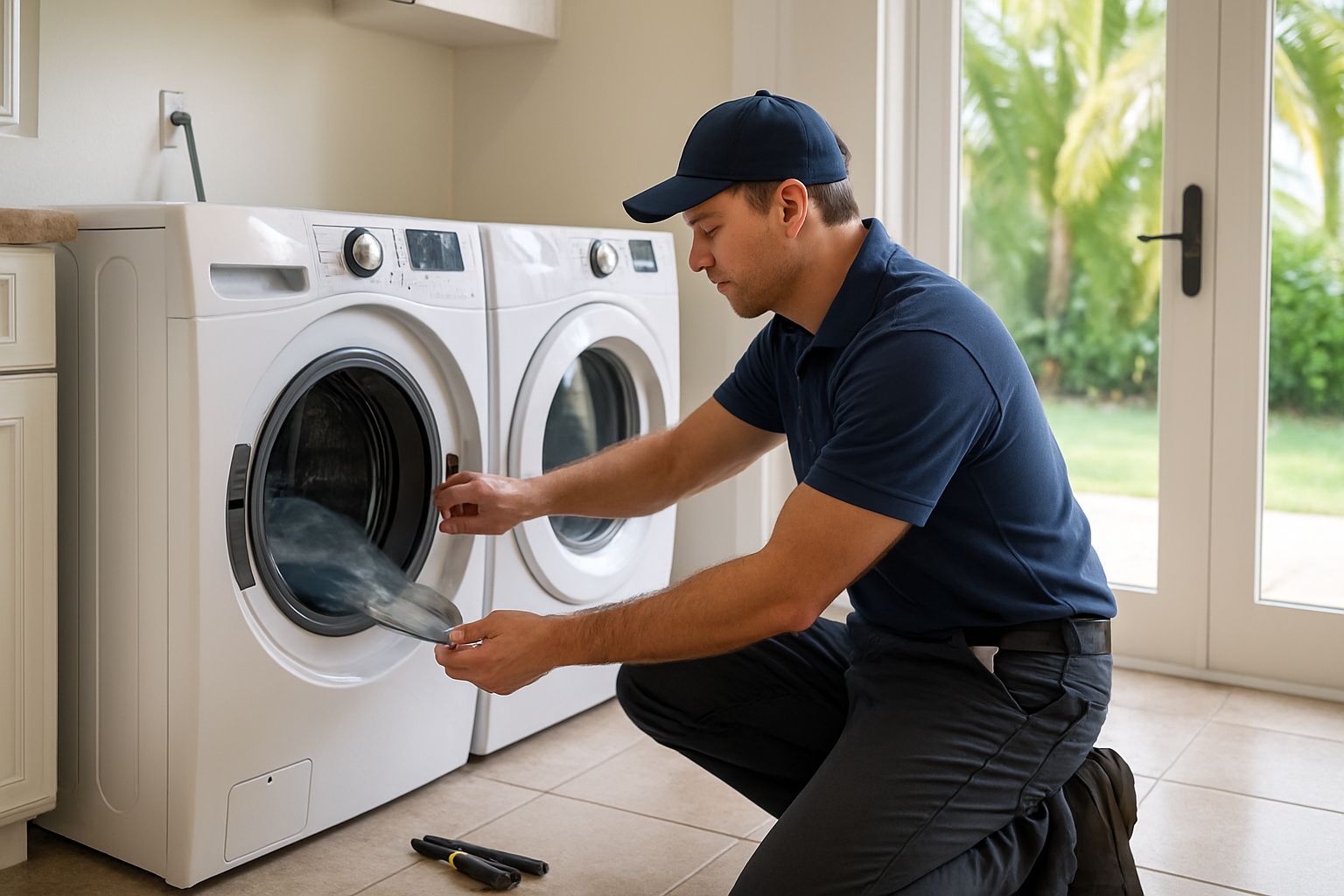

Washing Machine Sounds Like a Jet Engine During Spin? Roar or Unbalanced Load?
By General Appliance Service
A washer can be noisy during fast spin, but it should not sound like an aircraft taking off. When a washer produces a jet-engine-like noise, note the sound and when it begins. A repeating thump from uneven laundry differs from a smooth roar that rises as the basket accelerates. That distinction narrows likely causes, although it cannot identify a failed part without inspection.
What a Technician Checks When a Washer Roars During Spin
Technicians separate noises heard during agitation, draining, low-speed spin, and high-speed spin. A washer that is quiet until final spin suggests different causes than one that grinds, squeals, or clunks throughout the cycle.
A deep, even rushing sound that climbs with basket speed can indicate roughness in a bearing or gearcase-related assembly. Owners often describe this as an airplane, jet engine, or loud highway tire noise.
However, a bearing is not the only possibility. Loose suspension, a basket rubbing the outer tub, a pulley or belt issue, and installation problems can also make spin loud. Diagnosis confirms whether abnormal movement comes from the basket, drive system, or cabinet before selecting a repair.
A Steady Roar Is Different From an Unbalanced-Load Thump
An unbalanced load usually causes rhythmic thumping, banging, or severe shaking. Bulky items, a single bath mat, shoes, or a small load of heavy towels can make the washer pause, redistribute laundry, or reduce spin speed.
A bearing-type roar is often smoother. It builds as the basket accelerates and remains fairly steady at high speed instead of striking once per revolution. The washer may vibrate, but the rushing noise is usually the main clue.
Try one normal, properly sized load with items distributed around the basket, and make sure the washer is stable on the floor. If the noise disappears, leveling or load distribution may be involved. If the same roar returns with a balanced load, arrange diagnosis. Do not repeatedly run badly distributed loads, which can damage hoses, flooring, suspension parts, and the cabinet.
Signs the Problem May Be Getting Worse
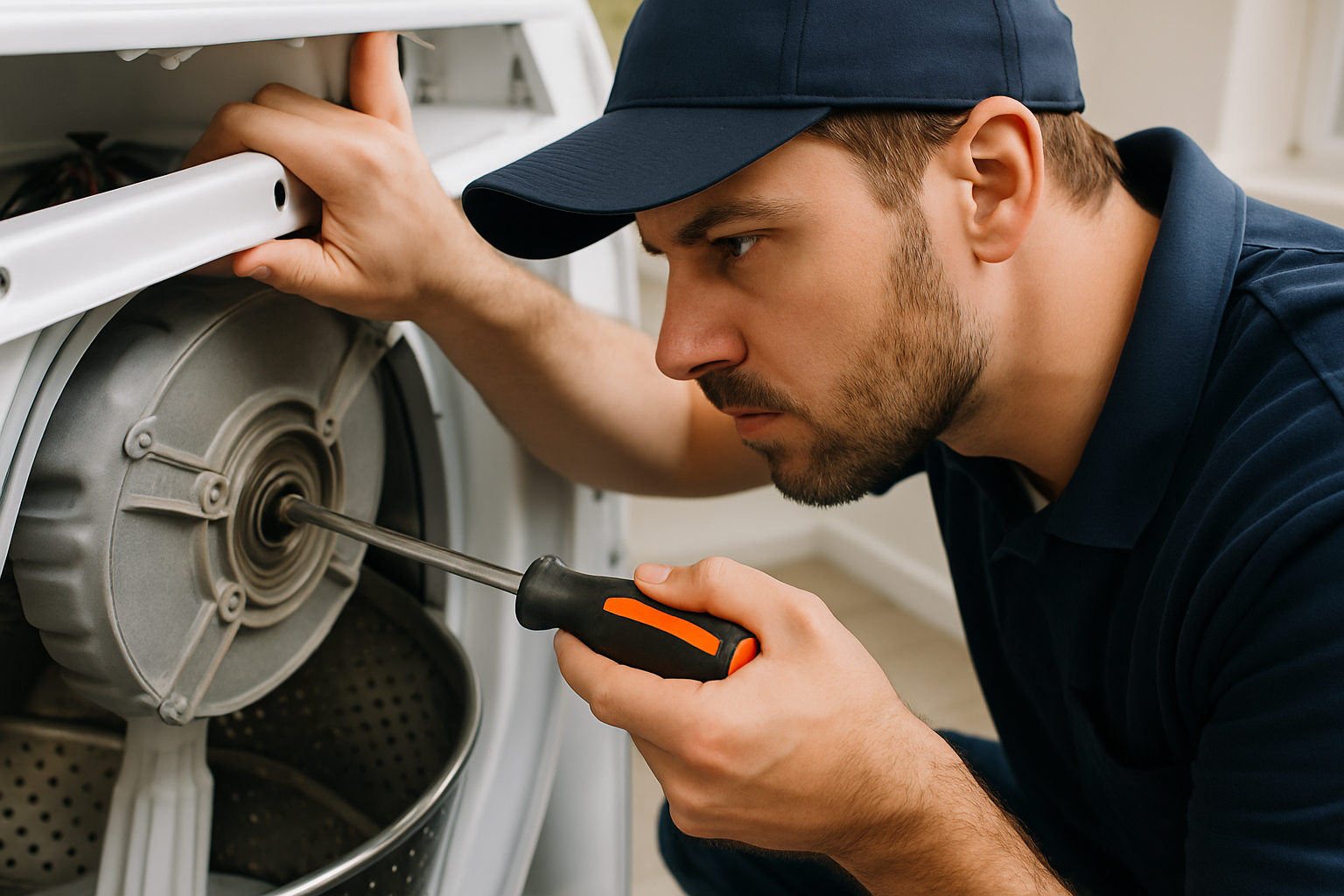
A loud spin noise may appear before more obvious failure symptoms. As internal wear progresses, the basket can develop excess movement, drag during rotation, or vibration that was not present previously. On some designs, a failing seal can allow water into areas where it causes additional damage.
Stop using the washer if it suddenly becomes much louder, walks across the floor, leaks, smells hot, grinds metal-on-metal, contacts the cabinet, or cannot complete spin. These conditions can create further damage or safety concerns.
Clothes coming out much wetter than usual are another useful clue. That does not automatically mean bearings are bad; drain restrictions, drive problems, control issues, and out-of-balance conditions can also prevent high-speed spin. It does mean the complete drain and spin sequence should be checked.
Safe Checks Before Calling for Washer Repair
With the washer turned off, check externally accessible areas for visible water, objects near the cabinet or base, and obvious installation concerns. On a newly installed machine, verify that shipping materials were removed according to the manufacturer’s instructions.
Record a short video from a safe distance while the noise occurs. Note whether the roar begins at low or high spin, whether the machine walks, and whether a balanced load changes it. Have the complete model number ready, since washer construction varies by model.
Avoid removing panels, pulling the basket, bypassing lid or door switches, or attempting to lubricate internal bearings. For washer and dryer repair in Boynton Beach, General Appliance Service can evaluate the noise pattern rather than assuming the loudest component has failed.
For appliance repair in Palm Beach Gardens, FL, a video and model number can help distinguish balance, suspension, drive-system, and internal bearing-type concerns.
Frequently Asked Questions About a Washing Machine That Sounds Like a Jet Engine During Spin
Why does my washer sound like a jet engine only during spin?
High-speed spin places the greatest load on the basket and drive system. A smooth roar that rises with speed may indicate internal wear, but other components require inspection.
Can an unbalanced load make a washer roar like an airplane?
Unbalanced laundry more often causes repeated thumping, banging, or shaking. A steady roar that increases with basket speed is less typical of load distribution alone.
Is it safe to keep using a washer with a roaring spin noise?
Stop using it if it walks, leaks, smells hot, grinds, contacts the cabinet, or cannot complete spin. Continued operation can worsen a developing mechanical problem.
Does loud spin noise always mean bad washer bearings?
No. Leveling, suspension, basket contact, belt or pulley wear, motor components, and gearcase issues can all cause similar symptoms. Model-specific diagnosis matters.
What should I tell a washer repair technician?
Share the model number, a video, the cycle stage when noise occurs, changes with balanced loads, and any leaks, shaking, grinding, or wet-clothes symptoms.
A washer that roars during spin is worth addressing early, especially if the noise is worsening or accompanied by vibration or leaks. Careful diagnosis can separate a correctable setup issue from an internal failure.