
Why Is My Freezer Building Up Frost and Not Freezing? What a Technician Checks

September 3, 2026

Freezer building up frost and not freezing? Learn how door leaks, airflow problems, defrost failures, fans, and cooling-system issues cause freezer problems.

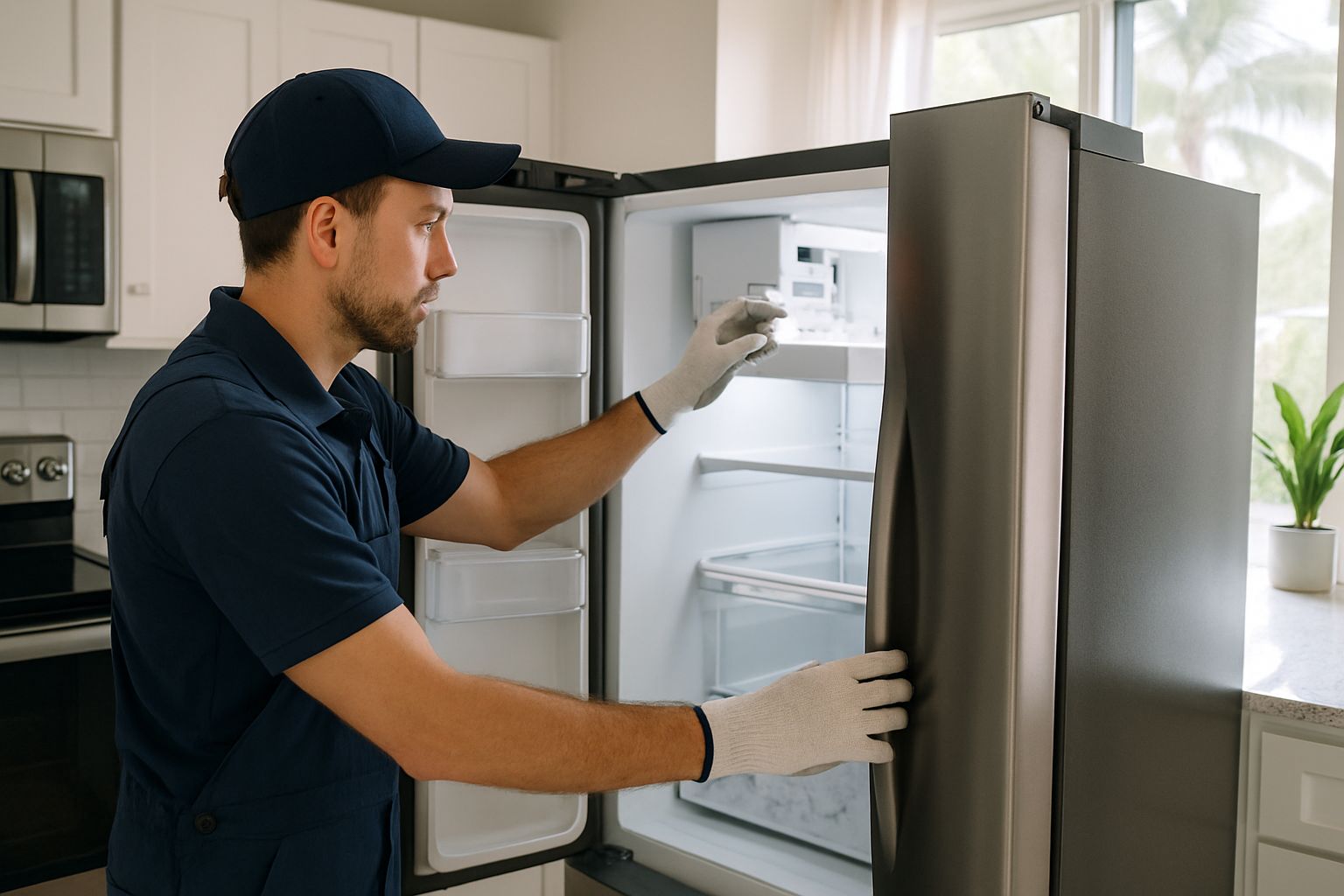
Freezer not freezing with heavy frost buildup covering shelves, vents, and frozen food

A freezer can be covered in frost and still fail to keep food properly frozen. We see this symptom when something interferes with airflow, moisture keeps entering the compartment, or the freezer cannot properly complete its automatic defrost cycle. The important thing is not to assume that frost automatically means the freezer is producing too much cold. In many cases, excessive frost is actually preventing the freezer from cooling correctly.

The location and appearance of the frost tell an appliance technician a lot. Snowy frost around the door is different from a solid sheet of ice behind the freezer's rear panel. Before replacing parts, the goal is to determine where the frost is forming, whether the fans are moving air, and whether the cooling and defrost systems are operating the way they should.

How Frost Can Cause a Freezer Not to Freeze

Most modern frost-free refrigerators use an evaporator coil located behind an interior freezer panel. Refrigerant moving through that coil makes it extremely cold. An evaporator fan then moves air across the coil and circulates that cold air around the freezer.

A small amount of frost naturally forms on the evaporator during normal operation. The refrigerator periodically enters a defrost cycle to melt that frost before it becomes thick enough to cause a problem.

If the defrost system stops working correctly, frost continues accumulating on the evaporator. Eventually, the coil can become surrounded by ice. Even though the evaporator itself may still be very cold, air can no longer move through it efficiently.

That is when homeowners start noticing soft ice cream, partially thawed food, rising freezer temperatures, or a compressor that seems to run for long periods. Professional refrigerator repair services should diagnose why the ice accumulated rather than simply melting the ice and calling the problem solved.

Frost Around the Freezer Door

When frost is concentrated around the door opening, shelves, packages, or front of the freezer, we first look for warm humid air entering the compartment.

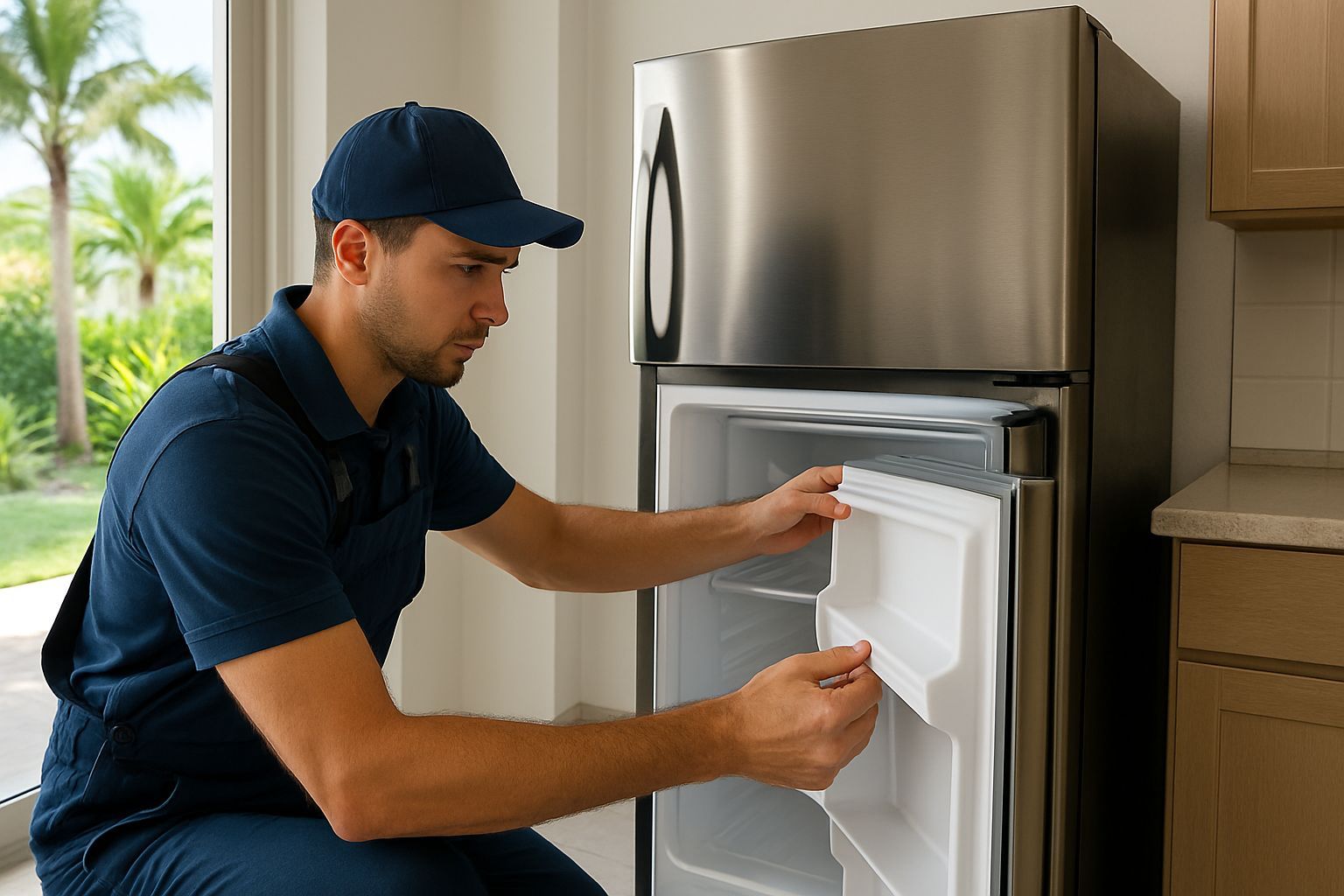
A freezer door that does not completely close can introduce a surprising amount of moisture. A food container may be sticking out too far, a drawer may not be seated correctly, or the door gasket may be dirty, torn, warped, or no longer making good contact with the cabinet.

South Florida humidity can make this type of problem especially noticeable. Every time humid room air enters the freezer, moisture condenses and freezes on the coldest surfaces.

Before scheduling service, make sure nothing is preventing the door from closing. Run your hand around the gasket and look for visible gaps, damage, or sections that appear pulled away from the door.

Heavy Frost Behind the Rear Freezer Panel

A thick layer of frost or ice concentrated on the freezer's inside rear wall can indicate that the evaporator is becoming iced over behind the panel.

Several components may be involved. Depending on the refrigerator design, the technician may need to test the defrost heater, temperature sensor, defrost thermostat, wiring, electronic control, and related circuits.

This is why replacing a heater simply because the freezer has frost is not a proper diagnosis. A good technician determines whether the heater can operate, whether the controls are telling it to operate, and whether the temperature-monitoring components are reporting correctly.

Check the Evaporator Fan and Airflow

The evaporator fan plays a major role in maintaining an even freezer temperature. If it stops running, becomes obstructed by ice, or cannot move enough air, portions of the freezer may become warm even though the evaporator is cold.

Blocked vents can create similar symptoms. Food packed tightly against the back wall or air passages can prevent circulation. Leave space around freezer vents and avoid packing food so tightly that air has nowhere to move.

Keep in mind that many refrigerator designs stop the evaporator fan when the freezer door opens. Not hearing the fan while standing in front of an open freezer does not automatically mean the motor has failed.

The Evaporator Frost Pattern Matters

One of the most useful observations during freezer diagnosis is the frost pattern on the evaporator coil itself.

Under normal operating conditions, we generally expect cooling to be distributed across the evaporator. When only a small portion of the coil develops frost while the rest remains relatively warm, the problem may be different from a standard defrost failure.

A partial frost pattern can lead a technician toward possible sealed-system problems such as a refrigerant leak, restriction, or compressor performance issue. Those are very different repairs from replacing a defrost heater or fan motor.

The frost pattern should always be considered together with compressor operation, condenser condition, fan operation, temperatures, and the refrigerator's specific design.

What You Can Check Before Calling for Freezer Repair

There are several safe checks homeowners can make before scheduling appliance repair. Verify the freezer temperature setting and make sure the door closes completely. Check the gasket for visible damage and move packages away from vents.

If your refrigerator has condenser coils that the manufacturer recommends cleaning, make sure excessive dust or pet hair has not accumulated around them. Poor heat removal can make the entire refrigeration system work harder.

If the freezer has become heavily iced, do not use a knife, screwdriver, or other sharp object to chip ice away. Refrigerant tubing and other components can be damaged easily.

If manually thawing the freezer restores cooling temporarily but the frost quickly returns, the thaw did not actually repair the appliance. It simply removed the symptom for a short period.

LG Freezer Repairs Require Diagnosis Too

Homeowners searching for LG freezer repairs may immediately worry about the compressor, especially when the freezer temperature starts rising. But not every LG refrigerator cooling problem is caused by the compressor.

Airflow problems, evaporator ice buildup, fan failures, sensors, controls, and sealed-system issues can produce similar symptoms. We want to identify the actual failure before recommending an expensive repair.

The same principle applies to GE, Samsung, Whirlpool, KitchenAid, and other refrigerator brands. Symptoms point us toward an area of the appliance. Testing tells us which component or system has actually failed.

When to Call an Appliance Technician

Professional diagnosis is recommended when frost repeatedly returns, food begins thawing, the freezer cannot maintain temperature, the evaporator fan becomes noisy, the compressor seems to run continuously, or the freezer develops a heavy ice pattern behind the rear panel.

If you are searching for appliance repair near me, try to have the refrigerator's complete model number available when scheduling service. Also note the freezer temperature, whether the refrigerator section is cooling normally, and exactly where you see the frost.

For cooling problems that need quicker attention, General Appliance Service also provides same day fridge repair options depending on location and scheduling availability.

Frequently Asked Questions About Freezer Frost and Cooling

Why is my freezer cold but not freezing?
The freezer may be below room temperature but still too warm to keep food properly frozen. Restricted airflow, heavy evaporator frost, a failing fan, door-seal problems, sensors, controls, or a sealed-system problem can all cause this symptom.

Can too much frost make a freezer stop freezing?
Yes. Heavy frost can block airflow through the evaporator. The coil may remain cold while the rest of the freezer gradually becomes too warm.

Why does frost keep coming back after I defrost my freezer?
If heavy frost quickly returns, the underlying problem is still present. Possible causes include a door-seal air leak, defrost-system failure, sensor problem, control issue, or airflow restriction.

How do I stop frost from building up in my freezer?
Make sure the door closes completely, inspect the gasket, keep vents unobstructed, avoid leaving the door open unnecessarily, and do not put hot uncovered food directly into the freezer. Repeated heavy frost should be professionally diagnosed.

Is a freezer not freezing worth repairing?
Often, yes. Fan motors, sensors, heaters, thermostats, door gaskets, and many control problems can be repairable. The decision becomes more complicated when a refrigerator has an expensive sealed-system problem, unavailable parts, or multiple previous failures.

Should I unplug a freezer that is covered in ice?
If a large amount of ice is interfering with operation, unplugging the appliance and allowing it to thaw can temporarily remove the ice. Protect the surrounding floor from water and follow the manufacturer's instructions. Remember that thawing does not correct the underlying failure if the frost comes back.

If your freezer keeps frosting over or will not maintain a safe freezing temperature, you can schedule appliance repair service with General Appliance Service for proper diagnosis.

not making ice
By General Appliance Service September 2, 2026
Refrigerator ice maker not making ice? Learn what technicians check first, including freezer temperature, water filters, fill tubes, inlet valves, sensors, fans, and ice maker controls.
wine cooler not cooling
By General Appliance Service September 1, 2026
Wine cooler not cooling? Learn how age, repair cost, cooling performance, and common failures help determine whether to repair or replace your wine cooler.
Same day appliance repair technician diagnosing a kitchen appliance in a South Florida home
By General Appliance Service August 31, 2026
Need same day appliance repair in South Florida? Learn what to check before calling, what technicians diagnose first, and how to prepare for faster refrigerator, washer, dryer, dishwasher, or oven repair
Sub-Zero refrigerator repair on a yacht in South Florida
By General Appliance Service August 30, 2026
Need Sub-Zero refrigerator repair on a yacht? General Appliance Service specializes in high-end refrigerator diagnosis and repair aboard yachts across South Florida.
Technician inspecting a built-in oven in a kitchen, with tools in an open toolbox nearby.
By General Appliance Service August 28, 2026
Oven says it’s preheated but food still comes out undercooked? Learn what technicians check for slow preheating, weak igniters, bad elements, sensors, controls, and heat loss.
By General Appliance Service August 27, 2026
Washer fills with water but won’t spin? Learn what an appliance technician checks first, including lid locks, drain issues, drive parts, and control problems before replacing parts.
fridge service repair near me technician diagnosing a refrigerator running constantly
By General Appliance Service August 26, 2026
Refrigerator won't stop running? Learn what a fridge repair technician checks, including airflow, door seals, sensors, frost patterns, and sealed-system performance.
dryer no heat
By General Appliance Service August 25, 2026
Dryer runs but won’t heat? Learn what technicians test first, from 240-volt power and thermal fuses to heating elements, airflow, and gas ignition.
Open dishwasher door with empty racks in a kitchen
By General Appliance Service August 24, 2026
Dishwasher Starts but No Water Enters? Here’s How Technicians Diagnose the Fill Problem
Person loading a dishwasher in a modern kitchen, with the door open and dishes inside
By General Appliance Service August 22, 2026
Dishwasher still smells bad after cleaning? Learn how drain hoses, filters, standing water, food debris and drainage problems can cause odors—and what to check.