
Why Is My Microwave Not Heating? What a Technician Checks Before Replacing Parts
Microwave runs but food stays cold? Learn what technicians check first, including settings, door switches, magnetron, diode, inverter, and control problems.

A microwave that turns on, counts down, runs the fan, and spins the turntable but leaves your food cold can be confusing. From the outside, everything appears to be working. The problem is that the parts responsible for actually producing microwave energy are separate from many of the components that operate the display, light, fan, and turntable. When we diagnose a microwave that is running but not heating, we first separate a simple setting or door problem from a failure in the high-voltage heating circuit.
Microwaves are also one appliance where we strongly recommend against opening the cabinet yourself. Internal components can operate at several thousand volts, and the high-voltage capacitor may retain a dangerous electrical charge even after the microwave has been unplugged. There are several checks a homeowner can safely make from the outside, but internal microwave oven repair and appliance repair should be handled by a trained technician.
First Check: Is the Microwave Actually in a Heating Mode?
Before assuming a major component has failed, check the controls. Some microwaves have Demo Mode, which allows the display, lights, fan, and turntable to operate without energizing the heating system. This is useful in an appliance showroom, but it can be accidentally activated during a power interruption, control-panel adjustment, or setup procedure.
Also check the selected power level. A microwave set to a very low power level does not energize the magnetron continuously, so heating may seem unusually slow. Try heating a microwave-safe cup of water at full power for a short test cycle. If the water remains essentially the same temperature, there is likely a real heating problem.
If the problem started immediately after a power outage or breaker trip, resetting the appliance according to the manufacturer's instructions may also be worthwhile. A reset can correct some control glitches, but it will not repair a failed electrical component.
A Door Switch Problem Can Stop the Heating Circuit
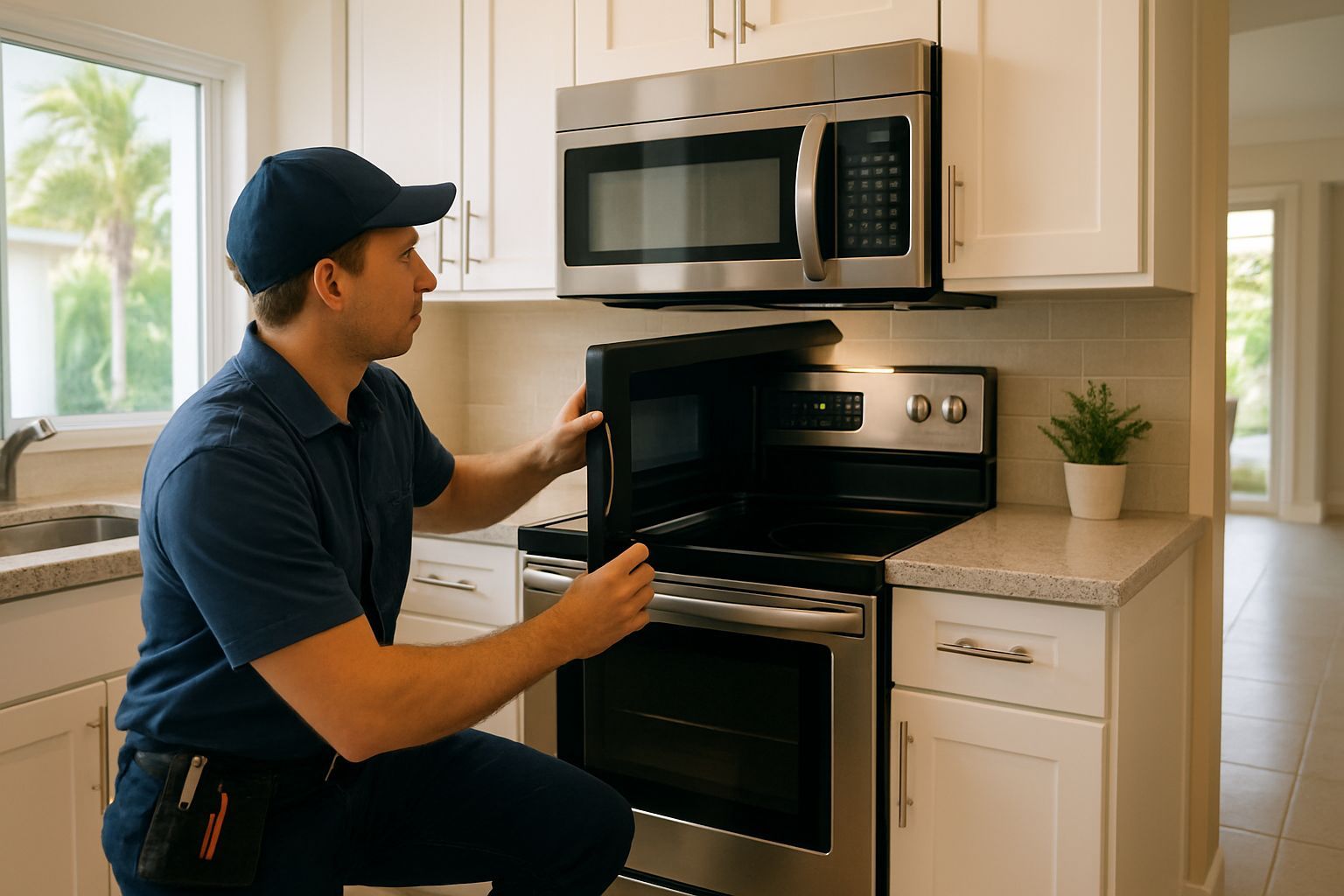
The microwave door does more than keep energy contained inside the cavity. Most microwaves use multiple interlock switches that tell the control system whether the door is properly closed. These switches must operate in the correct sequence.
A worn latch, misaligned door, damaged switch holder, or failed interlock switch can create unusual symptoms. Depending on the microwave design and which switch has failed, the appliance may refuse to start, stop intermittently, blow a fuse, or appear to run without heating.
If the microwave starts only when you lift, push, or press on the door, stop using it and have the door-latch system inspected. A technician should test the switches and switch timing instead of bypassing a safety device.
What Does the Magnetron Do?
The magnetron is the component that creates the microwave energy used to heat food. Because the magnetron is central to the heating process, it is often blamed whenever a microwave stops heating. Sometimes it is the failure, but replacing a magnetron without testing the rest of the circuit is not good diagnosis.
A failed high-voltage diode, capacitor, transformer, inverter board, thermal device, wiring connection, or control problem can prevent a perfectly good magnetron from receiving the power it needs.
Some failed magnetrons produce an unusual humming, buzzing, or electrical sound. Others simply stop producing microwave energy. The symptom alone is not enough to determine which part should be replaced.
The High-Voltage Diode Can Cause a Microwave to Run but Not Heat
On conventional microwave designs, the high-voltage diode works with the transformer and capacitor to provide the electrical conditions necessary for the magnetron to operate. If that diode opens or shorts, the microwave may still appear to run while producing little or no heat.
This is one reason a technician follows the circuit instead of immediately ordering a magnetron. The microwave's exact model and wiring diagram matter because not every microwave uses the same high-voltage design.
What About Inverter Microwaves?
Many newer microwaves use inverter technology instead of a traditional heavy high-voltage transformer. An inverter-controlled microwave can regulate magnetron output differently, but it also introduces another possible failure point.
If an inverter board is not receiving the proper control signal, is not receiving the correct supply voltage, or has failed internally, the magnetron may never produce heat. Technicians familiar with these systems use model-specific service information and electrical testing rather than treating an inverter microwave exactly like an older transformer-style unit.
Could the Control Board Be the Problem?
Yes, but the control board should not automatically be blamed. The board usually controls a relay or output that sends power toward the heating circuit. A failed relay, burned connection, damaged board, or missing control signal can result in a microwave that appears to operate normally without energizing the heating components.
Before replacing an expensive electronic control, a technician should verify what the board is receiving and what it is sending out. Parts should be replaced because testing identified a failure, not simply because they appear on a list of common causes.
Safe Things to Check Before Calling for Microwave Repairs
Homeowners can make several useful checks without removing the microwave cabinet. Verify that the microwave is plugged directly into a proper outlet, check that the breaker has not partially tripped, confirm that Demo Mode is turned off, and make sure the appliance is set to full cooking power.
Inspect the door and latch area for food debris, cracks, looseness, or anything preventing the door from closing normally. If the microwave has an obvious burning smell, sparks repeatedly, makes an unusually loud electrical buzzing sound, or trips the breaker, stop using it until the problem is diagnosed.
Do not remove the cabinet to test the capacitor, magnetron, diode, transformer, or inverter. Unlike many basic appliance checks, unplugging a microwave does not automatically make its internal high-voltage section safe.
Is a Microwave Worth Repairing?
That depends on the type of microwave, its age, condition, original cost, and failed component. An inexpensive countertop microwave with a major high-voltage failure may not make financial sense to repair. A built-in, drawer-style, convection, or over-the-range microwave can be a very different decision because replacement may be significantly more expensive and may involve cabinetry, trim, or installation considerations.
A proper diagnosis gives you the information needed to compare the repair with replacement instead of guessing. If you are looking for Appliance Repair in Wellington, FL, General Appliance Service can help diagnose microwave heating problems along with other major household appliance issues.
Microwave Not Heating FAQ
Why is my microwave running but not heating food?
If the display, fan, light, and turntable operate but the food stays cold, possible causes include Demo Mode, a door-interlock problem, failed magnetron, high-voltage diode, capacitor, transformer, inverter board, thermal device, wiring problem, or control-board failure.
What is the most common reason a microwave stops heating?
There is no single component that should be replaced without testing. Magnetrons and high-voltage components are common suspects, but door switches and control-related problems can produce similar symptoms. The exact circuit should be diagnosed before parts are ordered.
Can I reset a microwave that is not heating?
You can disconnect power according to the manufacturer's instructions and then restore it. This may clear an electronic control problem or incorrect mode, but a reset cannot repair a failed magnetron, diode, inverter, switch, or other component.
Can a microwave still run if the magnetron is bad?
Yes. The timer may count down, the fan may operate, the interior light may come on, and the turntable may rotate even when the magnetron is not producing microwave energy.
Is it safe to repair a microwave myself?
Basic external checks are reasonable, but opening the cabinet is different. Microwave high-voltage components can retain a potentially dangerous charge after the appliance is unplugged. Internal diagnosis and repair should be left to someone trained to work safely on microwave circuits.
How much does microwave repair cost?
The cost depends heavily on the microwave style, model, failed component, accessibility, and parts required. A door-switch repair is very different from replacing a magnetron or inverter assembly. Getting a diagnosis first allows you to compare the actual repair price with replacement.
If your microwave runs but no longer heats, avoid guessing at high-voltage parts. You can schedule appliance service with General Appliance Service for professional diagnosis and repair options.