
Why Is My Refrigerator Ice Maker Not Making Ice? What a Technician Checks First
Refrigerator ice maker not making ice? Learn what technicians check first, including freezer temperature, water filters, fill tubes, inlet valves, sensors, fans, and ice maker controls.
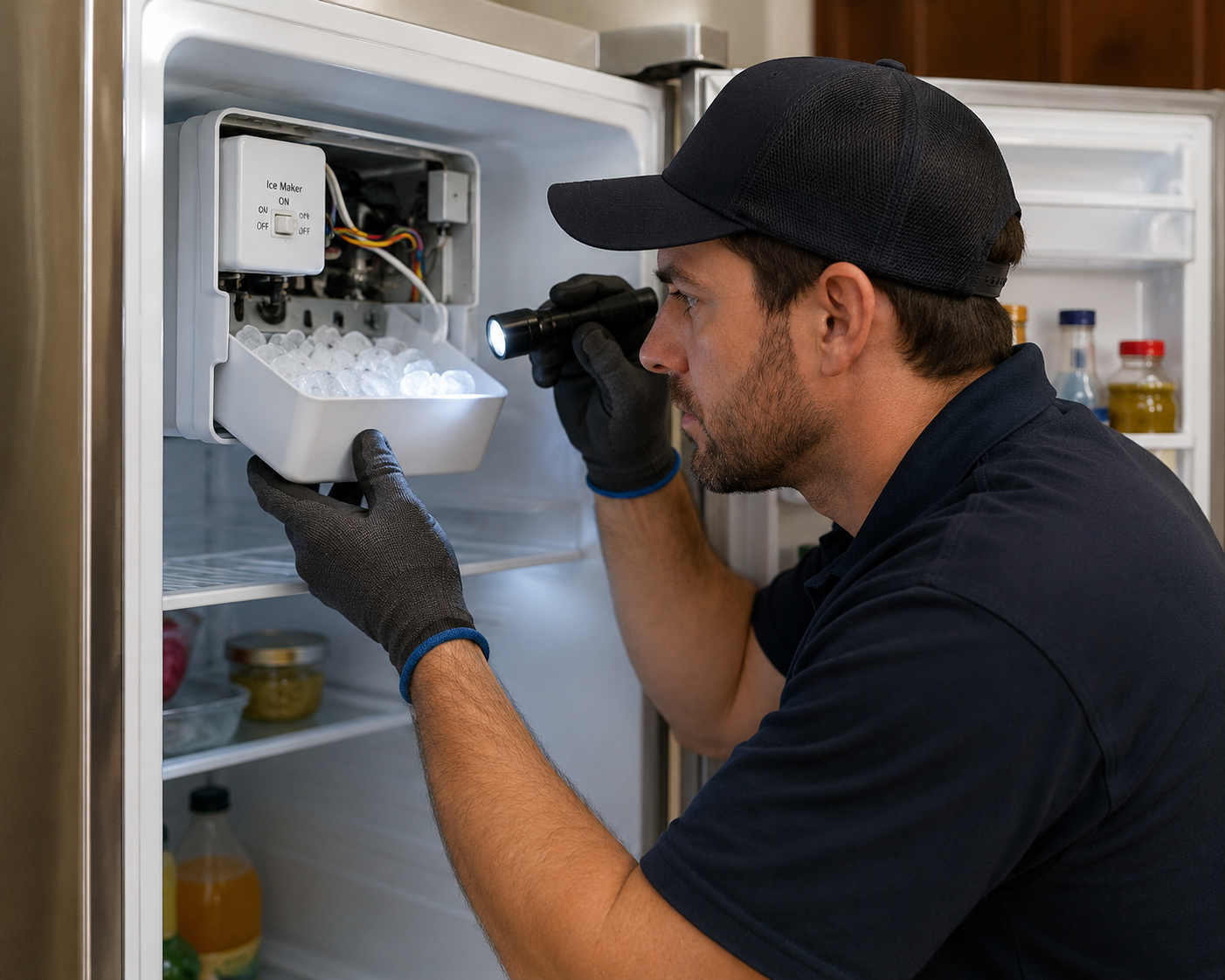
When a refrigerator ice maker is not making ice, it is tempting to assume the ice maker itself has failed. In the field, that is only one possibility. An ice maker needs the correct temperature, a reliable water supply, proper airflow, working sensors or switches, and a successful harvest cycle before it can keep the ice bin full.
The quickest way to diagnose the problem is to determine exactly where the ice-making process stops. Is the mold completely dry? Are there frozen cubes sitting in the tray that never eject? Is the ice maker producing only a few small cubes? Those symptoms point us in different directions. If you are dealing with a refrigerator ice maker not making ice, these are the areas a technician usually checks before replacing parts.
First Check the Actual Freezer Temperature
An ice maker can stop cycling even though the freezer still feels cold to your hand. Most refrigerator ice makers need the ice mold or surrounding compartment to reach a sufficiently low temperature before the control allows a harvest cycle.
We prefer an actual thermometer reading instead of relying only on the refrigerator display. A freezer that is supposed to be near 0°F but is actually running considerably warmer may keep food frozen while still interfering with normal ice production. On French-door refrigerators with an ice maker located in the fresh-food section, the ice compartment may also depend on a dedicated fan or cold-air duct.
If both the freezer temperature and ice production have recently changed, the ice maker may simply be the first symptom of a larger refrigerator cooling or airflow problem.
Make Sure the Ice Maker Is Actually Turned On
Before getting into electrical diagnosis, check the simple items. Depending on the refrigerator, the ice maker may use a shutoff arm, electronic on/off setting, ice-bin switch, magnetic sensor, or optical sensor to determine whether it should make more ice.
Make sure the ice bin is seated correctly and nothing is holding the shutoff arm in the off position. If the refrigerator has an electronic control panel, confirm the ice maker has not accidentally been disabled.
This sounds basic, but it is worth checking before taking anything apart.
Check the Water Filter and Water Supply
If the ice mold is dry, the next question is whether water is reaching it. A restricted refrigerator water filter can reduce flow enough to cause slow ice production, undersized cubes, or no ice at all. A recently replaced filter can also cause problems if it is not fully seated or if air remains in the water system.
If your refrigerator has a water dispenser, test its flow. Strong dispenser flow tells us that water is reaching the refrigerator, but it does not completely rule out an ice-maker water problem. Many refrigerators use separate valve circuits or solenoids for the dispenser and ice maker.
Also verify that the household water shutoff valve is fully open and that the supply line behind the refrigerator is not kinked.
A Frozen Fill Tube Is an Important Clue
The fill tube carries water into the ice maker. If that tube freezes shut, the ice maker may go through its normal motions but receive no water.
A frozen fill tube should not automatically be treated as a one-time ice blockage. Technicians also look for the reason it froze. Low water pressure or a water inlet valve that does not close cleanly can allow a small amount of water to remain or seep into the fill area, where it freezes and eventually blocks the tube.
If the fill tube repeatedly freezes after being cleared, the underlying water-supply or valve problem needs to be diagnosed rather than simply thawing the tube over and over.
What If There Are Ice Cubes Stuck in the Ice Maker?
Frozen cubes sitting in the mold tell us something important: water reached the ice maker and froze successfully. Now the problem is more likely related to the harvest side of the system.
Depending on the design, a technician may check the ice-maker motor, mold heater, temperature sensor or thermostat, position feedback, wiring, and the refrigerator control board. Modern refrigerator ice makers can also have built-in service tests that allow us to command a harvest cycle and watch where it fails.
This is one reason we do not recommend ordering an ice maker assembly based only on the symptom. A failed sensor, wiring issue, control problem, or temperature condition can make a perfectly good ice maker appear defective.
The Water Inlet Valve Can Fail in More Than One Way
The refrigerator water inlet valve opens electrically when the appliance calls for water. A valve can fail completely and deliver no water, but it can also become restricted or fail to seal properly.
During diagnosis, a technician may check whether the valve receives the proper electrical command, whether water pressure is adequate, and whether water actually flows when the valve is energized. Hearing the valve buzz does not prove that water is passing through it correctly.
French-Door Ice Makers Add Another Layer
Ice makers installed in the refrigerator compartment can be more complicated because they often rely on a separate cold-air path or ice-room fan to keep the ice compartment cold enough.
If that fan stops, an air passage freezes over, or the ice-room temperature sensor reads incorrectly, the freezer itself may be cold while the ice maker remains too warm to operate normally. That is why actual temperatures and model-specific diagnostics matter.
What You Can Safely Check Before Calling for Refrigerator Repair
Start by confirming the ice maker is turned on, the ice bin is properly installed, the freezer is maintaining the correct temperature, the household water valve is open, and the refrigerator water filter is not overdue for replacement.
Look for a visibly frozen fill tube and listen for unusual clicking or repeated attempts to cycle. If your refrigerator has recently been unplugged, had a filter changed, or was loaded with a large amount of warm food, give the appliance enough time to stabilize before assuming a component has failed.
Avoid jumping electrical terminals, applying power directly to valves, or forcing an ice-maker harvest unless you have the correct technical information for that exact model. Test procedures vary significantly between brands and designs.
Refrigerator Ice Maker Not Making Ice FAQ
Why is my ice maker not making ice even though the water dispenser works?
The dispenser and ice maker may use different valve circuits. The problem could involve the ice-maker valve, frozen fill tube, ice-maker controls, compartment temperature, sensor, or harvest mechanism even when the dispenser still works normally.
Can a refrigerator water filter cause the ice maker to stop making ice?
Yes. A clogged, incorrectly installed, or severely restricted water filter can reduce water flow to the ice maker. Low water flow may cause small cubes, slow production, or no ice.
How do I reset my refrigerator ice maker?
Reset procedures vary by brand and model. Some refrigerators use a test button, others use control-panel commands, and some require a specific diagnostic sequence. Check the owner's manual for the exact model rather than using a generic reset procedure.
Why are there frozen cubes in my ice maker that will not dump?
If the cubes are frozen but remain in the mold, the problem may involve the harvest motor, mold heater, temperature sensing, position feedback, wiring, or electronic controls.
What temperature should my freezer be for the ice maker to work?
A household freezer is generally designed to operate around 0°F. Ice-maker operating thresholds vary by model, so an actual temperature measurement is more useful than assuming the freezer is cold enough because the food remains frozen.
How long should I wait for an ice maker to start making ice again?
After a power interruption, filter replacement, temperature change, or refrigerator installation, the appliance may need several hours to stabilize and begin producing ice normally. A completely empty bin can take longer to refill.
When It Is Time to Call a Refrigerator Technician
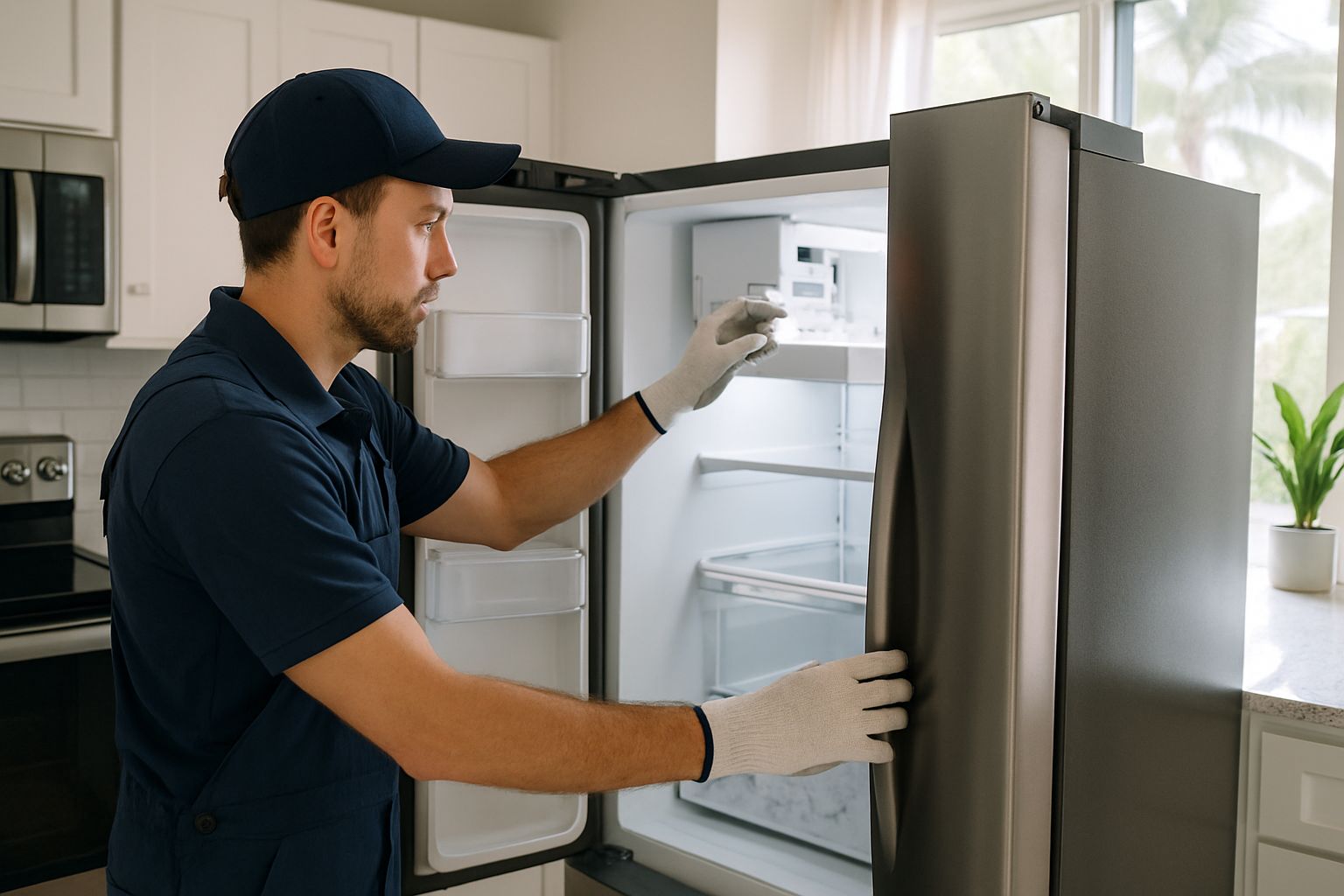
If the freezer temperature is correct, the water supply is good, the filter is clear, and the ice maker still will not fill or harvest, the next step is proper electrical and model-specific diagnosis. That may include checking the water valve, sensors, fans, ice-maker motor, wiring, and control outputs.
For an urgent refrigerator problem, you can also request same day refrigerator repair when scheduling availability allows.
If you are searching for appliance repair near me, General Appliance Service provides professional refrigerator and ice-maker diagnosis throughout our service areas. The goal is to find where the ice-making process actually stopped before recommending a part.