
Induction Cooktop Pan Not Detected: Why It Happens and What to Check
By General Appliance Service
An induction cooktop pan not detected message does not automatically mean the appliance is broken. Induction zones must recognize cookware that matches their size and sensing design before creating heat. A pan may be centered on the marked area but still be rejected because of its material, base shape, placement, or an appliance problem.
The symptom pattern matters. One burner rejecting one pan points to a different cause than every burner rejecting several pans. A zone that heats briefly and then shuts off also needs a different diagnosis than one that never recognizes cookware.
What a Technician Checks When an Induction Cooktop Will Not Detect a Pan
Induction cooking uses a magnetic field beneath the glass, so cookware must be induction-compatible and provide a signal the selected zone can recognize. The cooktop is not simply detecting weight or checking whether something is resting on the surface.
A technician begins with the model number, displayed error codes, and details about which zones are affected. Codes and symbols vary by brand, so their meaning must be verified using model-specific technical information.
Testing known-compatible cookware is an important next step. If one clean, flat-bottomed pan works on another zone but not a particular burner, the concern may be isolated to that zone, its wiring, or electronics. If multiple zones reject several suitable pans, shared power, control communication, cooling, or electrical supply issues become more likely.
Cookware Can Be Magnetic but Still Be a Poor Match
A magnet sticking to the bottom of a pan is a useful clue, but it does not guarantee reliable operation on every induction zone. The magnetic base may be too small for the selected element, uneven, thin, or not centered over the sensing area.
Many cooktops have a minimum cookware diameter. A small saucepan may not register on a large element even though it works on a smaller zone. Warped pan bottoms can create a gap between the cookware and glass, reducing detection. Some pans use a magnetic disk only in the center, which can also affect performance on larger elements.
Check the owner’s manual for minimum pan-size requirements. Try a pan known to work elsewhere on the cooktop, and place it cleanly in the center of the marked cooking area. With the surface cool and power off, wipe away moisture, food residue, or objects covering the controls. Do not remove the glass or access components beneath it.
One Rejected Zone Is Different From Every Zone Rejecting Pans
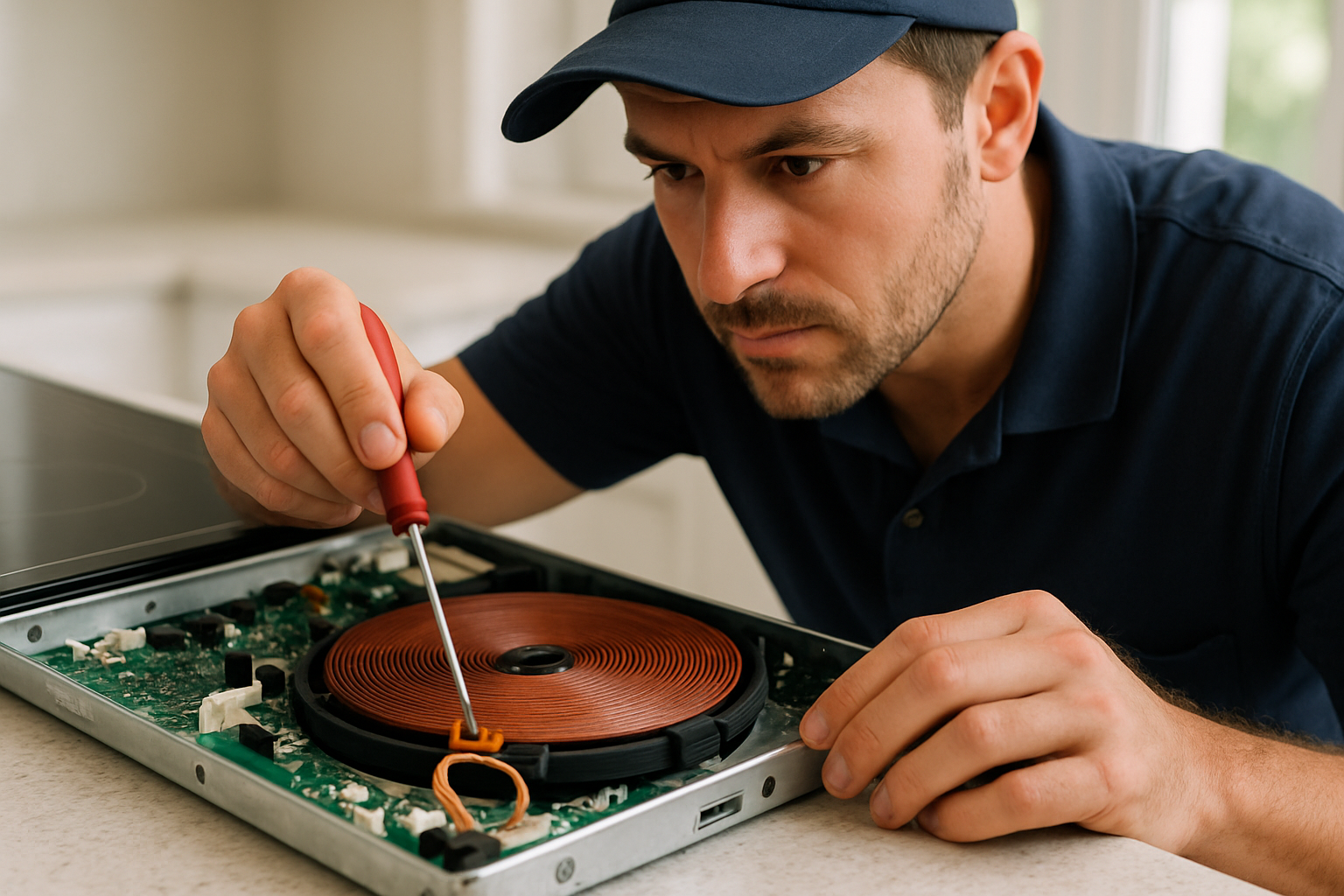
A single burner that will not recognize compatible cookware can indicate a zone-specific concern. That does not identify one failed part. A technician may need to evaluate the zone’s sensing circuit, induction generator, harness, communication path, and temperature protection.
If several zones reject one pan but accept another, cookware compatibility or pan size is more likely. If every zone rejects several known-compatible pans, incorrect incoming power, a loose connection, a user-interface issue, or a shared control problem may be involved.
Homeowners needing appliance repair in Pembroke Pines, FL should note whether the problem began after a power outage, breaker trip, spill, or installation change. That timeline can help narrow the diagnosis, but it does not prove that a control board has failed.
Why a Burner May Heat Briefly, Then Turn Off
A zone that detects cookware and begins heating provides a different clue than one that immediately displays a no-pan message. Brief heating followed by shutdown can involve cookware movement, overheating protection, cooling trouble, temperature feedback, or an intermittent connection.
Induction components generate heat and require proper cooling. A fan may run after cooking and can be normal. However, repeated shutdowns, a new error display, or abnormal fan operation after the surface has cooled should be evaluated.
Turn the cooktop off and avoid further use if you smell burning, see smoke, experience repeated breaker trips, notice cracked glass, or suspect liquid entered the controls. Do not keep resetting a tripped breaker, bypass protections, open the appliance, or test live circuits. Professional oven and cooktop repair can determine whether the issue involves cookware, one zone, or the appliance’s electrical and induction systems.
Frequently Asked Questions About Induction Cooktop Pan Not Detected
Why does my cooktop say pan not detected when a pan is on it?
The pan may be incompatible, too small, off-center, warped, or unable to make reliable contact. One affected burner may need professional testing.
Will a magnet sticking to my pan guarantee it works?
No. Magnetism suggests compatibility, but pan diameter, base construction, flatness, and the cooktop’s sensing design still determine whether a zone recognizes it.
Why does only one induction burner reject my cookware?
If the pan works on another zone, the affected burner may have a sensing, wiring, temperature-protection, or induction-electronics issue requiring diagnosis.
Why does a burner heat briefly and then turn off?
The cooktop may lose pan recognition, detect excessive temperature, have a cooling issue, or receive inconsistent information from a sensor or connection.
When should I stop using an induction cooktop?
Stop using it for smoke, burning odors, repeated breaker trips, cracked glass, liquid in controls, or abnormal fan behavior after the surface cools.
Comparing pans, zones, and shutdown behavior gives General Appliance Service useful diagnostic details while helping avoid unnecessary cookware or electronic-part replacement.