
Why Does My Dryer Keep Running When You Open the Door?
A dryer that runs with the door open needs prompt professional diagnosis.
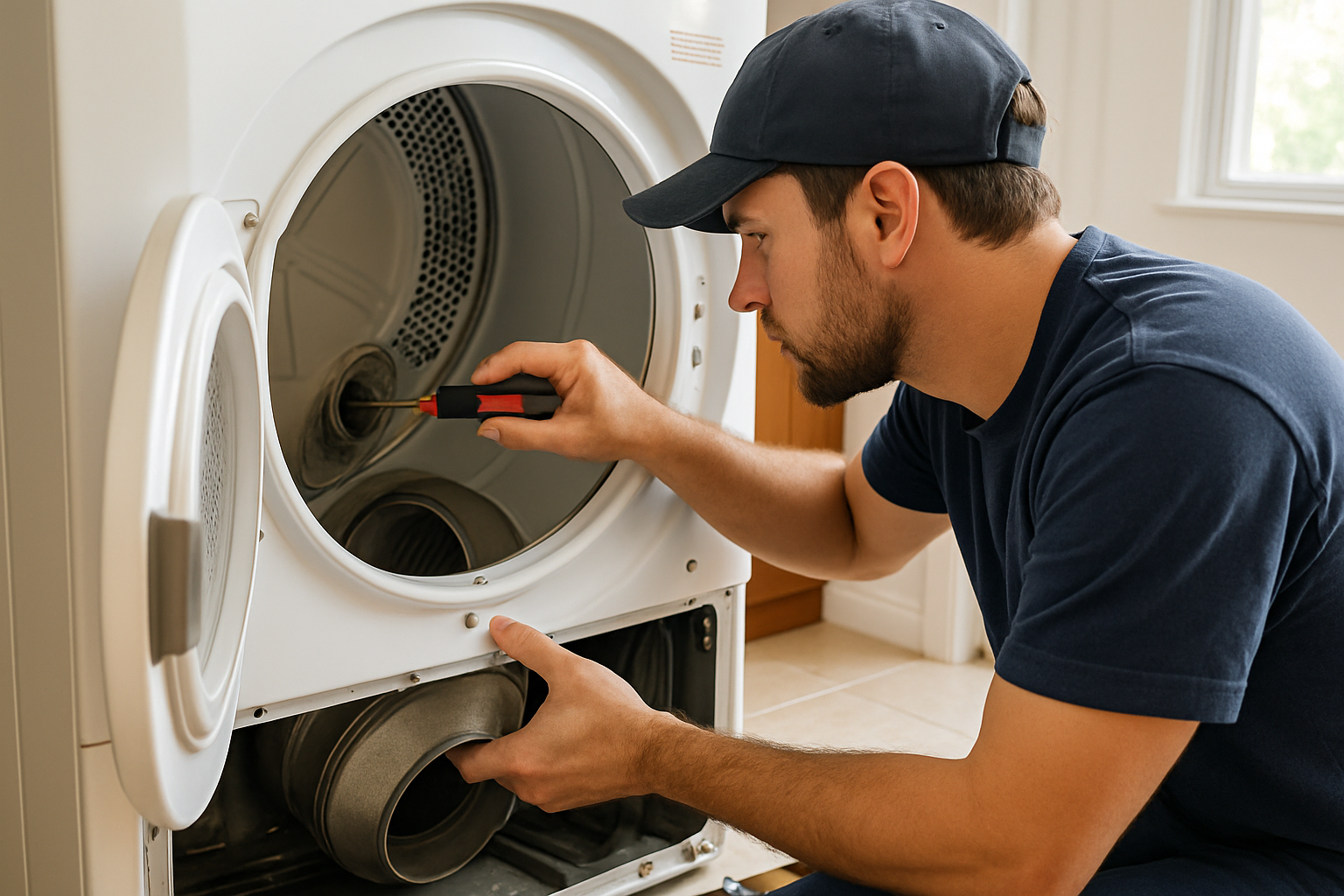
If your dryer keeps running when you open the door, stop using it until the cause is identified. Opening the door should immediately interrupt normal operation. A drum that continues turning, or a machine that starts when the door closes, can expose people to moving parts and may indicate a fault in the door-sensing or electrical control system.
Some models run a cooling fan after a cycle ends. That differs from the drum, blower, or heater operating with the door open. If the drum is still turning, treat it as an abnormal shutdown failure.
What a Technician Checks When a Dryer Will Not Stop With the Door Open
A dryer needs a dependable signal that the door has opened. On many models, a door switch changes state when the latch or actuator presses it. That signal tells the dryer to stop the motor and, when applicable, interrupt heat.
The first diagnostic step is confirming what remains on. Is the drum turning, or is only a fan audible? Does the display stay lit? Is heat still present? These details help separate a normal cooldown feature from an unsafe operating condition.
A technician confirms the sequence. Some dryers run normally until the door opens, while others begin running as soon as the door closes. Unexpected starting can involve a different failure pattern than a dryer that ignores the open-door signal during a cycle.
Model-specific wiring information is important because the same symptom may involve the door switch, latch alignment, wiring, relay, control output, or motor-start circuit.
Why the Door Switch Is Not Always the Only Cause
The door switch is a suspect, but it should not be replaced based only on the symptom. It may be damaged internally or fail to engage because the door is sagging, the latch is misaligned, or debris prevents the door from closing squarely.
A loose connector or damaged wire near the switch can create the same problem. The switch may work, but the control may not receive the proper signal. Repeated door movement can stress a tightly routed harness over time.
A control board can also be involved. A stuck relay or faulty output may continue sending power to the motor after the dryer should stop. However, a failed board is not the automatic conclusion. The door circuit must be checked first to determine whether the board receives correct information and whether its output remains energized improperly.
Depending on the model, motor or start-circuit components may also require testing. Diagnosis must distinguish an electrical command to run from abnormal motor behavior.
Safe Checks to Make Before Calling for Dryer Repair
Turn the dryer off, unplug it, or switch off its dedicated breaker. Do not use it again if the drum continues rotating with the door open.
With power disconnected, check for visible issues. Look for a bent door, loose hinges, a difficult latch, clothing or lint around the opening, and obvious damage near the latch area. These conditions can keep the door from closing or engaging the switch normally.
Do not hold down, tape, bypass, or manipulate the door switch to keep the dryer operating. The switch is a protective device intended to stop moving parts when the door opens. Avoid removing panels or attempting live voltage tests; dryer wiring requires the correct diagram, meter technique, and safety procedures.
Instead, record what happened. Note the selected cycle, whether heat was present, whether the drum or only a fan continued running, any error code, and whether the dryer started when the door closed. Include the complete model number.
Distinguishing This From Other Dryer Problems
A dryer that hums but does not spin, tumbles without heat, leaves clothes damp, or makes a thumping sound follows a different diagnostic path. Those symptoms can involve the motor, airflow, heating system, or drum-support parts, but they do not automatically explain a door-open run condition.
If the drum stops but a fan runs briefly after the cycle, check the owner’s manual for that model’s cooldown behavior. If the drum keeps rotating after the door opens, do not assume it is a normal fan feature.
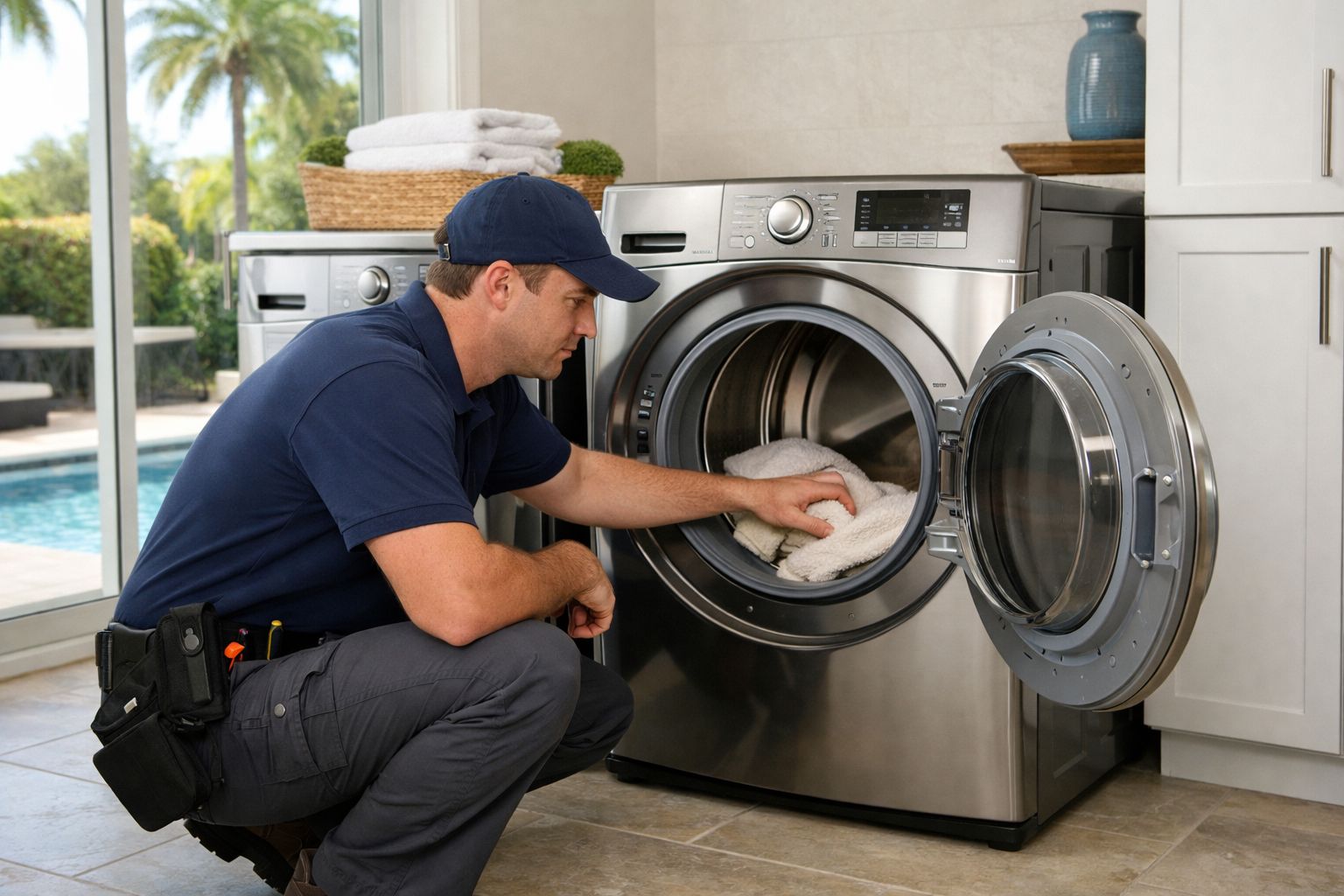
General Appliance Service can inspect the door input, wiring, motor controls, and board behavior through washer and dryer repair. Homeowners needing appliance repair in Coral Springs, FL can help focus the visit by reporting the exact shutdown sequence. Other common concerns appear in these dryer troubleshooting guides.
Frequently Asked Questions About a Dryer That Keeps Running When the Door Is Open
Is it safe to use a dryer that keeps running when I open the door?
No. Stop using it, disconnect power, and arrange an evaluation. Do not bypass the door switch or continue using the dryer to finish a load.
Why would my dryer start as soon as I close the door?
It may be receiving an incorrect run command. A relay, control output, door circuit, or model-specific motor-start component may require testing.
Can a bad door switch make a dryer keep running?
Yes. A failed or improperly engaged switch can cause this symptom, but latch alignment, wiring damage, connectors, and control behavior can look similar.
Does this problem always mean I need a new control board?
No. A stuck board relay is possible, but the door switch circuit, wiring, and applicable motor controls should be checked before replacing a board.
What details should I give a technician?
Provide the model number, cycle selected, whether the drum turned, whether heat was present, error messages, and whether the dryer started when the door closed.
A dryer that runs with its door open needs prompt attention because it defeats an important safety function. Keep it disconnected until the fault is professionally diagnosed and protective operation is verified.