
Why Does My Washer Fill Then Stop Before It Starts Washing?
By General Appliance Service
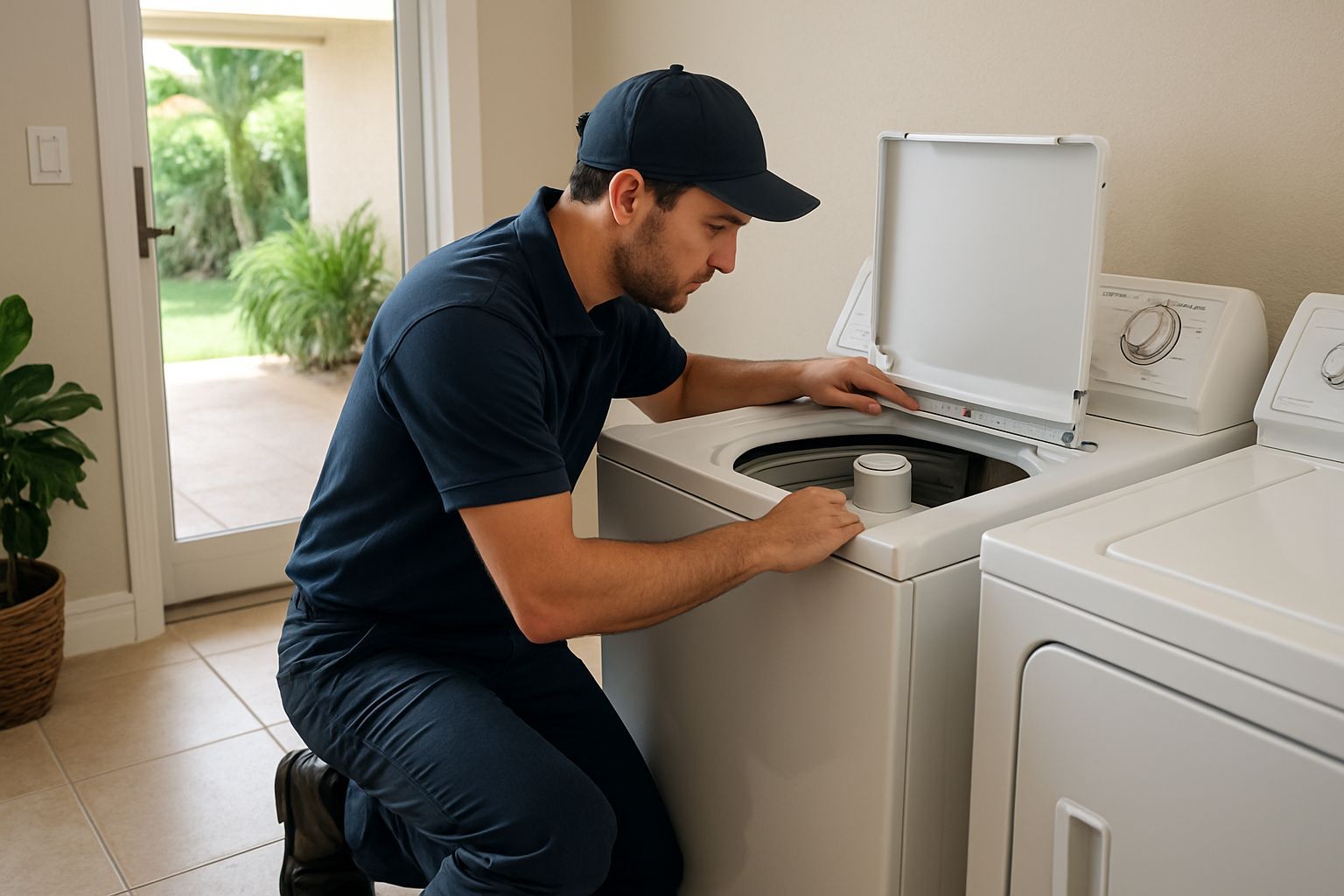
A washer that fills with water and then sits still is frustrating, especially when the display initially appears normal. The symptom does not automatically mean the motor, control board, or water valve has failed. Before washing begins, the appliance must confirm several conditions. If it cannot verify one of them, it may pause, hum, beep, or display an error instead of starting agitation or drum tumbling.
What a Technician Checks When a Washer Fills Then Stops
After water enters the tub, the washer may need to confirm the proper water level, door or lid status, detergent dispenser position, and motor response. A problem with any required signal can interrupt the transition from filling to washing.
Water-level sensing is a common diagnostic area. Most washers use a pressure system connected by a small hose and air trap. As water rises, pressure changes tell the control how much water is present. A loose hose, blockage, leak, or failed sensing component can send incorrect information. The tub may look full enough, while the washer still believes it needs water or detects a condition that prevents wash action.
A technician also checks actual water flow. Restricted inlet screens, weak household pressure, or a partly closed hot or cold valve can affect certain temperature selections. A cycle that calls for both supplies may pause if one side fills too slowly.
A Locked Door or Closed Lid Does Not Confirm Every Signal
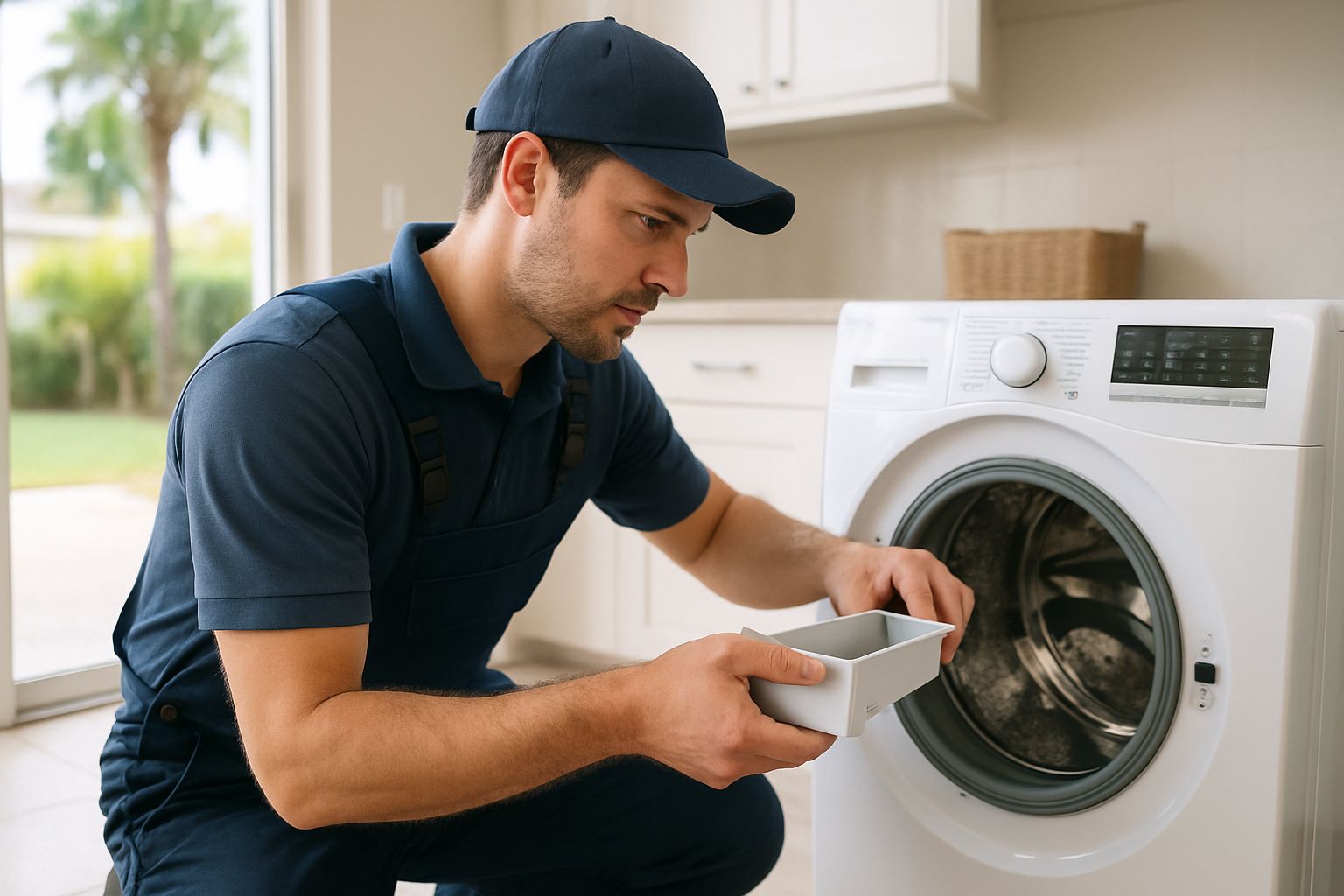
On a front-load washer, the door may lock during startup but still fail to provide all feedback signals expected by the control. The lock assembly, wiring, or communication with the control can interrupt the cycle after filling. A locked door confirms only part of the lock operation.
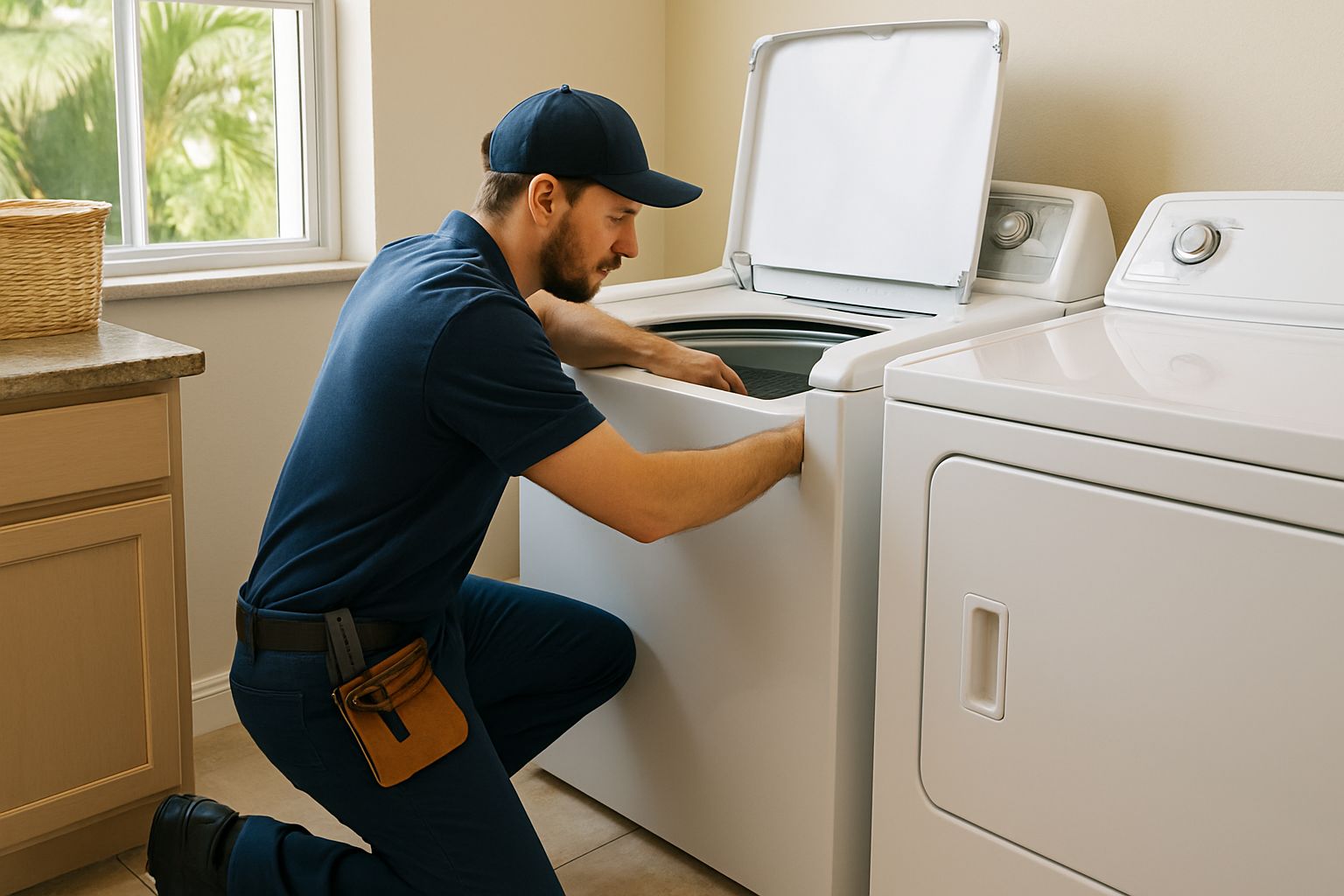
Top-load models can have similar lid-sensing concerns. Depending on the design, the washer may need confirmation that the lid is closed before agitation begins. If the motor attempts to start but the control does not detect expected movement, it may stop and report a fault rather than continue.
A hum after filling is worth noting, but it does not identify one failed part. The sound can mean the washer attempted a motor or drive command. Wiring, a motor or inverter system, a mechanical drive issue, or incorrect sensor information can all create a similar symptom.
Safe Checks Before You Call for Washer Repair
Start with checks that do not require removing panels. Confirm both household water shutoff valves are fully open, and make sure inlet hoses are not sharply kinked behind the washer. Compare the selected temperature with the available water supplies. A restricted hot-water supply can affect warm or hot cycles differently than cold cycles.
If the display shows a code, photograph it exactly as shown. Error-code meanings vary by manufacturer and model, so a general online list may not apply to your washer.
Also consider the load. An overpacked comforter, tightly tangled items, or a severely uneven load can interfere with normal operation. If the owner’s manual permits it, redistribute the items and retry once with a normal-sized load. Use only the reset procedure approved for your model.
Do not open electrical panels, bypass a lid or door switch, or test live circuits. Stop using the washer if there is smoke, a burning smell, repeated breaker trips, active leaking, or uncontrolled filling.
Why Diagnosis Matters More Than Replacing a Part
This symptom can involve more than one failure area. A control board can cause a washer to pause after filling, but incorrect information from a pressure sensor, lock assembly, wiring harness, or motor circuit can produce the same result.
During washer and dryer repair, a technician can verify water flow, valve operation, pressure-hose condition, lock or lid feedback, dispenser movement where applicable, and the change from fill to wash. The goal is to confirm whether a component receives the proper command and responds correctly, rather than replacing the most obvious-looking part.
Do not confuse this issue with a washer that washes normally but fails later. If the drum agitates or tumbles but clothes remain soaking wet, review guidance for a washer fills with water but will not spin. That later-cycle problem often involves draining, balance detection, or spin-stage operation.
Frequently Asked Questions About a Washer That Fills Then Stops
Why does my washer fill with water and then do nothing?
It may be waiting for water-level feedback, lid or door confirmation, motor movement, or another required signal before the wash stage can begin.
Can low water pressure make a washing machine stop after filling?
Yes. Restricted hot or cold water flow can prevent a cycle from filling correctly within the time expected by the control.
Why does my washer beep after it fills?
A beep can indicate the control detected a fault or cannot proceed. Photograph any displayed code for accurate model-specific diagnosis.
Should I reset a washer that fills but will not wash?
Use only the reset procedure in the owner’s manual. Repeated pausing after a reset usually requires diagnosis rather than continued restarting.
When is a washer that stops after filling unsafe to use?
Stop using it for smoke, burning odors, breaker trips, leaks, or uncontrolled filling. Do not bypass safety switches to continue testing.
For appliance repair in Ormond Beach, FL, document the selected cycle, temperature, door-lock behavior, sounds, and any error code. Those details help General Appliance Service begin diagnosis at the correct cycle stage.