
Microwave Trips Breaker When You Open the Door? Why the Timing Matters
By General Appliance Service
A microwave that trips the breaker when you open or close the door needs attention. The timing is an important clue: a trip during door movement differs from one that occurs after cooking begins. Stop using the microwave until the cause is identified. A breaker is reacting to an electrical condition, not simply creating a nuisance interruption.
Why Door Operation Changes the Diagnosis
Opening the door does more than release the latch. Door hooks operate several interlock switches inside the cabinet. These switches must change electrical states in a specific sequence to prevent operation with the door open and interrupt cooking circuits when the door is released.
A worn switch, damaged latch, shifted switch holder, or poor door alignment can disrupt that sequence. Loose terminals, damaged wiring, or insulation wear near the interlock assembly can create a similar symptom. The breaker may trip at the moment the door moves because that is when the circuit changes.
That does not automatically mean the door switch is the only failed part. The timing gives a technician a useful starting point, but diagnosis must confirm the actual fault.
Safe Checks Before Calling for Repair
After a breaker trip, stop using the microwave. Turn off the breaker or unplug the unit if the plug is safely accessible. Do not pull an over-the-range microwave from its mounting or reach behind it for a cord that cannot be safely accessed.
With power disconnected, make only a limited visual check. Look for food buildup around latch openings, a sagging or loose door, visible cord or plug damage, and discoloration near the outlet. Note whether the trip happened while opening the door, latching it shut, pressing Start, or after heating began.
Also record buzzing, burning odors, sparks, display flickering, or nearby lights dimming. Do not repeatedly reset the breaker to recreate the problem. Never remove the cabinet, bypass an interlock, or probe internal switches and wiring. Microwave high-voltage components can remain hazardous after unplugging.
What a Technician Checks
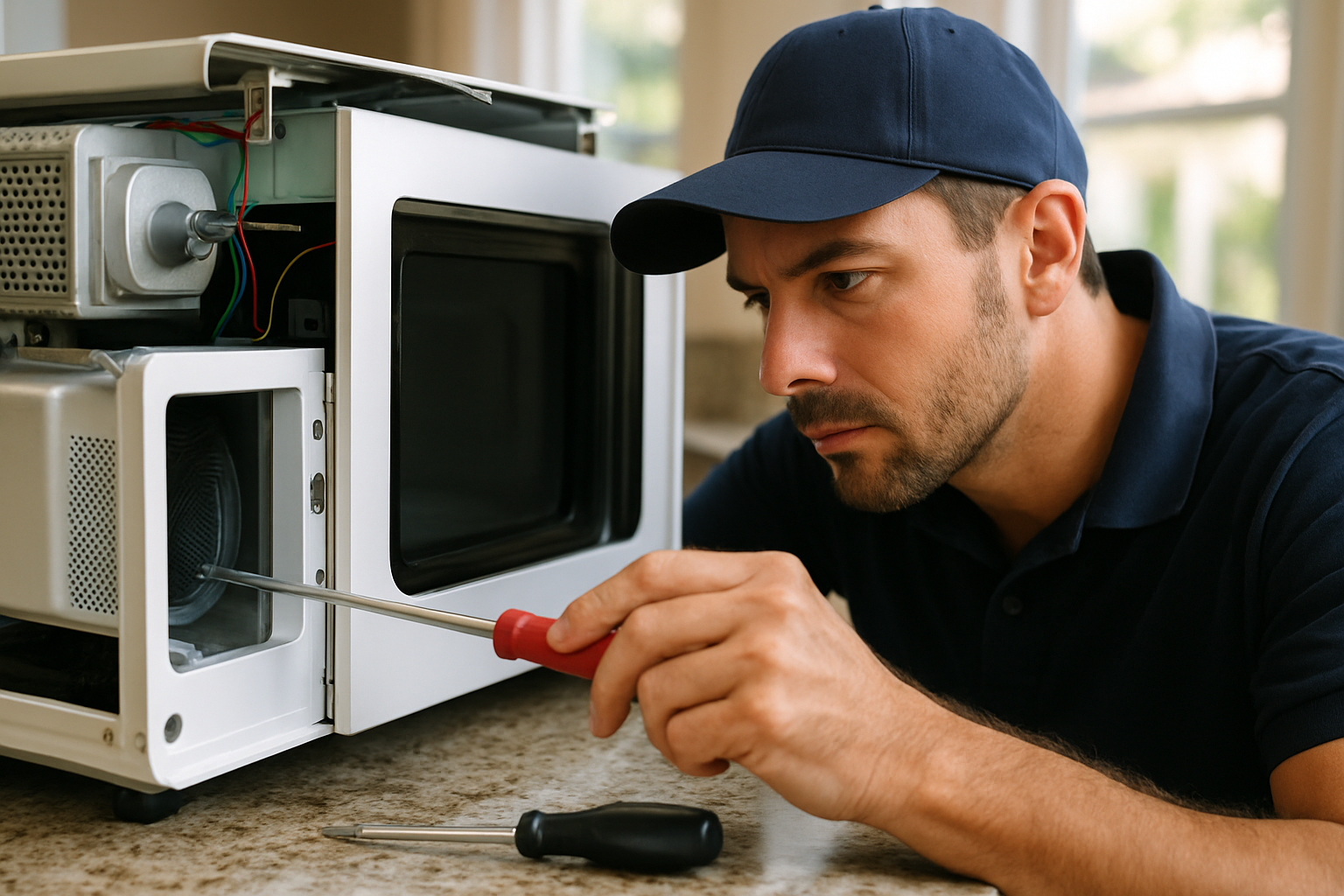
A technician first separates an external breaker trip from an internal microwave fuse failure. Either may indicate an electrical fault, but neither identifies the failed component by itself.
Inspection usually includes the breaker rating, circuit use, outlet, cord, and plug. An overheated outlet, damaged plug, or flickering lights on the same circuit may require an electrician to evaluate the home wiring.
At the appliance, testing focuses on door alignment, latch engagement, switch-holder condition, interlock sequence, harnesses, and terminals. The technician uses the model-specific wiring diagram rather than replacing a visible part based only on the symptom. Depending on the timing, testing may extend to the noise filter, controls, fan circuit, or high-voltage components.
Professional microwave repair in South Florida can determine whether the issue is in the interlock circuit or elsewhere in the appliance.
Comparing Door Trips, Start Trips, and Warning Signs
A breaker trip only when cooking starts can point beyond the door switches. Starting a cycle energizes circuits associated with the transformer or inverter system, magnetron, cooling fan, and controls. A trip after food has heated briefly may indicate a component that fails under load or as it warms.
By comparison, an immediate trip while opening or closing the door directs more attention to the latch and interlock area. Separate faults can still produce the same result, so replacing parts from an online list may leave the original problem unresolved.
Sparks, smoke, scorching, or burning odors increase urgency. Leave the microwave disconnected and do not run another cycle. Readers seeing arcing can review this guide about a microwave sparking with no metal inside. For appliance repair in Lake Worth, mention the exact door position or cooking stage that triggers the breaker.
Frequently Asked Questions About a Microwave That Trips the Breaker
Why does my microwave trip the breaker when I open the door?
Door movement changes the interlock switches. A worn switch, latch issue, cracked mount, or wiring fault can create an electrical problem during that sequence.
Can a bad microwave door switch trip a circuit breaker?
Yes. An interlock switch operating out of sequence can contribute to a trip. Its mount, connectors, latch action, and related wiring also require inspection.
Is it safe to reset the breaker and keep using the microwave?
No. Repeated resets can increase the risk of appliance or circuit damage. Leave the microwave off until a qualified professional identifies the cause.
Why does my microwave trip the breaker only when it starts cooking?
A Start-related trip may involve cooking circuits rather than only door interlocks. High-voltage, fan, control, or line-side components may need professional testing.
Should I call an appliance technician or an electrician?
Start with appliance diagnosis when the trip follows microwave use or door movement. Contact an electrician too if the outlet, plug, panel, or nearby lights show problems.
Prompt diagnosis protects the appliance and helps determine whether the issue is limited to the microwave or involves the household electrical circuit.