
Why Is My Freezer Door Hard to Open After Closing It?
By General Appliance Service
A freezer door that feels suctioned shut right after you close it can be surprising. In many cases, brief resistance is normal. Warmer room air enters while the door is open, then cools after it closes. That can slightly lower pressure inside the compartment and create a temporary vacuum effect against the gasket.
Timing matters. A door that opens normally after a minute or two is different from one that stays stuck, scrapes, rebounds open, or develops frost around the opening.
What a Technician Checks When a Freezer Door Is Hard to Reopen
A technician first separates normal pressure-related resistance from a door closure or mechanical problem. If the door opens easily after a short wait and remains properly closed, the gasket may simply be sealing as intended.
Persistent resistance calls for a closer inspection. The cabinet should be level, and the door should sit squarely in the opening. On a swing-door freezer, hinges, cams, closers, mounting points, and cabinet rubbing are checked. On a bottom freezer drawer, rails, stops, and drawer alignment are equally important.
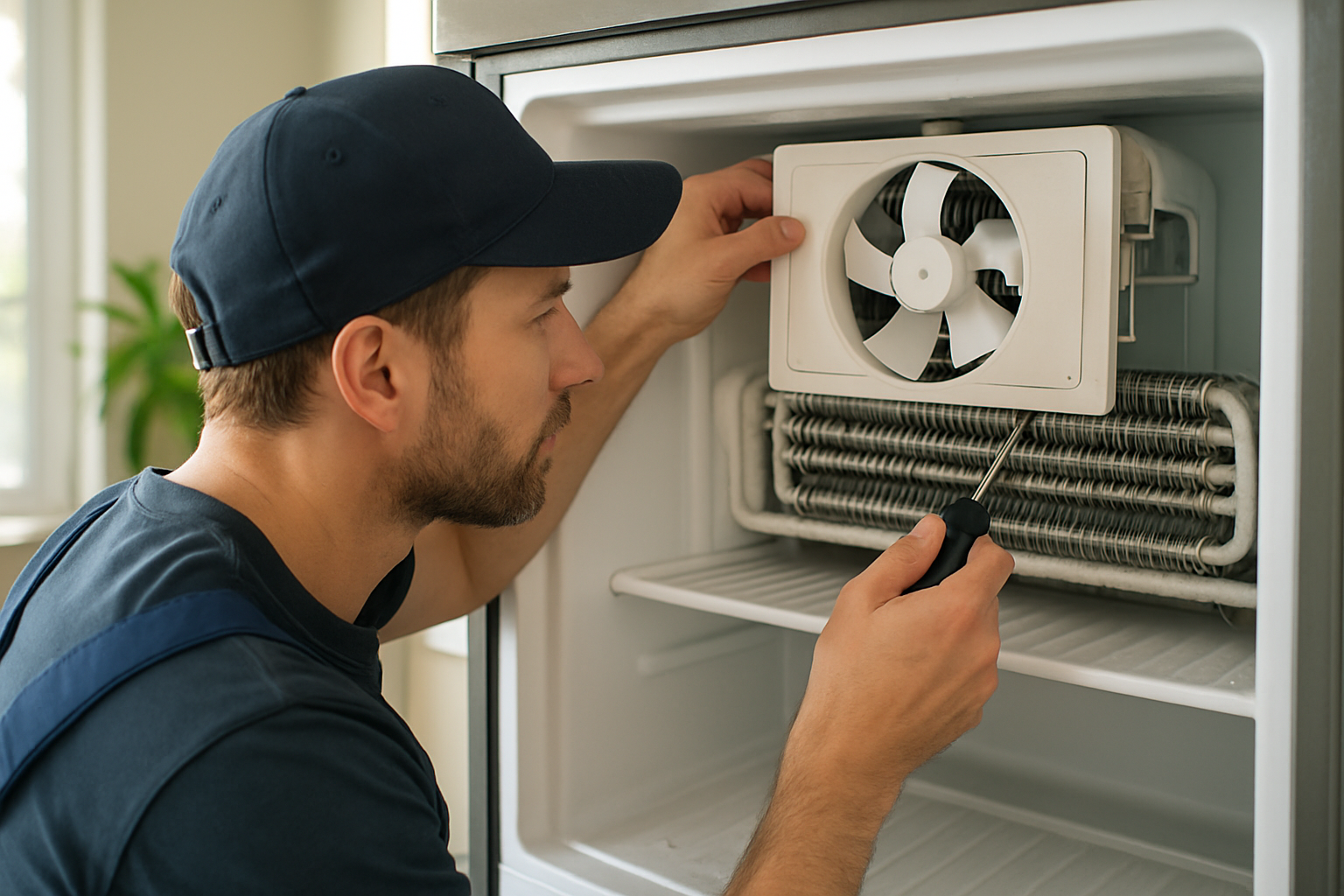
The gasket is inspected around its full perimeter, especially at corners. Tears, folds, distortion, sticky residue, or sections pulling away can affect the seal. A poor seal can also allow warm air inside, leading to frost, ice near the opening, and changing door alignment. If frost, condensation, soft food, or temperature changes are present, airflow and defrost performance may need evaluation.
Brief Suction Is Normal; Ongoing Binding Is Not
The normal version is specific: you close the freezer, immediately try to reopen it, and feel resistance for a short time. After waiting one or two minutes, the door should open normally.
A problem is more likely when resistance does not fade or appears with other symptoms. Watch for a door that requires unusual force every time, a drawer that sticks on one side, or a door that will not stay closed without being pushed. Frost along the cabinet edge, moisture near the gasket, a door alarm, or food that is not staying frozen also deserves attention.
Cabinet interference is another common cause. A freezer may cool properly while an uneven cabinet, shifted drawer rail, or settled door makes opening and closing feel wrong. The gasket may seem like the obvious culprit, but the underlying issue can be mechanical.
Safe Checks You Can Make Before Calling for Service
Close the door normally, wait one or two minutes, and try again. If the resistance disappears, note the timing. Do not slam the door, which can make pressure changes feel stronger and may shift packages inside.
Check that food packages, bins, and ice containers are fully seated. An item blocking closure can leave the door uneven or allow it to reopen slightly. Look for visible crumbs, spills, frost, tears, folds, or loose gasket sections. Clean the gasket only as allowed by the owner’s manual.
Also check for cabinet-edge rubbing or a drawer that does not glide smoothly. Do not pry the door open, force a stuck drawer, loosen hinge screws, remove rails, or reshape a gasket with heat. Freezer doors are heavy, and closure hardware varies by model.
When Freezer Repair Is the Better Next Step
Professional service is appropriate when the door remains difficult to open after pressure should have equalized. Call for help if it scrapes, binds, fails to stay closed, has visible ice around the opening, or is paired with poor cooling.
Before replacing a gasket or adjusting hardware, confirm the actual cause. General Appliance Service can inspect door components and related cooling concerns through freezer repair in South Florida. A proper diagnosis can prevent replacing a part that was never the problem.
For a misaligned drawer, recurring frost, or a door that opens back up, appliance repair in Jupiter, FL can evaluate the freezer as a complete system.
Frequently Asked Questions About a Freezer Door Hard to Open After Closing
Is it normal for a freezer door to be hard to open right after closing it?
Yes. Air entering during opening cools quickly after closure, creating temporary pressure resistance. The door should become easier to open after a short wait.
How long should I wait before reopening a freezer door?
Wait about one or two minutes. If resistance remains unusually strong afterward or requires force every time, the freezer should be inspected.
Can a bad freezer gasket make the door hard to open?
It can contribute, but it is not always the cause. Alignment, frost, cabinet interference, and drawer-rail issues can create similar symptoms.
Why does my freezer drawer feel stuck or uneven?
Normal suction alone is less likely. Check for shifted or overloaded contents first. Continued binding may indicate ice buildup, rail alignment, stops, or closure-component trouble.
When should I call for freezer repair instead of treating suction as normal?
Call if difficulty continues after waiting, the door scrapes or pops open, frost or condensation appears, or cooling performance and alarms become concerns.
Brief suction after closing usually indicates a sealed, cold compartment. Persistent force, binding, or frost is different, and early diagnosis can help protect door hardware and stored food.