
Why Is My Refrigerator Making Small or Hollow Ice Cubes?
By General Appliance Service
Small or hollow refrigerator ice cubes usually point to a water-fill problem rather than an automatically failed ice maker. When the ice maker still harvests and drops ice but produces thin, hollow, or incomplete cubes, its mold may not be receiving enough water during the fill cycle. The water path, freezer temperature, and ice maker’s normal operating sequence all matter.
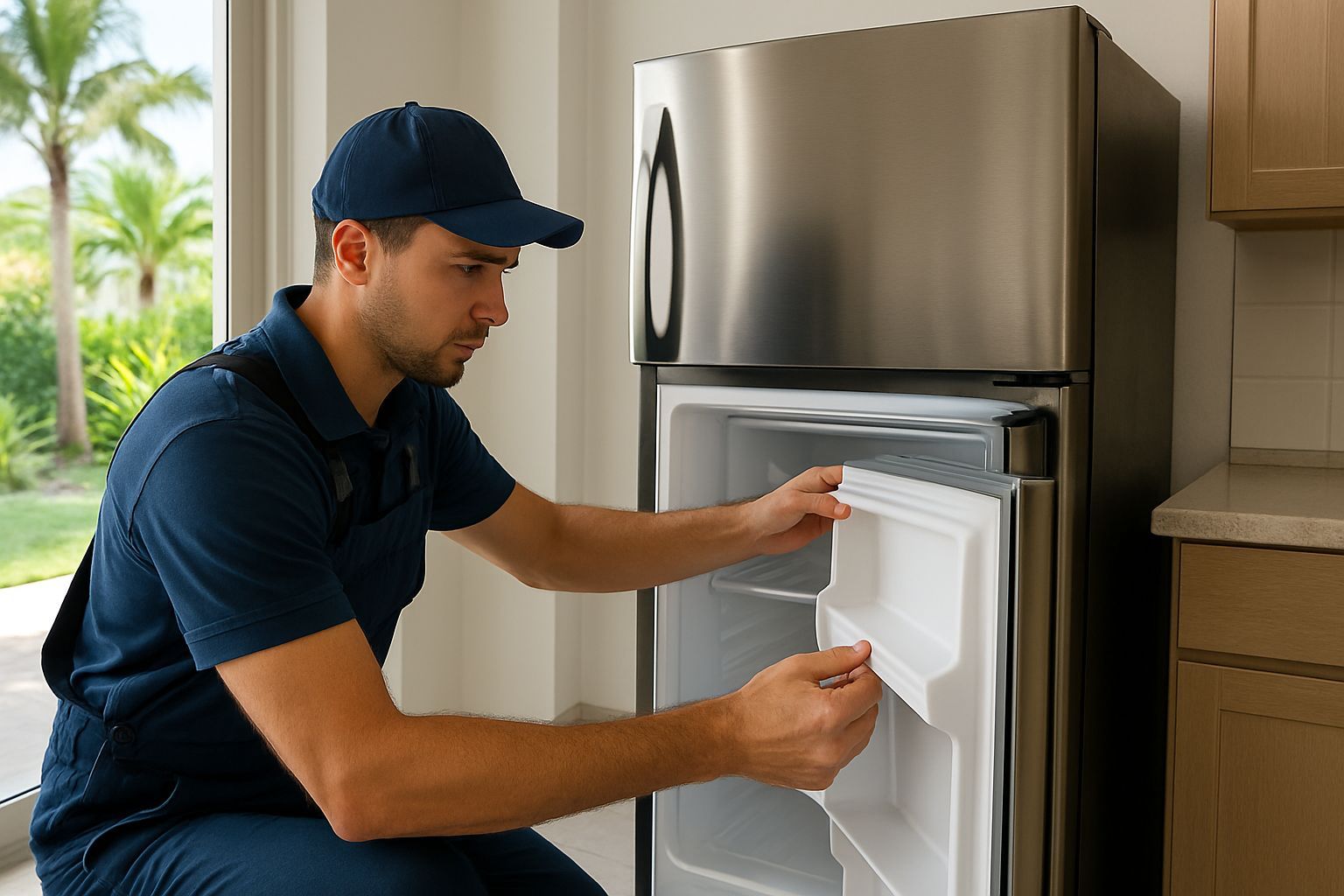
What a Technician Checks When a Refrigerator Is Making Small Ice Cubes
Cube size begins with fill volume. During a cycle, the inlet valve opens and water travels through tubing to the ice-maker mold. Restricted, delayed, or interrupted flow can leave small crescents, hollow cubes, or partial shapes.
A technician checks the complete path from the household supply to the fill tube. A filter may be overdue, incorrectly installed, or poorly seated. A supply line may be pinched after the refrigerator was moved. Depending on the model, the filter head, internal tubing, or the ice-maker outlet on the inlet valve can also restrict flow.
The ice maker is not automatically the first part to replace. Proper diagnosis includes checking valve operation, water delivery to the mold, fill-tube obstructions, harvest timing, wiring, and model-specific settings.
A Normal Water Dispenser Does Not Rule Out a Restriction
A strong dispenser stream does not always prove the ice maker is receiving enough water. Many refrigerators use separate tubing branches or separate inlet-valve outlets for the dispenser and ice maker.
That means water may flow normally at the door while the ice-maker side has a restricted valve outlet, partially frozen fill tube, or narrowed water path. It helps to understand why refrigerator water flow can differ between the dispenser and ice maker, since the two functions share some components without using every component the same way.
Timing offers useful clues. Cubes that gradually become smaller may indicate declining flow through a filter or water path. A sudden change after plumbing work, a filter replacement, a power interruption, or moving the refrigerator can point toward a specific event.
Safe Checks Before Calling for Refrigerator Repair
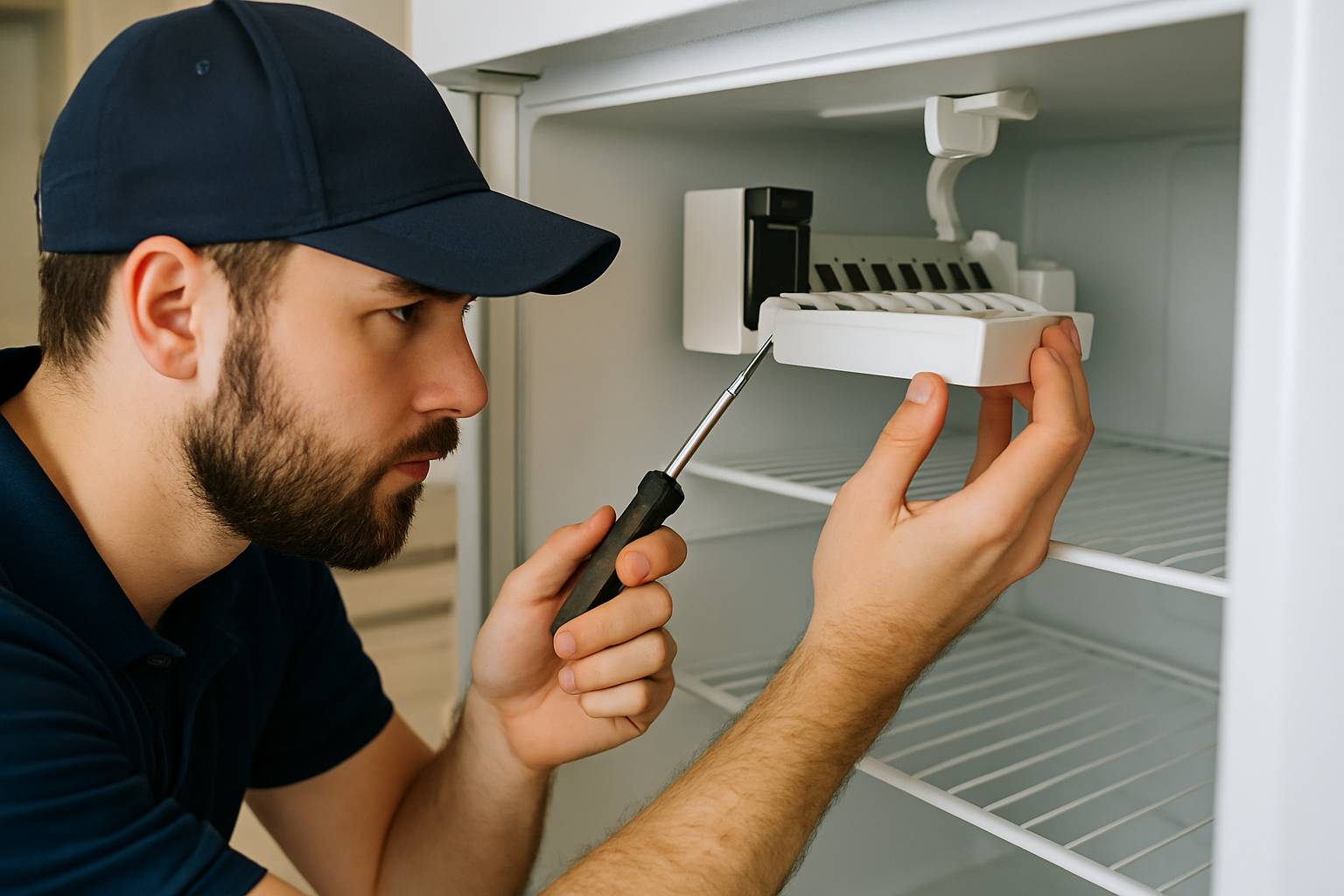
Start with the owner’s manual and confirm that the freezer is maintaining the temperature specified for the model. Notice whether frozen food seems softer than usual. Temperature may not be the sole cause of small cubes, but it can disrupt normal ice-making operation.
Check that the correct manufacturer-approved filter is fully seated. Replace it according to the manual’s schedule and instructions. An incorrect or poorly installed filter can restrict flow, but repeatedly changing filters without identifying the cause can be wasteful.
Inspect the visible external water supply line for sharp kinks or crushed areas, and make sure the household shutoff valve is fully open. Note whether the dispenser is slow, normal, or not working.
Avoid thawing concealed lines with a hair dryer, piercing ice, forcing the fill tube, or removing panels. Those actions can damage tubing, insulation, wiring, or ice-maker components.
Temperature, Airflow, and Professional Diagnosis
Small or hollow cubes primarily indicate insufficient water entering the mold, but freezer conditions still matter. A freezer that is too warm can delay harvesting or interfere with dependable ice production.
Warm temperatures can result from blocked airflow, frost buildup, a weak evaporator fan, a damaged door seal, sensor issues, or a control problem. Actual temperature readings are more useful than relying only on the display setting.
Oversized cubes, ice sheets, or water dripping into the bin suggest a different problem, such as overfilling, a seeping valve, or a fill tube that continues dripping. For homeowners needing appliance repair in Wellington, FL, documenting cube appearance, dispenser performance, and freezer behavior can help speed diagnosis.
When basic checks do not restore normal cubes, refrigerator and ice maker repair can identify a restricted water path, frozen fill tube, inlet-valve issue, temperature condition, or ice maker that is not completing its intended fill sequence.
Frequently Asked Questions About a Refrigerator Making Small Ice Cubes
Why did my refrigerator suddenly start making small cubes?
Sudden undersized cubes often indicate reduced water delivery after a filter change, plumbing work, a refrigerator move, or a partially closed shutoff valve.
Can a clogged water filter make ice hollow?
Yes. A restricted filter can limit water reaching the mold. If cubes remain small after a correctly installed replacement, another restriction may be present.
Why does the dispenser work but the ice is small?
The dispenser and ice maker can use separate valve outlets or tubing branches. Normal dispenser flow does not confirm full flow to the ice-maker mold.
Does small ice mean the freezer is too warm?
Not necessarily. Small cubes more often mean low fill volume, but poor airflow, a door-seal problem, or another cooling issue can affect ice production.
Should I replace the ice maker first?
No. Check the water supply, filter, fill tube, inlet valve, freezer temperature, and model-specific ice-maker operation before replacing the ice maker.
Small cubes are often repairable once the restricted or interrupted part of the water path is identified. Prompt diagnosis can help prevent wasted filters, unnecessary parts, and recurring ice-production problems.