
Why Is My Refrigerator Door Alarm Beeping When the Door Is Closed?
By General Appliance Service
A refrigerator door alarm beeping when the door is closed is frustrating, especially when the doors appear fully shut. The alarm does not automatically mean the gasket has failed. It means the refrigerator believes a door, drawer, or compartment remains open. That signal can result from an obstruction, poor alignment, weak gasket contact, or a switch, sensor, wiring, or control problem.
What a Technician Checks When a Refrigerator Door Alarm Keeps Beeping
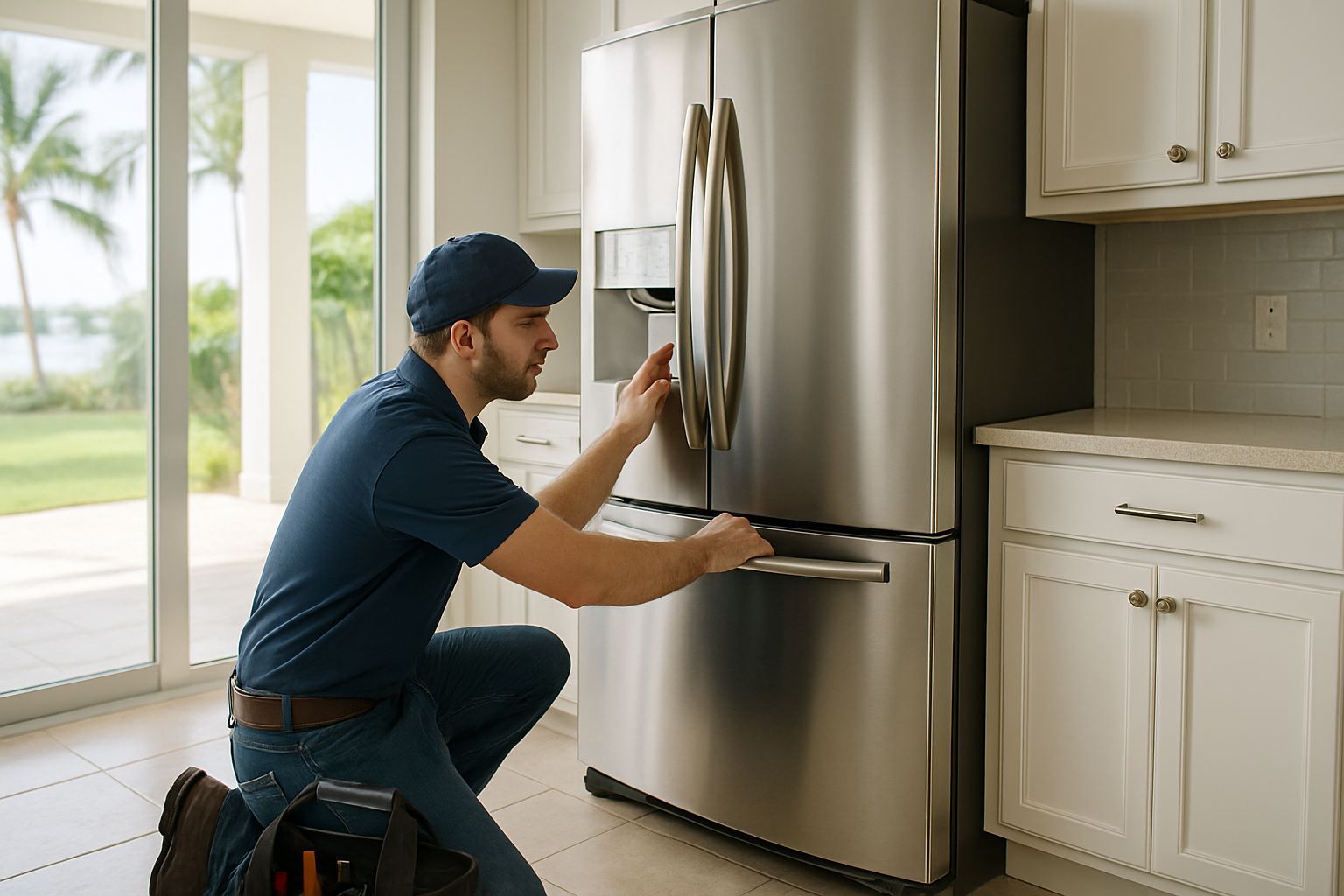
The first step is separating an actual closure issue from a false door-open signal. A technician checks whether every door closes evenly against the cabinet and whether drawers slide fully into place. A food package, shifted shelf, door bin, or overfilled freezer can leave a tiny gap that prevents sealing or sensor recognition.
Door geometry also matters. A refrigerator may look closed while one corner is not contacting the cabinet. Worn hinges, a sagging door, damaged gasket sections, or cabinet interference can change its position. On French-door models, the center mullion or flipper must rotate correctly as the doors close. If it sticks or is bent, the refrigerator may lose its seal or continue reporting an open door.
General Appliance Service can provide refrigerator repair in Boynton Beach when a recurring alarm needs more than a basic cleanup or visible adjustment check.
Check for Obstructions and Gasket Contact First
Before assuming an electrical part has failed, remove anything that may interfere with closure. Check food packages, shelves, door bins, crisper drawers, and the ice bin. A drawer that is slightly off its track can keep a freezer door from closing completely.
Inspect the gasket around the affected door for crumbs, sticky residue, tears, or folded sections. A dirty gasket may not grip the cabinet, particularly at corners. Clean it only with a method approved in the owner’s manual. Avoid high heat, stretching the seal, or improvised reshaping tools, which can make the sealing problem worse.
Also inspect the hinge area. An obviously crooked door or loose-looking hinge deserves attention, but do not loosen hinge hardware unless the model instructions explain the procedure. Refrigerator doors are heavy, and incorrect adjustment can damage hinges, wiring, or the cabinet finish.
Why the Interior Light Can Help Identify the Problem
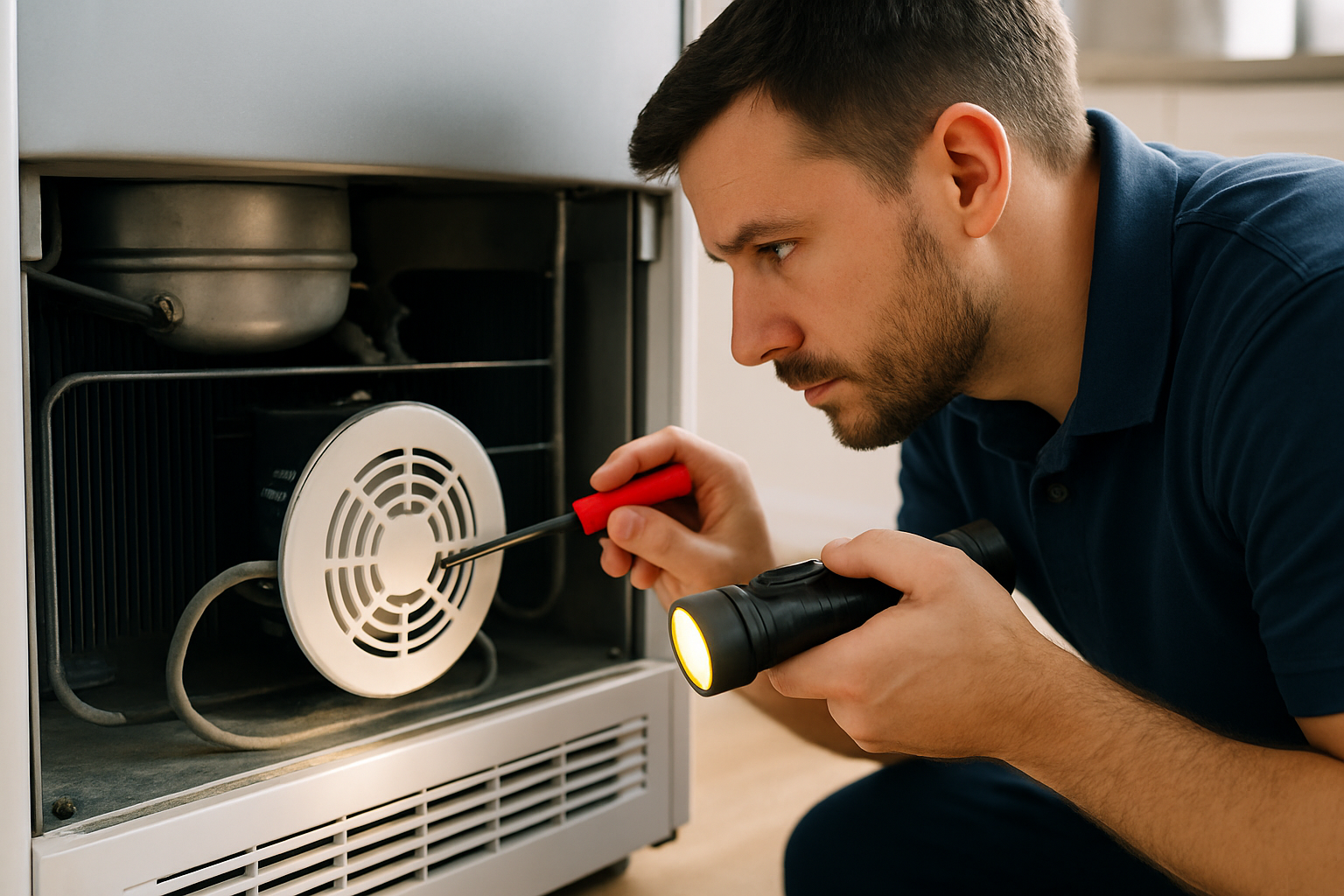
Many refrigerators use a plunger switch, magnetic reed switch, Hall-effect sensor, or similar device to determine whether a door is open. That input may also control the interior light and influence alarm, fan, or damper operation.
If the light stays on after a door closes, that is useful evidence, but it does not identify the failed part. The switch could stick, a magnetic sensor may not detect its mating magnet, or a harness connection may be intermittent. A misaligned door can create the same symptom.
Do not hold a switch down or bypass a sensor to test the refrigerator. Instead, observe the light normally and make a short video if the behavior is intermittent. Note whether the light changes as each fresh-food door, freezer door, or drawer closes. That information can shorten professional diagnosis.
A False Door Signal Can Affect Cooling
The alarm may not be the only symptom. Some refrigerators alter light, fan, damper, or temperature-management behavior when they believe a door is open. A warm compartment can therefore resemble a cooling-system failure when the appliance is receiving incorrect door-status information.
A failed control board can cause unusual alarm behavior, but incorrect information reaching the board can do the same. Before replacing a board, a technician should confirm compartment temperatures, test the applicable switch or sensor, inspect connectors and flexing harness areas, and compare fan and damper operation with model-specific wiring information.
If cooling changes along with the alarm, do not wait for food temperatures to rise further. Homeowners needing appliance repair in Atlantis, FL can have closure hardware and electrical inputs diagnosed together instead of replacing parts based on a guess.
When a Reset Is Worth Trying—and When It Is Not
A reset may clear a temporary alert or restore a display after a power interruption. Use only the reset method listed in the owner’s manual. If the alarm returns, the refrigerator is still detecting an open-door condition or related error.
Record the model number, affected compartment, beep pattern, display message, and current temperatures. Seek prompt service for damaged wiring, burning odors, sparking, repeated breaker trips, or warming food. Those symptoms go beyond a simple door adjustment.
Frequently Asked Questions About a Refrigerator Door Alarm Beeping When the Door Is Closed
Why does my refrigerator keep beeping when both doors are closed?
It may detect a door or drawer that is not sealing fully, or receive a false signal from a switch, sensor, wiring connection, or control circuit.
Can a dirty or damaged refrigerator gasket trigger a door-open alarm?
Yes. Debris, tears, folded edges, or weak gasket contact can leave a small gap. The door may appear closed while failing to seal tightly.
Why is my refrigerator light staying on after I close the door?
The refrigerator likely still believes the door is open. Door alignment, a failed switch or sensor, or wiring trouble can cause this behavior.
Can a bad door switch make the refrigerator section warm?
On some models, it can affect fan, damper, or control behavior. Temperature readings and model-specific testing are needed before blaming the switch.
Should I reset my refrigerator if the door alarm keeps returning?
A manual-approved reset is reasonable after checking for obstructions. It will not repair a worn hinge, damaged gasket, failed sensor, or broken wire.
A repeating alarm deserves attention before it affects food temperatures or energy use. Start with safe visual checks, then arrange diagnosis if the closure and sensor signals do not match.