
Washer Spins but Won’t Agitate? Why a Humming Sound Needs the Right Diagnosis
By General Appliance Service
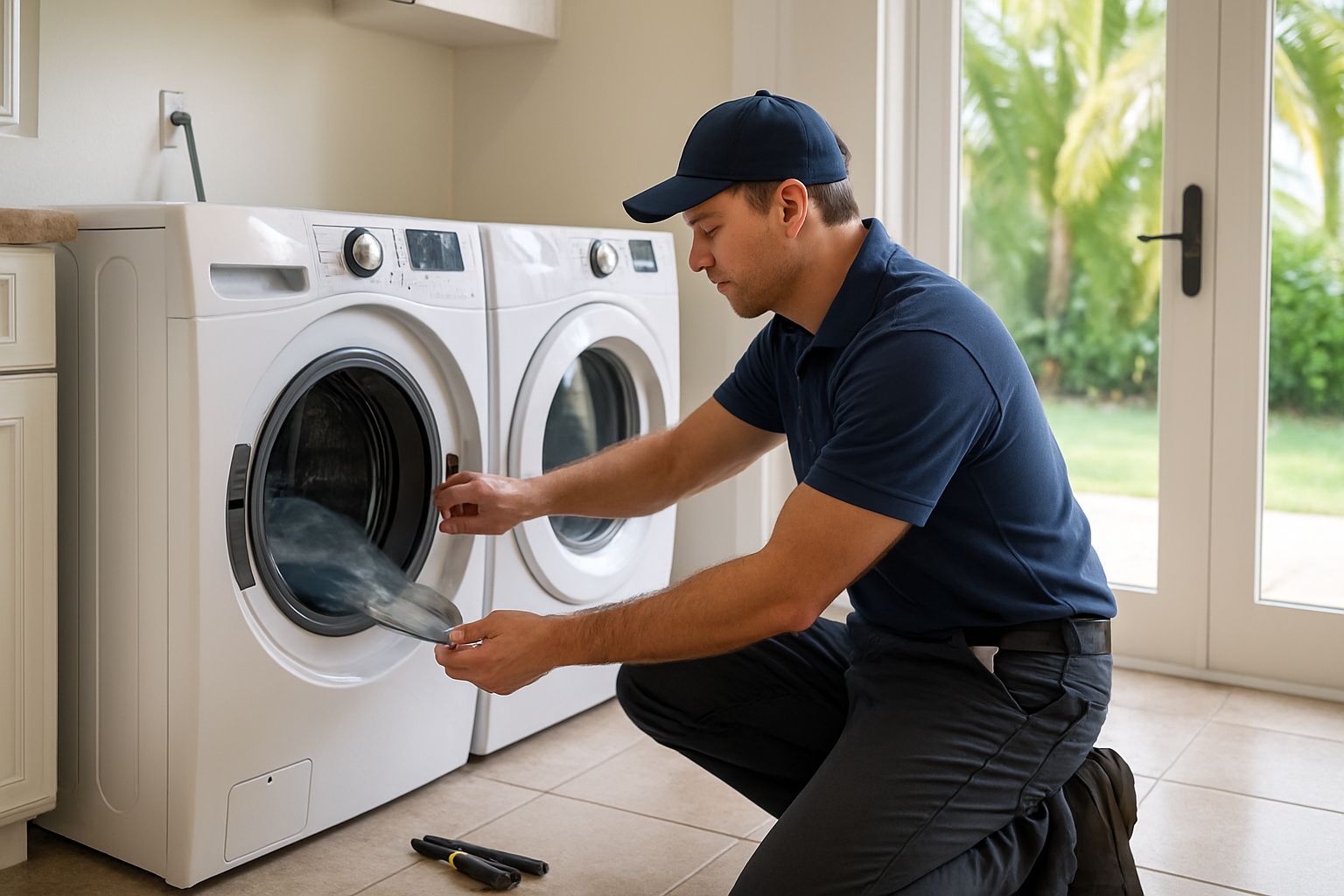
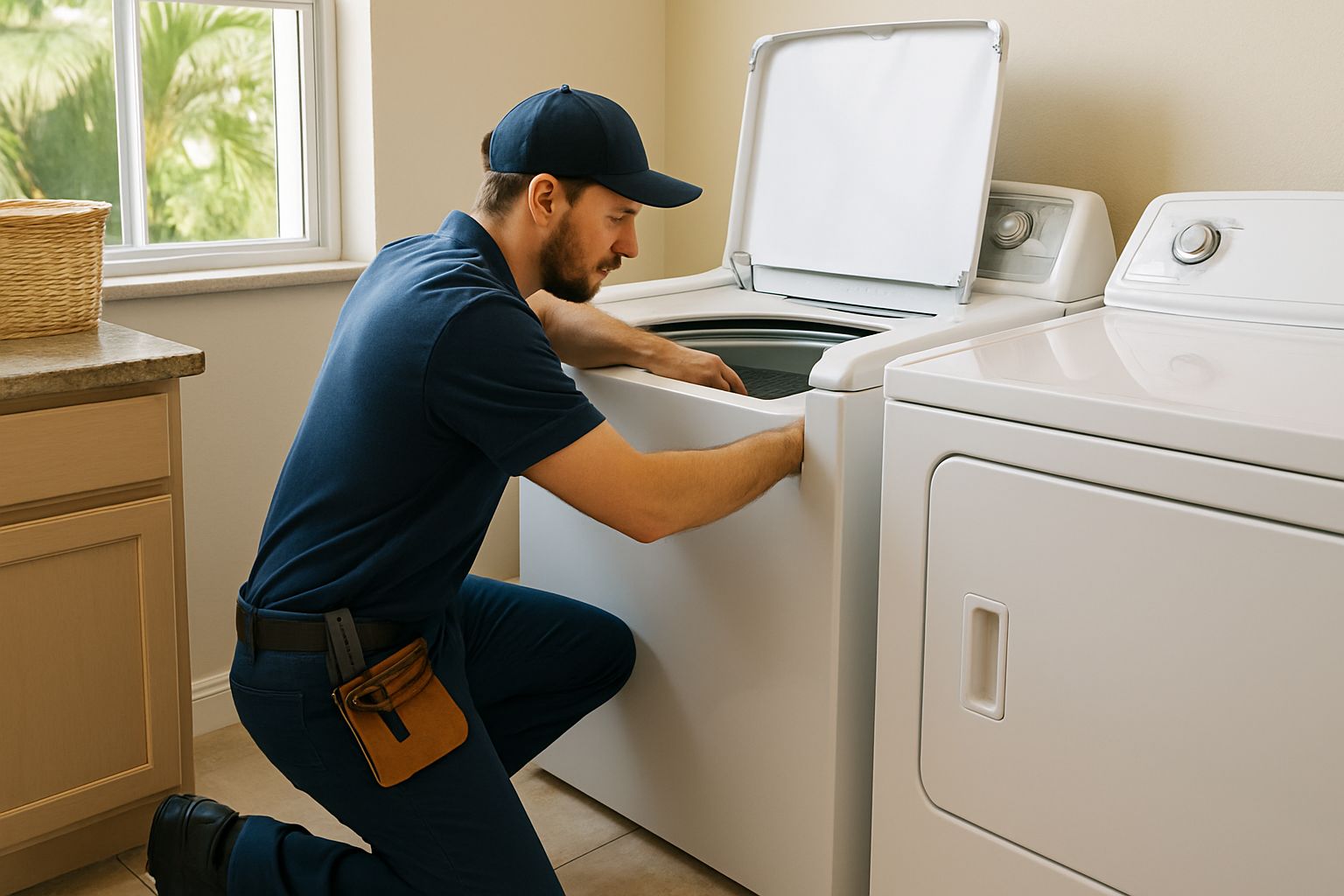
A top-load washer that drains and spins normally but sits still during washing can be confusing. The machine seems partly functional, yet clothes are not moving through the water. If your washer spins but won’t agitate , a humming or clicking sound is an important clue—but it is not a diagnosis by itself.
Agitation and spin are separate jobs. Depending on the design, they may use different motor directions, drive components, control commands, or electrical circuits. A washer can therefore spin well enough to remove water while failing to move the wash load.
What a Technician Checks When a Top-Load Washer Will Not Agitate
A technician first confirms the cycle sequence: Does the washer fill normally? Does the timer or display advance? Does it hum only when agitation should begin? Does it still drain and spin afterward?
Those details help narrow the test path. A washer that fills, hums during wash, then drains and spins has a different pattern than a washer fills with water but will not spin.
Next, the technician identifies the drive design. Top-load washers may use belts, direct-drive systems, clutches, shift actuators, gearcases, or electronically controlled motors. Model-specific wiring information helps determine whether the timer or control board is commanding agitation and whether the motor receives proper power under load. Harnesses, terminals, and control contacts may also be checked for corrosion, looseness, or heat damage.
Why a Humming Sound Does Not Automatically Mean a Bad Motor
A hum often means something is energized but not moving successfully. That may be the motor, but it can also involve a control output, start-related circuit, or mechanically bound drive system.
Mechanical resistance is one possibility. An obstruction, seized bearing, damaged drive component, or transmission-related problem can keep the motor from turning as intended. Power may be present, but the drive cannot move freely.
The reverse is also possible: the mechanical system may be capable of moving, but the motor may not receive the right command or starting assistance. On applicable models, a weak start component, damaged wiring, poor harness connection, failing timer, or control board can create a similar humming symptom.
Before replacing a motor, testing should confirm both correct electrical supply and whether the drive system is binding. Replacing parts based on sound alone can create unnecessary expense.
Safe Checks to Make Before Calling for Washer Repair
Start with the load. An overloaded washer or heavy items packed to one side can make operation difficult. If there is no burning odor, smoke, sparking, or grinding, try one normal-sized, balanced load. Do not repeatedly restart a washer that continues humming without agitating.
With power off, look around the basket rim for clothing caught between the basket and tub. A small garment can interfere with movement, but do not force the basket, remove cabinet panels, or access the drive system yourself.
Note the sequence for the technician:
- Whether the washer fills normally
- Whether the display or timer advances
- How long the hum lasts
- Whether clicking happens before or after humming
- Any error codes
- Whether drain and spin still work
Unplug the washer if you notice burning smells, smoke, sparking, leaks near electrical components, repeated breaker trips, or loud grinding. Continued operation can worsen motor, wiring, or control damage.
Why Model-Specific Diagnosis Matters
The same symptom can point to very different failure areas. One washer may have a worn belt or clutch, while another may have a shift actuator that cannot place the transmission into wash mode. Direct-drive and electronic models may require testing of motor circuits, sensors, control outputs, or specialized drive parts.
A technician may evaluate the coupler, belt, clutch, gearcase, basket drive, pump, motor bearings, and wiring—but only where those parts apply. The goal is to follow operation from the control command to the motor and through the mechanical drive path, not inspect random parts.
For washer and dryer repair, have the full model number ready. It is commonly found beneath the lid, around the washer opening, or on the rear panel. If balancing the load does not change the symptom, appliance repair in Greenacres can provide model-specific testing instead of guessing at expensive parts.
Frequently Asked Questions About a Washer That Spins but Won’t Agitate
Why does my washer spin and drain but not agitate?
Spin and agitation can use different motor directions, drive components, and control signals. A fault may stop wash movement while drain and spin functions continue normally.
What does humming during the wash cycle mean?
It usually means a component is receiving power but cannot start or move properly. Mechanical resistance, wiring trouble, a control issue, or motor-start problem may be responsible.
Can an unbalanced load stop agitation?
An overloaded or uneven load can make a washer struggle, though it is more often linked to spin issues. Try one balanced load once before scheduling diagnosis.
Is it safe to keep using a humming washer?
Stop using it if you smell burning, see smoke or sparks, hear grinding, notice leaking, or experience breaker trips. Repeated humming can stress electrical components.
Does a washer that will not agitate need a new motor?
No. A motor is only one possibility. Controls, wiring, start components, actuators, belts, clutches, and transmission-related parts can produce the same symptom.
Clear notes about each cycle stage give a technician a better starting point and help avoid replacing a part simply because the washer hums.