
Why Does My Electric Coil Burner Shut Off While Cooking and Work Again After It Cools?
By General Appliance Service
An electric coil burner shuts off while cooking for two different reasons: it may be regulating heat as designed, or it may be losing electrical contact as parts become hot. Working again after several minutes of cooling is an important clue, but it does not automatically mean the burner is operating normally.
This guidance applies to ranges with removable plug-in coil elements. Glass-top radiant ranges, induction cooktops, and burners that remain hot after the control is turned off require a different diagnosis.
What a Technician Checks When a Coil Burner Cuts Out
Some replacement coil elements include a temperature-sensing area near the center. If the coil becomes excessively hot, that feature may temporarily interrupt power. This is more likely on high heat with no pan, a lightweight pan, or cookware that does not sit flat against the coil.
Normal cycling is different. At medium or low settings, the surface-control switch commonly turns the element on and off to maintain average heat. The coil may glow, dim, and glow again. A burner that becomes completely cold on high heat and stays off until it cools deserves closer attention.
A technician identifies the correct element design and rating for the range model, then inspects the plug-in terminals, receptacle, wiring, and insulation. A loose connection can create heat, worsen over time, and open when the area gets hot.
Start With the Pan and the Burner’s Contact
Turn the control off and let the range cool before inspecting anything. Consider what was on the burner when it shut down. A flat, heavy-bottomed pan that matches the burner size transfers heat away efficiently. A warped pan, very small pan on a large burner, or pan that rocks can allow sections of the coil to overheat.
Once cool, confirm that the coil sits securely in the receptacle and lies reasonably level. An obviously warped coil, darkened terminals, cracked insulation, melted plastic, or loose receptacle should not be ignored.
Note the heat setting, how long the burner ran before cutting out, and whether it restarted by itself. Trying a properly sized pan is useful. If the problem disappears with suitable cookware, heat buildup may be the explanation. Repeated shutdown with a good pan at ordinary settings calls for diagnosis.
Why One Burner Can Fail While Others Work
When only one coil has this symptom, the surface-control switch is only one possible cause. Replacing it without testing can waste money.
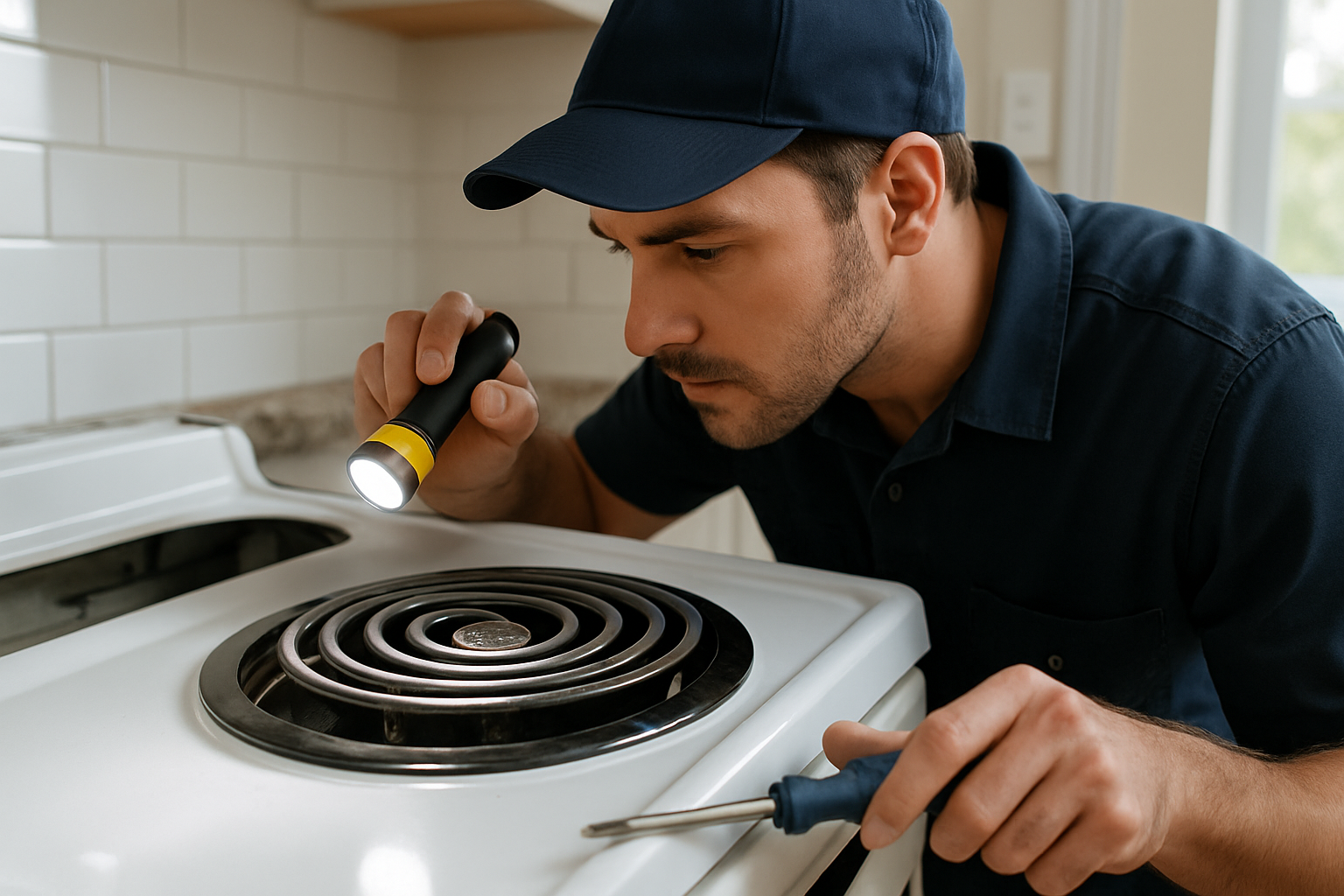
Heat damage at the plug-in connection is common. Terminals can become corroded, loose, or discolored. As current passes through a poor connection, resistance creates heat. The connection may open when hot, then make contact again after cooling. That pattern can look like an overheating element.
The coil itself may have an internal break that opens as metal expands. Wiring or a switch connection can behave similarly. During an oven and cooktop repair visit, a technician verifies the correct element and control configuration, checks for heat damage, and tests the control path using model-specific safe procedures. The element and receptacle should be evaluated before blaming the switch or electronic control.
Stop Using the Burner When There Are Danger Signs
Do not continue testing a burner that sparks, smokes, trips the breaker, produces a burning or electrical odor, or has melted material around the coil or receptacle. Turn the control off and avoid using that burner. These signs suggest an overheating electrical connection rather than routine cycling.
Homeowners seeking appliance repair in Boca Raton, FL should describe the cooling-and-restarting pattern, along with any odor, arcing, or visible discoloration. Those details help narrow the likely failure area.
A burner that stays energized after the knob is turned off is a separate safety concern. Review our guidance for an electric stove burner that stays hot after you turn it off. Do not treat a burner that will not shut off as normal cycling.
Frequently Asked Questions About an Electric Coil Burner Shutting Off While Cooking
Why does my electric coil burner turn off and come back on later?
It may be cycling through its heat control, or a heat-limiting feature may interrupt power. A heat-sensitive connection, damaged element, receptacle issue, or control problem is also possible.
Is it normal for a coil burner to stop heating without a pan?
Some newer elements may limit heat when cookware is removed because the coil temperature rises quickly. New or repeated shutdowns with a pan in place should still be investigated.
Can a warped or lightweight pan make a burner shut off?
Yes. Poor pan contact can let the coil run hotter than intended. Use a flat-bottomed pan sized appropriately for the element and confirm that it sits evenly.
Why does only one burner on my range keep cutting out?
One affected burner often points to its element, receptacle, terminals, or individual control path. Other burners can work normally while one connection has overheated or loosened.
When should I stop using an electric coil burner?
Stop immediately if there is sparking, smoke, a burning smell, breaker trips, melted plastic, visible terminal damage, or a loose coil. Repeated shutdown during normal cooking also needs service.
Prompt attention can prevent a damaged receptacle or connection from affecting the element, wiring, or controls. Use a different burner when safe, and arrange diagnosis rather than repeatedly resetting or forcing the affected coil to operate.