Why Is My Microwave Sparking With No Metal Inside?
By General Appliance Service
A microwave sparking with no metal inside is not something to ignore or “test one more time.” A flash may come from a hidden foil fragment, metallic dish trim, or contaminated interior surface. Repeated sparks, crackling, smoke, or a burning smell can indicate damage inside the cooking cavity. Stop the cycle immediately, unplug the microwave, and let it cool before checking for an obvious cause.
What a Technician Checks When a Microwave Sparks
The first question is what was inside when sparking began. Metal is not always obvious: foil from packaging, twist ties, metallic accents on plates or mugs, and some takeout containers can arc.
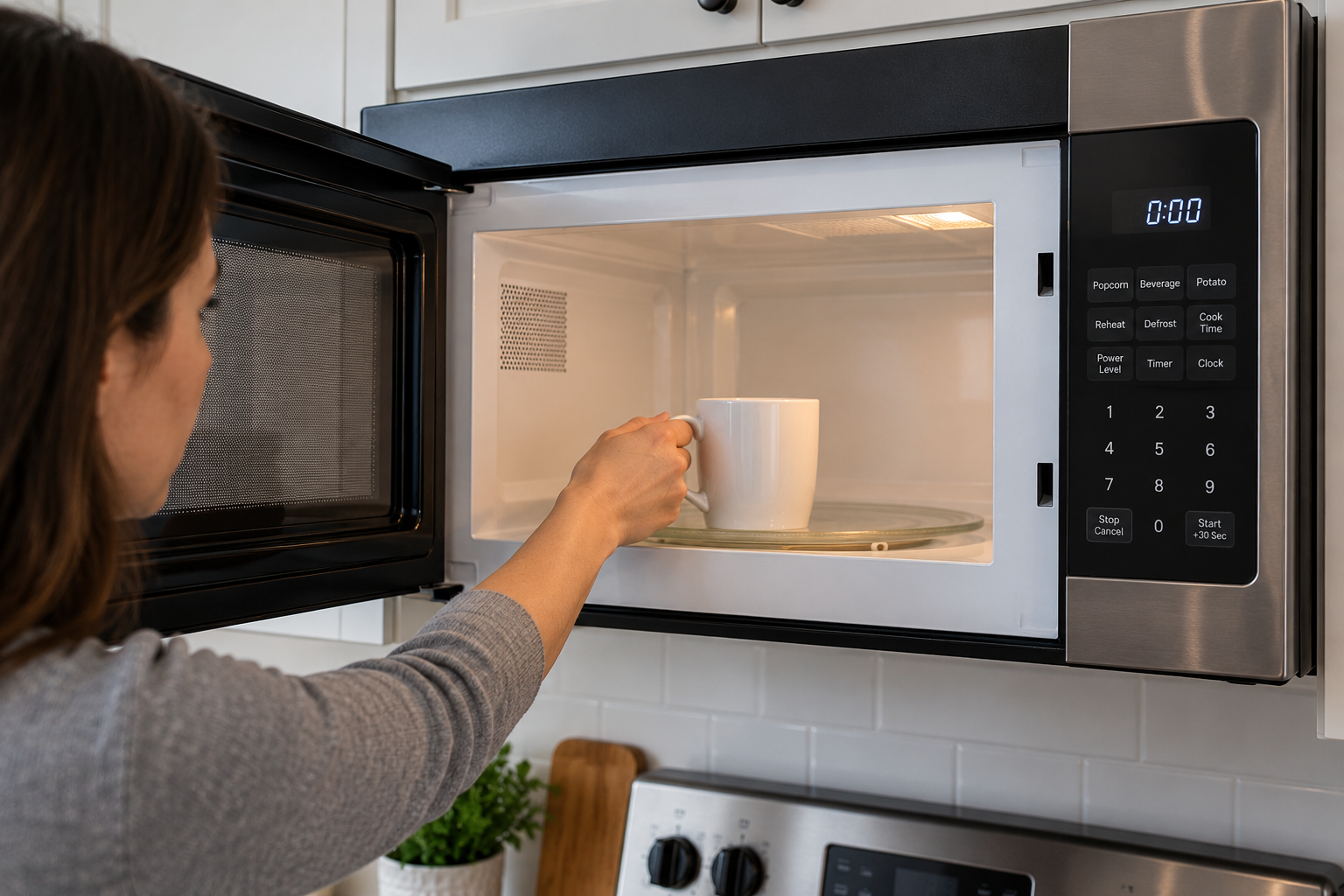
If the cavity was empty or the problem continues after an item is removed, the inspection shifts to interior surfaces. A technician looks for baked-on food, grease, scorch marks, chipped cavity coating, damaged accessories, and heat around the waveguide area. The waveguide directs microwave energy into the cavity and is often protected by a small cover on an interior wall.
A dark spot may be carbonized food splatter, while a melted cover can cause repeated arcing in the same place. Damage to the cavity, an improperly positioned rack, or an internal electrical fault can produce similar sounds and flashes. The visible spark is a useful clue, but it does not identify the failed part by itself.
Food Residue Can Become an Arcing Point
Food splatter and grease can bake onto the side walls, ceiling, and waveguide-cover area. Once residue becomes carbonized, it may conduct enough energy to create crackling or a small arc.
After the microwave cools, remove the turntable and roller ring if the owner manual permits. Check underneath for foil, packaging debris, twist ties, or utensils. Inspect dishes and containers for metallic trim before using them again.
Use a soft damp cloth to wipe loose splatter and grease from accessible, intact surfaces, then dry the area. Do not scrape a dark spot, puncture a cover, repaint the cavity, or apply cleaner to damaged interior material. Those actions can worsen the damage and hide evidence needed for diagnosis.
Even when an obvious item is removed, stop using the unit if there is scorching, melting, chipped coating, or another spark during a later use.
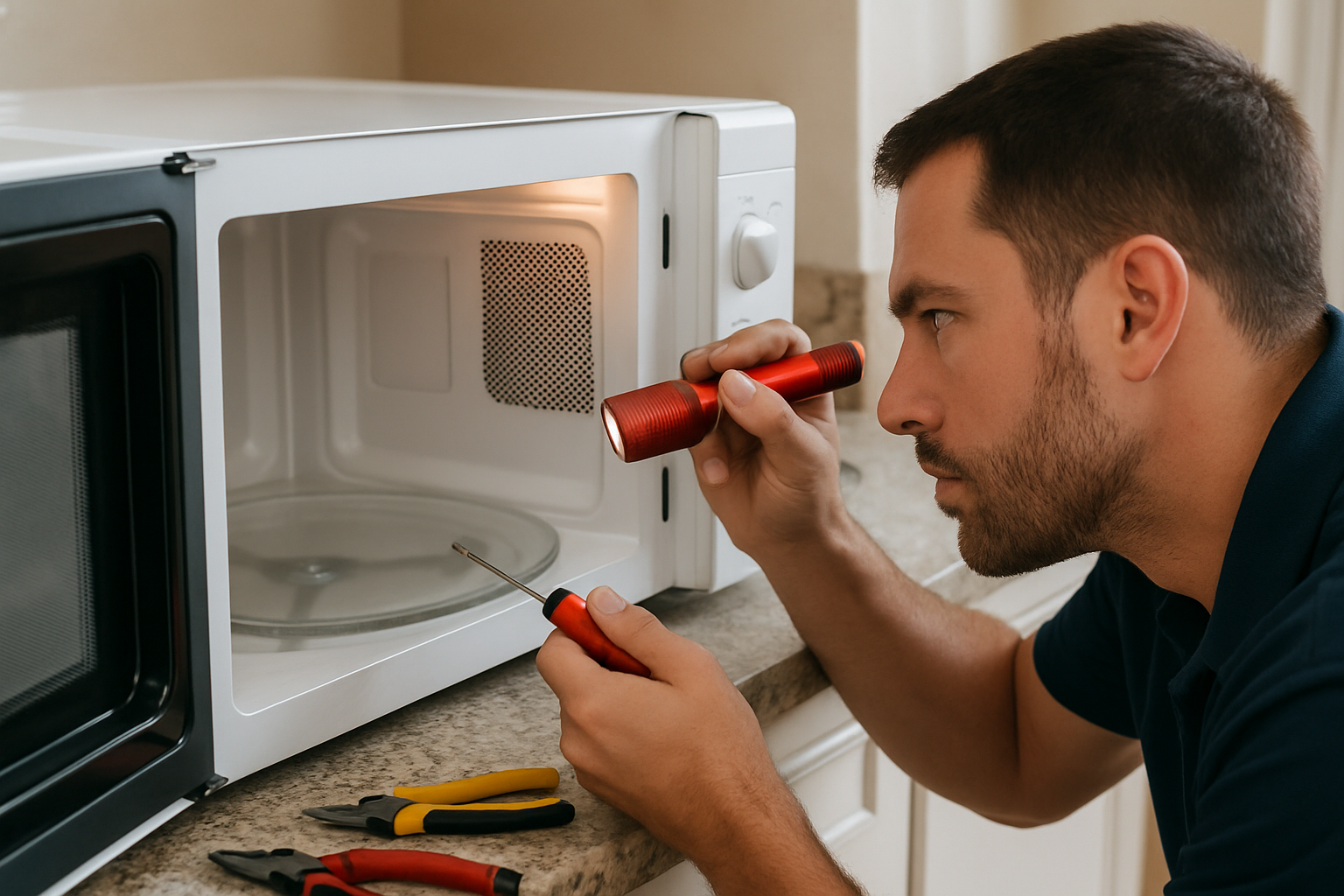
Inspect the Small Cover on the Interior Wall
The small rectangular or square panel on one cavity wall is commonly the waveguide cover. It is not a shipping insert and should not be poked, removed, or cleaned aggressively.
A stained, warped, cracked, melted, or burned cover may be involved in arcing. Damage around the opening behind it can also be a concern. A technician can inspect that area along with the antenna or stirrer components used on the specific microwave design.
Photograph discoloration, chipped coating, a melted panel, damaged rack hardware, or a scorch pattern before cleaning beyond a normal wipe-down. Record the brand and complete model number as well. These details help determine whether the issue involves a replaceable cover, cavity damage, or a larger repair concern.
For repeated arcing or a burning odor, microwave appliance repair in Boynton Beach can help determine whether the fault is limited to a cavity component or makes continued use unsafe.
When to Stop Using It and Consider Repair
A brief spark from a clearly identified foil fragment is different from sparks that return after the cavity is emptied and cleaned. Repeated arcing is a stop-use condition. So are smoke, a strong electrical or burning-paper odor, melted plastic, unusual humming, or a breaker that trips while the microwave runs.
Do not run empty test cycles to watch for sparks. Never remove the cabinet or inspect high-voltage components yourself. Even unplugged microwaves contain circuitry that is not safe for homeowner repair.
A qualified technician may inspect door-interlock operation, wiring, cooling airflow, cavity condition, and the high-voltage system using proper procedures. A removable contaminated component may be repairable, depending on the model and part availability. Extensive scorch marks, exposed metal, widespread coating damage, or heat damage to the cavity may make replacement more practical.
Countertop, over-the-range, and built-in microwaves have different replacement considerations, including fit, venting, trim, and electrical setup. Homeowners needing appliance repair in Pembroke Pines should leave the microwave unplugged when the cause is not clearly a removable object.
Frequently Asked Questions About Microwave Sparking With No Metal Inside
Why does my microwave spark without metal inside?
Hidden foil, metallic trim, burned food residue, a damaged waveguide cover, or cavity damage can cause arcing. Stop use if no removable cause is found.
Can food splatter or grease cause arcing?
Yes. Carbonized food or grease can create an arcing point, especially near the waveguide cover. Wipe intact surfaces gently, but do not scrape damaged material.
Is it safe to use a microwave after one spark?
Only when an obvious cause was removed and there is no odor, smoke, melting, scorch mark, or repeat sparking. Otherwise, leave it unplugged.
What is the small cover inside the microwave wall?
It is commonly a waveguide cover protecting the opening where microwave energy enters the cavity. Cracking, warping, staining, or burning there requires evaluation.
Should I repair or replace a scorched microwave?
The decision depends on the location and extent of damage. Minor contamination differs from exposed metal, failed components, or widespread cavity deterioration.
A microwave that repeatedly sparks should remain unplugged until its cavity and components can be evaluated safely. Addressing the cause promptly helps avoid further damage and unsafe operation.