
Why a Front-Load Washer Door Won’t Unlock After the Cycle
By General Appliance Service
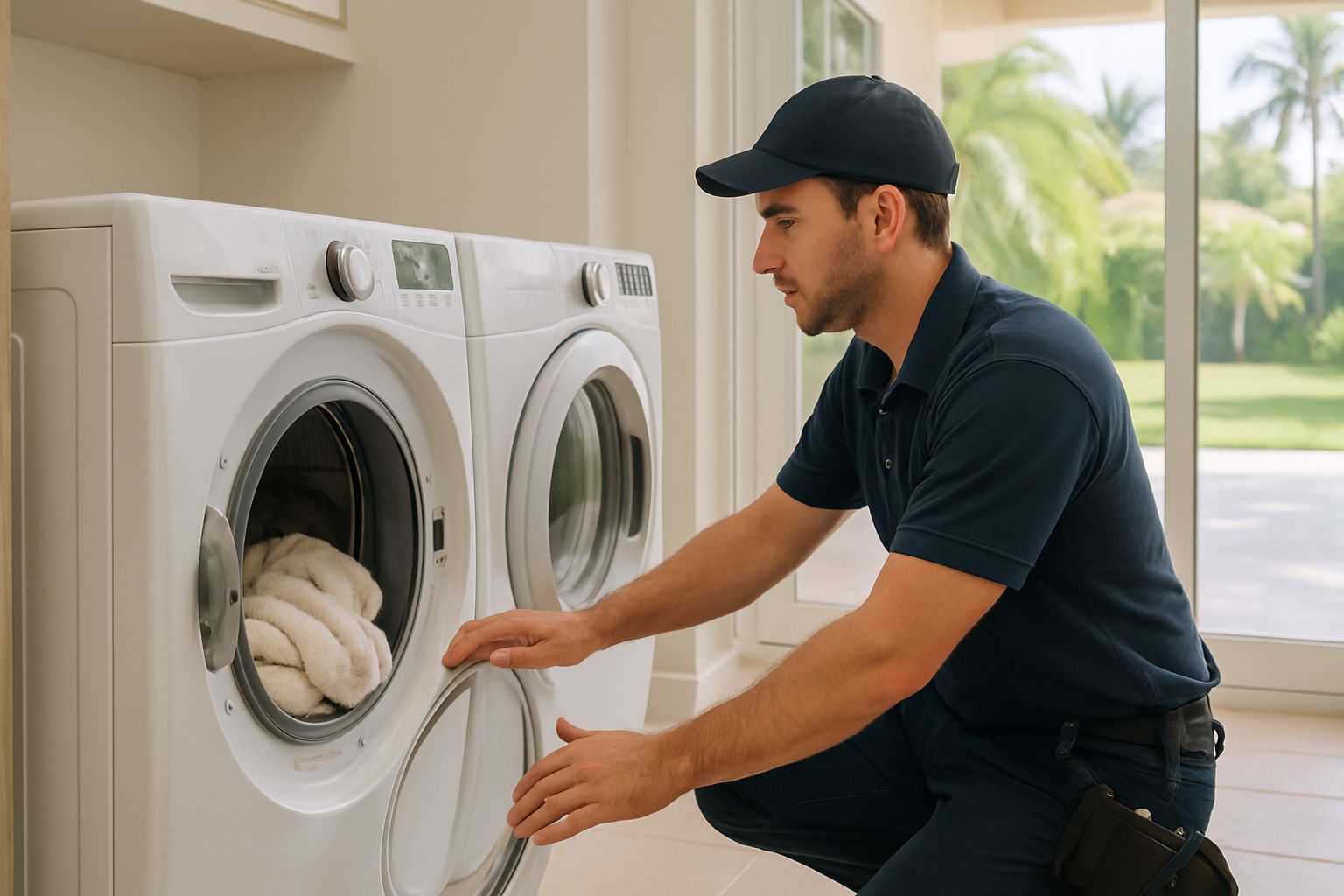
A front-load washer door won't unlock after the cycle for several reasons, and a failed latch is only one possibility. Most machines must confirm that the drum has drained, spinning has stopped, and the lock has completed its release sequence before opening is allowed. That safety process helps prevent flooding and injury. The most useful first distinction is whether water remains in the drum.
What a Technician Checks When a Front-Load Washer Door Stays Locked
A technician first determines whether the washer truly completed the cycle. A display may show “end” even when the machine did not finish draining, spinning, or releasing the lock as expected.
Standing water behind the door glass often points to a drainage or water-level feedback problem. A clogged drain path, restricted pump filter on applicable models, weak drain pump, or pressure-sensing issue can make the control believe water is still present. Many front-load washers will not unlock until that condition is resolved.
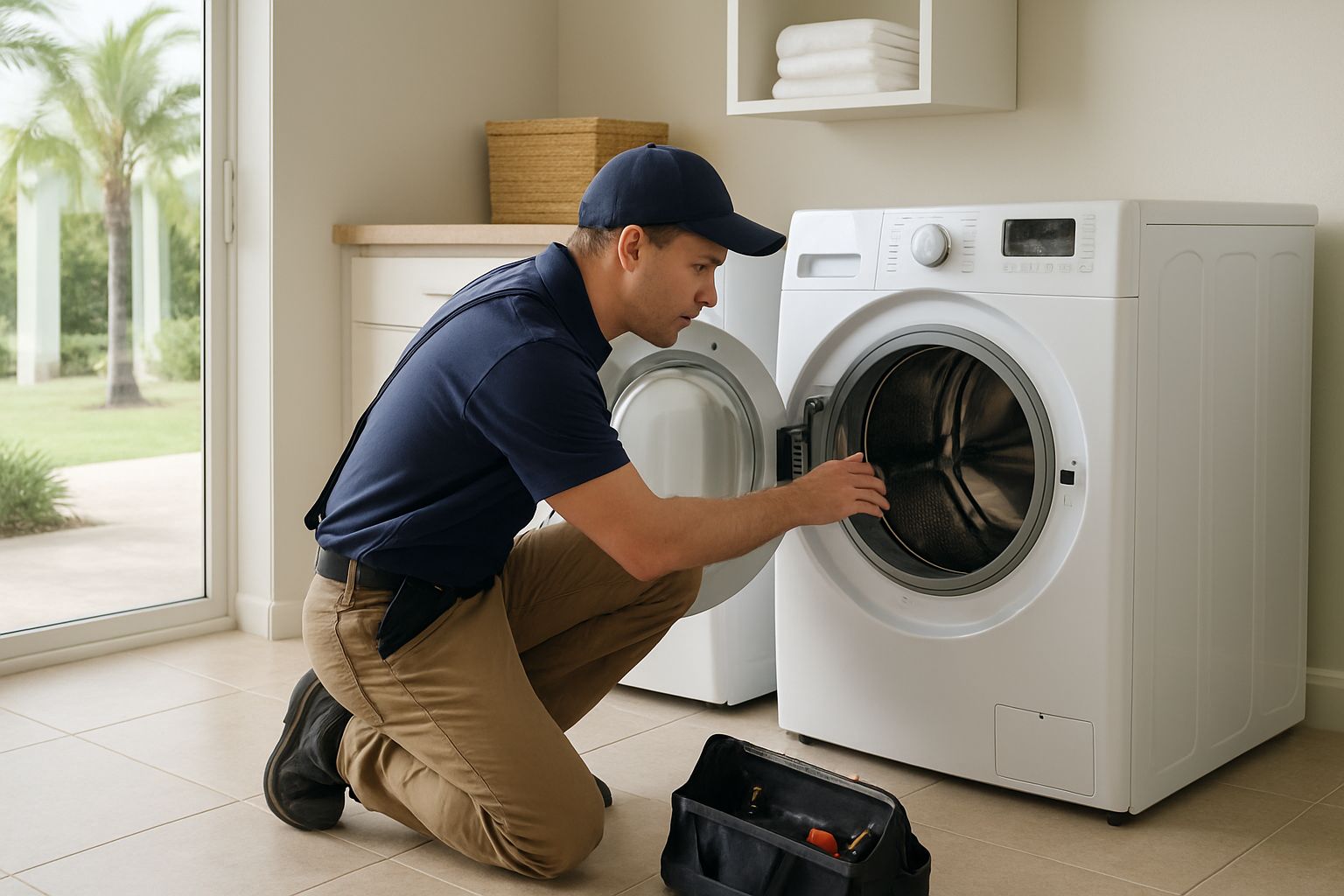
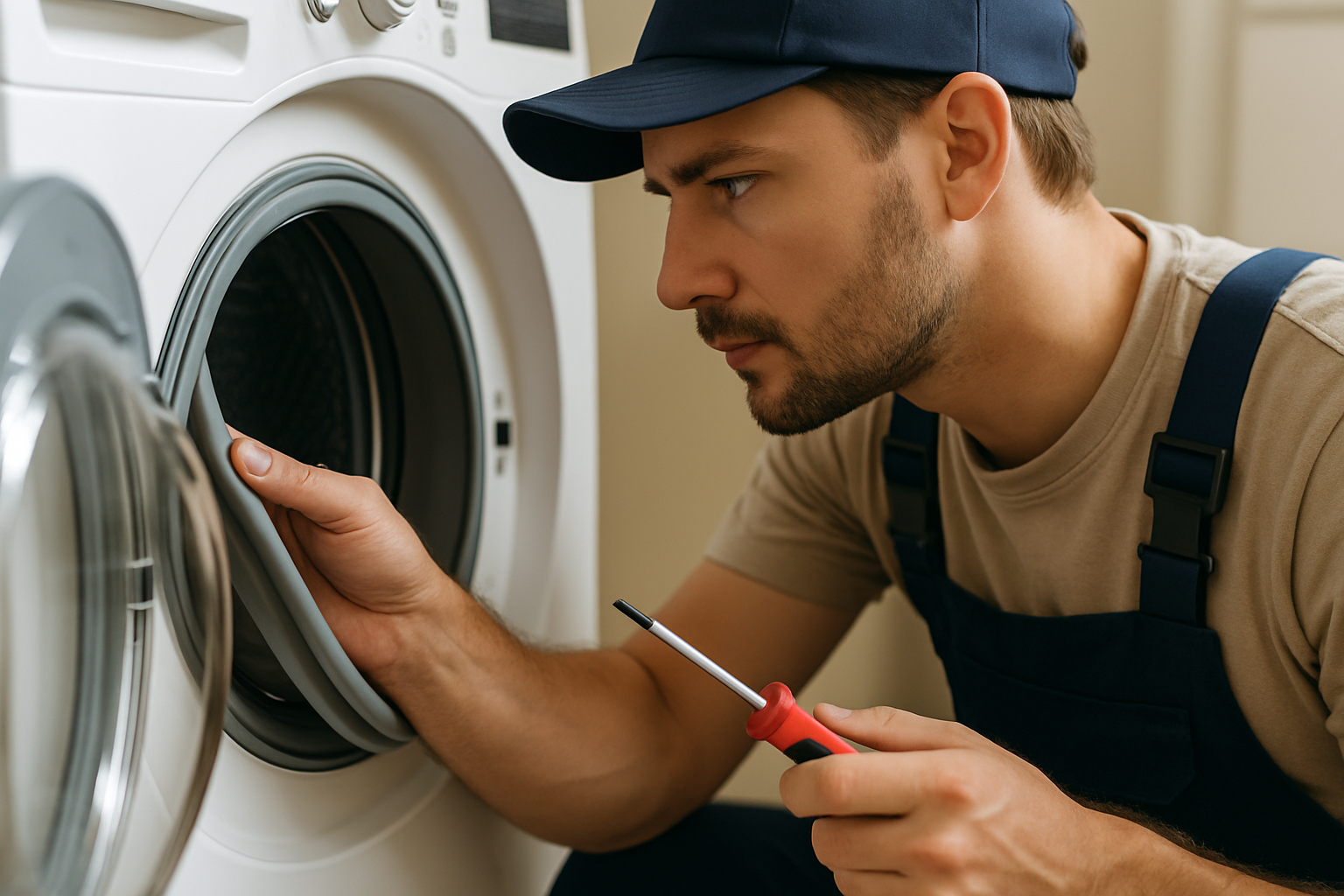
If the drum is empty, the diagnosis shifts toward the door lock system. The door strike, latch feedback, wiring, lock mounting, and control response may need testing. An indicator light changing does not necessarily mean the lock has physically released.
Start by Looking for Water and an Incomplete Cycle
Look through the door before repeatedly pressing controls. Visible water is an important clue because it narrows the likely cause.
A washer that stopped before final spin, hummed near the end, or displayed a drain-related error may not have removed water successfully. The pump may be obstructed, weak, or unable to move water through a restricted hose or plumbing connection. The control may be waiting for a low-water-level signal that never arrives.
An interrupted spin can also leave the door locked. The machine may detect an unbalanced load, motor issue, or problem confirming that the door remained secured during high-speed operation. For related symptoms, see why a washer fills with water but will not spin.
Even with an empty drum, a drain-related fault is still possible. The washer may have drained eventually but failed to complete its remaining programmed steps.
Safe Checks Before Calling for Washer Service
Use the manufacturer’s normal controls first. Pause or cancel the cycle, then allow the delay listed in the owner’s manual for the door lock to release. Some models intentionally remain locked briefly after the drum stops.
Check whether child lock or control lock is active, if equipped. This feature usually does not physically lock the door, but it can prevent normal commands from being accepted.
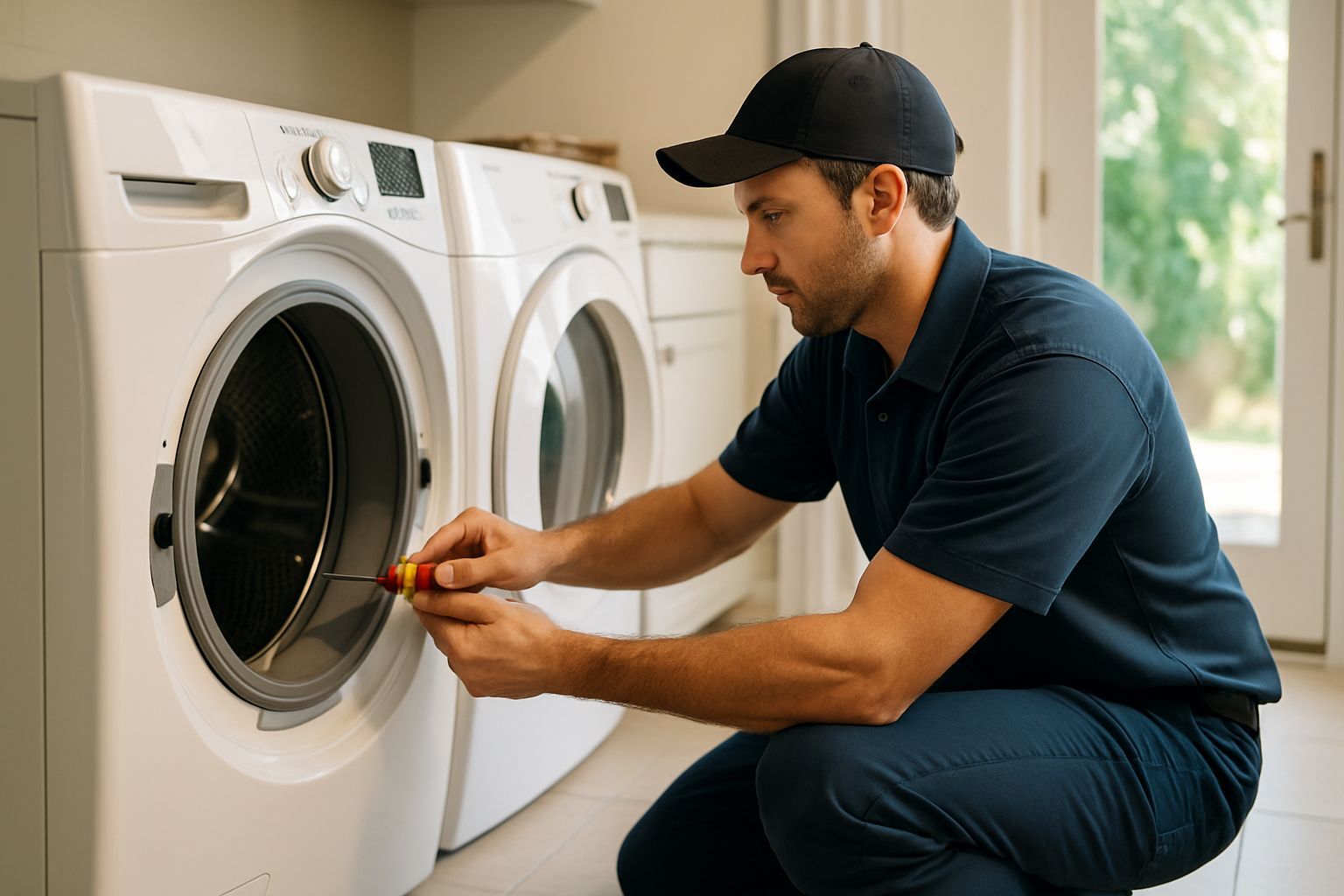
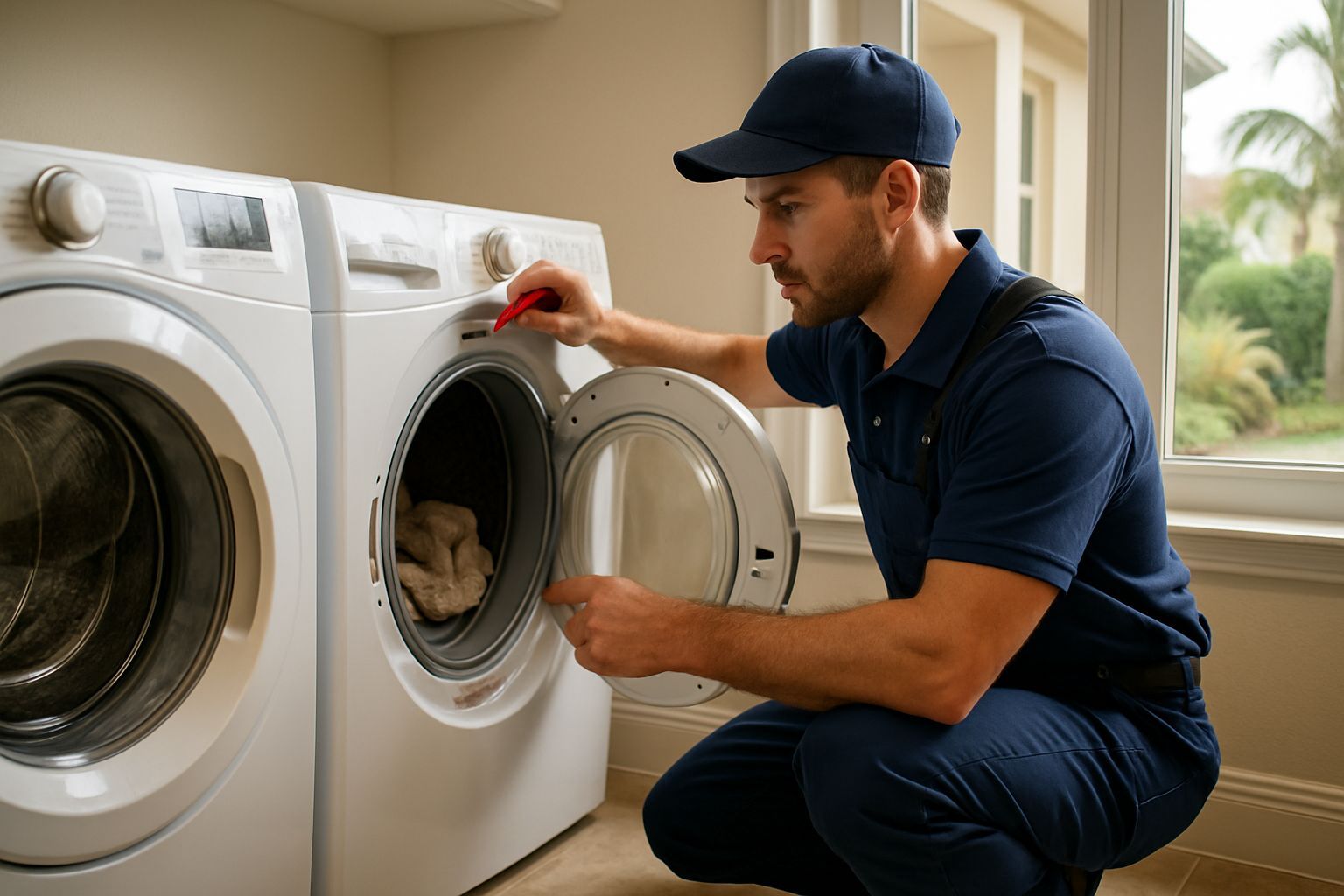
Inspect the visible door opening for laundry caught between the gasket and door. Check the exposed door strike for obvious looseness or damage. Do not pull hard on the handle or force the door open. Doing so can damage the strike, handle, gasket, or lock assembly.
Follow a reset or emergency-release procedure only when it appears in your model’s manual. Do not pry at the latch, bypass wiring, remove panels, or use improvised release methods. Seek service promptly for smoke, burning odors, leaks, tripped breakers, or visible door damage.
Why Replacing the Door Latch First Can Be a Mistake
A latch can be blamed for a problem caused elsewhere. The lock must receive the correct command from the control and return the expected feedback signal. If the washer still believes water is present, it may never authorize an unlock command.
Proper diagnosis confirms drain performance, water-level feedback, stored fault information when available, latch operation, wiring condition, and control inputs and outputs. A loose harness connector, damaged wire, misaligned strike, or faulty pressure input can create symptoms that resemble a failed latch.
A control board can also contribute to a locked-door complaint, but incorrect information reaching the board can cause the same result. Professional washer and dryer repair helps identify the failed component instead of replacing parts based only on the symptom. Homeowners needing appliance repair in Jupiter, FL can have recurring lock or cycle-completion problems evaluated safely.
Frequently Asked Questions About a Front-Load Washer Door That Won’t Unlock
Why is my front-load washer door still locked after the cycle ends?
The washer may be in a safety delay, detecting water, or stopping before its normal drain, spin, and unlock sequence is complete.
Will a washer door unlock if water remains in the drum?
Usually not. Front-load washers commonly stay locked with water inside because opening the door could spill water onto the floor.
Can a drain problem keep the washer door locked?
Yes. A restricted drain, weak pump, blocked hose, or water-level sensing issue can prevent the washer from confirming that the drum is empty.
Is it safe to force open a locked washing-machine door?
No. Forcing the handle or prying at the latch can damage the door, strike, gasket, or lock assembly. Use approved instructions only.
Does a locked door always mean the latch is bad?
No. Drain faults, incomplete cycles, wiring damage, water-level feedback, strike alignment, and control issues can all keep a washer door locked.
General Appliance Service can diagnose whether the problem involves drainage, the lock mechanism, sensor feedback, wiring, or electronic controls, helping prevent unnecessary parts replacement and further door damage.