
One Electric Stove Burner Not Heating While Others Work: What the Difference Can Mean
By General Appliance Service
If one electric stove burner is not heating while the oven, clock, and other burners still work, that pattern is important. A complete range power loss becomes less likely, while the individual circuit for that cooking zone becomes the focus. The burner element may be at fault, but a control, connection, or wiring issue can create the same symptom.
What a Technician Checks When One Burner Will Not Heat
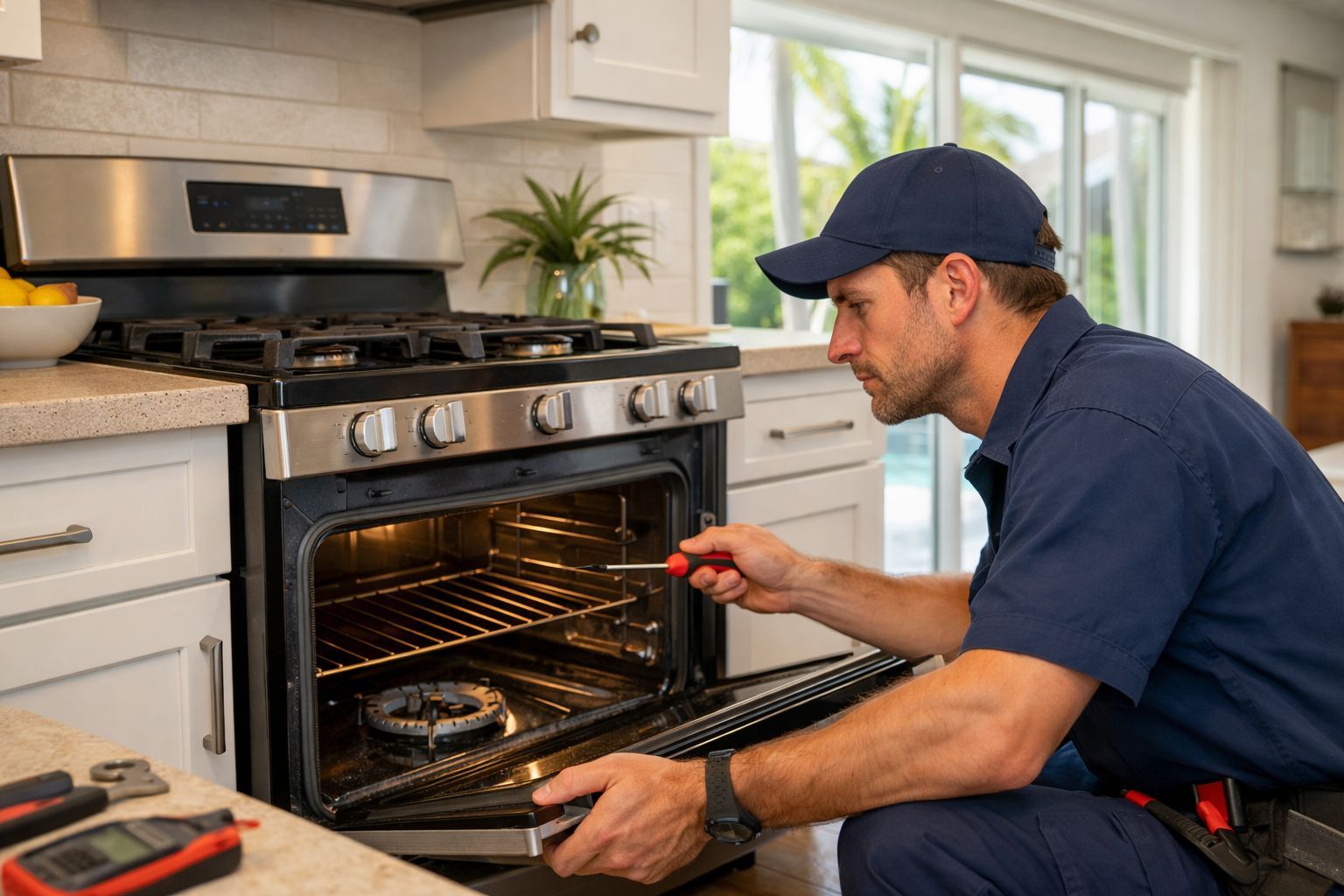
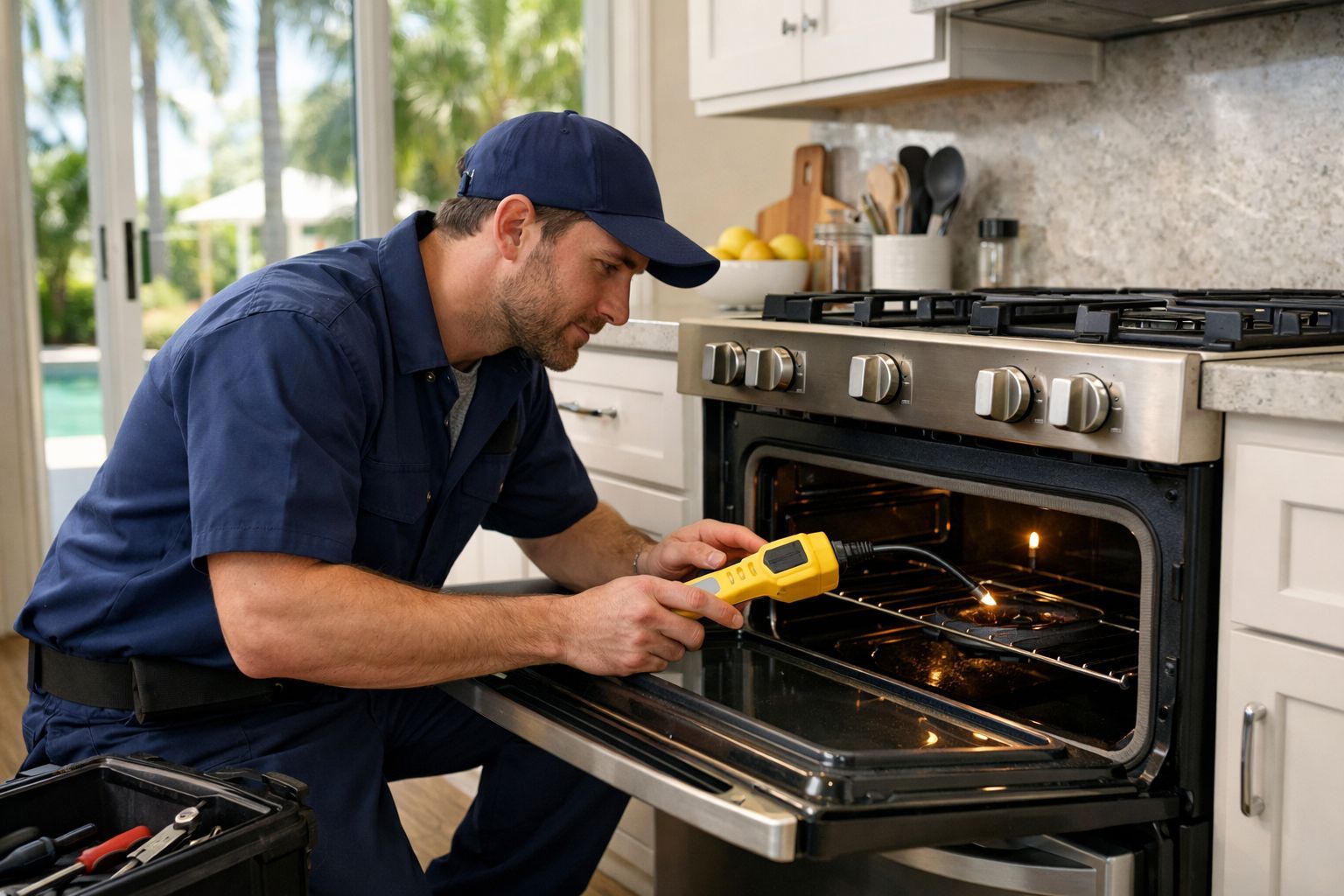
A technician first confirms whether the burner is completely cold, only lukewarm, intermittent, or heating briefly before stopping. Each behavior points toward a different test path.
On ranges with removable coil burners, the circuit includes the coil element, receptacle, infinite switch, and connecting wires. A damaged receptacle terminal can keep a good-looking coil from receiving proper power.
Smooth-top cooktops use radiant elements beneath the glass. The affected zone may involve the element, limiter, selector switch, electronic control, or a heat-damaged connector. Dual or expandable burners have separate inner and outer circuits.
Using the model-specific wiring diagram, the technician checks whether the commanded setting sends the correct voltage to the correct terminals. A burner that appears normal or shows basic continuity is not automatically proven good.
A Single Cold Burner Is Different From a Range With No Power
When several burners and the oven stop working, diagnosis often starts with the household electrical supply, breaker, outlet, or range terminal block. Electric ranges use a 240-volt supply, and a supply issue can leave some functions operating while others do not.
If the oven and every other surface burner work normally, the individual burner circuit is more suspect. That does not mean the element should be replaced based on a guess. A failed switch, burned connection, or damaged wire can stop the same burner from heating.
For homeowners needing oven and cooktop repair in Boynton Beach, distinguishing one failed cooking zone from a broader power problem can help avoid ordering the wrong part.
Coil Burners and Smooth-Top Burners Fail Differently
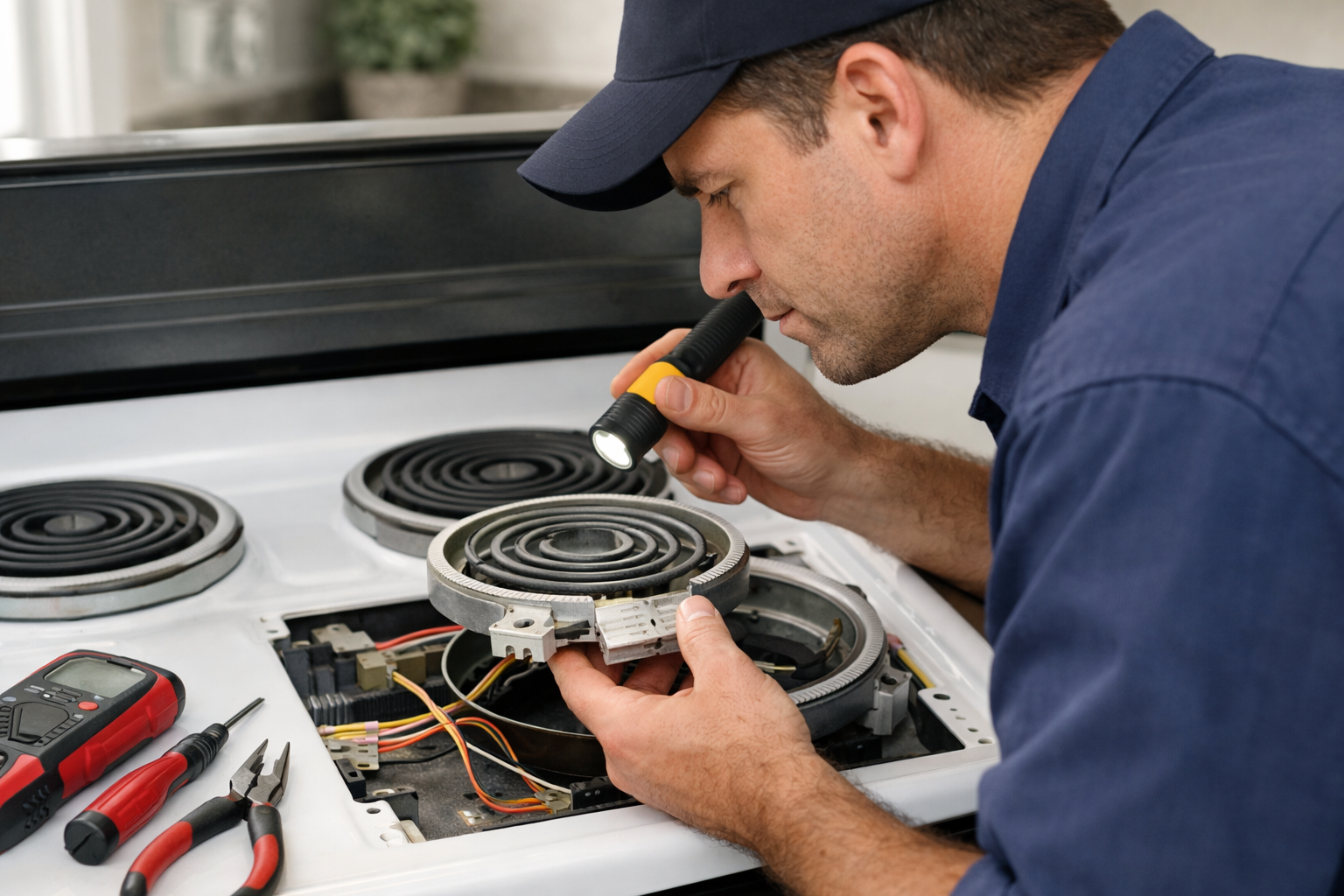
With a coil range, inspect from above only after the appliance is off and fully cool. A cracked, crooked, pitted, or visibly heat-damaged coil is a useful clue. Look for discoloration, melting, or scorching around the receptacle, but do not pull apart terminals or handle energized components.
A loose or overheated coil receptacle can create resistance at the connection. The burner may stay cold, heat weakly, or work intermittently. Receptacle wiring behind the cooktop is not a safe homeowner repair.
Radiant cooktops conceal the heating element under glass, limiting visual inspection. A completely cold zone may have an open element circuit, while weak or uneven heat can involve the element, limiter, control, or connection. On a dual burner, confirm the correct knob setting is selected for the desired cooking area.
Do not assume a replacement element is correct or connected correctly. Terminal locations vary by model, especially for radiant and dual elements.
Safe Checks and Symptoms That Need Service
Confirm that only one burner is affected, then note whether it is cold, barely warm, or heats and cuts out. Verify the correct knob and setting, particularly on expandable cooktop zones. Photograph visible cracking, melted plastic, sparking areas, or discoloration without touching terminals or lifting the cooktop.
Stop using the burner if it sparks, smokes, smells like burning plastic, trips the breaker, or continues heating after the control is off. Do not remove panels, test live voltage, or attempt wiring repairs.
A burner that works until the cooktop gets hot, then returns after cooling, is a different pattern. This guide on an electric stove burner shuts off while cooking explains that heat-related symptom. For appliance repair in Parkland, FL, clear observations help a technician diagnose the circuit efficiently.
Frequently Asked Questions About One Electric Stove Burner Not Heating
Why does only one burner on my electric stove not heat?
Its element, receptacle, switch, wiring, or connection may have failed. When other functions work, the affected burner circuit is usually the primary focus.
Can a bad burner receptacle keep one coil element from heating?
Yes. Overheated or loose receptacle terminals can interrupt power to the coil. Replacing only the element may not correct the actual failure.
Why does my electric burner get warm but not hot enough to cook?
Weak heat can result from a poor connection, damaged element, faulty switch, or dual-zone control issue. Testing is needed to identify the failed component.
Can I swap stove burners to test the element?
Only with the range off and cool, on compatible coil models. A swap may provide a clue, but cannot verify the receptacle, switch, wiring, or voltage.
Should I use my range if one burner sparks or smells like burning plastic?
No. Stop using that burner immediately. Sparking, smoke, melting, or burning odors can indicate a damaged electrical connection and possible fire hazard.
A proper diagnosis identifies whether the problem is the element, control, receptacle, or wiring, helping prevent unnecessary parts replacement and restoring safe cooking operation.