Freezer Feels Cold but Ice Cream Is Soft: Why the Temperature Display May Not Tell the Whole Story
By General Appliance Service
A freezer can feel cold when you open the door yet still fail to keep food properly frozen. If ice cream is soft, treat it as a temperature-performance concern rather than proof that one specific part has failed. The display may show the temperature you selected, but it may not reflect the actual air and food temperature throughout the compartment.
Soft ice cream after a power outage, a door left ajar, or a large grocery load can be temporary. If it keeps happening, however, the freezer needs closer attention.
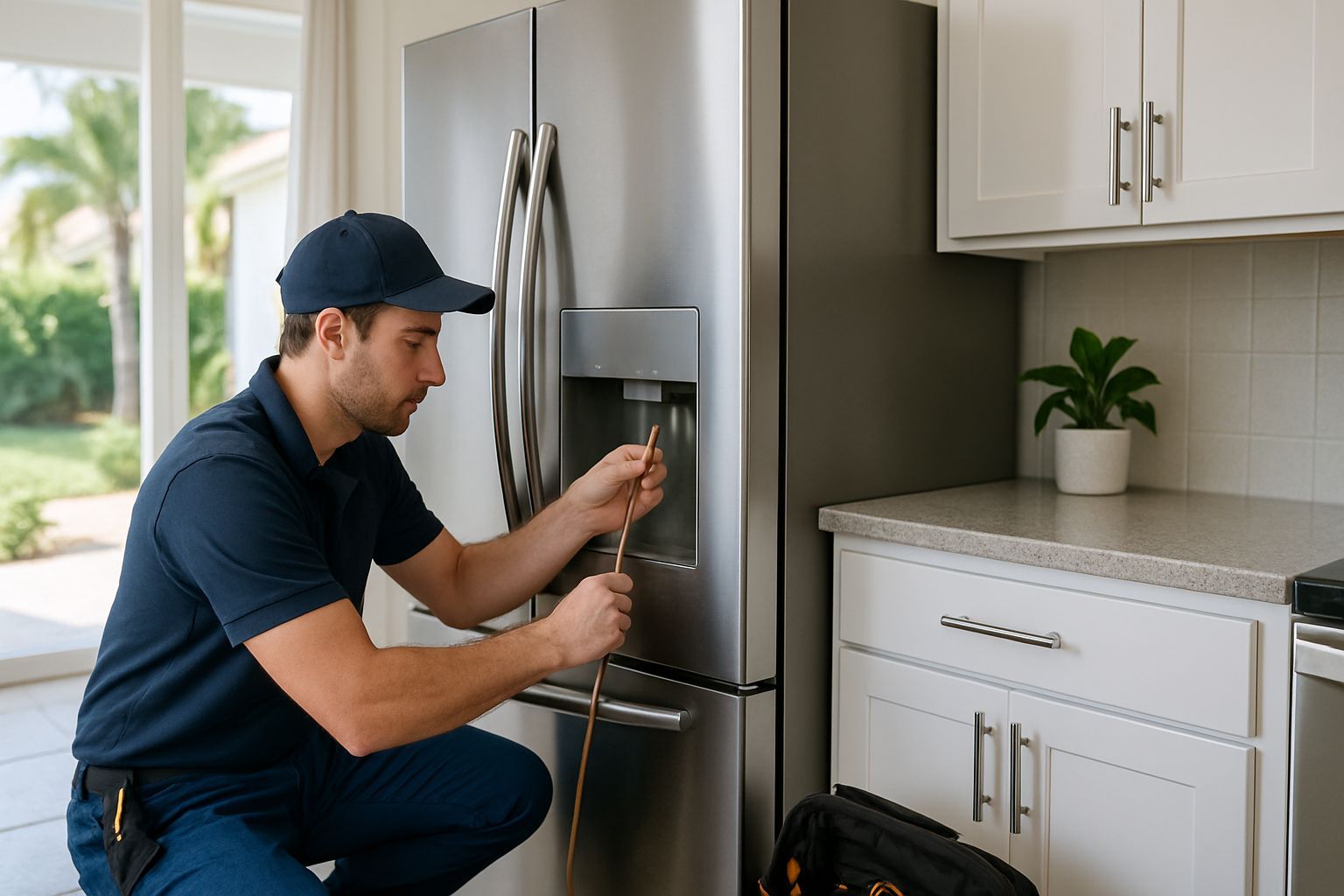
What a Technician Checks
A control setting is a command to the appliance, not always a live reading from the center of the freezer. Some displays show a target temperature, while sensors may be located away from stored food.
A technician compares actual compartment temperatures with the control inputs and observes how temperatures change over time. A brief warming period during defrost is different from repeated warming that softens food and leaves the freezer struggling to recover.
This symptom can involve several systems. Restricted airflow, an inconsistent evaporator fan, frost buildup, or an inaccurate sensor can affect cooling. Start components, compressor performance, and sealed-system issues may also cause inadequate temperatures. A spinning fan or running compressor does not identify the cause by itself.
Useful diagnostic details include long run times, clicking sounds, recurring frost, error codes, and whether the refrigerator section is warming too. These observations help distinguish a temporary warm event from a problem requiring testing.
Verify the Actual Freezer Temperature
Ice cream is a helpful warning sign, but it is not a calibrated thermometer. Different products soften at different temperatures, often before other frozen foods appear thawed.
Place a freezer thermometer near the center of the compartment, away from walls and direct vent airflow. Leave it for several hours or overnight, and avoid repeatedly opening the door while checking. Each opening adds warm, moist air and can distort the results.
Record more than one reading. Note whether temperatures rise overnight, after heavy door use, during hot weather, or around automatic defrost cycles. A freezer that cools again later may still have a recurring performance issue if food repeatedly softens.
If food is actively thawing, move vulnerable items to another working freezer or an insulated cooler. Minimize door openings, check the owner’s manual, and follow official food-safety guidance rather than relying only on appearance.
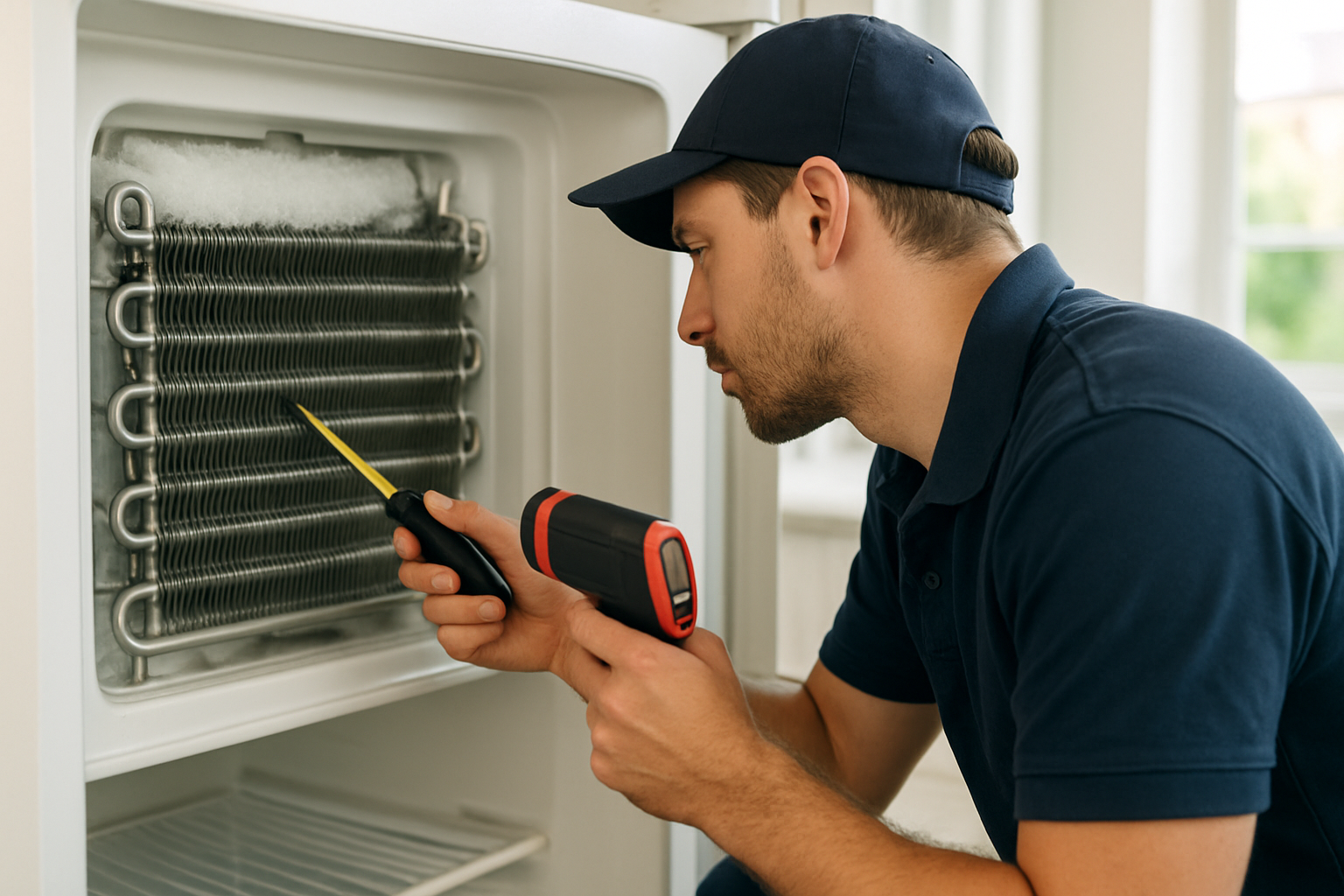
Check Airflow, Seals, and Visible Frost
Before assuming a major refrigeration failure, look for simple conditions that block cold-air movement. Packages can hold the door open, dirty or torn gaskets can leak, and tightly packed food can block interior vents. A freezer needs space for air circulation; one area may feel cold while another warms.
Inspect the rear interior panel without taking anything apart. Heavy frost can indicate restricted airflow around the evaporator area behind the panel. The freezer may still make some cold air, but not enough may reach the food compartment consistently.
A poor seal allows warm, humid room air inside, increasing frost and forcing longer run times. Where condenser coils are safely accessible, cleaning visible dust can support normal maintenance. It does not prove dirty coils were the original cause.
Do not remove evaporator covers, use a heat gun on frost, bypass controls, or probe wiring. These actions can damage hidden tubing, plastic liners, or electrical components.
Know When Professional Diagnosis Helps
A one-time softening event may follow an extended door opening, recent loading, defrost recovery, or a power interruption. Allow time to stabilize while monitoring the separate thermometer.
Repeated temperature swings, quickly returning frost, unusual clicking, or a warming refrigerator section are more concerning. Photograph the display, thermometer readings, visible frost, food condition, and any error code. Keep the model number available.
For homeowners needing freezer repair , those details can help narrow the diagnosis before parts are recommended. A technician can evaluate airflow, defrost performance, fan operation, sensors, wiring, controls, starting components, and sealed-system performance.
For residents seeking appliance repair in Lake Worth, FL , diagnosing an intermittent freezer issue early can help support a better repair decision. Actual temperature data is more useful than a display setting that only appears correct.
Frequently Asked Questions About a Freezer That Feels Cold but Has Soft Ice Cream
Why is my freezer cold to the touch but my ice cream is soft?
The compartment may be cooler than the kitchen but still too warm for firm ice cream. Airflow, frost, seals, fans, or sensors may contribute.
Can the freezer display be wrong when it shows the selected setting?
Yes. It may show the selected setpoint rather than the temperature near food. A separate thermometer monitored over time provides more useful performance information.
When should I call for freezer repair?
Call when temperatures remain above the manufacturer’s recommended range, fluctuate repeatedly, frost returns quickly, or food softens despite normal use and a closed door.
Can frost on the back wall make food soften?
Yes. Frost can restrict evaporator airflow. The freezer may still feel cold and the fan may run, but insufficient cold air reaches stored food.
Should I keep food in a freezer that is not fully freezing?
Move actively thawing food to another freezer or cooler, limit door openings, and follow official food-safety guidance. Running does not necessarily mean the appliance is safe.
A freezer that feels cold is not always holding a safe, stable temperature. A thermometer and careful observations can identify a temporary event or show when professional testing is appropriate.