
Why an Oven Gets Too Hot on Bake and the Broil Element Glows
By General Appliance Service
An oven that gets too hot on Bake can ruin a meal and may signal a problem that needs prompt attention. A glowing broil element is not always a failure: many electric ovens use both elements during preheat or temperature recovery. Concern is warranted when the broil element remains bright red, food repeatedly burns, the oven exceeds its setting, or heat continues after Bake is cancelled.
What a Technician Checks When an Oven Gets Too Hot on Bake
The first step is separating normal heating cycles from true overheating. Some ovens alternate between the bake and broil elements during preheat, then briefly use the upper element after the door opens or a cold dish is added. That activity should decrease once the cavity reaches the selected temperature.
A technician confirms the temperature setting, observes the heating pattern, and checks whether the oven cycles off correctly. The same symptom can have different causes. A sensor may report the wrong temperature, the control may respond incorrectly to accurate sensor information, or an element circuit may stay energized when it should shut off. Testing the complete heating system helps avoid replacing parts based only on a visible glow or burned food.
Why the Broil Element May Glow During Bake
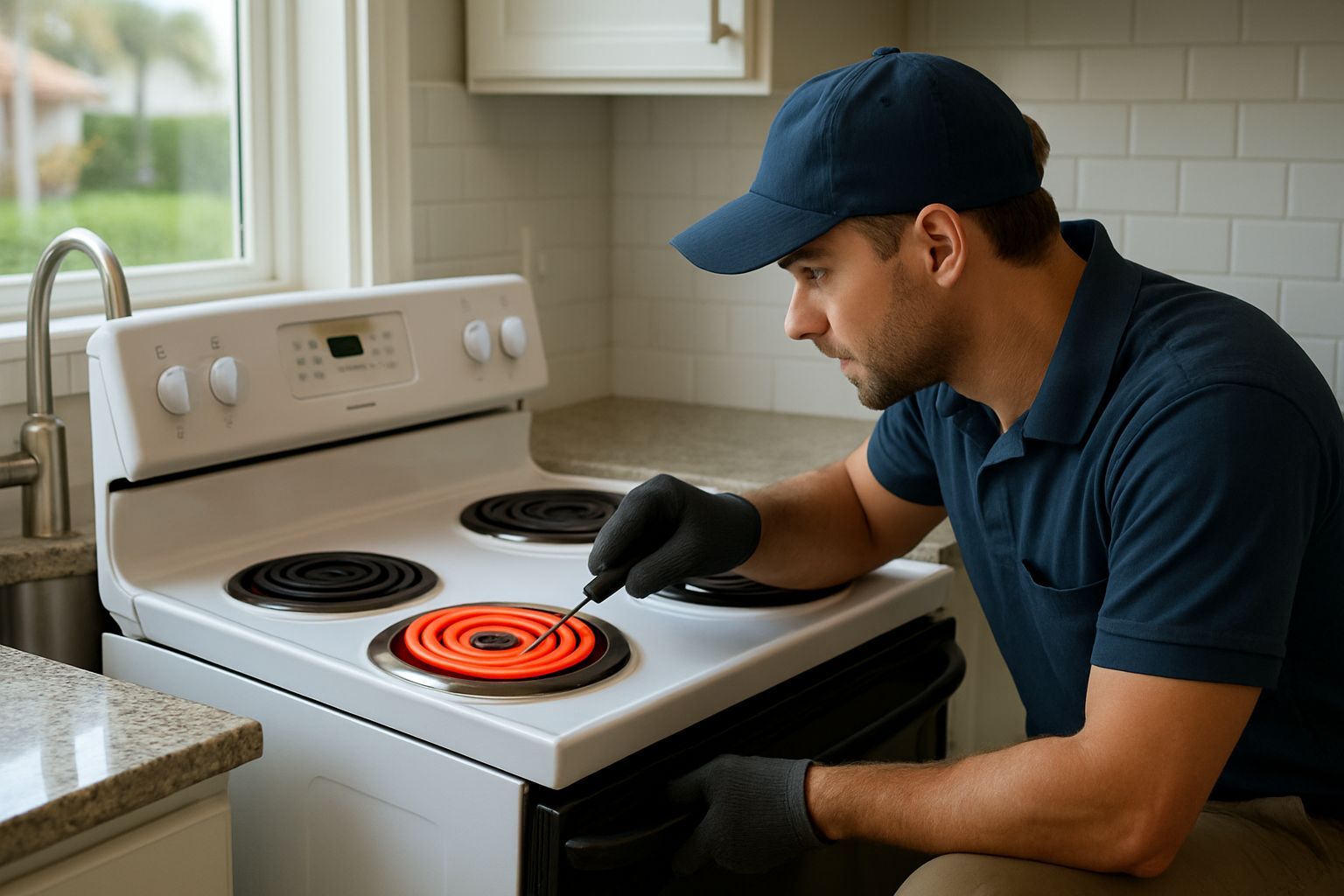
Electric ovens do not always heat from the lower element alone. The control may energize the broil element during preheat or cycling to support even cavity temperatures. Brief red glow at the top can therefore be normal.
The pattern matters. An element that stays bright red while the oven climbs well above the setting is different from short cycling. Repeated top scorching may suggest excessive broil operation, while food that burns throughout or cooks unusually fast can point to broader temperature-control trouble. Rack position, dark cookware, convection settings, and recipe timing can also affect results.
An oven thermometer can provide a general observation, but it is not a precise diagnostic tool. For the opposite complaint, see our guide when an oven says it is preheated but food is still undercooked.
How the Control, Sensor, and Wiring Affect Temperature
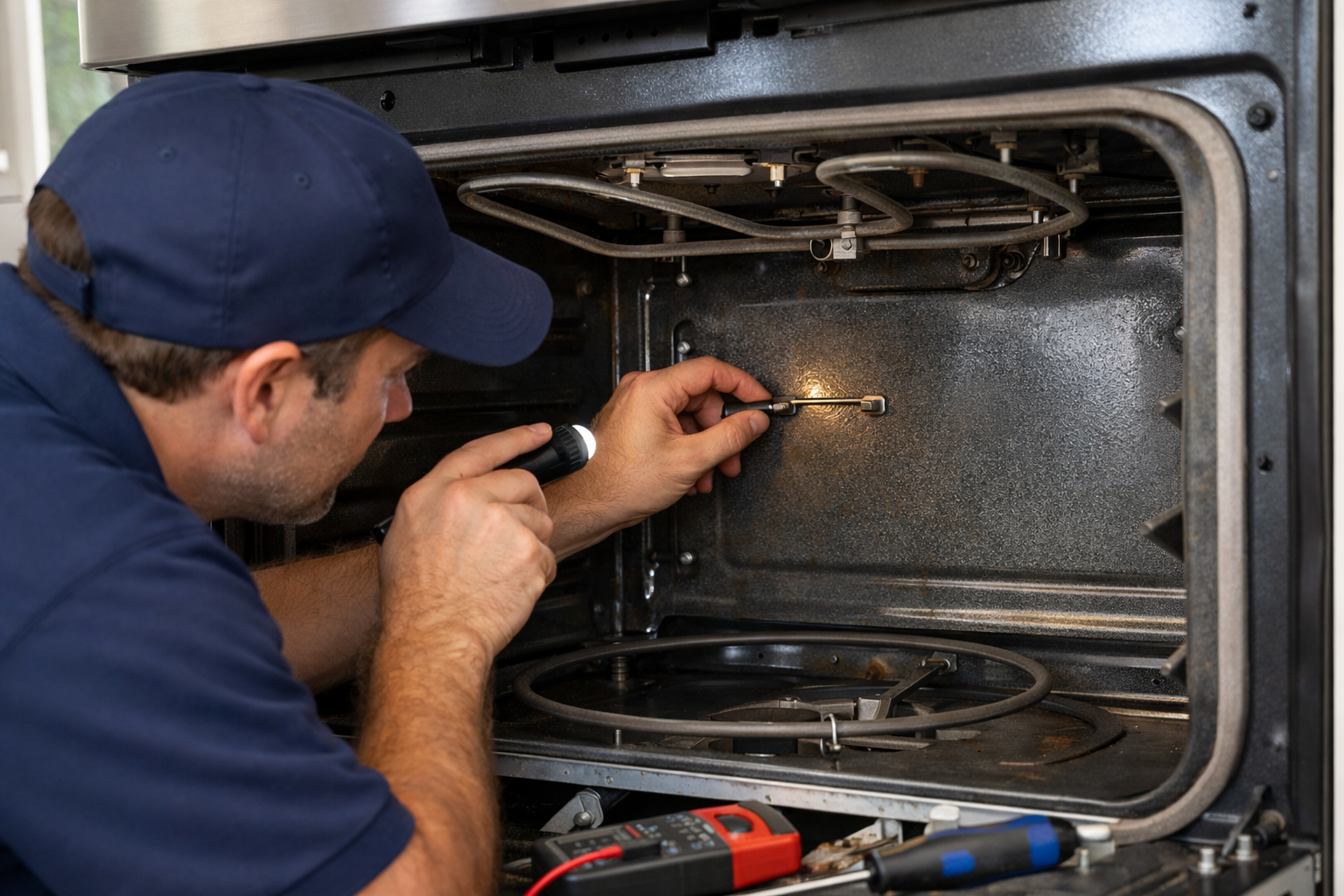
The oven sensor monitors cavity temperature and sends information to the electronic control. The control then energizes or stops the bake and broil circuits. A failed sensor can contribute to overheating, but burned food alone does not identify it as the cause.
Control boards, wiring, terminals, and element circuits can create similar symptoms. On certain models, a relay or control-path fault may fail to release power to an element as intended. Relay contacts can sometimes stick or weld closed, but that is a model-specific diagnosis rather than a universal explanation.
A technician may inspect the sensor circuit, control response, harnesses, terminals, and signs of heat damage. The oven should also be checked to confirm that it de-energizes at temperature and after cancellation. Professional oven and cooktop repair in Boynton Beach is safer than guessing which component has failed.
What to Do if the Oven Keeps Heating After You Turn It Off
Stop using the oven if it is smoking, producing a burning odor, displaying an error code, visibly overheating, or continuing to heat after the controls are Off. Keep children and pets away, and do not leave it unattended to see whether it resets.
If heating continues, turn off the dedicated circuit breaker only if it is safe and readily accessible. Do not remove panels, perform live-voltage tests, tap relays, or bypass safety devices. Those actions can create shock, burn, and fire risks.
After the oven cools, note the selected temperature, heating duration, broil-element behavior, and any error code. Intermittent overheating can be difficult to reproduce, so these details help. Homeowners needing appliance repair in Briny Breezes, FL should arrange prompt service if the oven will not shut down normally.
Frequently Asked Questions About an Oven Getting Too Hot on Bake
Is it normal for the broil element to come on during Bake?
Yes. Many electric ovens briefly use the broil element during preheat or recovery. Continuous glowing accompanied by overheating or burned food is not normal.
Why does my oven burn food at the correct setting?
The cavity may be hotter than displayed, or broil heat may be excessive. Cookware, rack position, and convection settings can also increase browning.
Should I use an oven that keeps heating after I turn it off?
No. Cancel the cycle and shut off the dedicated breaker if safe. Do not leave the oven unattended; arrange service promptly.
Does overheating always mean the temperature sensor failed?
No. The sensor is one possibility. The control board, relay path, wiring, terminals, and normal model-specific heating strategy also require evaluation.
Can a control-board relay cause intermittent overheating?
It can on some models. A sticking relay may keep an element powered too long, but testing should confirm the circuit fault before replacement.
Persistent overheating is a safety concern, not merely a cooking inconvenience. Avoid continued use until the oven cycles and shuts off properly, especially when the broil element remains energized unexpectedly.