
Microwave Turntable Not Turning but Still Heats: What the Symptom Can Mean
By General Appliance Service
A microwave can count down, light up, run its fan, and heat a cup of water while the glass plate remains still. When a microwave turntable is not turning but still heats, the heating and rotation systems are performing separate jobs. The cause may be a misplaced roller ring or worn coupler, but it can also involve the turntable motor, wiring, or controls.
A stopped plate does not automatically make the microwave unsafe, but it can cause uneven heating and deserves attention.
What a Technician Checks When a Microwave Turntable Stops Turning
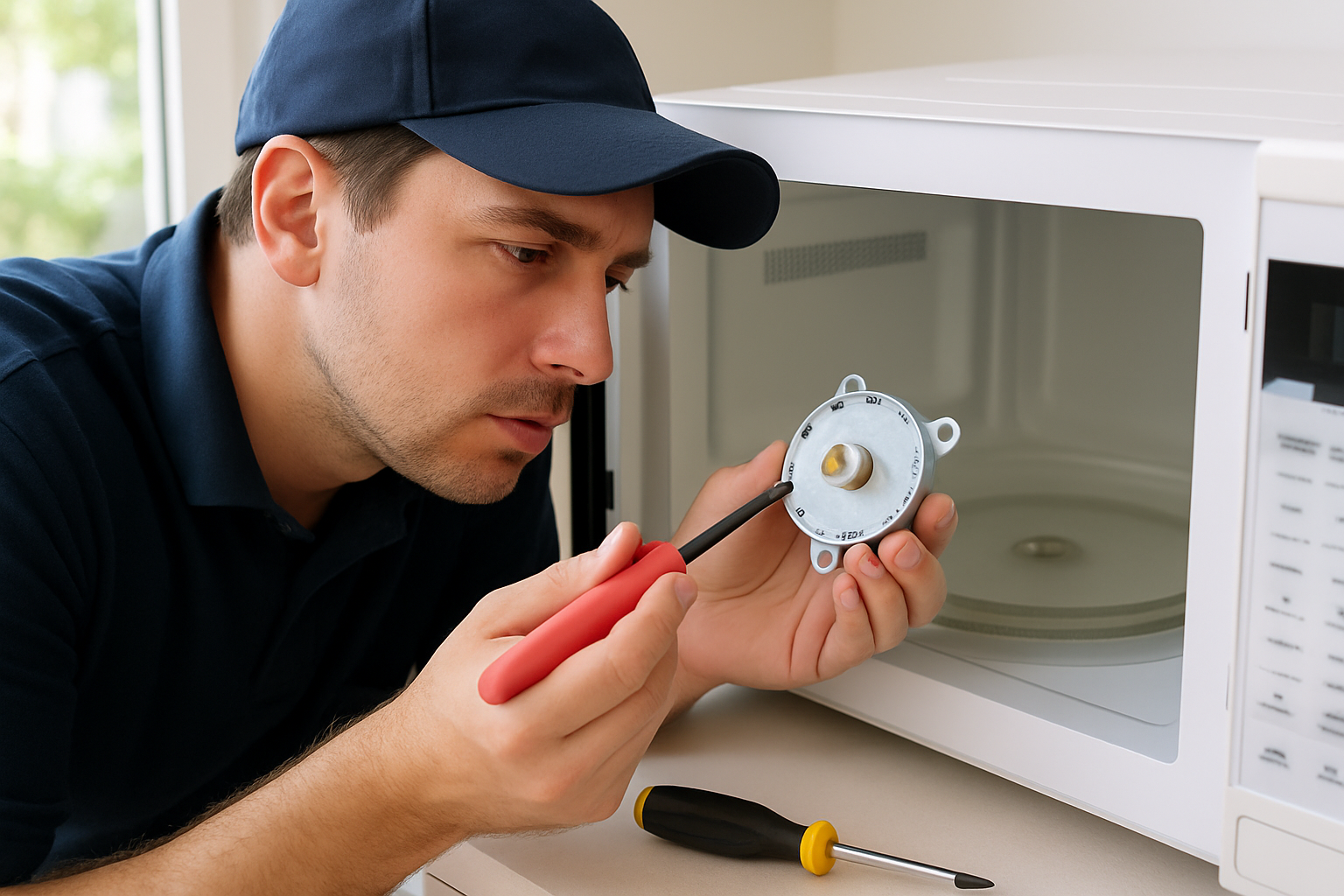
The turntable assembly includes the glass tray, roller ring, center drive coupler, and a small motor beneath the microwave floor. The tray must sit level on the rollers and engage securely with the coupler. A ring installed incorrectly, debris around a roller wheel, or a cracked coupler can keep the tray from moving.
A tray may appear properly installed while still failing to seat fully on the coupler. A worn coupler can also slip under the weight of food, sometimes causing clicking or grinding noises.
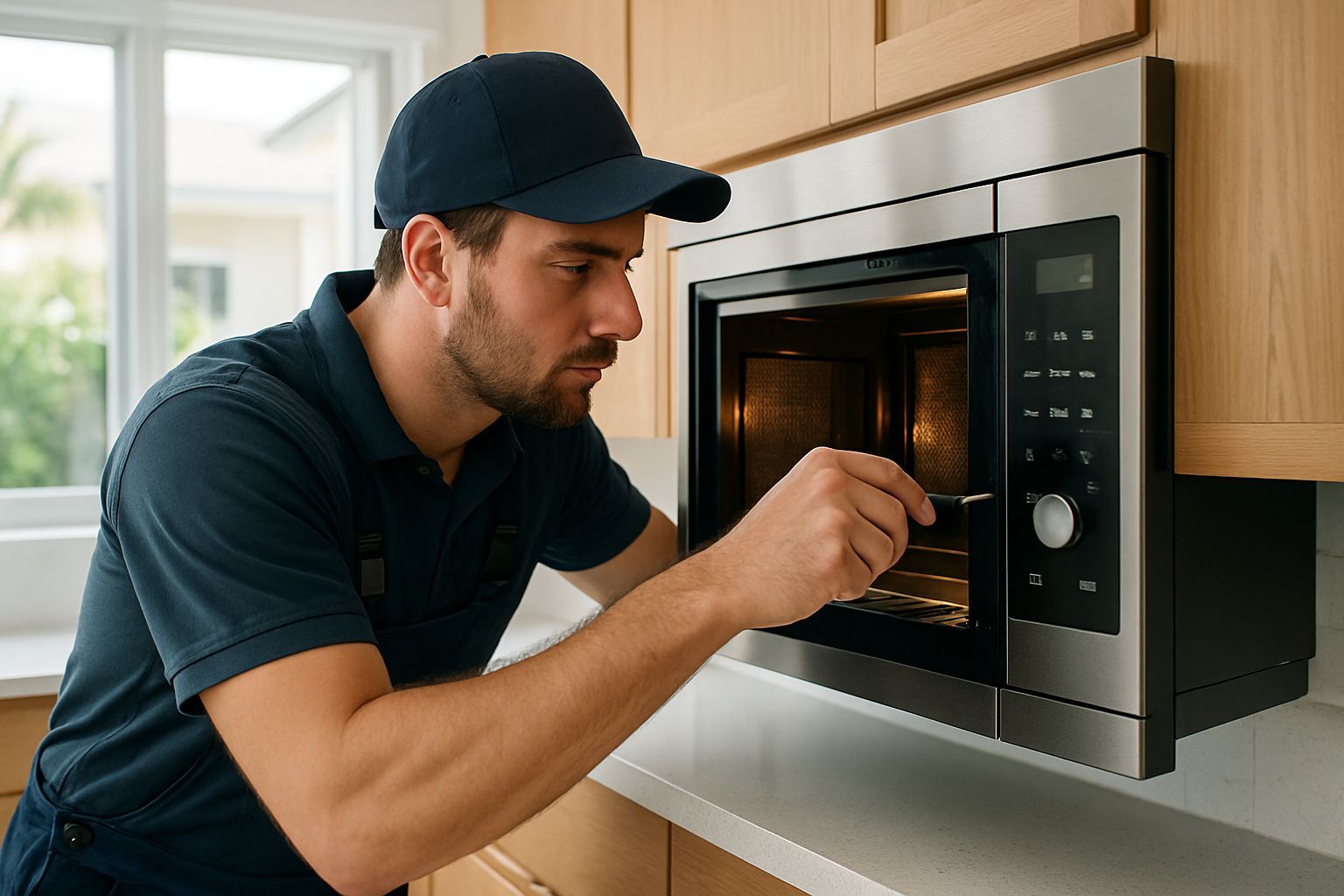
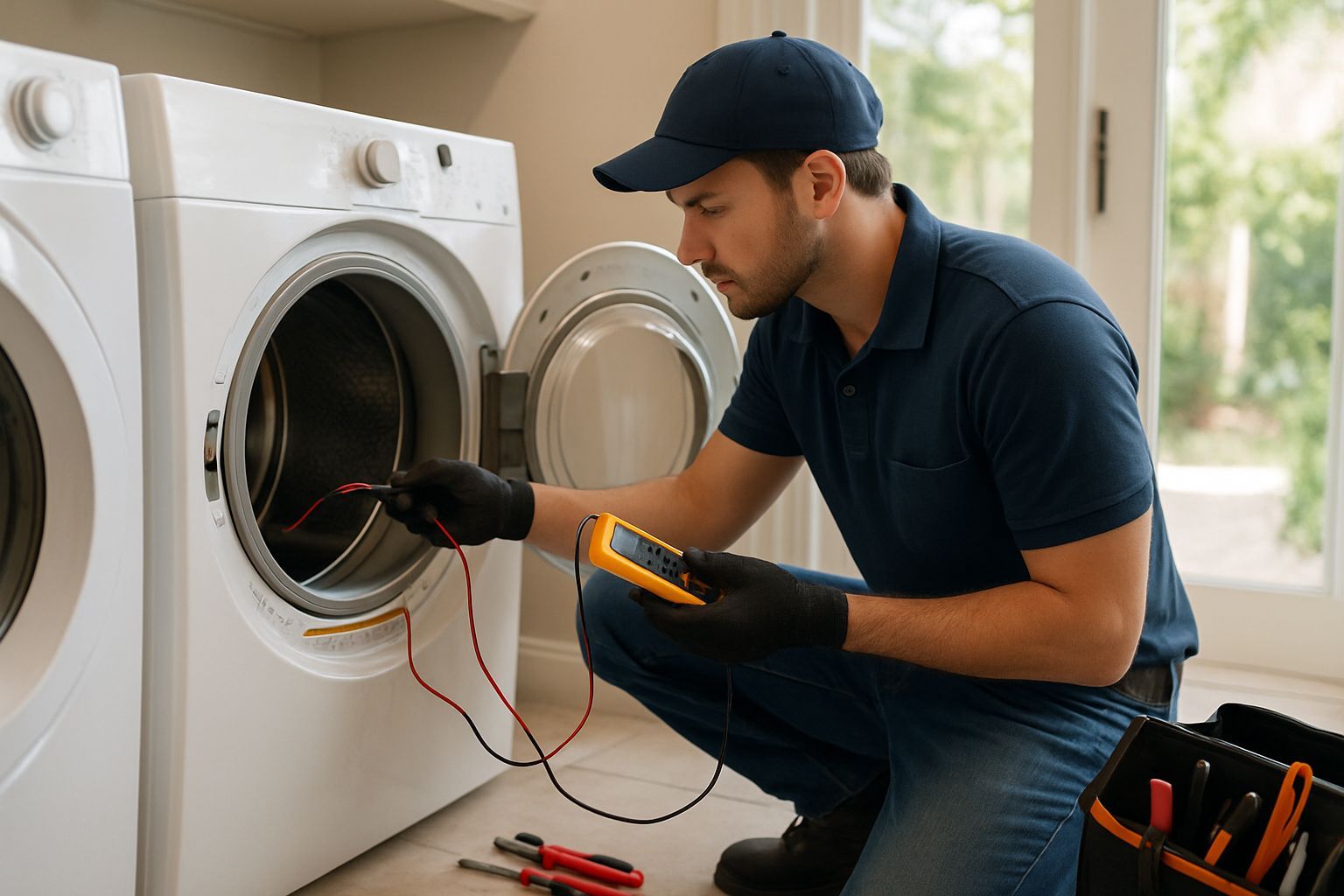
If the visible parts are intact, a technician checks whether the motor receives its proper command and power. Diagnosis may include motor continuity, wiring connections, door-interlock-related conditions, relays, and control-board output. The failed part may be the motor, but it could also be damaged wiring, a switch, or a control issue.
Why Food Heats Unevenly Without a Rotating Plate
Microwaves do not heat every area of the cavity with equal intensity. A rotating plate moves food through different energy patterns, reducing the chance that one spot overheats while another remains cool.
Without rotation, soup may boil on one side of a bowl while the other side is barely warm. Thick foods can develop cold spots, which is especially important when reheating leftovers. Stirring partway through heating may help temporarily, but it does not repair the turntable system.
Not every microwave uses a conventional spinning tray. Some models use a stirrer or another energy-distribution method, so confirm the model’s intended operation before assuming a stationary tray is defective. A microwave that runs but produces no heat follows a different diagnostic path; learn more about a microwave runs but does not heat.
Safe Checks to Make Before Calling for Microwave Repair
Unplug the microwave before inspecting the tray area. Remove the glass tray and roller ring, then look for crumbs, hardened spills, warped plastic, broken roller wheels, or a coupler that is visibly split or loose. Clean the tray track according to the owner’s manual.
Reinstall the ring and tray carefully. The tray should sit flat without rocking, and its center should rest on the coupler. Do not force the coupler, pry up the microwave floor, or apply lubricant to internal parts.
After reassembly, perform one brief, attended test using a microwave-safe cup of water. Never run a microwave empty. Watch for tray movement and note clicking, grinding, error codes, burning smells, sparks, or breaker trips.
Do not remove the outer cabinet. Microwaves contain high-voltage components that can retain a dangerous electrical charge even after the unit is unplugged.
When a Turntable Problem Needs Professional Diagnosis
If the tray still will not turn after correct reassembly, schedule service. This is particularly worthwhile for built-in and over-the-range units, where mounting, venting, trim, and cabinet fit can complicate replacement.
For homeowners needing appliance repair in Greenacres, FL, General Appliance Service can determine whether the issue is mechanical, electrical, or control-related before recommending a repair.
Stop using the microwave until it is inspected if you notice arcing, a burning odor, electrical buzzing, a damaged door or latch, or a tripped breaker. A stationary turntable is different from arcing, but both symptoms require attention; see guidance for a microwave sparking with no metal inside.
Frequently Asked Questions About a Microwave Turntable Not Turning but Still Heats
Why does my microwave heat but the turntable does not move?
Heating and rotation use separate systems. The roller ring, coupler, motor, wiring, relay, or control output can fail while the microwave still heats.
Can I use the microwave if the glass plate is not spinning?
It may heat food unevenly and leave cold spots. If the model normally has a turntable, avoid relying on it until the cause is identified.
Why does food heat unevenly when the turntable stops?
The plate normally moves food through varying energy patterns. Without movement, one area can receive substantially more energy than another during the heating cycle.
Can the roller ring or coupler stop the tray?
Yes. A jammed, warped, cracked, or incorrectly positioned ring can prevent movement. A worn center coupler may spin without gripping the glass tray.
Should I replace the turntable motor myself?
Do not assume the motor is defective. Cabinet removal creates a high-voltage risk, so professional testing of the motor, wiring, and controls is safer.
A properly seated tray may solve a simple mechanical issue, but persistent non-rotation needs diagnosis. Prompt service can restore more even heating and help prevent a minor problem from becoming more complicated.