
Dishwasher Smells Like Burning Plastic During Heated Dry? Stop the Cycle and Check This
By General Appliance Service
A dishwasher that smells like burning plastic should not be treated as a normal heated-dry odor. The appliance may still complete its cycle and clean dishes, but the smell can signal a plastic item near heat, damaged rack material, or an overheating electrical connection. Cancel the cycle if it is safe to do so, switch the dishwasher off, and avoid another load until the source is assessed. Smoke, sparking, or a tripped breaker requires prompt service.
What a Technician Checks When a Dishwasher Smells Like Burning Plastic
When the odor starts helps narrow the diagnosis. A smell during washing may involve a circulation component, wiring, or another load operating under power. An odor during draining can direct attention to the drain system and its connections. If it occurs near the end of the cycle, the heating and heated-dry circuits need close inspection.
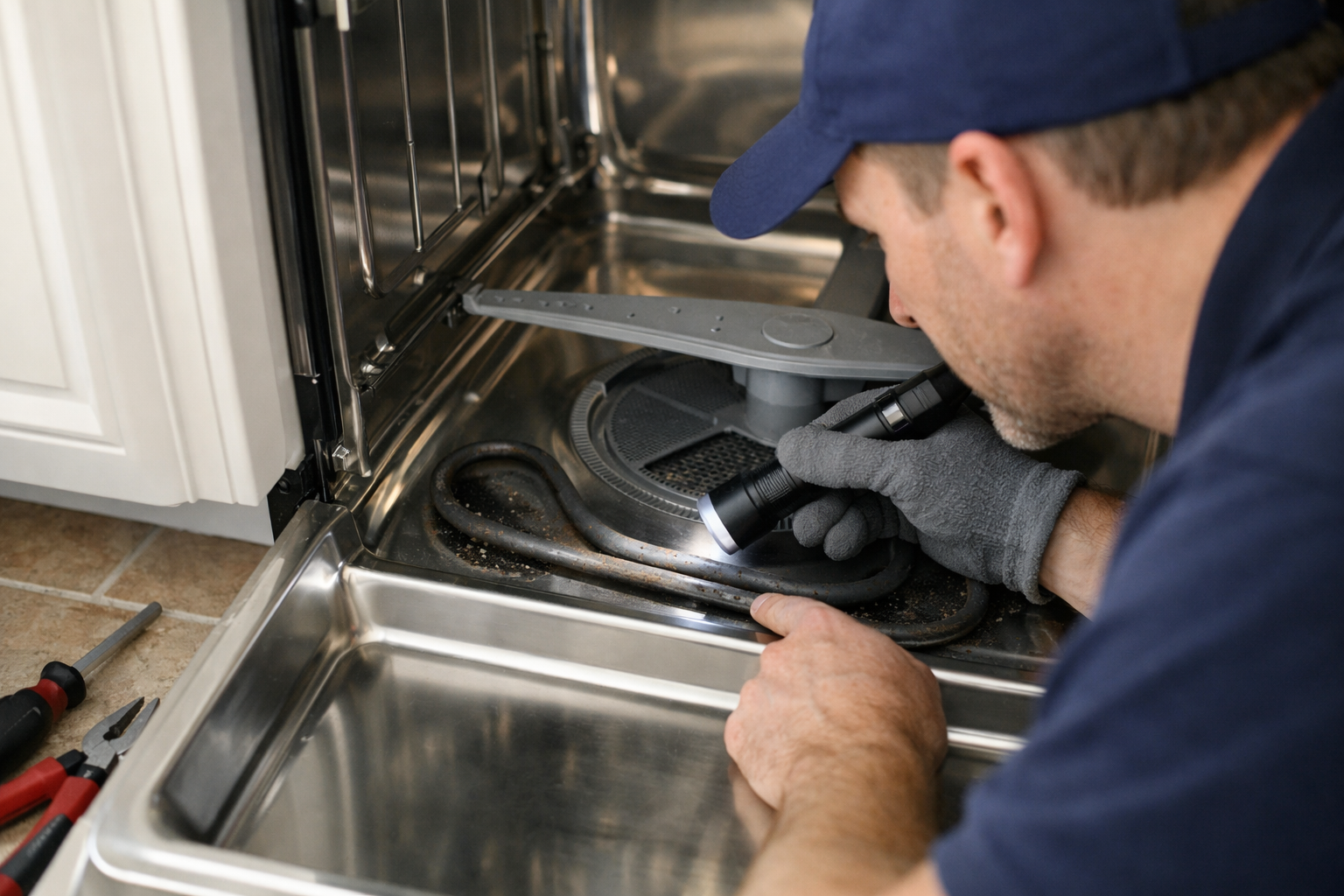
The heating element is not automatically the failed part. A loose terminal can create electrical resistance and excessive heat while the dishwasher continues operating. A technician checks heater placement, supports, harness routing, terminals, door-latch and control connections, and signs of melting, discoloration, or arcing. They also inspect for foreign objects and rack damage that could let plastic contact a heat source.
For repeated odors, dishwasher repair in Boynton Beach can identify the source without guessing from the smell alone.
Why Heated Dry Makes the Odor More Noticeable
Heated dry raises the temperature inside the dishwasher, which can intensify the smell from melted plastic, damaged rack coating, or an overheating connection. Heat often reveals a problem rather than causing it. A marginal connection may not smell during washing but can get hot enough to produce an odor when the heater is energized.
A misplaced plastic item is also possible on models with exposed heating elements. Lightweight lids, containers, and utensils can shift during a cycle and settle too close to the heater. Bent rack tines or missing rack coating can change how items sit in the lower rack.
Although a control issue can contribute, a failed control board is only one possibility. Damaged wiring, poor connections, or incorrect sensor information can create similar symptoms and should be tested before parts are replaced.
Safe Checks to Make After the Dishwasher Cools
After the dishwasher has completely cooled, inspect only what is plainly visible. Check the tub, racks, door area, and floor for melted plastic, utensils near the heater, blistered rack coating, or discoloration. Do not remove the toe-kick, door panel, wiring, or tub components to investigate.
Note when the smell started: during washing, draining, or drying. Record error codes, unusual humming or buzzing, water left in the tub, and whether a breaker tripped. Photos of visible melting or rack damage can help with diagnosis. Have the dishwasher’s brand, model number, and approximate age available for the service call.
Leave the appliance off if there is smoke, sparking, visible melted wiring, or a strong electrical odor. Do not run another cycle simply to see if the smell returns.
Why Normal Washing Performance Does Not Prove It Is Safe
A dishwasher uses separate components and circuits at different points in the cycle. It may wash dishes normally while a heater terminal, wire, latch-area connector, or control connection overheats later. Good cleaning results are not a safety test.
Avoid replacing a heater, control, or other electrical part based only on the odor. Proper diagnosis confirms whether the component receives power correctly, its connections are secure, and another condition is not creating excess heat.
Homeowners needing appliance repair in West Palm Beach, FL should treat a recurring hot-plastic smell as a diagnostic concern rather than routine maintenance. A technician can inspect the failure area and recommend the appropriate repair.
Frequently Asked Questions About a Dishwasher That Smells Like Burning Plastic
Why does my dishwasher smell like burning plastic near the end of a cycle?
Heated dry often operates near the end, making a melted item or overheating connection more noticeable. The odor alone cannot identify the failed component.
Should I stop using a dishwasher that smells hot or electrical?
Yes. Cancel the cycle if safe, turn it off, and do not run another load. Smoke, sparks, breaker trips, or melting require prompt service.
Can a plastic utensil or damaged rack cause this smell?
Yes. Lightweight items can shift near an exposed heater, while damaged rack coating can alter item placement. Check visible areas only after cooling.
Why does the smell happen only during heated dry?
Heated dry increases tub temperature and demand on the heating circuit. That can expose a loose connection or heat a misplaced plastic item.
Can it still clean dishes if an electrical connection is overheating?
Yes. The dishwasher may complete its cycle while a terminal or wire generates excess heat. Normal washing does not mean continued operation is safe.
A sharp, electrical, or recurring burning-plastic odor deserves attention. Stopping use early and documenting when the smell occurs gives a technician a safer, more efficient starting point.