Why Does My Gas Stove Keep Clicking After the Burner Lights?
By General Appliance Service
A gas burner normally clicks only while it is lighting. After a steady flame forms, sparking should stop. Continued clicking can mean the ignition system is not recognizing the flame, moisture is affecting a component, or a switch remains active. Note whether one burner or several are involved, whether the issue began after a spill or cleaning, and whether the flame appears even and stable.
What a Technician Checks When a Gas Stove Keeps Clicking
Electronic ignition systems use an electrode beside the burner to create a spark. On some ranges and cooktops, that area also helps the appliance confirm that flame is present. If the expected signal is not received, the system may keep sparking even though the burner looks lit.
A technician does not assume the spark module has failed based on clicking alone. Burner-cap alignment, burner-head placement, residue, moisture, cracked electrode insulation, damaged wiring, grounding, ignition switches beneath the knobs, and the spark module can create similar symptoms.
A cap that is slightly off-center can change flame travel and keep flame from reaching the electrode area as intended. The diagnostic goal is to identify why the system continues to call for spark rather than replacing parts based only on the sound.
One Clicking Burner Versus All Burners Clicking
When only one burner clicks after lighting, the cause is often local. The burner head may be dirty, the cap may be misaligned, or moisture may be around the electrode. A damaged electrode or that burner’s ignition switch can also be responsible.
If several burners click together, the pattern points toward a shared issue. Moisture after a boil-over or cleaning session can affect the ignition circuit. Shared switch wiring, grounding, or spark-module operation may also be involved. This is a useful clue, not proof that one specific part has failed.
For homeowners needing appliance repair in Jupiter, it helps to record which burners spark, when the clicking occurs, and whether it stops after the cooktop dries. A short video can help document an intermittent problem.
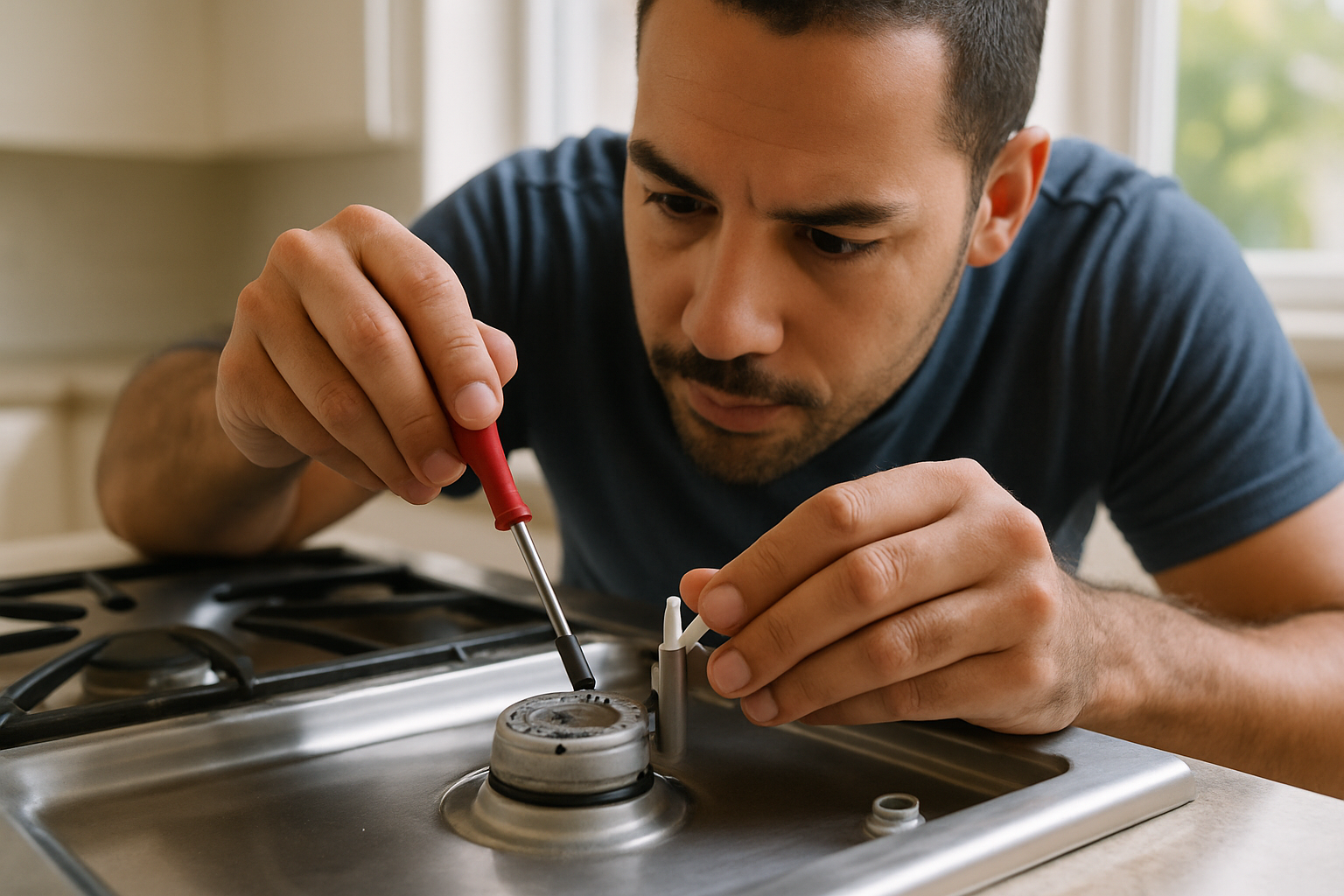
Check Flame Quality Before Blaming the Ignition System
A burner can be lit and still have a flame-related problem. Watch for weak or uneven flames, delayed ignition, flames lifting from the ports, popping, or flare-ups. An unstable flame may not reliably reach the electrode area or satisfy the appliance’s flame-recognition process.
Spilled food and residue can restrict burner ports, while incorrect assembly can alter the flame pattern. Gas-supply or regulation concerns may also be possible if flame quality changes when another burner or the oven operates.
Do not repeatedly turn a burner on and off to force it to light. Delayed ignition can briefly allow gas to build before lighting, causing a pop or flare-up. If a burner does not light promptly or you smell gas, stop using the cooktop.
Safe Checks and When to Schedule Cooktop Repair
Turn all burner controls fully off before inspecting the cooktop. If you smell gas, do not use matches, lighters, electrical switches, or the appliance. Leave the area and follow your gas utility’s emergency instructions.
After the surface is cool, check for obvious spill residue, standing moisture, and visibly misplaced burner caps or heads. Follow the owner’s manual for cleaning and reassembly. Let components dry thoroughly if the issue started after a spill or cleaning. Do not poke, bend, sand, or remove the ignition electrode.
Continuous clicking after the knobs are off, gas odor, delayed lighting, popping, flare-ups, or visible electrode damage require service. During oven, stove, and cooktop repair, a technician can inspect burner fit, flame coverage, electrodes, switches, wiring, grounding, and spark-module operation.
Frequently Asked Questions About a Gas Stove That Keeps Clicking After the Burner Lights
Why does my gas stove keep clicking after the flame is on?
The system may not be receiving the expected flame signal, or an ignition switch may remain active. Moisture, residue, alignment, wiring, or damaged parts can contribute.
Can a spill make a gas cooktop click nonstop?
Yes. Liquid or cleaning residue near an electrode or ignition-switch area can affect the ignition circuit. Let the cooktop dry, but schedule service if clicking continues.
Why are all my gas stove burners clicking together?
Multiple burners clicking can indicate moisture in a shared circuit, switch or wiring trouble, grounding issues, or spark-module behavior. It does not mean every electrode failed.
Is it safe to use a burner that clicks after lighting?
Avoid using it until the cause is identified, especially with uneven flame, delayed ignition, or clicking after shutdown. Stop immediately if you smell gas or see flare-ups.
What should I do if a burner clicks but will not light promptly?
Turn the control off instead of repeatedly cycling it. Once cool, check for spills and cap placement. Persistent delayed ignition or gas odor needs professional diagnosis.
Prompt repair helps restore normal ignition and shutdown behavior while addressing flame-quality concerns before they become a more disruptive cooktop problem.