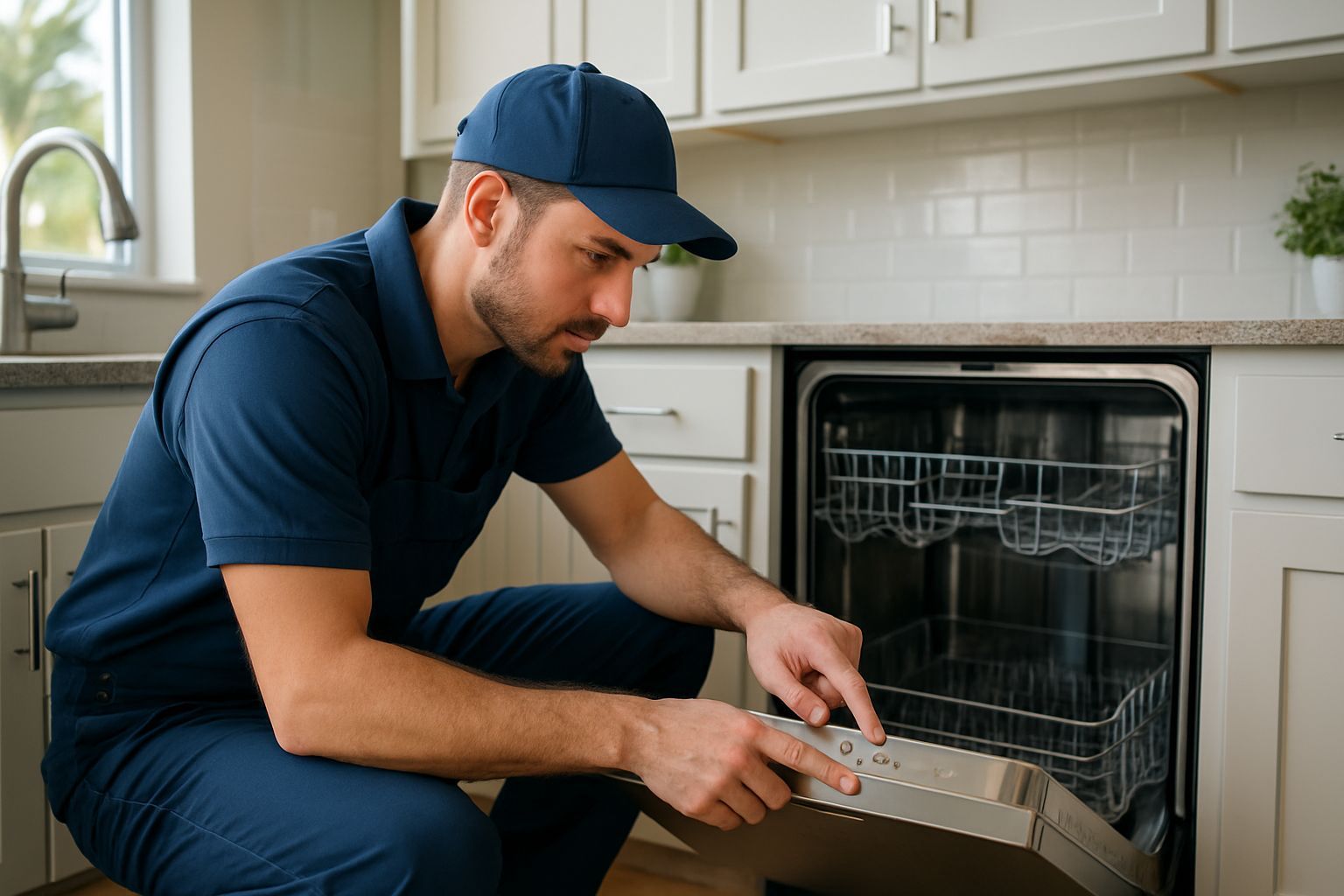

Why Is My Dishwasher Not Filling With Water? What an Appliance Technician Checks
Dishwasher Starts but No Water Enters? Here’s How Technicians Diagnose the Fill Problem
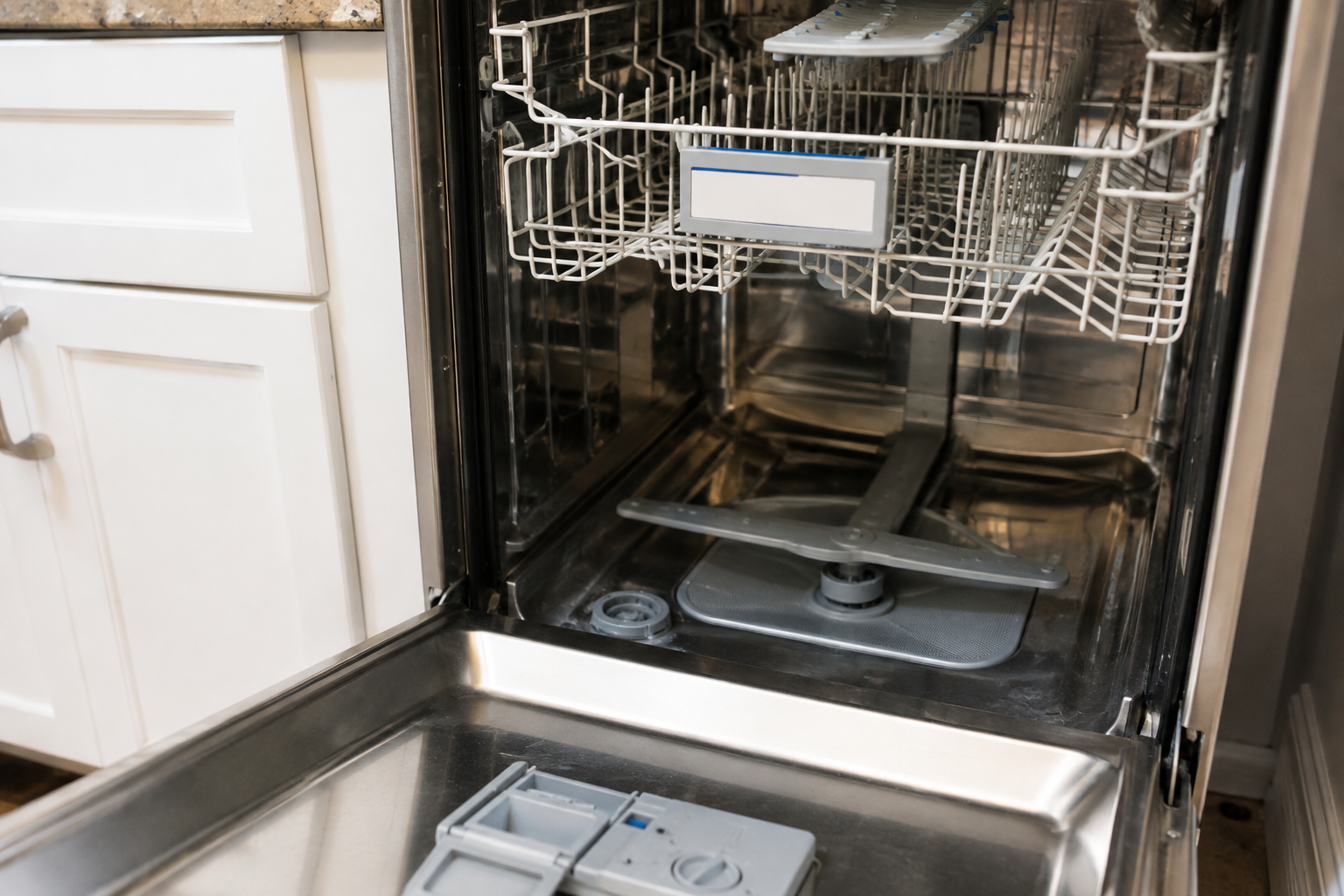
A dishwasher that powers on, drains for a few seconds, and then seems to sit there without bringing in water can be confusing. The machine may sound like it started normally, but when you open the door a few minutes later, the tub is still nearly dry. When technicians diagnose this type of problem, we do not automatically assume the water inlet valve is bad. A dishwasher that will not fill can be caused by the household water supply, a stuck float, a failed switch, a restricted inlet valve, damaged wiring, or a control problem.
The important part is finding out where the fill sequence stops. That is the difference between accurate dishwasher repair and replacing parts based only on the symptom.
First, Make Sure the Dishwasher Is Actually Calling for Water
Many dishwashers begin a cycle by running the drain pump briefly. That is normal. After the drain portion ends, the control should move into the fill portion of the cycle. Homeowners sometimes hear the initial drain and assume the dishwasher is trying to fill when it has not reached that step yet.
Give the machine enough time to enter the wash cycle and listen carefully. A normal fill usually produces an obvious sound of water entering the tub. If there is silence after the drain pump stops, that gives a technician a different diagnostic direction than a dishwasher that fills very slowly or brings in only a small amount of water.
Check the Household Water Supply Before Blaming the Dishwasher
A surprisingly simple problem can stop the entire machine. The water supply valve under the sink may be closed, partially closed, or restricted. This sometimes happens after plumbing work, sink replacement, garbage disposal work, or installation of a new dishwasher.
A homeowner can safely look under the sink and confirm that the dishwasher supply valve appears to be open. Also look for a sharply kinked supply line. Do not disconnect plumbing unless you are comfortable working with pressurized water. A line that looks fine from the outside can still have restricted flow, so technicians may verify actual water delivery when necessary.
The Dishwasher Float Can Stop the Fill Cycle
Many dishwashers have a float inside the tub near one of the front corners. It usually looks like a small plastic cap or dome that moves up and down. Its purpose is to help prevent the dishwasher from overfilling.
If the float becomes stuck in the raised position because of debris, detergent residue, or a mechanical problem, the dishwasher may interpret that condition as an already-full tub and refuse to energize the fill circuit. With the dishwasher turned off, the float should generally move freely. Never force it if it feels jammed.
The float itself is only part of the system. Underneath it is typically a switch or sensor that communicates its position to the control. A technician may test that switch electrically instead of replacing it simply because the dishwasher is not filling.
Why Replacing the Water Inlet Valve First Can Waste Money
The water inlet valve is a common failure point. It opens electrically during the fill portion of the cycle and allows household water into the dishwasher. Valves can fail electrically, become restricted internally, or develop debris buildup at the inlet screen.
But a valve cannot open if it never receives the proper electrical command. That is why professional diagnosis separates a failed valve from a problem somewhere else in the circuit.
Depending on the model, a technician may use the wiring diagram and electrical test equipment to determine whether the correct voltage reaches the inlet valve during the fill portion of the cycle. If proper voltage is present but the valve does not open and the water supply is good, the valve becomes a much stronger suspect. If voltage is missing, the diagnosis moves toward the float circuit, door-switch logic, wiring harness, control board, or another condition preventing the machine from filling.
Low Water Is Different From No Water
Another problem we see is a dishwasher that technically fills, but not enough. The homeowner may notice dirty dishes, detergent remaining in the dispenser, weak spray action, or a wash pump that sounds different while running.
Low water volume can result from a restricted inlet valve or household supply problem. Modern dishwashers use relatively small amounts of water, so looking for a deep pool in the bottom of the tub is not always a reliable way to judge whether the water level is correct. The proper fill level depends on the dishwasher design.
Manually adding extra water may temporarily change the way the dishwasher washes, but it does not identify why the normal fill system is underperforming.
Wiring and Control Problems Need Proper Testing
If the water supply is available, the float system operates normally, and the inlet valve checks out, the problem may be in the wiring or electronic control system. A loose connector, damaged wire, failed control output, or another electrical problem can prevent the inlet valve from being energized correctly.
This is where guessing becomes expensive. Replacing a control board because a dishwasher will not fill can leave you with exactly the same problem when the real fault is a float switch, wiring connection, or valve circuit issue.
Live-voltage testing inside a dishwasher should be left to someone trained to work safely around energized equipment and water. If you are searching for appliance repair near me, look for service that diagnoses the circuit before recommending expensive replacement parts.
What You Can Safely Check Before Scheduling Dishwasher Repair
Before calling for service, confirm that the dishwasher has power, the door is closing and latching normally, the household water valve appears open, and the visible float moves freely. Note whether the dishwasher drains at startup, whether you hear water entering the machine, and whether an error code appears on the display.
It also helps to locate the complete model number before scheduling service. Dishwasher designs vary considerably, and the model number allows a technician to locate the correct wiring information, diagnostic procedure, and part specifications.
If the dishwasher still will not fill, General Appliance Service provides same day appliance repair options in qualifying service areas. Homeowners in Boca Raton can also review our Boca Raton appliance repair page for local service information.
A dishwasher with no water does not automatically need a new water valve or control board. The right repair starts by following the fill sequence, confirming the water supply, checking the float system, and testing the inlet-valve circuit before parts are ordered. When you are ready to have the problem properly diagnosed, you can schedule appliance service with General Appliance Service.